
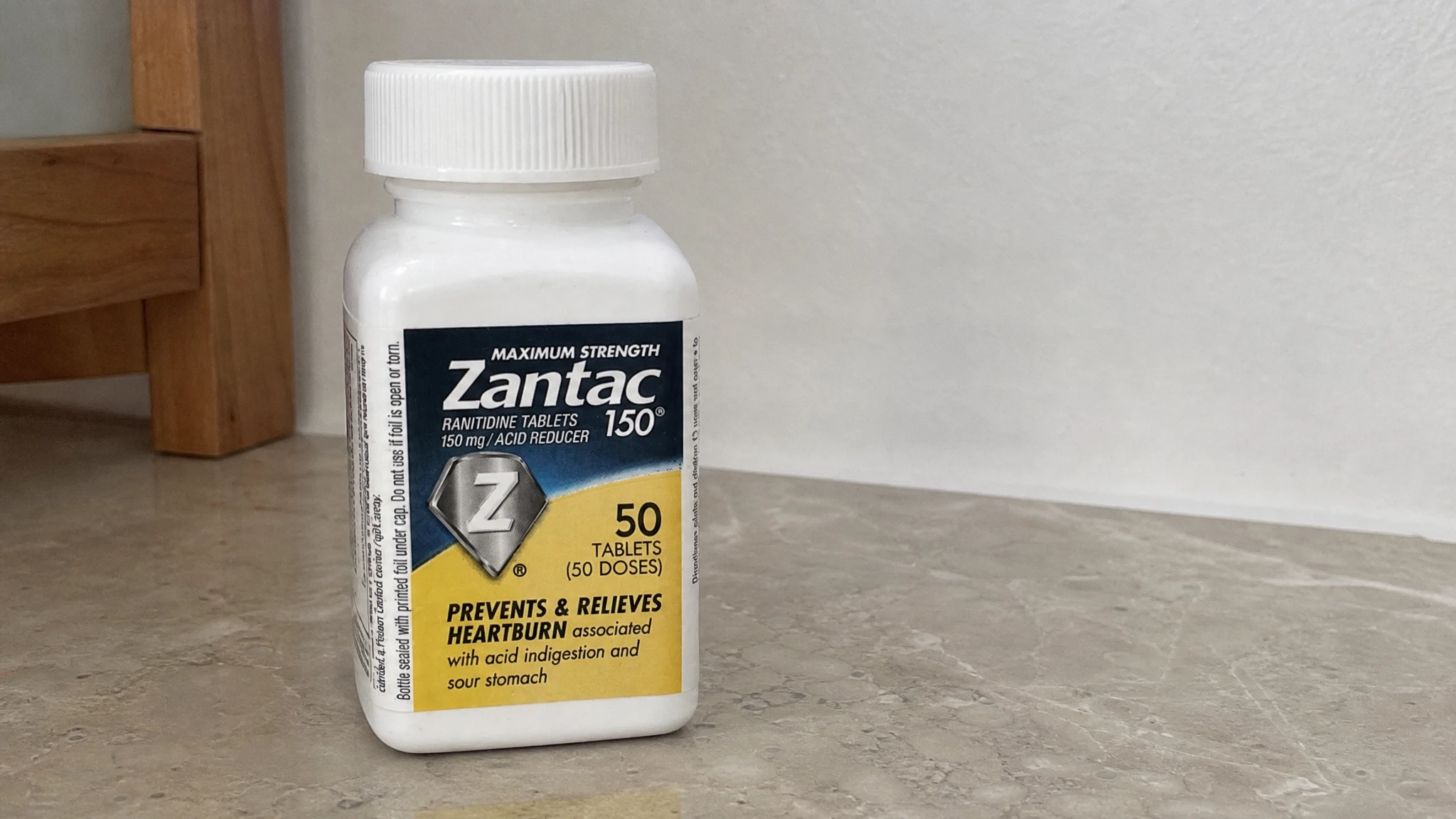
What Is the Zantac Lawsuit?
The Zantac lawsuit is a nationwide group of personal injury and consumer claims over the heartburn drug ranitidine, centralized in part as MDL No. 2924, In re: Zantac (Ranitidine) Products Liability Litigation, in the U.S. District Court for the Southern District of Florida before Judge Robin L. Rosenberg, with many more cases filed separately in state courts, led by Delaware.
Zantac is a brand name for ranitidine, a drug that reduces stomach acid and was sold for years as a prescription and over-the-counter heartburn treatment. The Judicial Panel on Multidistrict Litigation centralized the first actions on February 6, 2020, and the Panel's order names Boehringer Ingelheim, GlaxoSmithKline, Pfizer, Sanofi and Chattem as the common defendants that manufactured, sold, or distributed Zantac.
The centralized docket combined two kinds of claims. Individual plaintiffs allege they developed cancer, and consumer class plaintiffs seek refunds and other economic damages for ranitidine they bought.
“On the basis of the papers filed and hearing session held, we find that the actions listed on Schedule A involve common questions of fact, and that centralization in the Southern District of Florida will serve the convenience of the parties and witnesses and promote the just and efficient conduct of this litigation. These actions share factual questions arising from allegations that ranitidine, the active molecule in Zantac and similar heartburn medications, can form the carcinogen NDMA, either during storage or when metabolized in the human body.”
Source: U.S. Judicial Panel on Multidistrict Litigation, In re: Zantac (Ranitidine) Products Liability Litigation, MDL No. 2924, Transfer Order, Document 198 (February 6, 2020)
Why Are People Filing Zantac Lawsuits?
People are filing Zantac lawsuits because they allege that ranitidine, the active ingredient in Zantac, can break down into N-nitrosodimethylamine (NDMA), a probable human carcinogen, and that the manufacturers failed to warn consumers. The Judicial Panel's 2020 transfer order describes the shared theory as ranitidine forming NDMA either during storage or inside the human body.
The concern traces to a private testing company, Valisure, whose lab results are summarized in Judge Rosenberg's December 2022 order. Valisure reported NDMA above 3,000,000 nanograms in heated samples, while the FDA's own daily limit for NDMA in a drug is 96 nanograms. The court noted that Valisure had to heat the drug to 266 degrees Fahrenheit to reach that figure and detected none at body temperature, and that the FDA's own tests found much lower levels, with some pills above the 96 nanogram limit.
Plaintiffs include people diagnosed with cancer after long-term ranitidine use and consumers who bought the drug and say they would not have if the risk had been disclosed. The defendants dispute that ranitidine causes cancer, and their position is described below.
What Injuries Are Included in the Zantac Lawsuit?
The injuries included in the Zantac lawsuit are cancers that plaintiffs attribute to NDMA from ranitidine. The federal MDL narrowed its focus to five designated cancers, and each is defined in plain language below, followed by what plaintiffs allege.
Plaintiffs first told the court in January 2021 that they planned expert reports on ten cancers. They dropped breast and kidney cancer in November 2021 and colorectal, prostate and lung cancer in January 2022, leaving bladder, esophageal, gastric, liver and pancreatic cancer as the designated cancers. Cases involving other cancers stayed on the docket as non-designated claims.
Bladder Cancer
Bladder cancer is a cancer that starts in the cells lining the bladder, the organ that stores urine.
Plaintiffs allege regular ranitidine use exposed them to NDMA that contributed to bladder cancer. It was one of the five designated cancers for which plaintiffs' experts offered general causation opinions in the federal MDL.
Esophageal Cancer
Esophageal cancer is a cancer that starts in the esophagus, the tube that carries food from the throat to the stomach.
Plaintiffs with this diagnosis allege that long-term ranitidine use for heartburn or reflux preceded their cancer.
Gastric Cancer
Gastric cancer, also called stomach cancer, is a cancer that begins in the lining of the stomach.
Plaintiffs allege NDMA from ranitidine contributed to stomach cancer. Part of their theory is that NDMA can form inside the body after ranitidine is swallowed, which the court's order examines as endogenous formation.
Liver Cancer
Liver cancer is a cancer that starts in the cells of the liver, the organ that filters blood and processes nutrients.
Plaintiffs allege NDMA exposure contributed to liver cancer, and this diagnosis was among the five designated cancers in the federal MDL. Animal studies on NDMA were part of the secondary evidence the court reviewed.
Pancreatic Cancer
Pancreatic cancer is a cancer that starts in the pancreas, an organ behind the stomach that helps with digestion and blood sugar control.
Plaintiffs with pancreatic cancer allege their ranitidine use caused the disease. It was the fifth designated cancer, and the federal court's December 2022 ruling covered all five.
Who Qualifies for the Zantac Lawsuit?
You may qualify if:
- You took Zantac or generic ranitidine regularly, and you can show it through prescription, pharmacy, or purchase records
- You were later diagnosed with a cancer named in the litigation, such as bladder, esophageal, gastric, liver, or pancreatic cancer
- Your claim is one an attorney confirms is still active, for example a later-filed non-designated cancer case pending in MDL No. 2924
- Your diagnosis falls within your state's statute of limitations, which a reviewing attorney must confirm individually
You may not qualify if:
- You took only famotidine (the active ingredient in Pepcid and Zantac 360), cimetidine, or a proton pump inhibitor, since the FDA's testing found no NDMA in those drugs
- You have no cancer diagnosis, or a diagnosis your attorney cannot connect to ranitidine use
- Your claim was already dismissed in the federal MDL or in Delaware, unless a pending appeal restores it
- Your state's statute of limitations has already run, which only a reviewing attorney can confirm
This summary describes who historically qualified to join the Zantac litigation, not an open invitation to file. The federal designated-cancer claims are on appeal, the Delaware cases were dismissed, and GSK's settlement covered only cases already pending with participating firms. Only a mass-tort attorney reviewing your records can confirm whether any route remains for you.
What Is the Current Status of the Zantac Lawsuit?
The current status of the Zantac lawsuit is a mature litigation waiting on appellate courts. The federal MDL has largely concluded at the trial-court level, Delaware's cases ended on summary judgment in April 2026, and both rulings are being reviewed on appeal.
In re: Zantac (Ranitidine) Products Liability Litigation, MDL No. 2924
The Judicial Panel on Multidistrict Litigation centralized the first Zantac actions in the Southern District of Florida on February 6, 2020 and assigned them to Judge Robin L. Rosenberg. On December 6, 2022, Judge Rosenberg granted the defendants' Daubert motions on general causation and granted summary judgment, ruling that plaintiffs had not produced admissible primary evidence that ranitidine causes the five designated cancers. Plaintiffs had conceded on the record that summary judgment should follow if the Daubert motions were granted.
As of the Panel's September 1, 2026 report, 847 actions remain pending out of 15,018 filed, down from 14,795 pending in May 2023. On August 7, 2026, the Panel denied a defense motion to transfer five new Pennsylvania cases into MDL No. 2924, explaining that common proceedings in the MDL have largely concluded and that remaining activity mostly involves later-filed non-designated cancers.
| Proceeding Type | Federal multidistrict litigation, 28 U.S.C. § 1407 |
| Court | U.S. District Court, Southern District of Florida |
| Judge | Honorable Robin L. Rosenberg |
| Centralized | February 6, 2020 |
| Pending Cases (Sept. 1, 2026) | 847 of 15,018 total actions filed |
| Key Ruling | Daubert and summary judgment order, December 6, 2022 |
Eleventh Circuit Appeals
Plaintiffs appealed the dispositive rulings to the U.S. Court of Appeals for the Eleventh Circuit, and nine consolidated appeals were argued on October 10, 2025. GSK reported in its second-quarter 2026 results that it expects a decision in the second half of 2026, and no decision had been located as of this writing.
The Panel's August 2026 order says it may reconsider transferring new cases if the appeals lead to a resumption of substantial common pretrial proceedings. A ruling that upholds the exclusion of plaintiffs' experts would largely end the federal designated-cancer claims, while a reversal could reopen them.
| Proceeding Type | Federal appeal |
| Court | U.S. Court of Appeals, Eleventh Circuit |
| Appeals | Nos. 21-12618, 21-14325 and seven later consolidated appeals |
| Argued | October 10, 2025 |
| Decision | Pending as of this writing |
In re: Zantac (Ranitidine) Litigation, Delaware Superior Court
Delaware's Superior Court, in a May 2024 ruling by Judge Vivian Medinilla, allowed plaintiffs' general causation experts, the opposite result from the federal MDL. The Delaware Supreme Court reversed on July 10, 2025, holding that the trial court had applied a standard that favored admitting expert testimony and had framed general causation around NDMA instead of the product, ranitidine.
On December 1, 2025, the Superior Court denied plaintiffs' request for supplemental expert disclosures. On April 13, 2026, it granted summary judgment on all cases filed on or before December 1, 2025, finding that plaintiffs had not shown general causation. Plaintiffs filed a notice of appeal on May 13, 2026.
| Proceeding Type | State-court coordinated litigation |
| Court | Superior Court of the State of Delaware, C.A. No. N22C-09-101 |
| Supreme Court Ruling | No. 255, 2024, reversed July 10, 2025 |
| Summary Judgment | April 13, 2026, cases filed on or before December 1, 2025 |
| Appeal | Notice of appeal filed May 13, 2026 |
When Will the Zantac Lawsuit Be Settled?
The Zantac lawsuit will not be settled through a single global agreement, because the litigation has been resolved in separate pieces. GSK agreed on October 9, 2024 to pay up to $2.2 billion to resolve about 80,000 state-court cases. The federal MDL claims were dismissed on summary judgment and now depend on the Eleventh Circuit.
No per-person payout applies to every claim. GSK's agreement covered roughly 93 percent of the state-court cases pending against it through ten plaintiff firms, and it did not admit liability. Individual amounts depend on each firm's participation terms, the diagnosis, and the strength of the exposure records, factors only a reviewing attorney can weigh.
Press reports describe settlements by other defendants. The Financial Times reported in May 2024 that Pfizer would pay up to $250 million to resolve about 10,000 cases, and Bloomberg reported in April 2024 that Sanofi would settle about 4,000 state cases for roughly $100 million. Pfizer told the Financial Times it continues to defend the claims, and neither company's figure was confirmed in those reports.
Dividing the headline numbers gives a rough average, about $27,500 per case for GSK's up to $2.2 billion across about 80,000 cases. That figure is arithmetic, not a published average payout, because attorney fees, eligibility rules, and participation terms reduce what any claimant receives.
GSK separately reached an agreement in principle to pay $70 million to resolve a qui tam complaint filed by Valisure, subject to approval by the Department of Justice. That agreement concerns a government-fraud claim, not the personal injury cases.
Zantac Lawsuit Updates
The latest Zantac lawsuit updates and case status are tracked below in date order, covering the federal MDL, the Delaware state-court cases, the Eleventh Circuit appeals, and the settlements.
Zantac Lawsuit Timeline of Events
MDL 2924 Pending Count Holds at 847
The JPML's September 1, 2026 report listed 847 pending actions in MDL No. 2924, identical to its July 1 count, out of 15,018 actions filed since the Zantac docket began.
JPML Denies Transfer of Five Pennsylvania Zantac Cases
The Judicial Panel on Multidistrict Litigation denied the defendants' motion to send five Eastern District of Pennsylvania cases, including Cobaugh and Gardner v. Boehringer Ingelheim, into MDL No. 2924, reasoning that the Zantac MDL's common proceedings have largely concluded.
JPML Report Counts 847 Pending Zantac Cases
By the JPML's July 1, 2026 report, MDL No. 2924 held 847 pending actions, down from 1,030 at the start of January 2026.
Plaintiffs Appeal Delaware Summary Judgment
Delaware Zantac plaintiffs filed a notice of appeal from the Superior Court's April 2026 summary judgment order, which GSK says applies to the six GSK cases that were pending when the court ruled.
Delaware Superior Court Grants Summary Judgment on All Cases
The Delaware Superior Court granted summary judgment on every Zantac case filed on or before December 1, 2025, finding that plaintiffs had not demonstrated general causation, an element each of their claims requires.
Court Dismisses GSK Zantac Securities Class Action
A court dismissed the Zantac securities class action against GSK with prejudice, holding the investors' claims were barred by the statute of limitations, according to GSK's own report of the ruling.
MDL 2924 Pending Cases Fall to 1,030
The JPML's January 5, 2026 report showed 1,030 pending actions in MDL No. 2924, a drop of more than 780 from the 1,812 shown in its December 2, 2025 report.
JPML Counts 1,812 Pending Zantac Cases
The Panel's December 2, 2025 report listed 1,812 pending actions in MDL No. 2924, down from 2,427 eleven months earlier as dismissed cases continued to leave the docket.
Delaware Court Denies Supplemental Expert Disclosures
After the Delaware Supreme Court's reversal, the Delaware Superior Court denied the Zantac plaintiffs' request to serve supplemental expert disclosures and asked for more briefing on which plaintiffs the ruling bound, setting up the April 2026 summary judgment decision.
Eleventh Circuit Hears Zantac MDL Appeals
The U.S. Court of Appeals for the Eleventh Circuit heard oral argument on nine consolidated appeals from the Zantac MDL's dispositive rulings, including the December 2022 Daubert and summary judgment order.
Delaware Supreme Court Reverses Zantac Expert Ruling
The Delaware Supreme Court reversed the Superior Court's May 2024 decision admitting plaintiffs' general causation experts, holding that the proponent of expert testimony bears the burden of showing it is reliable and that experts must address the product itself, ranitidine.
JPML Suspends Tag-Along Notice Duty in MDL 2924
After consulting Judge Rosenberg, the Judicial Panel on Multidistrict Litigation suspended the parties' obligation to notify the Clerk of new Zantac tag-along actions, a sign that the MDL's common work was winding down.
MDL 2924 Docket Shrinks to 2,427 Pending Cases
The JPML's January 2, 2025 report listed 2,427 pending actions in MDL No. 2924, a steep fall from 14,396 in April 2024, consistent with the Panel's later statement that the transferee court entered judgment in most actions.
GSK Agrees to Pay Up to $2.2 Billion in State-Court Zantac Settlement
GlaxoSmithKline announced agreements with ten plaintiff firms to resolve about 80,000 state-court Zantac cases, roughly 93 percent of those pending against it, for up to $2.2 billion, without admitting liability.
Pfizer Reportedly Agrees to Settle About 10,000 Zantac Cases
The Financial Times reported that Pfizer would pay up to $250 million to resolve about 10,000 Zantac cases, while Pfizer said it remains confident its Zantac products did not cause cancer when used as directed.
Cook County Jury Returns Defense Verdict for Boehringer Ingelheim
A Cook County, Illinois jury returned a defense verdict for Boehringer Ingelheim after about four hours of deliberation in the first Zantac trial, rejecting a plaintiff who had sought $640 million.
Delaware Superior Court Admits Plaintiffs' Zantac Experts
Judge Vivian Medinilla of the Delaware Superior Court denied the defendants' motions to exclude plaintiffs' general causation experts, a ruling GSK said conflicted with the federal MDL's December 2022 decision and announced it would appeal.
Sanofi Reportedly Agrees to Settle About 4,000 Zantac Cases
Bloomberg reported that Sanofi agreed to settle about 4,000 state-court Zantac cases, which FiercePharma later described as worth roughly $100 million, or about $25,000 per claimant.
JPML Reports 14,396 Pending Cases in MDL 2924
The JPML's April 1, 2024 report counted 14,396 pending actions in MDL No. 2924 and 15,002 filed in total, showing that the Zantac MDL kept almost all its cases on the docket after the 2022 ruling while appeals proceeded.
MDL 2924 Pending Count Stands at 14,389
The Panel's December 15, 2023 report listed 14,389 pending actions among 14,991 filed in MDL No. 2924, down about 400 from the summer's count.
JPML Lists 14,797 Pending Zantac Cases
As of the JPML's July 17, 2023 report, MDL No. 2924 held 14,797 pending actions out of 14,959 filed, little changed from two months earlier.
JPML Lists 14,795 Pending Zantac Cases
The JPML's May 15, 2023 report showed 14,795 pending actions out of 14,957 filed in MDL No. 2924, roughly five months after Judge Rosenberg's Daubert ruling.
Judge Rosenberg Excludes Plaintiffs' Experts and Grants Summary Judgment
In a 341-page omnibus order, Judge Robin L. Rosenberg granted the defendants' Daubert motions on general causation and their motion for summary judgment, finding that plaintiffs lacked reliable evidence that ranitidine causes the five designated cancers.
Plaintiffs Narrow Their Expert Cancers to Five
Plaintiffs' leadership told the court in MDL No. 2924 that it would offer general causation experts only for bladder, esophageal, gastric, liver and pancreatic cancer, narrowing from eight cancers.
Plaintiffs Drop Breast and Kidney Cancer From Expert Reports
Plaintiffs' leadership in the Zantac MDL notified the court that it no longer planned general causation expert reports for breast and kidney cancer, cutting its list from ten cancers to eight.
Plaintiffs Disclose Ten Cancers for Expert Reports
Plaintiffs' leadership notified the MDL court that it intended to offer expert reports on ten cancers: bladder, breast, colorectal, esophageal, gastric, kidney, liver, lung, pancreatic and prostate.
Court Sets Common-Benefit Rules as Case Count Passes 400
In Pretrial Order 37, Judge Rosenberg set a protocol for common benefit work and expenses, noting that more than 400 additional cases had joined the first group of transferred actions and that a registry held further unfiled claims.
Court Appoints Plaintiffs' Co-Lead Counsel in MDL 2924
In Pretrial Order 20, Judge Rosenberg appointed plaintiffs' co-lead counsel, the Plaintiffs' Steering Committee and other leadership for the Zantac MDL.
FDA Asks Manufacturers to Pull All Ranitidine From the Market
The FDA requested the immediate withdrawal of all prescription and over-the-counter ranitidine products, saying NDMA in some products rises over time and with heat and could reach unacceptable levels.
JPML Centralizes Zantac Cases in the Southern District of Florida
The Judicial Panel on Multidistrict Litigation created MDL No. 2924, centralizing fifteen actions from nine districts, nine personal injury and six consumer class cases, before Judge Robin L. Rosenberg, with 126 related actions pending in 21 districts.
How to File a Zantac Lawsuit
To file a Zantac lawsuit, start with the 5 steps below.
- Confirm you took ranitidine, not famotidine: Zantac 360 and Pepcid contain famotidine, which the FDA's testing did not find NDMA in, so only ranitidine products fit the litigation.
- Gather your prescription and pharmacy records: Records showing the product, the dosage, and how long you took it are the core proof of exposure for any ranitidine claim.
- Collect your cancer diagnosis records: Pathology reports and treatment notes confirm the cancer type and the date of diagnosis, which also affect your filing deadline.
- Ask whether your claim is still open: The federal designated-cancer claims are on appeal, the Delaware cases were dismissed, and GSK's settlement covered only cases already pending, so an attorney must tell you whether any route remains.
- Consult a mass-tort attorney about your deadline: Statutes of limitations differ by state and by when you learned of a possible link, and only a reviewing attorney can confirm yours.
Zantac Lawsuit is no longer accepting new claims. Federal claims over the five designated cancers in MDL No. 2924 were dismissed on summary judgment in December 2022 and are on appeal. The Delaware cases were dismissed on summary judgment in April 2026, and GSK's state-court settlement was limited to cases already pending with ten plaintiff firms. No open claims process is accepting new participants as of this writing.
What Evidence Do I Need for a Zantac Lawsuit?
The strongest evidence for a Zantac lawsuit is documentation of regular ranitidine use paired with a confirmed cancer diagnosis. That generally means prescription or pharmacy records, receipts for over-the-counter purchases, and medical records showing the cancer type and diagnosis date. A treating physician's notes about how long you took the drug can also help an attorney evaluate the claim.
Documents alone did not decide the litigation, because the courts focused on scientific proof. Judge Rosenberg's order recounts the FDA's own figure that taking 96 nanograms of NDMA daily for 70 years would carry a cancer risk of about 1 in 100,000. That figure shows why courts demanded reliable expert evidence connecting ranitidine to cancer, not only proof of use.
What Did the Zantac Manufacturers Allegedly Know About NDMA?
The Zantac manufacturers allegedly knew, or should have known, about NDMA, and plaintiffs allege the defendants concealed the NDMA-associated dangers of ranitidine from consumers. The Judicial Panel's 2020 order records that plaintiffs uniformly allege the manufacturers, sellers, and distributors of Zantac knew or should have known the medication exposed consumers to NDMA.
On April 1, 2020, the FDA, whose drug center was then led by Janet Woodcock, asked manufacturers to withdraw all ranitidine products from the U.S. market. The agency called NDMA a probable human carcinogen, said levels in some ranitidine rise with time and heat, and reported finding no NDMA in famotidine, cimetidine, esomeprazole, lansoprazole, or omeprazole.
The defendants deny that ranitidine causes cancer. GSK says the scientific evidence does not reliably show that ranitidine raises the risk of any cancer, and Pfizer says its FDA-approved Zantac products did not cause cancer when used as directed. No court has entered a final merits ruling that any defendant caused a plaintiff's cancer.
How Does the Zantac Lawsuit Compare to Related Cases?
The Zantac lawsuit differs from several related cases that share a name, a defendant, or the NDMA contaminant. Each is a separate proceeding with its own parties and should not be confused with the ranitidine cancer litigation described on this page.
The Judicial Panel cited the Valsartan NDMA litigation, a separate MDL over a blood pressure drug, when it centralized the Zantac cases in 2020. The Valsartan docket involves a different drug and different manufacturers, though both concern NDMA contamination.
| Case | What It's About | Status |
|---|---|---|
| In re: Valsartan NDMA Contamination Products Liability Litigation | A separate MDL over NDMA in a blood pressure drug, cited by the Panel in 2020 | Separate docket, not part of MDL 2924 |
| Zantac securities class action against GSK | Investor claims that GSK misled shareholders about Zantac risks | Dismissed with prejudice, March 4, 2026 |
| Valisure qui tam complaint | A government-fraud claim filed by the testing company that raised the NDMA concern | GSK agreed in principle to pay $70 million, subject to DOJ approval |
| Zantac 360 (famotidine) | A current Zantac-branded heartburn product with a different active ingredient | Not part of the ranitidine litigation |
Frequently Asked Questions
What is the Zantac lawsuit about?
The Zantac lawsuit is a group of cancer and consumer claims alleging that ranitidine, the active ingredient in Zantac, can form the carcinogen NDMA and that the manufacturers failed to warn consumers, with the federal cases centralized as MDL No. 2924 in the Southern District of Florida.
Is the Zantac lawsuit a class action or an MDL?
The Zantac lawsuit is primarily a multidistrict litigation, MDL No. 2924, that combined individual personal injury cases with consumer class actions seeking refunds, alongside separate state-court cases such as those in Delaware.
What is the status of the Zantac lawsuit in Delaware?
The status of the Zantac lawsuit in Delaware is that the Superior Court granted summary judgment on April 13, 2026 for all cases filed on or before December 1, 2025, and plaintiffs filed a notice of appeal on May 13, 2026.
What is the Zantac lawsuit settlement amount?
The Zantac lawsuit settlement amount reported most reliably is GSK's agreement of October 2024 to pay up to $2.2 billion to resolve about 80,000 state-court cases, while Pfizer and Sanofi settlements are press-reported at roughly $250 million and $100 million.
What is the average payout for the Zantac lawsuit?
No average payout for the Zantac lawsuit has been published, and dividing GSK's up to $2.2 billion by about 80,000 cases gives only a rough arithmetic figure near $27,500 that overstates what claimants receive after fees and eligibility rules.
Can I still file a Zantac lawsuit in 2026?
Filing a Zantac lawsuit in 2026 is difficult, because the federal designated-cancer claims were dismissed and are on appeal, the Delaware cases were dismissed, and GSK's settlement covered only pending cases, so an attorney must confirm whether any claim remains open and timely.
Did the FDA recall Zantac?
The FDA did not order a recall but on April 1, 2020 requested that manufacturers withdraw all ranitidine products from the U.S. market, and it did not find NDMA in famotidine, the active ingredient in the Zantac 360 product sold today.
Is the Zantac lawsuit the same as the Valsartan lawsuit?
No, the Zantac lawsuit and the Valsartan lawsuit are separate MDLs over different drugs, a heartburn medicine and a blood pressure medicine, though both involve NDMA contamination.