
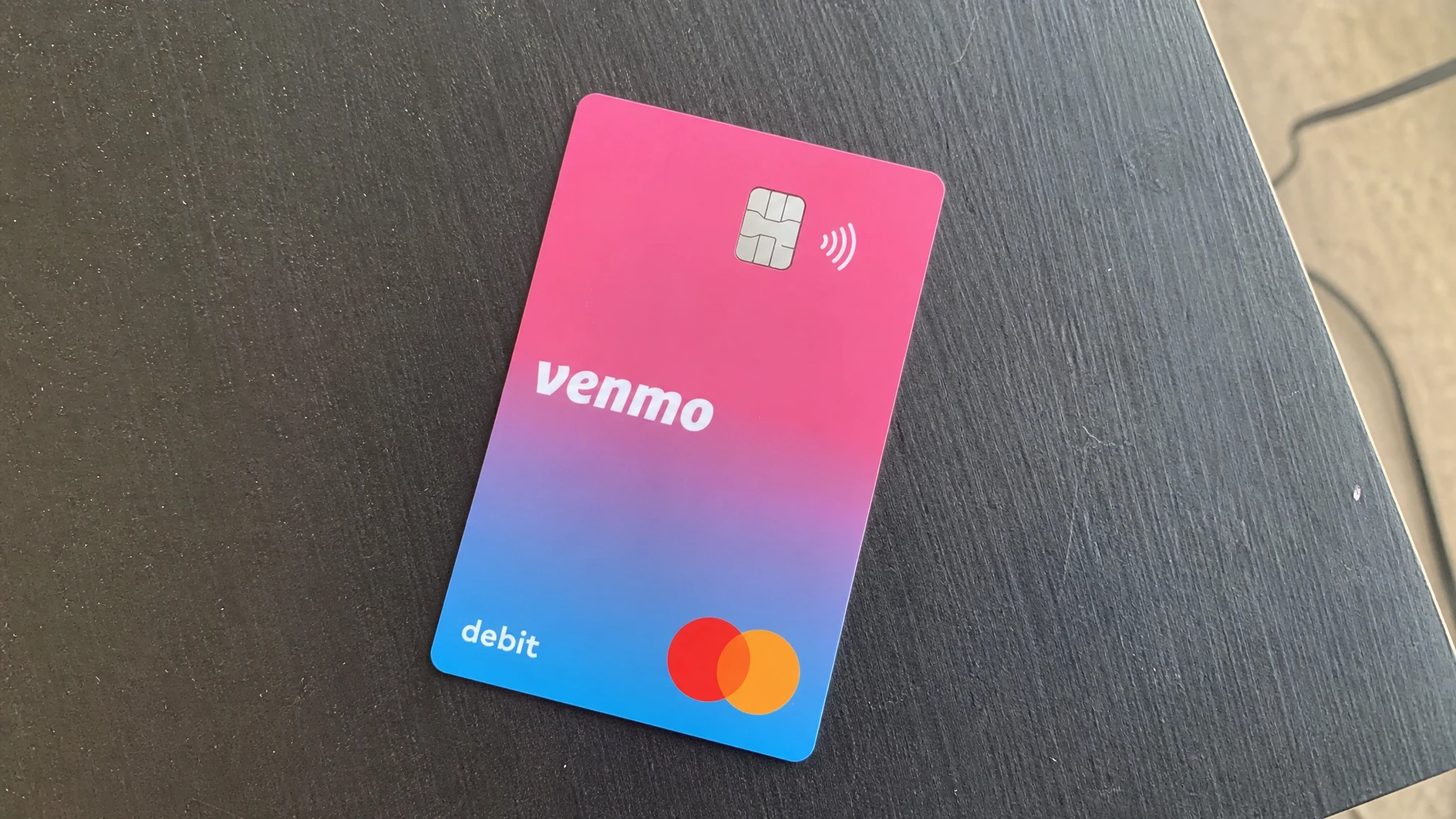
What Is the Venmo Lawsuit?
The Venmo lawsuit is a proposed class action accusing PayPal, Inc. of routing private Venmo payment data to outside tracking companies, not a multidistrict litigation or a certified class. Four California residents filed it in the U.S. District Court for the Northern District of California, San Jose Division, on September 1, 2026, and the case is captioned Borquez, et al. v. PayPal, Inc. d/b/a Venmo.
The complaint alleges that PayPal built third-party tracking software into the Venmo app and sent users' names, contact details and payment records to two outside data companies, including transactions the users had marked private. The named plaintiffs are Stacey Borquez, Lana Nava, Nathan Olson and Remi Rundzio, and they seek to represent both a nationwide class and a California subclass of Venmo users who used private settings.
No court has certified a class, and the Judicial Panel on Multidistrict Litigation lists no Venmo or PayPal MDL, so this remains a single proposed class action rather than a consolidated mass tort. That distinction matters for anyone searching for a Venmo settlement, because a proposed class action creates no claims process until a court approves one.
Why Are People Filing Venmo Lawsuits?
People are filing Venmo lawsuits because the complaint alleges PayPal promised that private payments would stay private, then transmitted them to advertising and analytics firms anyway. Venmo's own privacy statement says the platform "does not disclose your personal information with third parties for their promotional or marketing purposes," and Venmo's help center says a payment marked private will not appear "anywhere other than in your personal transactions feed under the Me tab and with the other participant."
According to the complaint, PayPal deliberately embedded tracking technology from mParticle Inc., a customer data platform that builds persistent advertising profiles, and Kochava Inc., a mobile attribution company that also operates as a data broker. Neither company is named as a defendant. The data described in the filing includes the sender's full name, email address and telephone number, the sender's Android Advertising ID, mParticle ID and Kochava ID, and the recipient's identity, the amount paid and the transaction note.
The filing stresses two details that make the alleged disclosure harder to avoid. Every Venmo payment records who paid whom, how much and why, and the note describing the payment's purpose becomes mandatory once a user sets an account to private. The complaint also contends the trackers did not anonymize or aggregate what they received, and that the transmissions happened no matter which privacy setting a user selected.
The lawsuit separately challenges a PayPal user agreement that took effect on August 24, 2026, roughly a week before filing. Plaintiffs call its arbitration provisions unconscionable and ask the court to strike them, pointing to terms that require a handwritten signature on any dispute notice, stretch the informal resolution period from 45 to 60 days, and cap how many similar claims can proceed at once, allowing only 50 total where 25 or more coordinated disputes exist. The complaint also says PayPal dropped an earlier promise to cover arbitration fees on claims of $10,000 or less, and that existing users could reject the changes only by closing their accounts.
What Injuries Are Included in the Venmo Lawsuit?
The Venmo lawsuit includes five distinct categories of alleged harm, all of them privacy and economic harms rather than physical injuries. The complaint pleads ten separate causes of action that group into those five categories, and a single user could in principle be affected by all of them at once.
Across every category, the alleged harm is the same underlying event viewed through different legal theories: private payment information leaving the app and reaching companies the user never chose. PayPal has not responded to the complaint and has admitted no wrongdoing, and no court has ruled on any of these theories.
Interception of Private Payment Data
Interception is a wiretapping claim alleging that the contents of an electronic communication were captured by someone other than the intended sender or recipient while the message was in transit.
The complaint pleads interception under the federal Electronic Communications Privacy Act, which bars unauthorized interception of electronic communications, and under the California Invasion of Privacy Act, Sections 631 and 632, the state wiretapping provisions covering interception and recording. The alleged intercepted content includes the free-text payment note, which the filing describes as mandatory once an account is set to private.
This category is the reason the case reaches beyond ordinary data-sharing complaints. A claim that a company shared profile data is different in kind from a claim that the substance of a private message was captured while it traveled, and the wiretapping statutes carry their own damages provisions.
Disclosure of Personally Identifying Information
Personally identifying information is any data that can be used to identify a specific individual, such as a full name, email address, telephone number or a persistent advertising identifier tied to their device.
The lawsuit alleges that names, email addresses and telephone numbers left the app alongside device-level identifiers, specifically the Android Advertising ID, an mParticle ID and a Kochava ID. Persistent identifiers of that kind matter because they let separate data sets about the same person be linked together over time.
Two negligence claims built on the Gramm-Leach-Bliley Act and the California Financial Information Privacy Act carry this theory, both of which govern how financial institutions handle customer information. The complaint's illustration is a payment note from plaintiff Remi Rundzio of Westminster, who is alleged to have written his daughter's name and information about a class she took into the note field.
Intrusion Upon Seclusion
Intrusion upon seclusion is a privacy claim alleging an intentional intrusion into a person's private affairs that would be highly offensive to a reasonable person, regardless of whether the information was later published.
The complaint pairs this common-law claim with Article I, Section 1 of the California Constitution, which recognizes privacy as an inalienable right. Both reach highly offensive intrusions rather than requiring proof of financial loss, which is why they often appear in cases where the measurable monetary damage is hard to pin down.
The alleged offensiveness here rests on the gap between the promise and the practice. A user who found the private setting, switched it on and then had to write a payment note anyway would reasonably expect that note to stay between the two people in the transaction.
Unauthorized Device Access
Unauthorized device access is a claim alleging that software reached into a person's own phone or computer and took data from it without permission, separate from any claim about how a company later used that data.
This theory is pled under the California Comprehensive Computer Data Access and Fraud Act, which bars unauthorized access to a person's device. The claim targets the conduct at the handset rather than the conduct at the server, treating the embedded tracking software as the mechanism of access.
It is a distinct legal route to the same underlying facts, and it survives or fails on its own terms. A court could accept a wiretapping theory and reject a device-access theory, or the reverse, because each statute defines the prohibited act differently.
Unjust Enrichment
Unjust enrichment is a claim alleging that a company retained a benefit, usually money or something of commercial value, that in fairness it should not be allowed to keep.
The complaint pleads unjust enrichment alongside California's Unfair Competition Law, which covers unlawful business practices. The alleged benefit is commercial rather than a direct charge to users, since the theory is that the transmitted data carried advertising and analytics value that PayPal captured without paying for it.
Plaintiffs ask for damages, restitution, disgorgement, an injunction and attorneys' fees. Disgorgement is the remedy attached specifically to this category, because it asks a court to strip a gain rather than to compensate a measured loss.
Who Qualifies for the Venmo Lawsuit?
You may qualify if:
- You used Venmo with your account set to private, or you sent or received at least one payment marked private
- Your personally identifying information or payment details were nonetheless transmitted to mParticle or Kochava
- You are a United States resident, for the proposed nationwide class, or a California resident, for the proposed California subclass
- You have not already filed an individual arbitration demand against PayPal over the same conduct
You may not qualify if:
- You only ever used Venmo with public or friends-visible settings and never marked a payment private
- You already submitted an arbitration demand against PayPal covering this conduct, which the proposed class definition expressly carves out
- You are looking for a payout from the Plaid settlement or another closed matter, which are separate proceedings with their own closed deadlines
No class has been certified in this case, so nobody is formally a class member yet and there is nothing to claim at this stage. These criteria restate the class definition as proposed in the complaint, not a court's ruling on who qualifies. Only a qualified attorney reviewing your own account history, your state of residence and your state's filing deadline can confirm whether you have a claim, and PayPal's August 2026 arbitration terms may separately affect how any individual claim must be brought.
What Is the Current Status of the Venmo Class Action Lawsuit?
The current status of the Venmo class action lawsuit is early federal pretrial litigation, with the complaint filed and docketed but no response from PayPal, no certified class and no settlement. Because the case is roughly three weeks old as of this writing, the docket so far holds the complaint and routine opening filings rather than substantive rulings.
Only one proceeding is tracked on this page. The Judicial Panel on Multidistrict Litigation lists no Venmo or PayPal MDL, so there is no consolidated docket, no pending-case count and no bellwether schedule of the kind mass-tort pages typically report.
Borquez, et al. v. PayPal, Inc. d/b/a Venmo
Four named plaintiffs filed the complaint on September 1, 2026, paying the $405 civil filing fee, and attached three exhibits. The docket shows a certificate of interested entities filed the same day and a consent or declination to proceed before a magistrate judge filed the following day, which are standard opening steps in the Northern District of California rather than substantive developments. The court reassigned the case to District Judge Noel Wise on September 3, 2026, and PayPal has since asked for more time to respond to the complaint.
| Court | U.S. District Court, Northern District of California, San Jose Division (federal) |
| Case Number | 5:26-cv-09340 |
| Filed | September 1, 2026 |
| Judge | District Judge Noel Wise, with discovery referred to Magistrate Judge Nathanael M. Cousins |
| Basis of Jurisdiction | Federal question, 28 U.S.C. 1331 |
| Jury Demand | Plaintiffs |
| Proposed Class | Nationwide class plus a California subclass, not certified |
| Current Stage | PayPal has moved to extend its September 22, 2026 deadline to respond to the complaint, and plaintiffs have opposed that motion as of September 21, 2026 |
None of the docket entries are publicly available as free documents, so the filings themselves cannot be read without a PACER account. The case details above come from the public docket record rather than from the complaint text, and no primary-source PDF of the complaint is freely accessible at this time.
How Much Is the Venmo Lawsuit Payout?
There is no Venmo lawsuit payout. The privacy case against PayPal has no settlement, no settlement fund and no claims process, because it was filed on September 1, 2026 and PayPal has not yet responded to the complaint.
Plaintiffs are asking for damages, restitution, disgorgement, an injunction and attorneys' fees, but a request in a complaint is not an award and carries no dollar figure a court has approved. Any estimate of a per-person payout at this stage would be speculation, and whether this case ever produces one generally depends on class certification, the outcome of the arbitration fight and whether the parties negotiate a resolution.
Two specific figures circulate in searches for a Venmo settlement, and neither one comes from this case. A recovery of up to $500 appears in attorney advertising for an individual arbitration campaign over Venmo bank-account linking, which is a law firm's intake offer rather than a court-approved settlement amount. A separate $58 million settlement fund paid roughly $35.97 per approved claim, but that money came from Plaid Inc., a different company, in a different case that closed years ago. Both are described in the related-cases section below.
Because the case has no claims process, there is also no official Venmo settlement website, no claim form and no deadline to meet right now. Any site currently asking for personal details in exchange for a place in a Venmo class action settlement is not operating an approved claims process for this case, since a court has to appoint a settlement administrator before one can exist.
Latest Venmo Lawsuit Updates
The latest Venmo lawsuit updates and news, including new filings, rulings and regulatory developments, are tracked below as they're confirmed. The Venmo privacy class action remains in early pretrial litigation as of September 2026, with no class certified and no settlement reached. The timeline below tracks every confirmed development from the first filing forward, including separate proceedings involving Venmo that are not part of this case.
Venmo Lawsuit Timeline
FTC settles with PayPal over Venmo privacy and funds-availability claims
The Federal Trade Commission announced a settlement resolving charges that Venmo misled users about the availability of funds, misrepresented how its privacy settings worked and overstated its security. The consent order required PayPal to obtain biennial third-party assessments of its compliance with the Gramm-Leach-Bliley Privacy and Safeguards Rules for ten years.
Consumers sue Plaid over bank login credentials collected through payment apps
Plaintiffs represented by Lieff Cabraser Heimann & Bernstein filed a data-privacy class action against Plaid Inc. in federal court in Northern California, alleging the company presented login screens mirroring users' own banks and then used the credentials to collect transaction and financial data. Plaid is a separate defendant from PayPal, and Venmo users were affected as app users rather than as parties.
CFPB issues a civil investigative demand to PayPal over Venmo collections
The Consumer Financial Protection Bureau served PayPal with a civil investigative demand seeking information related to Venmo's unauthorized funds transfers and collections processes. A civil investigative demand is a fact-gathering step rather than a finding, and it opened a fact-gathering phase into whether Venmo's debt-collection practices warranted enforcement.
Plaid privacy settlement receives preliminary approval
A federal judge granted preliminary approval to a $58 million settlement resolving the Plaid privacy class action, clearing the way for notice to go out to users of Venmo, Coinbase and other apps that relied on Plaid for bank connections.
Judge Donna M. Ryu grants final approval to the $58 million Plaid settlement
U.S. District Judge Donna M. Ryu of the Northern District of California entered an order granting final approval to the Plaid settlement, which also required Plaid to change its privacy processes and user interface. Approved claimants were later paid roughly $35.97 each, and this settlement resolved claims against Plaid rather than against PayPal or Venmo.
CFPB closes its PayPal and Venmo investigation without enforcement action
After roughly three years, the Consumer Financial Protection Bureau closed the probe it opened in January 2021 without bringing an enforcement action or imposing a penalty against PayPal or Venmo.
FTC announces a settlement banning Kochava from selling sensitive location data
The Federal Trade Commission announced a proposed settlement with data broker Kochava Inc. and its subsidiary, barring them from selling, licensing or disclosing sensitive location data without a consumer's affirmative express consent. The 2026 Venmo complaint cites this Kochava settlement when describing the company's role as a data broker.
Attorneys open a Washington investigation into Venmo referral texts
Lawyers working with ClassAction.org began seeking Washington residents who received Venmo refer-a-friend texts, examining whether the program violates the state's Commercial Electronic Mail Act. This remains an attorney investigation with no complaint on file, and it is legally unrelated to the privacy case over transaction data.
A revised PayPal user agreement takes effect one week before the privacy suit
PayPal put a new user agreement into force that reworked its dispute-resolution terms, extending the informal resolution period from 45 to 60 days and limiting how many coordinated claims may proceed at once. Plaintiffs in the case filed the following week ask the court to strike those provisions as unconscionable.
Four Venmo users file the privacy class action against PayPal
Stacey Borquez, Lana Nava, Nathan Olson and Remi Rundzio filed Borquez, et al. v. PayPal, Inc. d/b/a Venmo in the Northern District of California, docketed as case number 5:26-cv-09340 and assigned to U.S. Magistrate Judge Susan G. Van Keulen. The complaint runs to ten causes of action and arrived with three exhibits attached.
Plaintiffs file their magistrate-judge consent form
The four plaintiffs filed a consent or declination to proceed before a United States magistrate judge, a routine opening step in the Northern District of California that does not signal anything about the merits of the Venmo privacy claims.
PayPal has not yet answered the Venmo privacy complaint
No response from PayPal appears on the docket in Borquez, et al. v. PayPal, Inc., and no class has been certified. A defendant typically has a set period to answer or move to dismiss after service, so the next expected development in this case is PayPal's first substantive filing.
District Judge Noel Wise takes over the Venmo privacy case
The Northern District of California reassigned Borquez, et al. v. PayPal, Inc. from Magistrate Judge Susan G. Van Keulen to District Judge Noel Wise on September 3, 2026, and referred discovery to Magistrate Judge Nathanael M. Cousins. Judge Wise's court set an initial case management conference for December 15, 2026.
PayPal's counsel appears and seeks more time to respond
Attorney Archis Ashok Parasharami filed a notice of appearance for PayPal, Inc. on September 18, 2026, then filed an administrative motion asking the court to extend PayPal's September 22, 2026 deadline to respond to the Venmo privacy complaint. PayPal still had not filed an answer or a motion to dismiss as of that date.
Plaintiffs oppose PayPal's bid to delay its response
Stacey Borquez, Lana Nava, Nathan Olson and Remi Rundzio filed an opposition on September 21, 2026 to PayPal's motion for an extension of time. Judge Noel Wise had not ruled on PayPal's extension request as of that date.
How to File a Venmo Lawsuit
To file a Venmo lawsuit, start with the 5 steps below.
- Confirm you used private settings: Check whether your Venmo account was set to private or whether you sent payments marked private, since the proposed class is defined around users who chose those settings.
- Preserve your Venmo records: Export or screenshot your transaction history, including the payment notes and the privacy setting on your account, because those records show both your use of the app and the content the lawsuit says was transmitted.
- Check whether you already demanded arbitration: The proposed class expressly excludes anyone who has already filed an arbitration demand against PayPal over this conduct, so confirm your own history before assuming you fit the class.
- Review PayPal's current dispute terms: Read the user agreement that took effect on August 24, 2026, since its arbitration provisions are being challenged in this case and may affect how an individual claim has to be brought in the meantime.
- Consult a privacy class action attorney: Speak with a lawyer who handles consumer privacy litigation, since only an attorney reviewing your own records and state of residence can tell you whether to wait for class certification or pursue an individual claim.
Answer a few questions and a case reviewer will follow up. Free, no obligation.
A case reviewer will follow up soon.
What Evidence Do You Need for a Venmo Lawsuit Claim?
Evidence for a Venmo lawsuit claim starts with proof that you used the app under private settings during the relevant period. Because this case turns on the gap between a promised privacy setting and what allegedly happened anyway, the records that matter most are the ones showing which settings you selected.
- Account privacy settings: screenshots of your Venmo privacy configuration, showing the account-level default and any per-payment private markings.
- Transaction history: an export or screenshots of payments you sent and received, including the note field, since the notes are the content the complaint says was intercepted.
- Account identity records: the email address and phone number tied to your Venmo account, which are among the identifiers the complaint says were transmitted.
- Device information: the type of device you used, particularly whether it was an Android handset, because the complaint specifically names the Android Advertising ID among the transmitted identifiers.
- Dispute correspondence: any arbitration demand, dispute notice or complaint you previously sent PayPal, which matters because prior arbitration demands are carved out of the proposed class.
No claims process exists yet, so there is nowhere to submit these documents at present. Preserving them now still matters, because account data can age out of an app's accessible history and a class notice, if one is ever issued, generally arrives long after the conduct it covers.
What Regulators Have Already Found About Venmo Privacy Practices?
Regulators have already sanctioned Venmo's privacy practices once, when the Federal Trade Commission settled charges in February 2018 that Venmo misrepresented how its privacy settings worked. That history matters to the current case because it establishes that the question of whether Venmo's privacy controls do what users think they do has been raised by a federal regulator before.
The FTC's 2018 action covered three areas. It charged that Venmo told users money was available for transfer to an external bank account without adequately disclosing that the funds could be frozen or removed after review, that Venmo misled consumers about its privacy settings because a transaction could still be shared publicly unless a user changed both settings rather than one, and that Venmo claimed to use bank-grade security while lacking a written security program until at least March 2015. The FTC brought the security and notice counts under the Gramm-Leach-Bliley Act's Safeguards Rule and Privacy Rule.
| Regulatory action | Agency | Date | Outcome |
|---|---|---|---|
| Privacy settings, funds availability and security claims | Federal Trade Commission | February 27, 2018 | Settlement and consent order requiring biennial third-party compliance assessments for ten years |
| Unauthorized funds transfers and collections processes | Consumer Financial Protection Bureau | Opened January 21, 2021 | Closed in 2024 with no enforcement action and no penalty |
| Sale of sensitive location data by Kochava Inc. | Federal Trade Commission | May 4, 2026 | Proposed settlement barring sales without affirmative express consent; Kochava is not a defendant in the Venmo case |
The consent order's compliance-assessment requirement ran for ten years from 2018, which means it was still in force when the conduct described in the 2026 complaint is alleged to have occurred. Whether that overlap has any legal significance is untested, since no court has ruled on the current allegations and PayPal has admitted no wrongdoing in this case.
How Does the Venmo Lawsuit Compare to Other Venmo Class Actions?
Several separate matters are commonly called a Venmo class action, and only one of them is actually a filed lawsuit against PayPal over Venmo transaction data. The others involve different defendants, different conduct or no filed complaint at all, which is why searches for a Venmo settlement turn up payout figures that belong to none of them.
The Plaid matter is the one most often mistaken for a Venmo settlement. Plaid Inc. is a separate company that connects apps to users' bank accounts, and the money in that case came from Plaid rather than from PayPal or Venmo. Venmo users were eligible because they had linked bank accounts through Plaid, not because Venmo was a defendant. That case is closed and its claims deadline has long passed.
| Matter | Defendant | Conduct at issue | Status |
|---|---|---|---|
| Borquez v. PayPal (this page) | PayPal, Inc. d/b/a Venmo | Transaction data and payment notes allegedly sent to mParticle and Kochava | Filed September 1, 2026; no class certified, no settlement |
| In re Plaid Inc. Privacy Litigation | Plaid Inc., not PayPal | Bank login credentials collected through app connection screens | Closed; $58 million settlement finally approved July 20, 2022, roughly $35.97 per approved claim |
| Washington referral-text investigation | Venmo (no complaint filed) | Refer-a-friend texts allegedly sent without consent under Washington's CEMA | Attorney investigation only as of June 2026; no lawsuit on file |
| Bank-linking arbitration campaign | PayPal, individual claims | Bank verification screens said to route credentials to Plaid | Law firm intake advertising individual arbitration, not a class action or approved settlement |
The practical consequence is that eligibility does not transfer between these matters. Qualifying for the Plaid settlement never made anyone a member of the proposed Borquez class, and responding to arbitration advertising can actually remove a person from the proposed class, since the class definition excludes anyone who has already filed an arbitration demand against PayPal.
Frequently Asked Questions
Is the Venmo class action lawsuit legitimate?
A real Venmo class action lawsuit does exist, filed as Borquez, et al. v. PayPal, Inc. d/b/a Venmo in the U.S. District Court for the Northern District of California on September 1, 2026. It is a proposed class action, which means no court has certified a class and nobody is formally a class member yet. Many websites currently advertising Venmo settlement sign-ups are not connected to this case, because a court must appoint a settlement administrator before any official claims process can exist.
Is the Venmo lawsuit a class action or an MDL?
The Venmo lawsuit is a proposed class action, not a multidistrict litigation. The Judicial Panel on Multidistrict Litigation lists no Venmo or PayPal MDL, so there is no consolidated docket and no pending-case count of the kind mass-tort litigation produces. A class action resolves the claims of an entire defined group in one case, which is a different mechanism from consolidating many individual suits for shared pretrial handling.
How much is the Venmo lawsuit payout per person?
No Venmo lawsuit payout per person exists, because the case has no settlement, no settlement fund and no claims process. Plaintiffs have requested damages, restitution and disgorgement, but a request in a complaint is not an award. The $500 figure circulating online comes from law firm advertising for individual arbitration over bank-account linking, and the roughly $35.97 that some Venmo users received came from the separate Plaid settlement, which was paid by Plaid Inc. rather than by PayPal.
Who qualifies for the Venmo class action lawsuit?
Qualifying for the Venmo class action lawsuit depends on the class definition proposed in the complaint, which covers United States Venmo users who set their accounts or payments to private and whose information nonetheless reached mParticle or Kochava. The proposal also includes a California subclass and expressly excludes anyone who has already filed an arbitration demand against PayPal. Because no class has been certified, these criteria reflect what plaintiffs have asked for rather than a court's ruling on eligibility.
What data does the Venmo lawsuit say was shared?
The data the Venmo lawsuit says was shared includes the sender's full name, email address and telephone number, the sender's Android Advertising ID along with mParticle and Kochava identifiers, and the recipient's identity, the payment amount and the transaction note. The complaint contends this information was not anonymized or aggregated and was transmitted regardless of which privacy setting the user selected. PayPal has not responded to those allegations and has admitted no wrongdoing.
Is the Venmo lawsuit the same as the Plaid settlement?
The Venmo lawsuit is not the same as the Plaid settlement, and the two involve different defendants. Plaid Inc. is a separate company that connects apps to bank accounts, and its $58 million settlement received final approval on July 20, 2022, paying roughly $35.97 per approved claim to users of Venmo, Coinbase and other apps. The 2026 case names PayPal as the defendant and concerns transaction data allegedly sent to tracking companies, which is different conduct entirely.
Can I still file a claim in a Venmo settlement?
Filing a claim in a Venmo settlement is not possible right now, because no settlement exists in the case against PayPal and no claims process has been created. The Plaid settlement, which did pay Venmo users, has closed and its deadline has passed. Preserving your own Venmo records is the useful step at this stage, since a class notice, if one is ever issued, generally arrives long after the conduct it covers.