
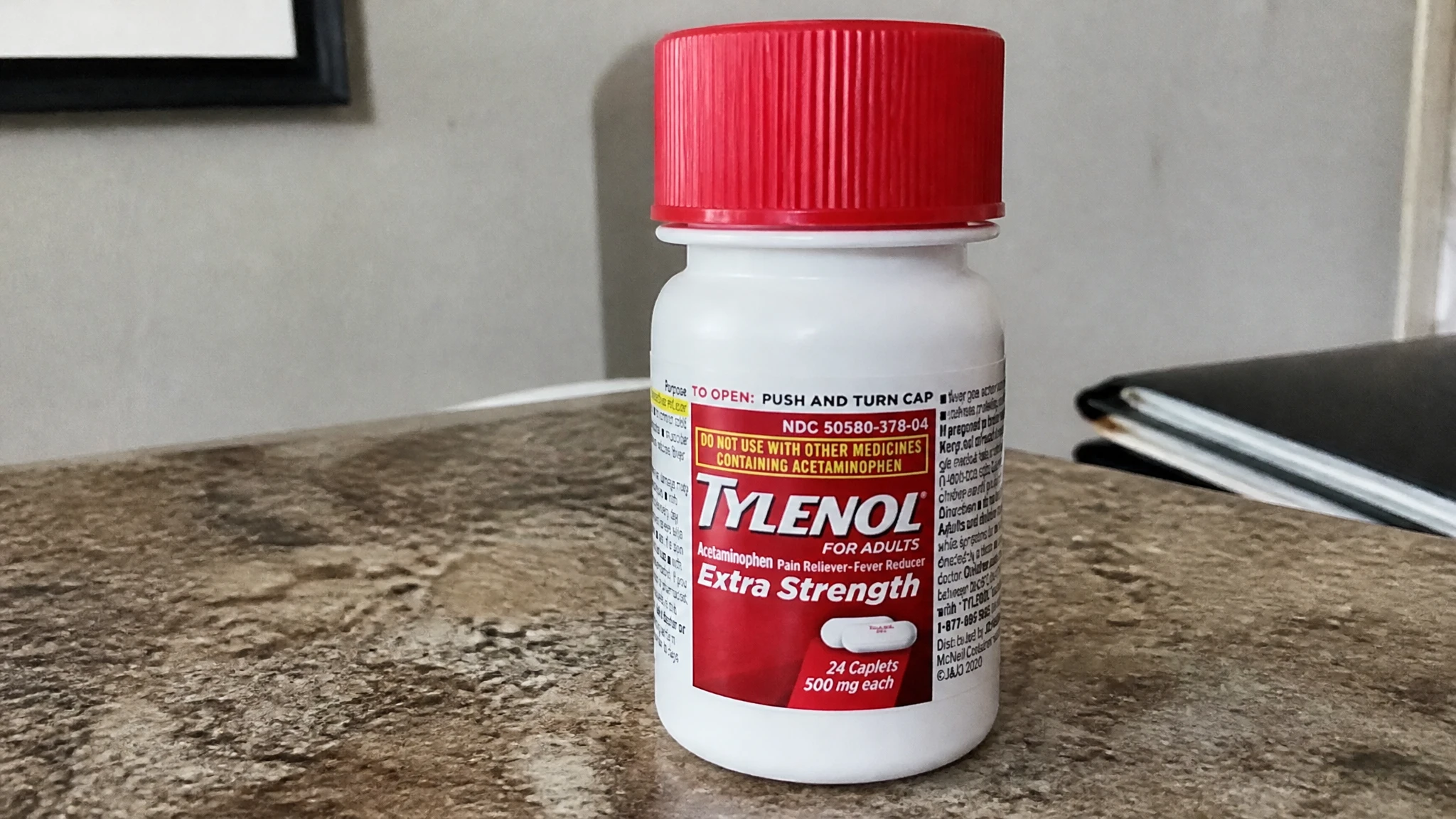
What Is the Tylenol Autism Lawsuit?
The Tylenol autism lawsuit is a group of product liability claims alleging that taking acetaminophen during pregnancy caused autism spectrum disorder (ASD) or attention-deficit/hyperactivity disorder (ADHD) in children, centralized as MDL No. 3043 in the U.S. District Court for the Southern District of New York before Judge Denise Cote.
Tylenol is a brand name for acetaminophen, a pain reliever and fever reducer that is also sold as store-brand generics and is called paracetamol or APAP in other settings. The Judicial Panel on Multidistrict Litigation centralized the first cases on October 5, 2022, when it counted eighteen actions in seven districts and was notified of 47 related actions. The Panel's order describes store-brand generic acetaminophen, and claims over brand-name Tylenol against Johnson & Johnson's consumer unit joined the same docket, as the court's own opinion in Chapman v. Walmart shows.
The cases are individual lawsuits rather than one class action, so each family's claim stays separate while the court handles shared pretrial questions. The pleaded theories in Chapman, used by the court as a representative complaint, include strict liability for failure to warn, negligence, negligent misrepresentation, breach of implied warranty and a state consumer protection claim.
“All actions present common factual questions arising from the allegation that plaintiffs used over-the-counter generic acetaminophen products while pregnant and, as a result of prenatal exposure to acetaminophen, their children developed autism spectrum disorder (ASD), attention deficit hyperactivity disorder (ADHD), or both. The common factual questions include: (1) whether prenatal exposure to acetaminophen can cause ASD and ADHD; (2) whether and when defendants knew or should have known of the risk based on, inter alia, studies allegedly linking acetaminophen to ASD and ADHD; and (3) the alleged role and potential responsibility of common suppliers of the acetaminophen products at issue.”
Source: U.S. Judicial Panel on Multidistrict Litigation, In re: Acetaminophen - ASD/ADHD Products Liability Litigation, MDL No. 3043, Transfer Order, Document 92 (October 5, 2022)
Why Are People Filing Tylenol Autism Lawsuits?
People are filing Tylenol autism lawsuits because they allege that acetaminophen taken during pregnancy can disturb a child's brain development and that the makers and sellers did not warn pregnant consumers. The Judicial Panel's 2022 order describes the shared theory as acetaminophen's in utero impact on brain development.
The scientific concern cited in the litigation builds on studies going back to 2013. On September 23, 2021, a group of 91 scientists, clinicians and public health professionals published a consensus statement in Nature Reviews Endocrinology calling for precautionary action on prenatal acetaminophen use and recommending the lowest effective dose for the shortest possible time. Judge Cote's opinion in Chapman quotes that statement, and notes that the Tylenol label at the time carried only the general line "If pregnant or breast-feeding, ask a health professional before use."
A 2019 study from Johns Hopkins researchers, published in JAMA Psychiatry, measured acetaminophen byproducts in umbilical cord blood from 996 mother-infant pairs. It reported that children in the highest exposure group had 2.86 times the odds of an ADHD diagnosis and 3.62 times the odds of an autism diagnosis, though cord blood can reflect use shortly before delivery and the authors called for more research.
Studies like these show statistical associations, not proof of cause, which is why the courts have spent years on whether plaintiffs' expert testimony meets the legal standard, as the case status section below explains.
What Injuries Are Included in the Tylenol Autism Lawsuit?
The injuries included in the Tylenol autism lawsuit are two neurodevelopmental conditions, autism spectrum disorder and ADHD, and each is defined in plain language below with what plaintiffs allege. The Judicial Panel's order records that plaintiffs commonly allege both conditions are caused by acetaminophen's in utero impact on brain development.
The lawsuit does not concern acetaminophen overdose or liver injury, which are separate and well-known risks of taking too much of the drug. A family may allege one condition or both, and a formal diagnosis is the starting point for any claim.
Autism Spectrum Disorder
Autism spectrum disorder is a neurodevelopmental condition that affects how a person communicates, interacts with others and processes sensory information, and it varies widely in its effects from person to person.
Plaintiffs allege that prenatal acetaminophen exposure contributed to their child's autism spectrum disorder. The child in the court's Chapman example was born in 2015 and has both ASD and ADHD, and the complaint says the mother took Tylenol Extra Strength while pregnant.
The allegation is about a possible contribution from the drug, not a claim that acetaminophen is the only known influence on autism, and no court has found that it causes the condition.
Attention-Deficit/Hyperactivity Disorder (ADHD)
Attention-deficit/hyperactivity disorder is a neurodevelopmental condition marked by ongoing patterns of inattention, hyperactivity and impulsivity that interfere with daily functioning at home or school.
Plaintiffs allege that prenatal acetaminophen exposure contributed to their child's ADHD, and the Johns Hopkins cord blood study cited above reported its strongest ADHD association in the highest exposure group. Many complaints plead ADHD together with ASD, although a child can have one diagnosis without the other.
Which diagnosis a family has can affect how an attorney evaluates the claim, since the plaintiffs' expert evidence addressed both conditions and the courts have treated them as related but distinct injuries.
Who Qualifies for the Tylenol Autism Lawsuit?
You may qualify if:
- You took acetaminophen, either Tylenol or a store-brand generic, during pregnancy, and you can document that use through records, receipts or a health professional's notes
- Your child has a formal diagnosis of autism spectrum disorder, ADHD, or both, documented by a qualified clinician
- Your child's diagnosis and your use of acetaminophen fit a timeline that an attorney can connect, often with attention to which trimesters you used it
- Your claim is still within your state's filing deadline, which generally depends on when the diagnosis was made or discovered and is often paused while a child is a minor
You may not qualify if:
- You did not take acetaminophen during the pregnancy, for example you used only ibuprofen or another pain reliever
- Your child has no formal diagnosis, or a diagnosis an attorney cannot connect to prenatal acetaminophen use
- Your state's filing deadline has passed and no tolling or discovery rule extends it
- Your claim involves acetaminophen overdose or liver damage, which is a different kind of claim from the autism and ADHD cases
This summary describes who generally appears to qualify, not a promise that a claim is open or will succeed. No court has found that acetaminophen causes autism or ADHD, no single age cutoff has been set by the courts, and deadlines are set by each state. Only a qualified attorney reviewing your records can confirm eligibility and your deadline.
What Is the Current Status of the Tylenol Autism Lawsuit?
The current status of the Tylenol autism lawsuit is that the federal MDL has been revived on appeal and is returning to Judge Denise Cote for further pretrial proceedings, with no settlement and no trial date. The Second Circuit reversed the exclusion of three plaintiff experts on July 13, 2026, and denied rehearing on October 16, 2026.
The Judicial Panel's October 1, 2026 report lists 113 pending actions in MDL No. 3043 out of 777 total actions filed. That count stood at 501 pending on December 15, 2023, and at 58 in the Panel's March, July and August 2026 reports. Press coverage of the appeal describes roughly 500 revived lawsuits, and the Panel's report does not explain the gap between the two figures.
In re: Acetaminophen - ASD/ADHD Products Liability Litigation, MDL No. 3043
The Judicial Panel on Multidistrict Litigation centralized the first acetaminophen actions in the Southern District of New York on October 5, 2022, and assigned them to Judge Denise Cote. On November 14, 2022, the court denied motions to dismiss two actions on preemption grounds, and on April 20, 2023 it denied Johnson & Johnson Consumer Inc.'s preemption motion in Chapman.
The turning point came on December 18, 2023, when Judge Cote issued an opinion excluding the plaintiffs' five general causation experts under Rule 702 of the Federal Rules of Evidence. Without admissible expert testimony on general causation, the court dismissed the federal cases that depended on it, and plaintiffs appealed.
| Proceeding Type | Federal multidistrict litigation, 28 U.S.C. § 1407 |
| Court | U.S. District Court, Southern District of New York |
| Judge | Honorable Denise L. Cote |
| Centralized | October 5, 2022 |
| Pending Actions (Oct. 1, 2026) | 113 of 777 total actions filed |
| Key Ruling | Rule 702 expert exclusion, December 18, 2023, reversed on appeal July 13, 2026 |
With the appeal resolved, the cases return to Judge Cote, who could order the parties to select representative claims as potential bellwether trials. No bellwether schedule or trial date had been located as of October 28, 2026.
Second Circuit Appeal
The U.S. Court of Appeals for the Second Circuit heard argument on November 18, 2025, according to a plaintiffs' firm timeline, before Judges Eunice Lee, Gerard Lynch and Guido Calabresi. On July 13, 2026, the panel unanimously reversed and remanded in a 64-page opinion written by Judge Calabresi, holding that Judge Cote improperly excluded the testimony of Dr. Andrea Baccarelli, Dr. Eric Hollander and Dr. Brandon Pearson.
The panel stated that it was not deciding whether acetaminophen generally causes ASD or ADHD, and not deciding whether manufacturers must warn consumers. Defendants petitioned for rehearing on September 10, 2026, and the court denied both panel rehearing and rehearing en banc on October 16, 2026.
| Proceeding Type | Federal appeal |
| Court | U.S. Court of Appeals, Second Circuit |
| Appeals | Rutledge v. Walgreens Co. and Phippen v. Walgreens Co. |
| Argued | November 18, 2025 |
| Decision | Reversed and remanded, July 13, 2026 |
| Rehearing | Denied October 16, 2026 |
Kenvue said on the day of the July ruling that it was exploring all options and would continue to defend the cases. A petition asking the U.S. Supreme Court to review the decision generally must be filed within 90 days of the rehearing denial, which would fall in mid-January 2027, and whether defendants file one is not yet known.
When Will the Tylenol Autism Lawsuit Be Settled?
No settlement date has been set for the Tylenol autism lawsuit, and no settlement, payout schedule or global resolution has been announced by Johnson & Johnson, Kenvue or any retailer defendant.
Any per-person payout figure is speculation at this stage. Individual outcomes would depend on the diagnosis, the evidence of acetaminophen use, the state, and how the litigation develops, factors only a reviewing attorney can weigh.
The July 2026 appeals ruling returned the cases for further proceedings rather than resolving them, and Kenvue said it now has another opportunity to show that the plaintiffs' experts are unreliable. Plaintiffs must still prove that acetaminophen can cause ASD or ADHD and that it did so in their cases, which makes a near-term global settlement unlikely.
Several law firms publish projected ranges, with figures from $50,000 to more than $500,000 per claim, and one firm projects up to $2 million. Those numbers are marketing estimates based on other drug cases, not court-approved or negotiated amounts, and they should not be treated as expected payouts.
Texas's separate state-court case against Johnson & Johnson and Kenvue seeks civil penalties and other relief under consumer protection law, and any penalties from that case would generally go to the state rather than to individual families.
Tylenol Autism Lawsuit Updates and Case Status
Here is the current status of the Tylenol Autism lawsuit, updated with new filings, rulings, and case-count reports as they're confirmed. MDL No. 3043, the federal acetaminophen ASD/ADHD litigation in the Southern District of New York, continues in active pretrial proceedings as of October 2026, with no global settlement reached. The timeline below tracks every confirmed development from the first filing forward.
Tylenol Autism Lawsuit Timeline
Second Circuit Denies Rehearing in Tylenol Autism Litigation
The U.S. Court of Appeals for the Second Circuit denied panel rehearing and rehearing en banc in the acetaminophen autism and ADHD appeals, leaving its July 13, 2026 ruling in place. The order returns the MDL No. 3043 cases to Judge Denise Cote, and it does not find that acetaminophen causes autism or ADHD.
MDL 3043 Pending Count Reaches 113
The Judicial Panel on Multidistrict Litigation's October 1, 2026 report lists 113 pending actions in MDL No. 3043, with 777 actions filed in total, up from 58 pending in its earlier 2026 reports. The Panel does not state why the count changed, and a count of pending actions says nothing about the merits.
Defendants Ask Second Circuit to Rehear the Revival Ruling
Defendants in the acetaminophen autism and ADHD cases petitioned the Second Circuit on September 10, 2026 to rehear its July decision, arguing that the panel gave too little deference to Judge Cote's role in judging expert reliability.
JPML Report Shows 58 Pending Actions After Appeals Ruling
In its August 3, 2026 report, three weeks after the Second Circuit's decision, the Judicial Panel on Multidistrict Litigation still listed 58 pending actions and 722 total actions for MDL No. 3043. The report had not yet shown any change from the Second Circuit's reversal.
Second Circuit Revives Federal Tylenol Autism Lawsuits
A unanimous Second Circuit panel of Judges Eunice Lee, Gerard Lynch and Guido Calabresi reversed Judge Cote's exclusion of three plaintiff experts in a 64-page opinion and sent the MDL No. 3043 cases back to the district court. Reuters and other outlets describe more than 500 revived lawsuits, and Kenvue said the procedural ruling does not change its view that credible science shows no proven link.
MDL 3043 Count Unchanged at 58 Pending
The Judicial Panel's July 1, 2026 report listed MDL No. 3043 at 58 pending actions and 722 total, matching its March figures and showing no movement in the docket's open case count over that stretch.
JPML Lists 58 Pending Actions in the Acetaminophen MDL
The Judicial Panel on Multidistrict Litigation reported on March 2, 2026 that MDL No. 3043 had 58 pending actions out of 722 filed overall, while plaintiffs' appeal of Judge Cote's expert rulings remained undecided at the Second Circuit.
Texas Judge Refuses to Dismiss Attorney General's Tylenol Case
Judge LeAnn Rafferty of Panola County, Texas denied Kenvue's motion to dismiss the state's Tylenol lawsuit in a one-sentence order, Reuters reported, sending the Texas case into early discovery. Kenvue said it would keep defending against the claims.
Second Circuit Hears Argument on Tylenol Autism Appeals
A Second Circuit panel heard plaintiffs' appeal of Judge Cote's expert exclusion in the acetaminophen autism and ADHD cases, and Judges Gerard Lynch and Guido Calabresi questioned whether the district court was right to treat plaintiffs' expert opinions as unreliable. A plaintiffs' firm timeline dates the argument to November 18, 2025.
Texas Attorney General Sues Johnson & Johnson and Kenvue Over Tylenol
Texas Attorney General Ken Paxton announced a state-court lawsuit against Johnson & Johnson and Kenvue alleging that they hid for decades the risk that Tylenol could harm unborn children. The Texas Tribune reported that the suit rests on the Texas Deceptive Trade Practices Act and the Uniform Fraudulent Transfer Act rather than on personal injury claims, and Kenvue said the claims lack legal merit and scientific support.
FDA Starts Label Change Process for Acetaminophen
The U.S. Food and Drug Administration announced on September 22, 2025 that it had begun a process to change the acetaminophen label to reflect evidence that use in pregnancy may be associated with a higher risk of neurological conditions such as autism and ADHD. The agency also notified physicians and stated that a causal relationship has not been established.
Judge Cote Excludes Plaintiffs' General Causation Experts
Judge Denise Cote issued an opinion in MDL No. 3043 excluding all five of the plaintiffs' general causation experts under amended Federal Rule of Evidence 702, including Drs. Baccarelli, Pearson, Cabrera, Louie and Hollander. The ruling led to dismissal of the federal cases and to the appeal that the Second Circuit later decided.
JPML Counts 501 Pending Actions in MDL 3043
The Judicial Panel's December 15, 2023 report listed 501 pending actions in the acetaminophen MDL out of 549 filed in total, three days before Judge Cote's expert ruling.
Plaintiffs Move to Exclude Defense Expert Dr. Wendy Chung
MDL No. 3043 plaintiffs filed a memorandum of law on September 19, 2023 asking Judge Cote to exclude the testimony of defense expert Dr. Wendy Chung under Rule 702, arguing that her report lacked an objective methodology. The motion was one of the expert challenges that preceded the December 2023 ruling.
Court Denies Johnson & Johnson Consumer's Preemption Motion
Judge Cote denied Johnson & Johnson Consumer Inc.'s motion to dismiss the Chapman action in MDL No. 3043 on federal preemption grounds on April 20, 2023, so the failure-to-warn claims against the Tylenol maker could proceed.
Master Complaint Filed Against Johnson & Johnson Consumer
MDL No. 3043 plaintiffs filed their master complaint against Johnson & Johnson Consumer Inc. on December 16, 2022, a month after the court's initial pretrial conference set a schedule for separate master complaints against the Tylenol maker and the retailer defendants.
Court Rejects First Preemption Motions to Dismiss
Judge Cote denied motions to dismiss two actions in MDL No. 3043 on preemption grounds on November 14, 2022, and held the MDL's initial pretrial conference three days later, on November 17.
JPML Centralizes Acetaminophen Autism Cases in New York
The Judicial Panel on Multidistrict Litigation centralized the acetaminophen ASD and ADHD actions as MDL No. 3043 in the Southern District of New York before Judge Denise Cote, counting eighteen actions in seven districts and 47 related actions, over the objection of every responding defendant.
Chapman Complaint Filed in Nevada
Cherise Chapman, suing for her child, filed the complaint against Johnson & Johnson Consumer Inc. and Walmart in the District of Nevada on June 7, 2022, alleging that her child's ASD and ADHD followed her use of Tylenol Extra Strength during pregnancy. The action was later transferred into MDL No. 3043 and became the court's representative example.
Scientists Publish Consensus Statement on Prenatal Acetaminophen
A group of 91 scientists, clinicians and public health professionals published a consensus statement in Nature Reviews Endocrinology on September 23, 2021 urging precautionary action on acetaminophen use during pregnancy. Judge Cote's later opinion in Chapman quotes the statement as part of the plaintiffs' allegations about what the Tylenol maker should have known.
How to File a Tylenol Autism Lawsuit
Filing a Tylenol Autism lawsuit typically follows the 5 steps below.
- Confirm the diagnosis and the timeline: Write down your child's diagnosis, the date it was made and the dates you took acetaminophen during pregnancy, since an attorney will measure both against your state's filing deadline.
- Gather your prenatal and pediatric records: Request prenatal visit notes, pharmacy or store receipts and your child's diagnostic evaluations, as described in the evidence section below.
- Check whether your claim is still open: Ask whether your state's deadline has run and whether a new claim can still be added to the federal MDL or must be filed in state court, because the answer depends on your facts and the court's current orders.
- Consult a mass-tort attorney: Look for a firm experienced in drug injury litigation, and ask how fees are structured before you sign, since many firms in this area work on a contingency basis.
- Follow your attorney's filing instructions: If the attorney accepts the case, the firm files the complaint in the appropriate court and keeps you informed of deadlines, hearings and any settlement discussions.
Answer a few questions and a case reviewer will follow up. Free, no obligation.
A case reviewer will follow up soon.
What Evidence Do I Need for a Tylenol Autism Lawsuit?
The strongest evidence for a Tylenol autism lawsuit is proof of acetaminophen use during pregnancy paired with a formal diagnosis of ASD or ADHD in the child. That generally means prenatal visit notes that record your use, pharmacy or store receipts, and the clinical evaluation that produced your child's diagnosis.
Records of which product you used matter, because Tylenol is a brand name and many store-brand generics contain the same active ingredient, and the retailers named in the litigation sold the generics. Notes about when in the pregnancy you took it, and how often, can also help, since attorneys and experts look at the timing and amount of exposure.
Documents alone do not decide these cases. The courts focused on whether expert testimony linking prenatal acetaminophen to ASD or ADHD is reliable enough to reach a jury, as the case status section above describes, so an attorney will weigh the science alongside your own records.
What Did the Tylenol Autism Lawsuit Defendants Allegedly Know?
The Tylenol autism lawsuit defendants allegedly knew, or should have known, about studies linking acetaminophen to ASD and ADHD, and plaintiffs allege they did not warn pregnant consumers about the risk. The Judicial Panel's 2022 order lists whether and when the defendants knew or should have known of the risk as a common factual question in every action.
On September 22, 2025, the FDA said it had initiated the process for a label change and notified physicians that acetaminophen use in pregnancy may be associated with a higher risk of conditions such as autism and ADHD. The same FDA statement says that a causal relationship has not been established and that there are contrary studies in the scientific literature.
The defendants deny that acetaminophen causes autism or ADHD. Kenvue says credible, independent science shows no proven link and that it stands behind the safety of its product, and it points to medical groups that recommend acetaminophen in pregnancy when medically indicated.
| Defendant | Role in the litigation | Source |
|---|---|---|
| Johnson & Johnson Consumer Inc. | Manufacturer of Tylenol, sued over the brand-name product | Court opinion in Chapman v. Walmart |
| Kenvue | Consumer health company spun off from Johnson & Johnson that now owns Tylenol | Kenvue statement, July 13, 2026 |
| Walmart, CVS, Walgreens, Costco, Rite Aid, Safeway, Target, Family Dollar and Dollar Tree | Retailers of store-brand generic acetaminophen | JPML Transfer Order, Document 92 |
| LNK International and Perrigo | Manufacturers of some store-brand products, as represented by defendants, not named as defendants in the order | JPML Transfer Order, Document 92 |
How Does the Tylenol Autism Lawsuit Compare to Related Cases?
The Tylenol autism lawsuit differs from two related matters that share a product or a defendant but follow different rules. The Texas Attorney General's suit against Johnson & Johnson and Kenvue is a separate state-court case, filed in October 2025, that alleges deceptive marketing and a fraudulent transfer of liabilities and is not a personal injury claim brought by families.
The Panola County court denied Kenvue's motion to dismiss on February 26, 2026, and that case proceeds independently of MDL No. 3043 and of any outcome there. The FDA's label-change process is a regulatory step, not a lawsuit, and it does not by itself award anyone compensation.
| Matter | What It Is | Who Can Recover |
|---|---|---|
| MDL No. 3043 (this lawsuit) | Federal product liability claims over prenatal acetaminophen, ASD and ADHD | Families with a qualifying diagnosis and documented use |
| Texas v. Johnson & Johnson and Kenvue | State consumer protection and fraudulent transfer case in Panola County | The State of Texas, through civil penalties and other relief |
| FDA acetaminophen label-change process | Regulatory action begun September 22, 2025 | No one, it is not a lawsuit |
Frequently Asked Questions
What is the Tylenol autism lawsuit about?
The Tylenol autism lawsuit is a group of product liability claims alleging that taking acetaminophen during pregnancy caused autism spectrum disorder or ADHD in children, with the federal cases centralized as MDL No. 3043 in the Southern District of New York.
Is the Tylenol autism lawsuit a class action or an MDL?
The Tylenol autism lawsuit is a multidistrict litigation, MDL No. 3043, rather than a class action, so each family's case stays separate while one judge, Denise Cote, handles shared pretrial questions.
Is the Tylenol autism lawsuit over?
The Tylenol autism lawsuit is not over, because the Second Circuit reversed the exclusion of three plaintiff experts on July 13, 2026 and denied rehearing on October 16, 2026, which returned the cases to the district court for further proceedings.
When will the Tylenol autism lawsuit be settled?
No settlement date has been set for the Tylenol autism lawsuit, and no settlement has been announced, since the cases are returning to the district court and plaintiffs must still prove causation.
Who can file a Tylenol autism lawsuit, and is there an age limit?
A Tylenol autism lawsuit generally requires acetaminophen use during pregnancy and a child with a formal ASD or ADHD diagnosis, and no court has set an age cutoff because filing deadlines are set by each state and are often paused while a child is a minor.
Is the Texas Tylenol lawsuit the same as the Tylenol autism lawsuit?
The Texas Tylenol lawsuit is not the same as the Tylenol autism lawsuit, because the Texas Attorney General sued Johnson & Johnson and Kenvue in state court in October 2025 under consumer protection law, while the federal MDL consists of individual families' product liability claims.
Does the FDA say Tylenol causes autism?
The FDA does not say Tylenol causes autism, since its September 22, 2025 statement says a causal relationship has not been established, although it began a label-change process citing evidence of a possible association in pregnancy.