
What Is the Tampax Lawsuit?
The Tampax lawsuit is a group of separate class action lawsuits against The Procter & Gamble Company, not one single case, filed by different named plaintiffs in different federal courts, each targeting a different Tampax product claim: undisclosed lead, a false "free of dyes" claim, and a false "pure cotton" claim.
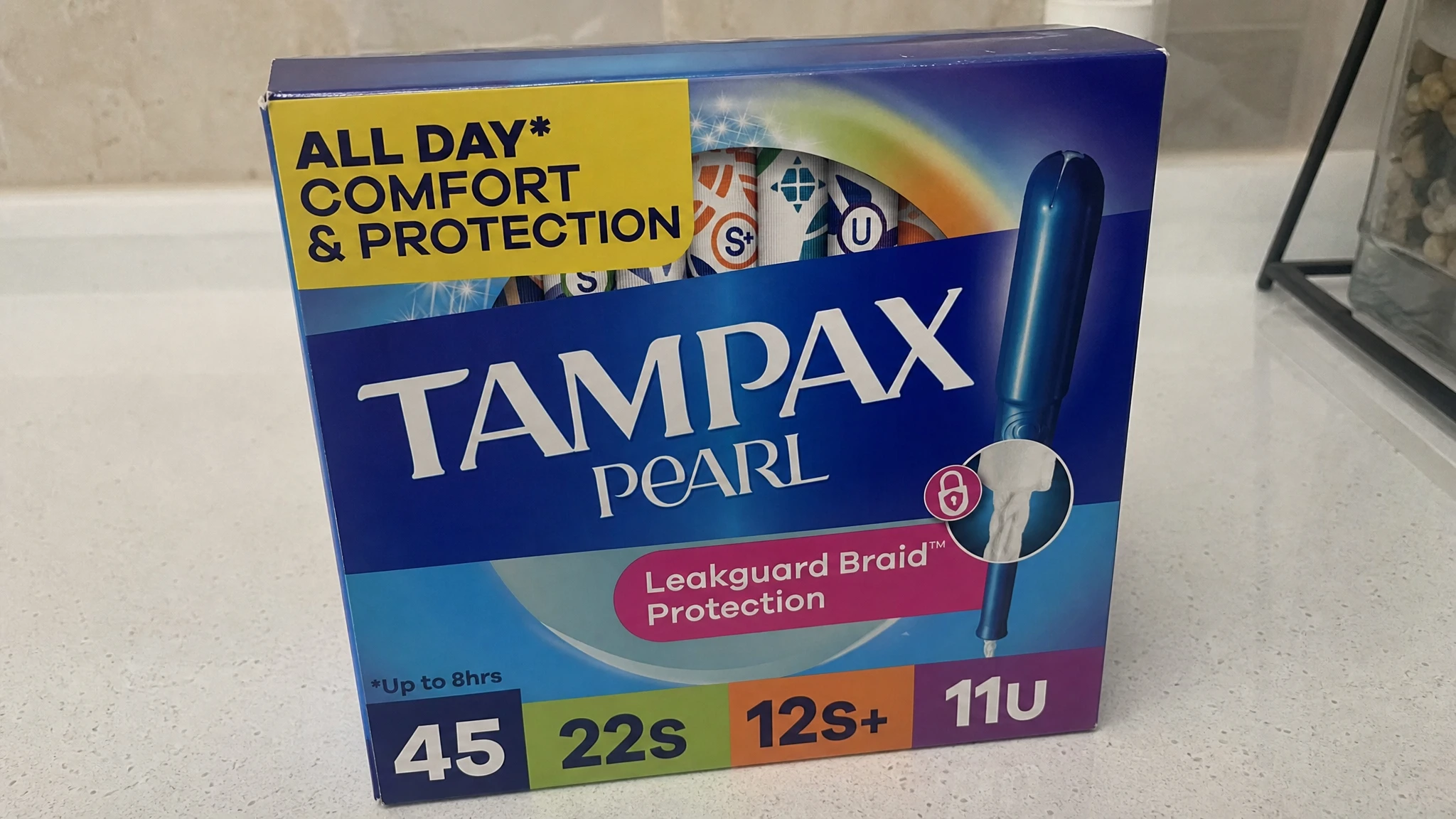
The most active matter is Barton and Moreno v. The Procter & Gamble Company, filed in the U.S. District Court for the Southern District of California. Plaintiff Allison Barton filed the original complaint on July 29, 2024, and was later joined by Jana Moreno. The case alleges Tampax Pearl and Tampax Radiant tampons contain lead that P&G failed to disclose on the product label. A separate proposed class action, filed in New York, alleges Tampax's dye-free labeling is misleading because the products contain titanium dioxide. A third case, Borovoy v. The Procter & Gamble Company (Case No. 1:24-cv-04366, U.S. District Court for the Northern District of Illinois), alleges Tampax Pure Cotton tampons are falsely marketed as 100% cotton despite containing synthetic ingredients.
The Procter & Gamble Company is the named defendant in every matter described on this page. It has not been found liable in any of them, and it has continued selling all of the named Tampax product lines throughout the litigation.
“Plaintiffs Allison Barton and Jana Moreno have sued Defendant The Procter & Gamble Company for allegedly violating California consumer protection law regarding its Tampax Pearl tampons and Tampax Radiant tampons. Plaintiffs allege that Defendant's Product labels misled consumers into believing Products are free of lead.”
Source: Source: Barton and Moreno v. The Procter & Gamble Company, Case No. 3:24-cv-01332-GPC-SBC, U.S. District Court for the Southern District of California, Order Granting in Part and Denying in Part Motion to Dismiss, Document 39 (August 8, 2025)
Why Are People Filing Tampax Lawsuits?
People are filing Tampax lawsuits because plaintiffs allege P&G sold Tampax tampons containing undisclosed lead, or advertised certain Tampax lines with claims plaintiffs say are false. Each case targets a distinct piece of that broader pattern rather than one shared allegation.
The lead case alleges independent laboratory testing using Inductively Coupled Plasma Mass Spectrometry, conducted in July 2024, found lead in Tampax Pearl and Tampax Radiant tampons. The complaint alleges that based on ordinary daily use, a consumer's cumulative lead exposure exceeds California's Maximum Allowable Dose Level of 0.5 micrograms per day for reproductive toxicity under Proposition 65, and that P&G's own packaging claims, including "#1 U.S. Gynecologist Recommended Tampon Brand" and "free of perfume," mislead consumers into believing the products are free of harmful substances.
The labeling cases allege something different: that specific marketing claims on the box are false, not that the products caused a physical injury. The "free of dyes" suit alleges Tampax's Cardboard, Pearl, and Radiant sub-brands use titanium dioxide, a synthetic white pigment, which plaintiffs say serves the same purpose as a dye even though it is not literally a dye. The Borovoy case alleges Tampax Pure Cotton tampons are marketed with a "100% Organic Cotton Core" claim and an image of raw cotton on the package, despite containing polypropylene, polyester, glycerin, paraffin, and titanium dioxide.
What Injuries Are Included in the Tampax Lawsuit?
The Tampax lawsuit includes two distinct categories of alleged harm: exposure to undisclosed lead, and economic harm from paying a premium for tampons marketed with labeling claims plaintiffs say are false. Each is defined in plain language below. P&G has denied wrongdoing in every matter described here.
Undisclosed Lead Exposure
Lead exposure, in this context, is contact with a toxic heavy metal that the World Health Organization states has no exposure level known to be free of harmful effects, particularly for reproductive-age women.
The Barton and Moreno complaint alleges that lead accumulates in the body and, at sufficient exposure, can contribute to reduced neurological function, anemia, kidney damage, seizures, and in extreme cases coma or death. The complaint does not allege that any named plaintiff developed one of these specific conditions; it alleges an economic injury from paying for tampons the complaint says are more hazardous than the labeling discloses, and asks the court to require accurate disclosure going forward.
Deceptive "Free of Dyes" and "Pure Cotton" Labeling
Deceptive labeling, in this context, is a legal claim that a product's package makes a representation a reasonable consumer would rely on that is false or misleading, separate from any claim of physical injury.
The "free of dyes" suit alleges Tampax's claim is misleading because titanium dioxide functions as a coloring agent even though it is not classified as a dye. The Borovoy "pure cotton" suit alleges the same underlying theory applied to a different label claim: that consumers paid more for Tampax Pure Cotton tampons believing the "100% Organic Cotton Core" and "90% Plant Based Applicator" claims meant the product was free of synthetic material, when the ingredient list includes polypropylene, polyester, glycerin, and paraffin.
Who Qualifies for the Tampax Lawsuit?
You may qualify if:
- You purchased Tampax Pearl or Tampax Radiant tampons in California within the applicable statute of limitations period (the lead case's claimant group)
- You purchased Tampax Cardboard, Pearl, or Radiant tampons marketed as "free of dyes" in New York (the titanium dioxide labeling case's claimant group)
- You purchased Tampax Pure Cotton tampons within the applicable statute of limitations period (the Borovoy claimant group)
You may not qualify if:
- You did not purchase any of the specific Tampax product lines named in these lawsuits
- You are looking to join a public settlement claims process; none currently exists for any Tampax matter described on this page
This eligibility summary describes each matter's own claimant group, not one shared nationwide class. No class has been certified and no settlement fund exists in any Tampax matter as of this writing; a qualified attorney reviewing your purchase records and state of residence can confirm whether you fall within a specific case's proposed class.
What Is the Current Status of the Tampax Lawsuit?
The current status of the Tampax lawsuit differs by proceeding: the lead case is active and furthest along procedurally, while the labeling cases remain earlier in the litigation process.
Barton and Moreno v. The Procter & Gamble Company (Active)
Plaintiff Allison Barton filed the original complaint on July 29, 2024. Plaintiff Jana Moreno joined as a co-plaintiff in a First Amended Complaint filed September 4, 2024. The court granted in part and denied in part P&G's first motion to dismiss on February 13, 2025, and gave plaintiffs leave to amend. Plaintiffs filed a Second Amended Complaint on March 10, 2025, and the court granted in part and denied in part P&G's second motion to dismiss on August 8, 2025, allowing the case to continue. A magistrate judge ordered an early neutral evaluation of settlement proposals on August 25, 2025.
| Proceeding Type | Federal class action, California consumer protection claims (UCL, FAL, CLRA) |
| Court | U.S. District Court for the Southern District of California |
| Judge | Hon. Gonzalo P. Curiel; Magistrate Judge Steve B. Chu |
| Case No. | 3:24-cv-01332-GPC-SBC |
| Named Plaintiffs | Allison Barton, Jana Moreno |
| Stage | Second motion to dismiss denied in part on August 8, 2025; settlement evaluation ordered August 25, 2025; no class certified |
Tampax "Free of Dyes" Titanium Dioxide Lawsuit (Early Stage)
A separate proposed class action, filed in New York, alleges P&G's "free of dyes" claim on Tampax Cardboard, Pearl, and Radiant packaging is misleading because the products contain titanium dioxide, which plaintiffs say serves the same coloring purpose as a dye. The case remains in an early stage, and P&G has not been found liable.
| Proceeding Type | Proposed class action, deceptive advertising claims |
| Jurisdiction | New York |
| Named Products | Tampax Cardboard, Pearl, and Radiant tampons |
| Stage | Early pretrial, no settlement reached as of this writing |
Borovoy v. The Procter & Gamble Company (Active)
Plaintiff Christy Borovoy filed a proposed class action in the U.S. District Court for the Northern District of Illinois alleging Tampax Pure Cotton tampons are falsely marketed as consisting of pure cotton despite containing polypropylene, polyester, glycerin, paraffin, and titanium dioxide. The case remains active, and P&G has not been found liable.
| Proceeding Type | Federal class action, deceptive advertising claims |
| Court | U.S. District Court for the Northern District of Illinois |
| Case No. | 1:24-cv-04366 |
| Named Plaintiff | Christy Borovoy |
| Named Product | Tampax Pure Cotton tampons |
| Stage | Active, no settlement reached as of this writing |
Has the Tampax Lawsuit Settled?
No, no Tampax lawsuit has reached a public settlement. A magistrate judge ordered an early neutral evaluation of settlement proposals in the lead case on August 25, 2025, but that is a court-ordered discussion between the parties, not a finished settlement, and no claims fund or payout amount currently exists.
Some websites advertise Tampax "settlement" claim forms or payout estimates; as of this writing no such settlement exists in any of the matters described on this page, so verify any intake form is run by a real, licensed law firm before submitting personal information.
If the lead case eventually settles or wins at trial, a consumer class action of this shape typically pays a modest, refund-sized amount tied to what a consumer spent on the product, since the case alleges an economic and disclosure injury rather than a specific personal injury requiring individualized medical proof.
Latest Tampax Lawsuit Updates
Here is the current status of the Tampax lawsuit, updated with new filings, rulings, and case developments as they're confirmed. This page tracks three separate proceedings on one interleaved timeline.
Full Tampax Lawsuit Timeline
Otkina Files a Fourth Tampax Lead Lawsuit in Illinois
Olga Otkina and seven other plaintiffs filed a proposed nationwide class action against The Procter & Gamble Company in the U.S. District Court for the Northern District of Illinois on January 28, 2026, Case No. 1:26-cv-00773. The complaint alleges independent testing found lead in Tampax Pearl tampons at levels up to 40.8 times the EPA's action level for drinking water. Source: topclassactions.com, "P&G hit with another class action over alleged lead in Tampax Pearl tampons."
Court Denies P&G's Bid to Transfer the Lead Case to Ohio
The U.S. District Court for the Southern District of California denied P&G's motion to transfer Barton and Moreno v. The Procter & Gamble Company to the Southern District of Ohio on December 11, 2025. The lead case therefore continues before Judge Gonzalo P. Curiel in California rather than being consolidated with the Ohio filing. Source: openclassactions.com Tampax lawsuit tracker.
Sanchez Files a Related Lead Lawsuit in Ohio
Plaintiff Sanchez filed a proposed class action against The Procter & Gamble Company in the U.S. District Court for the Southern District of Ohio on November 19, 2025, Case No. 1:25-cv-00852. The complaint alleges lead contamination in Tampax Pearl and Tampax Radiant tampons on behalf of purchasers from nine states. Source: openclassactions.com Tampax lawsuit tracker.
Magistrate Orders Early Neutral Evaluation of Settlement Proposals
A magistrate judge in the Barton and Moreno case ordered an early neutral evaluation of settlement proposals, a court-supervised settlement discussion that does not itself create a settlement fund or guarantee an outcome.
Court Denies Second Motion to Dismiss in Part
The U.S. District Court for the Southern District of California granted in part and denied in part P&G's second motion to dismiss in Barton and Moreno v. The Procter & Gamble Company, allowing the lead case to proceed past the pleading stage on its surviving claims.
P&G Files Second Motion to Dismiss
P&G moved to dismiss the Second Amended Complaint in the lead case, arguing plaintiffs' consumer protection claims were still legally insufficient after the court's February 2025 ruling.
Plaintiffs File Second Amended Complaint
Barton and Moreno filed a Second Amended Complaint after the court granted leave to amend, refiling their California consumer protection claims over lead in Tampax Pearl and Tampax Radiant tampons.
Court Grants in Part, Denies in Part First Motion to Dismiss
The court ruled on P&G's first motion to dismiss in the lead case, dismissing some claims while allowing others to proceed, and granted plaintiffs leave to amend their complaint.
Jana Moreno Joins Lead Case as Co-Plaintiff
Plaintiff Allison Barton filed a First Amended Complaint in the lead lead-in-tampons case, adding Jana Moreno as a co-plaintiff alongside her original claims over Tampax Pearl tampons.
Allison Barton Files Original Lead Lawsuit
Plaintiff Allison Barton filed the original complaint against The Procter & Gamble Company in the U.S. District Court for the Southern District of California, alleging Tampax Pearl tampons contain undisclosed lead.
How to File a Tampax Lawsuit
Here are the 4 steps to file a Tampax lawsuit.
- Confirm which Tampax matter actually applies to you: The lead case, the "free of dyes" case, and the Borovoy "pure cotton" case each involve different products and different claimant groups, so start by identifying which specific product and label claim match what you purchased.
- Gather your purchase records: Save receipts, order history, or loyalty-program records showing which specific Tampax product line and variety you bought, and when, since these are consumer-labeling claims where proof of purchase is central to eligibility.
- Understand these are consumer-refund claims, not personal-injury claims: None of the three matters described on this page currently allege a specific personal injury requiring medical proof; they seek disclosure changes and a refund-sized recovery tied to what class members spent on the product.
- Consult a licensed attorney before submitting information to any site: No public Tampax settlement fund exists as of this writing, and some sites advertise claim forms ahead of any real settlement; verify any intake form is run by a real law firm before providing personal information.
Answer a few questions and a case reviewer will follow up. Free, no obligation.
A case reviewer will follow up soon.
What Did P&G Allegedly Know About Lead in Tampax Products?
The Barton and Moreno complaint alleges that P&G's own packaging claims, including that Tampax Pearl is the "#1 U.S. Gynecologist Recommended Tampon Brand" and is "free of perfume," led reasonable consumers to believe the products contained no harmful substances. P&G has not been found liable and has denied wrongdoing; the court's August 2025 order addressed which of plaintiffs' legal theories may proceed, not whether the underlying allegations are true.
The complaint alleges independent laboratory testing in July 2024, using Inductively Coupled Plasma Mass Spectrometry, found lead present in Tampax Pearl and Tampax Radiant tampons across their light, regular, super, super plus, and ultra sizes. Plaintiffs allege that based on ordinary daily use of multiple tampons per day, cumulative exposure exceeds California's 0.5 microgram-per-day Maximum Allowable Dose Level for reproductive toxicity under Proposition 65, and that P&G disclosed none of this on the product label.
How Does the Tampax Lawsuit Compare to Related Cases?
The three matters described on this page all name The Procter & Gamble Company as defendant but allege different facts and different legal theories, and none shares a docket with the others. A separate, broader, and more recent case, Alassandra Franco Lopez et al. v. The Procter & Gamble Company et al., filed in California in mid-2026, names Tampax among many other feminine hygiene brands (including Always, Kimberly-Clark's Kotex, and Edgewell's Playtex) and alleges severe reproductive injuries, a personal-injury theory distinct from the economic-harm, disclosure-based claims in the three Tampax-specific cases above. Because the Lopez case involves different plaintiffs, additional defendants beyond P&G, and a different legal theory, it is a legally separate matter, not part of the Barton, "free of dyes," or Borovoy dockets.
| Matter | Court | Core Allegation | Status |
|---|---|---|---|
| Barton and Moreno v. P&G | S.D. California | Undisclosed lead in Tampax Pearl/Radiant | Active, MTD denied in part Aug. 2025 |
| Tampax "free of dyes" suit | New York | Titanium dioxide contradicts "free of dyes" claim | Active, early stage |
| Borovoy v. P&G | N.D. Illinois | "Pure cotton" claim contradicted by synthetic ingredients | Active, early stage |
| Lopez et al. v. P&G et al. | California (removed to federal court) | Reproductive injury across multiple feminine hygiene brands | Separate, distinct matter; not part of the above dockets |
Frequently Asked Questions
What is the Tampax lawsuit about?
The Tampax lawsuit refers to several separate class actions against The Procter & Gamble Company alleging Tampax tampons contain undisclosed lead, or are falsely advertised as free of dyes and made of pure cotton, each pursued as its own case in its own court.
Is the Tampax lawsuit a class action?
Yes, every matter described on this page, including Barton and Moreno, the "free of dyes" suit, and Borovoy, was filed as a proposed federal class action, though no class has actually been certified in any of them as of this writing.
Who is the defendant in the Tampax lawsuit?
The Procter & Gamble Company is the named defendant in every Tampax-specific matter described on this page; it has not been found liable in any of them and has denied the underlying allegations.
Has the Tampax lawsuit settled?
No. A magistrate judge ordered an early neutral evaluation of settlement proposals in the lead case on August 25, 2025, but that is a court-ordered settlement discussion, not a finished settlement, and no claims fund or payout currently exists in any Tampax matter.
Is there a real Tampax lawsuit claim form I can fill out right now?
Not for a settlement fund; none currently exists. Some websites advertise Tampax "settlement" claim forms ahead of any actual settlement, so verify any intake form is run by a real, licensed law firm before submitting personal information.
Is the Tampax lawsuit the same case as the lawsuit over Always and other feminine hygiene brands?
No. Alassandra Franco Lopez et al. v. The Procter & Gamble Company et al. names Tampax among several other feminine hygiene brands and alleges a different, personal-injury theory; it is a separate, legally distinct case from the three Tampax-specific lawsuits described on this page.