
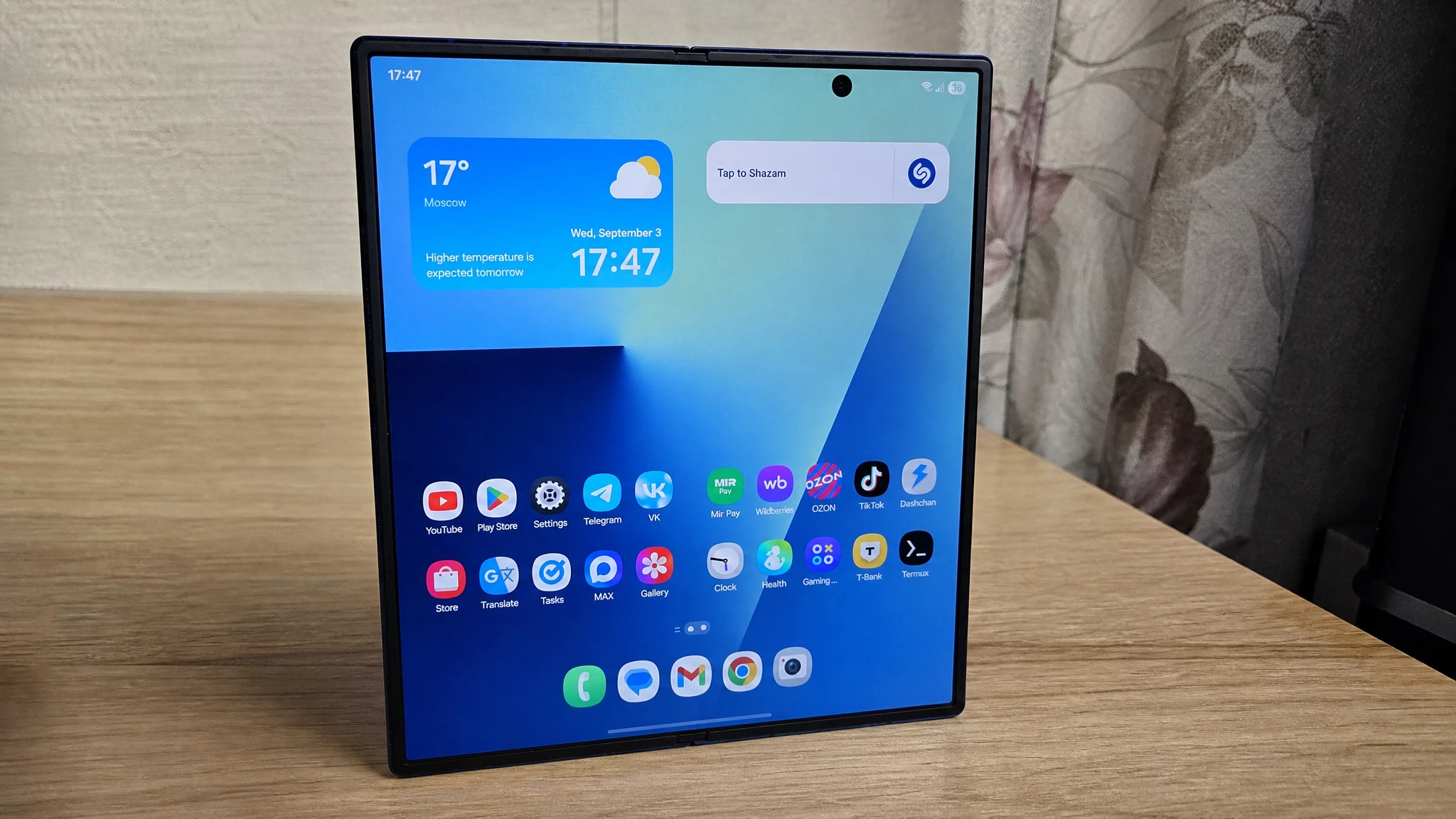
What Is the Samsung Foldable Phone Patent Lawsuit?
The Samsung foldable phone patent lawsuit is a federal patent infringement case that Lepton Computing LLC filed against Samsung Electronics Co., Ltd. and Samsung Electronics America, Inc., not a class action or multidistrict litigation. There is no recruitable class of claimants in a patent suit like this one, since the plaintiff is a single company asserting its own patent rights, not a group of injured consumers.
Lepton Computing, a small Texas-based patent holder, filed the case on April 23, 2026 in the U.S. District Court for the Eastern District of Texas, Marshall Division, captioned Lepton Computing LLC v. Samsung Electronics Co., Ltd. et al., Case No. 2:26-cv-00338. The complaint accuses Samsung's entire Galaxy Z Fold, Galaxy Z Flip, and Galaxy Z TriFold lineup of infringing nine patents Lepton says cover core foldable-phone technology.
Lepton says its founder, Stephen Delaporte, began developing foldable display concepts as early as 2008 and built an early prototype called the "Lepton Flex." The company has never released a commercial smartphone of its own.
Why Was the Samsung Foldable Phone Patent Lawsuit Filed?
The Samsung foldable phone patent lawsuit was filed because Lepton Computing says Samsung built its Galaxy Z foldable business on technology Lepton patented first. Lepton's complaint states that its founder discussed potential cooperation on foldable-phone technology with Samsung as far back as 2013, and that Lepton shared prototype hardware and technical details with Samsung representatives during those talks, years before Samsung's first commercial foldable, the original Galaxy Fold, shipped in 2019.
Lepton's nine asserted patents, which it says were filed in 2021, cover the hinge mechanism and internal hardware layout that let a folding phone's camera, magnets, and speakers fit around a bending display; the layered structure that protects a flexible OLED panel at its fold point; and software behavior Lepton calls "app continuity," the way an open app keeps running without interruption as a user folds or unfolds the device between its inner and outer screens.
Several technology-press outlets covering the filing have noted a timing problem with Lepton's claims: Samsung began selling foldable phones commercially in 2019, two years before Lepton's cited patents were filed in 2021, which could complicate arguments that Samsung's early devices infringed patents that did not yet exist. Lepton's position is that its own underlying concepts and 2013 discussions with Samsung predate both the patents' filing date and Samsung's first commercial device, and that the 2021 patents still cover technology Samsung adopted after those talks.
What Harms Does the Samsung Foldable Phone Patent Lawsuit Allege?
The Samsung foldable phone patent lawsuit alleges patent infringement across three separate categories of claimed technology, not a single undifferentiated claim. Each category covers a different part of how a Samsung Galaxy Z device physically folds or behaves in software.
Hinge and Internal Hardware Structure
This category of patent claim covers the mechanical hinge assembly and the physical layout of internal components, such as cameras, magnets, and speakers, packed around a folding phone's bending point.
Lepton alleges that Samsung's hinge design and the way it arranges internal hardware around that hinge in the Galaxy Z Fold and Z Flip lineup copies solutions covered by its patents. The complaint frames this as a foundational engineering problem, fitting rigid components into a chassis that has to flex thousands of times without breaking, that Lepton says it solved and patented before Samsung's foldables reached the market.
Flexible Display Protection
This category covers the layered structure, such as protective films and cover materials, that shields a flexible OLED display from cracking or creasing at the point where the phone folds.
Lepton alleges that Samsung's approach to protecting its flexible displays at the fold line, a problem every foldable phone maker has had to address, uses methods covered by its patent portfolio. Durable fold-point protection has been one of the most scrutinized engineering challenges across every generation of Samsung's foldables, and Lepton's complaint ties its claims directly to that specific technical problem.
App Continuity Software
"App continuity" describes software that keeps an app running without interruption as a device transitions between its outer cover screen and its larger inner foldable screen.
Lepton alleges that the software behavior letting a Galaxy Z Fold or Z Flip user start a task on the outer screen and continue it seamlessly on the inner screen once unfolded, or vice versa, infringes patents it holds covering that specific transition. This is the one claim category in the lawsuit that targets software rather than physical hardware design.
What Is the Current Status of the Samsung Foldable Phone Patent Lawsuit?
The current status of the Samsung foldable phone patent lawsuit is an active federal case in early pretrial proceedings, with no ruling on the merits as of this page's last update. Lepton Computing filed the complaint on April 23, 2026, and the case has not reached a claim-construction hearing, summary judgment, or trial.
Lepton Computing LLC v. Samsung Electronics Co., Ltd. et al.
Lepton Computing LLC filed this patent infringement case against Samsung Electronics Co., Ltd. and Samsung Electronics America, Inc. on April 23, 2026, in the U.S. District Court for the Eastern District of Texas, Marshall Division, before Judge Rodney Gilstrap.
| Court | U.S. District Court for the Eastern District of Texas, Marshall Division |
| Case Number | 2:26-cv-00338 |
| Filed | April 23, 2026 |
| Judge | Rodney Gilstrap |
| Plaintiff | Lepton Computing LLC |
| Defendants | Samsung Electronics Co., Ltd. and Samsung Electronics America, Inc. |
| Patents Asserted | 9 patents covering foldable hinge, display, and app-continuity software technology |
The Eastern District of Texas, and Judge Gilstrap in particular, hears a large share of U.S. patent infringement cases, which is a routine venue choice for this type of suit rather than evidence about the claims' strength. As of this page's last update, Samsung had not filed a public answer to the complaint, and no claim-construction schedule had been reported.
Could the Samsung Foldable Phone Lawsuit Get Galaxy Z Devices Banned?
A ban is possible in theory but considered unlikely by patent-law observers, since Lepton Computing is asking the court for a permanent U.S. injunction against Samsung's entire Galaxy Z Fold, Z Flip, and Z TriFold lineup on top of damages and ongoing royalties.
No court has ruled on Lepton's claims, and Samsung's foldable phones remain available for sale in the United States as of this page's last update. Courts rarely grant a full market-wide injunction against a major manufacturer's product line, and typically favor an ongoing royalty instead when a smaller patent holder prevails against a company with no competing product to protect.
Multiple technology-press outlets covering the filing have pointed to the roughly two-year gap between Samsung's 2019 commercial foldable launch and Lepton's 2021 patent filings as a potential weakness in the injunction request specifically, since a plaintiff seeking to block sales of an already-established product line faces a higher bar than one seeking damages alone.
Latest Samsung Foldable Phone Patent Lawsuit Updates
The latest Samsung Foldable Phone Patent lawsuit updates and news, including new filings, rulings, and case-count reports, are tracked below as they're confirmed. No settlement date has been set as of October 2026; the Samsung Foldable Phone Patent MDL remains in active pretrial litigation. Every verified development is listed in the timeline below, in order.
Full Samsung Foldable Phone Patent Lawsuit Timeline
Lepton Computing Files Suit Against Samsung in the Eastern District of Texas
Lepton Computing LLC filed a patent infringement complaint against Samsung Electronics Co., Ltd. and Samsung Electronics America, Inc. in the U.S. District Court for the Eastern District of Texas, Marshall Division, asserting nine patents against the Galaxy Z Fold, Z Flip, and Z TriFold lineup and seeking damages, ongoing royalties, and a permanent injunction.
Technology Press Flags a Timing Problem With Lepton's Claims
Multiple outlets covering the filing, including Android Authority and BGR, reported that Lepton's asserted patents were filed in 2021, roughly two years after Samsung's first commercial foldable, the original Galaxy Fold, shipped in 2019, a gap several reporters said could weaken Lepton's case for an injunction.
How Has Samsung Responded to the Foldable Phone Patent Lawsuit?
Samsung had not filed a public response to Lepton's complaint as of this page's last update, and none of Samsung's Galaxy Z foldable models have been pulled from sale or otherwise affected by the litigation.
Samsung has defended itself in patent disputes before and settled some rather than litigating them to judgment, including a 2018 settlement of a two-year patent fight with Huawei over FRAND licensing terms for shared telecom technology. Samsung has not publicly characterized Lepton's specific claims, and technology-press coverage of the filing has generally been skeptical of Lepton's case, describing the company as having no released product, a limited public track record, and patents filed years after Samsung's first commercial foldable device reached the market.
Patent infringement suits against large manufacturers, particularly those filed by smaller holding companies with no competing product, are commonly resolved through a negotiated license or dismissal well before trial, though no such resolution had been reported for this case as of this page's last update.
Is This the Same as the Apple v. Samsung Patent Lawsuit?
No. "Samsung patent lawsuit" can also refer to the much older, already-concluded Apple Inc. v. Samsung Electronics Co. design patent litigation, and conflating the two misattributes facts from one case to the other. Only the Lepton Computing case covers foldable-phone technology; the Apple case was about the rectangular front face and icon-grid design of Samsung's earlier non-foldable smartphones.
Apple sued Samsung starting in 2011 over design patents covering a smartphone's rectangular shape, rounded corners, and on-screen icon grid, a dispute that spanned roughly 50 lawsuits in 10 countries at its peak and reached the U.S. Supreme Court in 2016 on the question of how to calculate design patent damages. That litigation concluded years ago with judgments and settlements between the two companies. The Lepton Computing case is a separate, much newer dispute filed in 2026 over different patents covering different technology, foldable hinges, flexible displays, and app-continuity software, and it remains unresolved.
| Case | Plaintiff | Subject | Status |
|---|---|---|---|
| Lepton Computing v. Samsung (this page) | Lepton Computing LLC | Foldable hinge, display, and app-continuity software patents | Filed April 23, 2026, pending in E.D. Texas |
| Apple Inc. v. Samsung Electronics Co. (related, distinct case) | Apple Inc. | Smartphone design patents (rectangular shape, rounded corners, icon grid) | Concluded; reached the U.S. Supreme Court in 2016, long since resolved |
Frequently Asked Questions
What is the Samsung foldable phone patent lawsuit about?
The Samsung foldable phone patent lawsuit is a federal patent infringement case, Lepton Computing LLC v. Samsung Electronics Co., Ltd. et al., alleging that Samsung's Galaxy Z Fold, Z Flip, and Z TriFold devices infringe nine patents covering hinge design, flexible display protection, and app-continuity software.
Is the Samsung foldable phone patent lawsuit a class action?
No. The Samsung foldable phone patent lawsuit is a single company's patent infringement case against Samsung, not a class action or multidistrict litigation. There is no recruitable class of claimants, since the plaintiff is a patent holder asserting its own intellectual property rights, not a group of injured consumers.
Has Samsung settled the foldable phone patent lawsuit?
No settlement has been reported as of this page's last update. The case remains in early pretrial proceedings in the Eastern District of Texas, and Samsung had not filed a public response to Lepton's complaint.
Who filed the lawsuit against Samsung over its foldable phones?
Lepton Computing LLC, a small Texas-based patent holder founded by Stephen Delaporte, filed the lawsuit on April 23, 2026. Lepton says it developed early foldable-phone concepts starting around 2008 and discussed potential cooperation with Samsung as far back as 2013.
Could Samsung foldable phones actually get banned in the US?
A sales ban is legally possible but considered unlikely by patent-law observers, since Lepton is asking for a permanent injunction on top of damages and royalties. Courts rarely grant a market-wide injunction against an established product line, and Samsung's foldables remain for sale as of this page's last update.
Is the Lepton Computing lawsuit the same as the old Apple v. Samsung case?
No. The Lepton Computing lawsuit, filed in 2026 over foldable-phone hinge, display, and software patents, is legally distinct from Apple Inc. v. Samsung Electronics Co., an older, already-concluded design patent case over the rectangular shape and icon grid of Samsung's non-foldable smartphones.