
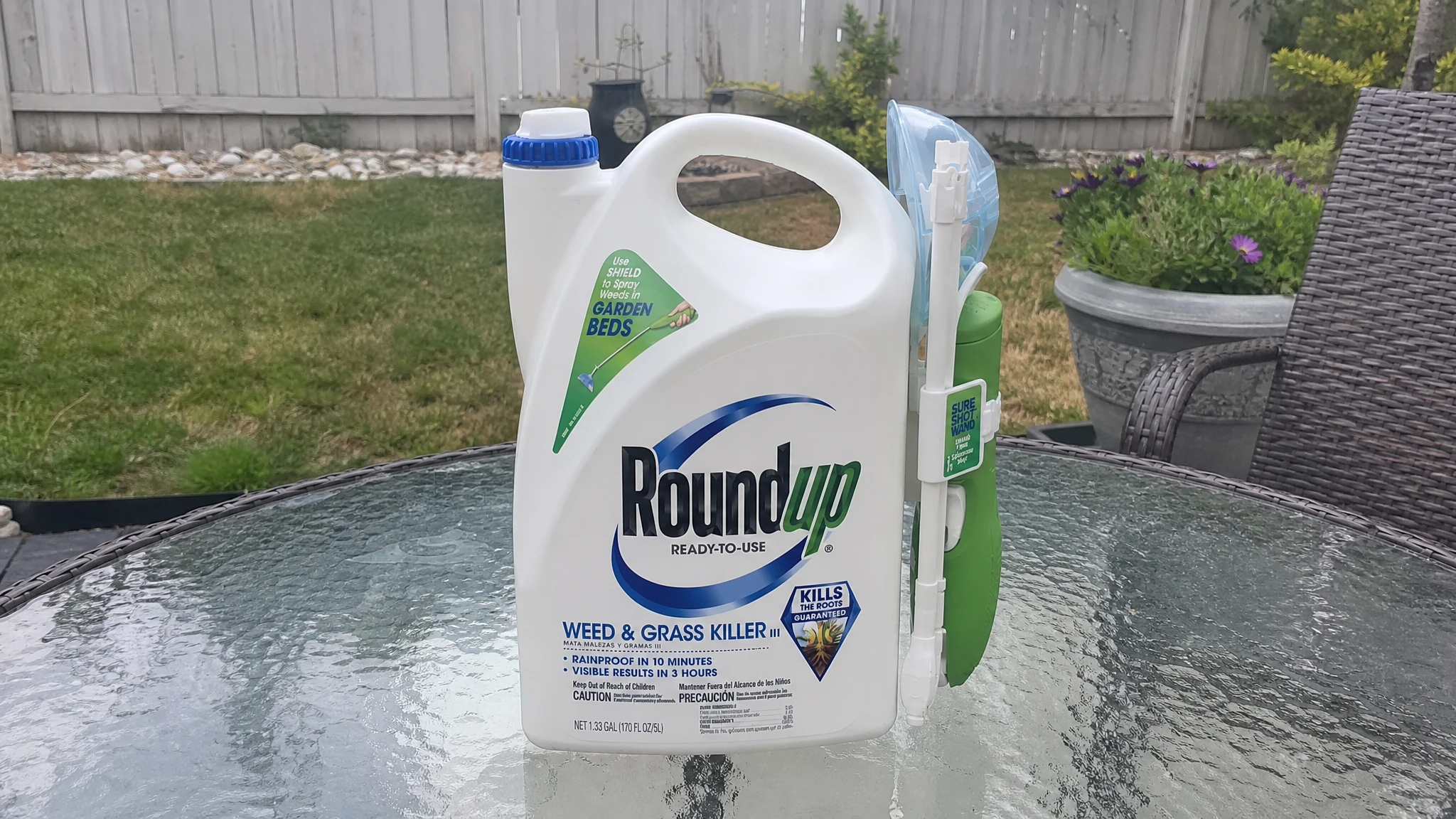
What Is the Roundup Lawsuit?
The Roundup lawsuit is a nationwide group of claims against Monsanto, now owned by Bayer, consolidated in part into MDL No. 2741, In re: Roundup Products Liability Litigation, in the U.S. District Court for the Northern District of California before Judge Vince Chhabria, with thousands of additional cases proceeding separately in state courts, primarily Missouri.
The Judicial Panel on Multidistrict Litigation's own transfer order describes the consolidated actions as sharing "common factual questions arising out of allegations that Monsanto's Roundup herbicide, particularly its active ingredient, glyphosate, causes non-Hodgkin's lymphoma."
Roundup is a glyphosate-based weed killer that has been the best-selling herbicide in the United States since the 1970s, used by farmers, landscapers, groundskeepers, and home gardeners. The World Health Organization's International Agency for Research on Cancer classified glyphosate as "probably carcinogenic to humans" in 2015, a classification plaintiffs cite as central evidence in their failure-to-warn claims against Monsanto.
“These actions share common factual questions arising out of allegations that Monsanto's Roundup herbicide, particularly its active ingredient, glyphosate, causes non-Hodgkin's lymphoma.”
Source: U.S. Judicial Panel on Multidistrict Litigation, In re: Roundup Products Liability Litigation, MDL No. 2741, Transfer Order, Document 57 (October 3, 2016)
Why Are People Filing Roundup Lawsuits?
People are filing Roundup lawsuits because they allege Monsanto knew for decades that glyphosate exposure was linked to cancer, yet marketed Roundup as safe for household and agricultural use without a warning label. The Judicial Panel's transfer order found that every centralized case raises the same overarching question, whether glyphosate causes non-Hodgkin lymphoma in people exposed to it while using Roundup, the common thread that justified coordinating pretrial discovery in one court.
Plaintiffs range from farmers and commercial groundskeepers with decades of occupational exposure to home gardeners who used Roundup on lawns and gardens over a period of years. Many point to internal Monsanto communications made public during early trials, which plaintiffs' attorneys argue show the company worked to influence scientific literature and regulatory review of glyphosate's safety.
The litigation grew rapidly after the first bellwether trial, Johnson v. Monsanto, produced a plaintiff verdict in 2018, followed by additional large verdicts including Pilliod v. Monsanto in 2019, both of which drew national attention to the underlying science and to Monsanto's own internal risk assessments.
What Injuries Are Included in the Roundup Lawsuit?
The Roundup lawsuit centers on non-Hodgkin lymphoma and several of its more specific subtypes. Each is defined in plain language first, followed by what plaintiffs specifically allege.
Non-Hodgkin Lymphoma
Non-Hodgkin lymphoma is a cancer that begins in the lymphatic system's white blood cells, the primary injury alleged across nearly every Roundup lawsuit.
Plaintiffs allege years of skin contact with or inhalation of glyphosate-based Roundup products caused them to develop non-Hodgkin lymphoma. A widely cited 2019 University of Washington meta-analysis found a 41% increased risk of non-Hodgkin lymphoma among people with the highest cumulative glyphosate exposure, research plaintiffs' attorneys point to as supporting general causation.
Diffuse Large B-Cell Lymphoma
Diffuse large B-cell lymphoma is the most common and typically the most aggressive subtype of non-Hodgkin lymphoma, requiring prompt treatment once diagnosed.
Plaintiffs diagnosed with this aggressive subtype allege their occupational or residential glyphosate exposure through Roundup use is the specific cause of their cancer, and several early bellwether trials centered on plaintiffs with this diagnosis.
Chronic Lymphocytic Leukemia and Small Lymphocytic Lymphoma
Chronic lymphocytic leukemia and small lymphocytic lymphoma (CLL/SLL) are two forms of the same slow-growing blood cancer, one centered in the bone marrow and blood, the other in the lymph nodes.
Some Roundup plaintiffs allege long-term glyphosate exposure caused CLL/SLL, a claim litigated alongside the more common non-Hodgkin lymphoma claims within the same MDL and state-court dockets.
Follicular Lymphoma
Follicular lymphoma is a slower-growing subtype of non-Hodgkin lymphoma that can still progress to a more aggressive form over time.
A smaller number of Roundup plaintiffs allege glyphosate exposure caused follicular lymphoma specifically, one of several distinct non-Hodgkin lymphoma subtypes named across the litigation's thousands of individual complaints.
Who Qualifies for the Roundup Lawsuit?
You may qualify if:
- You used Roundup or another glyphosate-based herbicide regularly for an extended period, whether occupationally (farming, landscaping, groundskeeping) or on your own property
- You were diagnosed with non-Hodgkin lymphoma, including diffuse large B-cell lymphoma, CLL/SLL, or follicular lymphoma, after that exposure
- You can document your exposure through purchase records, employment records, or other evidence connecting you to Roundup use
- Your diagnosis and exposure fall within your state's statute of limitations, which a reviewing attorney must confirm individually
You may not qualify if:
- You were exposed to a different herbicide or pesticide with no glyphosate-based Roundup product in your exposure history
- You have no cancer diagnosis, or a diagnosis unrelated to non-Hodgkin lymphoma or its recognized subtypes
- Your state's statute of limitations for this type of claim has already run, which only a reviewing attorney can confirm based on your specific diagnosis and discovery date
Eligibility depends on documented Roundup exposure, a supporting non-Hodgkin lymphoma diagnosis, and your state's own statute of limitations. Only a mass-tort attorney reviewing your specific exposure history and medical records can confirm whether you qualify to file.
What Is the Current Status of the Roundup Lawsuit?
MDL No. 2741 remains an active, ongoing multidistrict litigation even as Bayer works to resolve the litigation through settlements. Federal case counts, a newly proposed settlement, and a 2026 U.S. Supreme Court ruling are all shaping where the case stands today.
In re: Roundup Products Liability Litigation, MDL No. 2741
The Judicial Panel on Multidistrict Litigation centralized 21 Roundup actions from 14 federal districts into MDL No. 2741 in October 2016, assigning the docket to Judge Vince Chhabria in the Northern District of California. As of the Panel's September 1, 2026 report, 3,925 federal cases remain pending, with 5,323 total actions filed in the MDL's history, ranking it 13th by pending case volume among 166 active MDL dockets nationwide.
| Proceeding Type | Federal multidistrict litigation, 28 U.S.C. § 1407 |
| Court | U.S. District Court, Northern District of California |
| Judge | Honorable Vince Chhabria |
| Centralized | October 3, 2016 |
| Pending Cases (Sept. 1, 2026) | 3,925 of 5,323 total actions filed |
Proposed $7.25 Billion Settlement
Bayer announced a proposed $7.25 billion settlement in February 2026 to resolve current and future Roundup non-Hodgkin lymphoma claims, separate from the roughly $10.9 billion it already paid to resolve earlier claims in 2020. A Missouri state court held a final fairness hearing on September 14, 2026, where objecting plaintiffs' attorneys argued the deal under-compensates claimants and directs an estimated $675 million in fees to the firms that helped structure it. The Eighth Circuit rejected a bid by objectors to move review of the settlement to federal court on August 27, 2026, and the settlement remained without final court approval as of this writing.
| Proceeding Type | State-court class settlement (Missouri) |
| Proposed Amount | $7.25 billion |
| Announced | February 2026 |
| Fairness Hearing | September 14, 2026 |
| Status | Pending final court approval |
Monsanto Co. v. Durnell (U.S. Supreme Court)
The U.S. Supreme Court ruled 7-2 for Monsanto on June 25, 2026, in Monsanto Co. v. Durnell, holding that federal pesticide law preempts a state-law failure-to-warn claim that would require Monsanto to add a cancer warning to Roundup's label. The ruling reversed a Missouri Court of Appeals judgment that had upheld a jury verdict for plaintiff John Durnell, and it is expected to limit how many future state-court failure-to-warn claims can proceed, though it does not retroactively undo prior verdicts or settlements.
| Case | Monsanto Co. v. Durnell, No. 24-1068 |
| Decided | June 25, 2026 |
| Vote | 7-2, majority opinion by Justice Kavanaugh |
| Holding | FIFRA preempts the state failure-to-warn claim at issue |
What Is the Roundup Lawsuit Settlement Amount?
Bayer has already paid roughly $10.9 billion to settle Roundup claims in 2020, and has separately proposed a new $7.25 billion settlement in 2026 to resolve current and future non-Hodgkin lymphoma claims, though that newer settlement still awaits final court approval.
No single per-plaintiff payout applies to every case. Individual jury verdicts have ranged from roughly $1 million to more than $2 billion, and settlement payouts for cases resolved outside trial depend on the severity of the diagnosis, age at diagnosis, and strength of the individual exposure evidence, factors only a reviewing attorney can weigh for a specific case.
The largest single verdict reported in this litigation went to Georgia plaintiff John Barnes, whose jury awarded roughly $2.1 billion (about $65 million in compensatory damages and $2 billion in punitive damages) in March 2025; Monsanto has appealed that verdict.
Roundup Lawsuit Updates and Case Status
Here is the current status of the Roundup lawsuit, updated with new filings, settlements, and case developments as they're confirmed.
Roundup Lawsuit Timeline
Missouri Court Holds Fairness Hearing on $7.25 Billion Settlement
A Missouri state court held a final fairness hearing on Bayer's proposed $7.25 billion Roundup settlement, hearing objections that the deal under-compensates claimants and directs an estimated $675 million in fees to the firms that helped structure it, without issuing final approval.
MDL 2741 Federal Case Count Reaches 3,925
The Judicial Panel on Multidistrict Litigation's September 1, 2026 report counted 3,925 pending federal Roundup cases in MDL No. 2741, a slight decline from August's 3,932 consistent with the ongoing wave-based remand of resolved cases out of the MDL.
Eighth Circuit Rejects Bid to Move Settlement Review to Federal Court
The Eighth Circuit Court of Appeals rejected an attempt by objecting plaintiffs' attorneys to move review of the proposed $7.25 billion Missouri settlement into federal court, keeping the fairness review in the Missouri state court that granted preliminary approval.
Supreme Court Rules for Monsanto on Failure-to-Warn Preemption
The U.S. Supreme Court ruled 7-2 in Monsanto Co. v. Durnell that federal pesticide law preempts a state-law failure-to-warn claim requiring a Roundup cancer warning, reversing a Missouri appellate judgment and reshaping how many future state-court Roundup claims can proceed.
Missouri Court Grants Preliminary Approval to New Settlement
A Missouri state court granted preliminary approval to Bayer's proposed $7.25 billion Roundup settlement, opening the door to the fairness hearing process that followed later in 2026.
Bayer Announces Proposed $7.25 Billion Settlement
Bayer announced a new proposed $7.25 billion settlement to resolve current and future Roundup non-Hodgkin lymphoma claims, on top of the roughly $10.9 billion it had already paid to resolve earlier claims.
Georgia Jury Awards John Barnes Roughly $2.1 Billion
A Georgia jury awarded plaintiff John Barnes approximately $65 million in compensatory damages and $2 billion in punitive damages after finding his non-Hodgkin lymphoma was caused by Roundup exposure, one of the largest single-plaintiff verdicts in the litigation's history. Monsanto is appealing.
Bayer Announces Roughly $10.9 Billion Global Settlement
Bayer announced it would pay roughly $10.9 billion to resolve then-pending and a portion of future Roundup non-Hodgkin lymphoma claims, at the time the largest settlement in the litigation's history.
Pilliod v. Monsanto Produces a Large Jury Verdict
A California jury awarded a large verdict to plaintiffs Alva and Alberta Pilliod in the second bellwether trial to reach a jury, one of several early trial wins that drew national attention to the litigation's underlying science.
Johnson v. Monsanto Becomes the First Roundup Trial Verdict
A California jury sided with groundskeeper Dewayne Johnson in the first Roundup case to reach trial, finding Monsanto liable and awarding damages, a verdict that preceded the federal cases' consolidation into MDL No. 2741 two years earlier.
Judicial Panel Centralizes Federal Roundup Claims Into MDL No. 2741
The Judicial Panel on Multidistrict Litigation centralized 21 Roundup actions from 14 federal districts into MDL No. 2741, assigning the docket to Judge Vince Chhabria in the Northern District of California for coordinated pretrial proceedings.
How to File a Roundup Lawsuit
Here are the 5 steps to file a Roundup lawsuit.
- Confirm your Roundup exposure history: Document where and when you used or were exposed to Roundup, such as farm work, landscaping, groundskeeping, or regular home garden use, since exposure timing and duration are central to any claim.
- Gather your medical records: A confirmed diagnosis of non-Hodgkin lymphoma or one of its recognized subtypes, along with the diagnosis date, supports a Roundup claim.
- Collect exposure evidence: Purchase receipts, employment records, photographs, or witness statements showing your Roundup use help establish the exposure element of your case.
- Consult a mass-tort attorney about MDL No. 2741: An attorney experienced in Roundup litigation can confirm whether your exposure, diagnosis, and state's statute of limitations support filing a new claim, and can explain how the pending $7.25 billion settlement might affect your options.
- File your case in the appropriate court: A qualifying new federal case is typically filed in your home district and transferred into MDL No. 2741, while some claims are filed directly in Missouri state court instead.
Answer a few questions and a case reviewer will follow up. Free, no obligation.
A case reviewer will follow up soon.
What Evidence Do I Need for a Roundup Lawsuit?
The strongest evidence for a Roundup claim is documentation connecting your specific glyphosate exposure to a non-Hodgkin lymphoma diagnosis. That typically means purchase records or employment records showing regular Roundup use, medical records confirming your diagnosis and its date, and, where available, eyewitness or photographic evidence of your exposure over time. Courts and attorneys evaluating a Roundup claim look for a clear line connecting years of documented exposure to a later cancer diagnosis, not exposure or diagnosis alone.
What Did Monsanto Allegedly Know About Roundup's Risks?
Plaintiffs allege Monsanto knew for decades that scientific research raised cancer concerns about glyphosate, yet continued marketing Roundup as safe without a warning label. The Judicial Panel's own transfer order centers the litigation on the allegation that Monsanto "failed to warn consumers and regulators about the alleged risks of Roundup."
Plaintiffs' attorneys have pointed to internal Monsanto communications made public during early bellwether trials, along with the World Health Organization's International Agency for Research on Cancer 2015 classification of glyphosate as "probably carcinogenic to humans," as evidence the company had access to risk information it did not pass on to consumers. Monsanto and Bayer have consistently maintained that glyphosate is safe when used as directed and that regulatory bodies, including the EPA, have not required a cancer warning on Roundup's label, a position the U.S. Supreme Court's 2026 preemption ruling in Monsanto Co. v. Durnell largely credited.
| Proceeding | Result | Year |
|---|---|---|
| Johnson v. Monsanto (first bellwether) | Jury verdict for plaintiff | 2018 |
| Pilliod v. Monsanto | Jury verdict for plaintiffs | 2019 |
| Monsanto Co. v. Durnell (U.S. Supreme Court) | 7-2 ruling for Monsanto on FIFRA preemption, described above | 2026 |
How Does the Roundup Lawsuit Compare to Related Cases?
One related but legally distinct proceeding involves Bayer and should not be confused with the Roundup personal-injury litigation described on this page.
A separate securities-fraud class action, In re: Bayer AG Securities Litigation, was filed in the Northern District of California in July 2020 on behalf of investors who purchased Bayer American Depositary Receipts between May 2016 and March 2019. That case alleged Bayer misled investors about the Roundup litigation risk it was taking on by acquiring Monsanto, a claim about investor disclosures, not personal injury, and it reached a final approved settlement of $38 million in October 2025.
Monsanto Co. v. Durnell, the Supreme Court case described in the case-status section above, is a separate, individual Missouri claim rather than part of the federal MDL, distinct from this investor case in both parties and subject matter.
| Case | What It's About | Status |
|---|---|---|
| In re: Bayer AG Securities Litigation | Investor claims over Bayer's Roundup-risk disclosures before the Monsanto acquisition | Settled for $38 million, October 2025 |
| Monsanto Co. v. Durnell (U.S. Supreme Court) | One Missouri plaintiff's failure-to-warn claim; decided the federal preemption question | Decided for Monsanto, June 2026 |
Frequently Asked Questions
What is the Roundup lawsuit about?
The Roundup lawsuit is a group of tens of thousands of claims, including MDL No. 2741 in federal court and thousands of additional cases in state courts, alleging that long-term exposure to Roundup's glyphosate caused non-Hodgkin lymphoma and that Monsanto failed to warn consumers.
Is the Roundup lawsuit a class action?
The Roundup lawsuit is primarily a multidistrict litigation and a collection of individual state-court cases, not a single class action, though the proposed $7.25 billion settlement functions as a class-wide resolution for claimants who choose to participate.
Who qualifies to file a Roundup lawsuit?
People who used Roundup regularly, occupationally or at home, and were later diagnosed with non-Hodgkin lymphoma or one of its recognized subtypes may qualify, provided they have supporting exposure documentation and file within their state's statute of limitations.
What is the Roundup lawsuit settlement amount?
Bayer has already paid roughly $10.9 billion in a 2020 global settlement and has proposed a separate new $7.25 billion settlement in 2026 that still awaits final court approval, on top of individual jury verdicts that have ranged up to roughly $2.1 billion in a single case.
Who is the defendant in the Roundup lawsuit?
Monsanto Company, acquired by Bayer in 2018, is the sole named defendant across the actions consolidated in MDL No. 2741 and the related state-court cases.
Can I still file a Roundup lawsuit in 2026?
Yes. MDL No. 2741 and Missouri state courts continue to accept and try new Roundup cases as of this writing, even as the proposed $7.25 billion settlement awaits final approval, so people with a qualifying non-Hodgkin lymphoma diagnosis who have not yet filed may still be able to do so.
Did the Supreme Court end the Roundup lawsuit?
No. The Supreme Court's June 2026 ruling in Monsanto Co. v. Durnell held that federal pesticide law preempts one specific type of state failure-to-warn claim, which is expected to limit some future cases, but it did not end MDL No. 2741 or undo prior verdicts and settlements.