
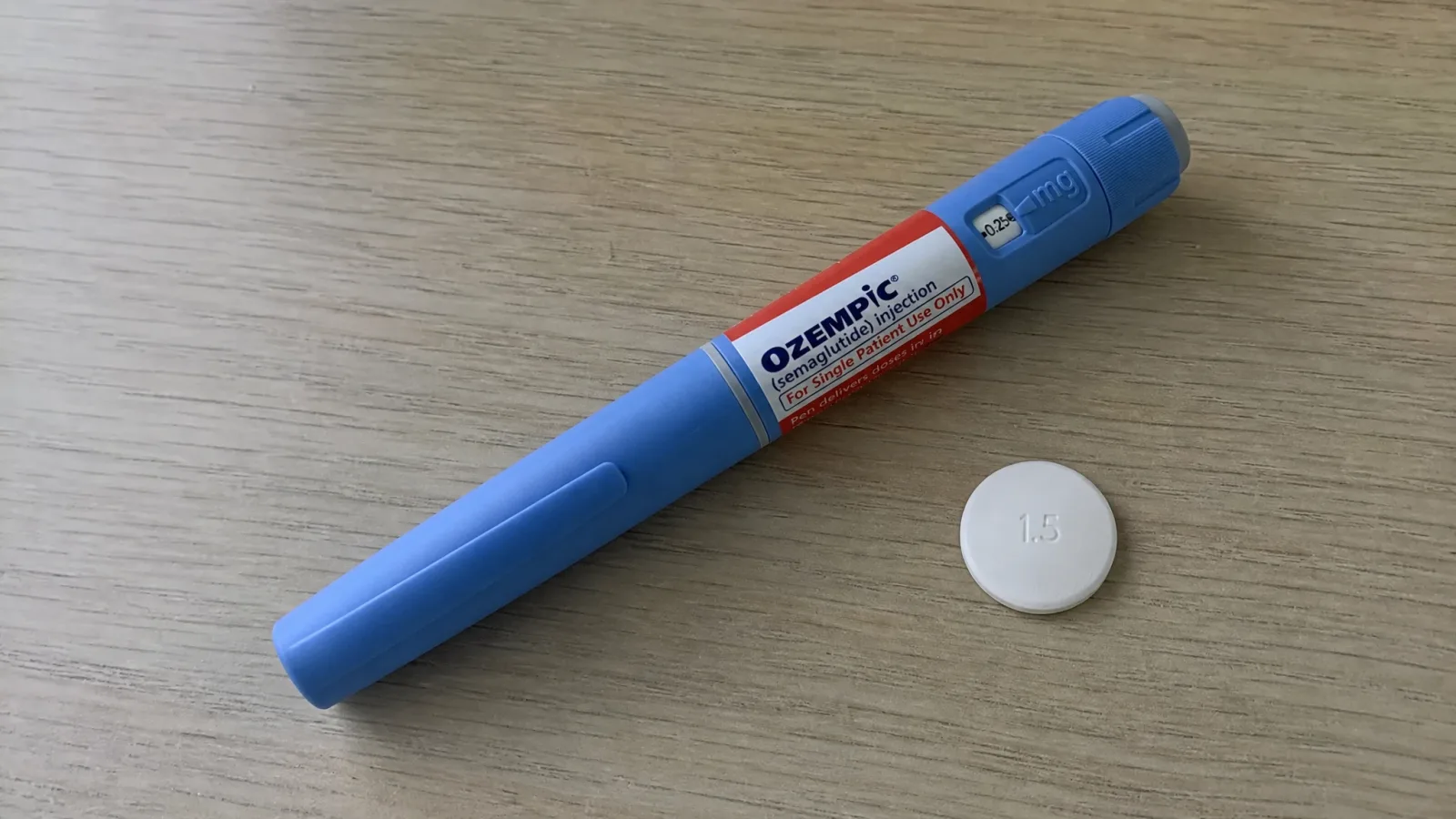
What Is the Ozempic Lawsuit?
The Ozempic lawsuit is federal multidistrict litigation (MDL), not a single class action, consolidating personal injury claims from people who allege the drug caused gastrointestinal injuries or sudden vision loss. There are two separate MDLs, not one, because the two injury types are legally and medically distinct.
MDL 3094, In re: Glucagon-Like Peptide-1 Receptor Agonists (GLP-1 RAs) Products Liability Litigation, was created February 2, 2024 and centralizes gastroparesis, ileus, and intestinal obstruction claims against Novo Nordisk and Eli Lilly. MDL 3163, In re: Glucagon-Like Peptide-1 Receptor Agonists (GLP-1 RAs) Non-Arteritic Anterior Ischemic Optic Neuropathy Products Liability Litigation, was created December 15, 2025 and centralizes NAION vision-loss claims against the same defendants. Both are assigned to U.S. District Judge Karen S. Marston in the Eastern District of Pennsylvania.
A separate New Jersey state-court multicounty litigation (MCL) runs alongside both federal MDLs for plaintiffs who filed in state court instead, covering the same drugs and largely the same injury theories. It is its own proceeding with its own docket, not folded into either federal MDL.
“Each lawsuit contains substantially similar allegations about GLP-1 RAs (specifically, Ozempic, Wegovy, Rybelsus, Trulicity, and/or Mounjaro) and their alleged propensity to cause gastrointestinal injuries. All actions share common issues of fact regarding whether defendants knew or should have known that their GLP-1 RA products can cause gastroparesis and other gastrointestinal injuries, whether defendants adequately warned plaintiffs or their prescribing physicians about the alleged dangers of these products.”
Source: U.S. Judicial Panel on Multidistrict Litigation, In re: Glucagon-Like Peptide-1 Receptor Agonists (GLP-1 RAs) Products Liability Litigation, MDL No. 3094, Transfer Order, Document 145 (Feb. 2, 2024)
Why Are People Filing Ozempic Lawsuits?
People are filing Ozempic lawsuits because plaintiffs allege Novo Nordisk and Eli Lilly knew or should have known their GLP-1 drugs could cause severe gastrointestinal injury or vision loss and failed to adequately warn patients and doctors. The underlying legal theories are failure to warn, design defect, and breach of warranty, the same three claims named directly in the NAION transfer order.
The gastrointestinal claims center on gastroparesis, a condition where the stomach empties too slowly, along with ileus and intestinal obstruction or pseudo-obstruction. The NAION claims allege a separate, unrelated harm: sudden, often permanent vision loss from reduced blood flow to the optic nerve. The JPML kept these as two separate MDLs specifically because the injuries are medically distinct, even though the same drugs and largely the same defendants are involved.
Plaintiffs also point to the products' regulatory history as part of their case. The FDA added ileus warnings to Ozempic's label in September 2023, and the label was updated again in January 2025 to state Ozempic is "not recommended in patients with severe gastroparesis," though that language does not say the drug itself causes the condition, a distinction plaintiffs' attorneys argue is itself evidence of an inadequate warning.
What Injuries Are Included in the Ozempic Lawsuit?
The Ozempic lawsuit includes two medically distinct categories of injury, split across the two separate MDLs described above: gastrointestinal injuries and NAION vision loss. Each is defined in plain language below, followed by what plaintiffs specifically allege. No global settlement has been reached for either injury type, and nothing below reflects a court finding of liability.
Gastroparesis
Gastroparesis is a condition in which the stomach empties food into the small intestine much more slowly than normal, causing nausea, vomiting, and persistent abdominal pain.
Plaintiffs allege Ozempic and other GLP-1 drugs slow gastric emptying far beyond the intended therapeutic effect, in some cases severely enough to require hospitalization. The first Ozempic stomach-paralysis lawsuit was filed August 2, 2023, and gastroparesis claims make up the bulk of MDL 3094's more than 4,000 pending cases.
Ileus and Intestinal Obstruction
Ileus is a temporary loss of normal bowel muscle movement; intestinal obstruction or pseudo-obstruction is a partial or complete blockage that stops food and fluid from passing through the intestines.
The FDA added ileus warnings to Ozempic's label in September 2023, after plaintiffs say adverse-event reports had already been accumulating. These claims are pled alongside gastroparesis in MDL 3094 rather than as a separate MDL, since the transfer order groups them as related gastrointestinal injuries.
NAION Vision Loss
Non-arteritic anterior ischemic optic neuropathy (NAION) is a sudden reduction in blood flow to the optic nerve that can cause vision loss, most often in one eye and often without warning.
Plaintiffs in MDL 3163 allege Ozempic, Wegovy, Saxenda, and Trulicity caused NAION, and bring claims for failure to warn, design defect, and breach of warranties, the exact three theories named in the transfer order that created this MDL. The Panel created MDL 3163 as its own separate litigation in December 2025, rather than folding it into the existing gastrointestinal MDL, specifically because the injury itself is different even though the same judge oversees both.
Who Qualifies for the Ozempic Lawsuit?
You may qualify if:
- You were prescribed and took Ozempic, Wegovy, Rybelsus, Mounjaro, or Trulicity
- You were later diagnosed with gastroparesis, ileus, intestinal obstruction, or another qualifying gastrointestinal injury, or with NAION vision loss
- Your diagnosis came after you started the medication, with a documented medical record
- You have not already settled or resolved a claim for the same injury
You may not qualify if:
- You had gastroparesis, a bowel disorder, or an existing eye condition diagnosed before you started the medication
- You cannot produce medical records connecting your diagnosis to the medication
- Your state's filing deadline (statute of limitations) for this type of claim has already passed
Only a qualified mass-tort attorney reviewing your specific medical records and state's filing deadline can confirm whether you qualify. Statutes of limitations vary by state and can be as short as one year from diagnosis, so do not wait to have your case reviewed.
What Is the Current Status of the Ozempic MDL?
The current status of the Ozempic MDL is active pretrial litigation in both federal tracks, with no bellwether trial completed in either one as of this writing. MDL 3094 is further along procedurally than MDL 3163, since it was created nearly two years earlier and has already moved into case management orders governing short-form complaints and electronic discovery.
MDL 3094: GLP-1 RAs Products Liability Litigation
The JPML created MDL 3094 on February 2, 2024, centralizing 18 actions from 11 districts (plus 37 related actions) into the Eastern District of Pennsylvania under then-assigned Judge Gene E. K. Pratter. MDL 3094 has since grown to 4,022 pending cases as of the Panel's September 1, 2026 report, up from 55 actions at creation.
| MDL Number | 3094 |
| Court | U.S. District Court, Eastern District of Pennsylvania |
| Presiding Judge | Hon. Karen S. Marston |
| Created | February 2, 2024 |
| Defendants | Novo Nordisk (Ozempic, Wegovy, Rybelsus) and Eli Lilly (Trulicity, Mounjaro) |
| Pending Cases (Sept. 1, 2026) | 4,022 |
Attorneys in MDL 3094 have implemented a Master Complaint and Short Form Complaint structure through case management orders, standard procedure for a large MDL that lets new plaintiffs adopt the master pleading rather than file a full complaint from scratch each time.
MDL 3163: GLP-1 RAs NAION Products Liability Litigation
The JPML created MDL 3163 on December 15, 2025, centralizing 21 actions from three districts (plus nine related actions) into the Eastern District of Pennsylvania and assigning it to Judge Marston, the same judge already overseeing MDL 3094. MDL 3163 had grown to 216 pending cases as of the Panel's September 1, 2026 report.
| MDL Number | 3163 |
| Court | U.S. District Court, Eastern District of Pennsylvania |
| Presiding Judge | Hon. Karen S. Marston |
| Created | December 15, 2025 |
| Defendants | Novo Nordisk (Ozempic, Wegovy, Saxenda) and Eli Lilly (Trulicity) |
| Pending Cases (Sept. 1, 2026) | 216 |
The Panel explicitly declined to fold the NAION claims into MDL 3094 despite substantial overlap in defendants, counsel, and pretrial issues, reasoning that a separate MDL number makes case tracking and docketing clearer for a distinct injury type.
New Jersey Multicounty Litigation (State Court)
The New Jersey Supreme Court approved consolidating Ozempic-related gastroparesis and NAION vision-loss claims into separate multicounty litigations (MCLs) in state court, a parallel track to the two federal MDLs for plaintiffs who filed in New Jersey state court, chosen in part because Novo Nordisk's U.S. operations are headquartered nearby in Plainfield, New Jersey.
| Proceeding Type | State-court Multicounty Litigation (MCL), not a federal MDL |
| Court | Superior Court of New Jersey |
| Defendant | Novo Nordisk |
| Relationship to Federal MDLs | Separate docket, does not merge with MDL 3094 or MDL 3163 |
How Much Is the Ozempic Lawsuit Worth?
No Ozempic lawsuit has settled yet, so any dollar figure circulating publicly, including a widely cited "$2 billion" estimate, is a speculative industry projection, not a confirmed payout. Lawyers representing plaintiffs typically estimate individual settlement values in the $250,000 to $700,000 range if a global resolution is eventually reached.
Those figures come from how comparable pharmaceutical mass torts have historically resolved, not from any reported Ozempic outcome, and actual values will not begin to take real shape until bellwether trials produce verdicts, which is not expected before 2027 at the earliest.
A bellwether trial is a small group of representative cases tried first so both sides can see how a jury responds to the evidence, and Judge Marston has indicated a group of representative gastroparesis cases will eventually be selected for this purpose in MDL 3094. Bellwether results, not the case count alone, are what typically drive settlement negotiations in a mass tort this size.
Ozempic Lawsuit Updates
Here are the latest Ozempic lawsuit updates, covering new court filings, rulings, and case-count reports as they're confirmed. MDL 3094 (gastrointestinal injuries) and MDL 3163 (NAION vision loss) continue in active pretrial proceedings as of September 2026, with no global settlement reached. See the full timeline below for every confirmed development since the litigation began.
Full Ozempic Lawsuit Timeline
MDL 3094 Tops 4,000 Pending Cases
The JPML's September 1, 2026 pending-MDL report shows MDL 3094 at 4,022 pending gastrointestinal-injury cases, making it the panel's 12th-largest active MDL by case count, while the newer MDL 3163 NAION litigation reached 216 pending cases in the same report.
Judge Marston Orders Early Discovery on Causation in the NAION MDL
U.S. District Judge Karen Marston issued a case management order in MDL 3163, the federal Ozempic and Wegovy NAION vision-loss litigation, directing early discovery to focus first on general causation and federal preemption of failure-to-warn claims. Plaintiffs must file their master complaint by October 28, 2026, after submitting a Plaintiff Fact Sheet by September 25, with fact discovery against Eli Lilly due December 18, 2026 and against Novo Nordisk due February 26, 2027.
JPML Creates a Separate MDL for NAION Vision-Loss Claims
The Judicial Panel on Multidistrict Litigation created MDL 3163 on December 15, 2025, centralizing 21 Ozempic and related GLP-1 NAION vision-loss cases in the Eastern District of Pennsylvania and assigning them to Judge Karen S. Marston, already the presiding judge in the older gastrointestinal-injury MDL.
FDA-Mandated Label Change Addresses Severe Gastroparesis
Ozempic's label was updated in January 2025 to state the drug is not recommended in patients with severe gastroparesis, a change plaintiffs point to as relevant to their failure-to-warn claims even though the label still does not state the drug itself causes the condition.
JPML Creates MDL 3094, Centralizing Gastrointestinal-Injury Claims
The Judicial Panel on Multidistrict Litigation centralized 55 gastroparesis, ileus, and intestinal-obstruction actions against Novo Nordisk and Eli Lilly into MDL 3094 in the Eastern District of Pennsylvania on February 2, 2024, rejecting proposals to split the litigation by defendant or send it to a different district.
FDA Adds Ileus Warning to the Ozempic Label
The FDA added ileus warnings to Ozempic's label in September 2023, roughly a month after the first Ozempic gastroparesis lawsuit was filed, a regulatory action plaintiffs now cite as evidence the risk was known before the label reflected it.
First Ozempic Gastroparesis Lawsuit Filed
The first individual lawsuit alleging Ozempic caused severe gastroparesis was filed on August 2, 2023, the earliest case that would later become part of MDL 3094's Schedule A when the MDL was created roughly six months afterward.
How to File an Ozempic Lawsuit
To file an Ozempic lawsuit, start with the 5 steps below.
- Confirm your diagnosis: Get a documented diagnosis of gastroparesis, ileus, intestinal obstruction, or NAION vision loss from a treating physician, since a formal diagnosis is the foundation of any claim.
- Gather your medical records: Collect prescription records showing you took Ozempic, Wegovy, Rybelsus, Mounjaro, or Trulicity, along with the records documenting your diagnosis and any related hospitalization or treatment.
- Check your state's filing deadline: Ask an attorney to confirm your state's statute of limitations, since it can run as short as one year from diagnosis and missing it can end your ability to file entirely.
- Consult a mass-tort attorney: Speak with a lawyer who specifically handles GLP-1 litigation, since they can confirm whether your case fits MDL 3094, MDL 3163, or the New Jersey state-court track.
- File your case or join the MDL: Your attorney files a short-form complaint adopting the MDL's master complaint if you qualify for MDL 3094 or MDL 3163, or files directly in the New Jersey MCL if that track fits your situation better.
Answer a few questions and a case reviewer will follow up. Free, no obligation.
A case reviewer will follow up soon.
What Did Novo Nordisk and Eli Lilly Allegedly Know About Ozempic Risks?
Both federal transfer orders frame the central dispute the same way: whether Novo Nordisk and Eli Lilly knew or should have known their GLP-1 drugs could cause gastrointestinal injury or vision loss, and whether they adequately warned patients and physicians. Neither company has been found liable in either MDL, and both have defended their products' safety records publicly.
Novo Nordisk manufactures Ozempic, Wegovy, and Rybelsus, all built on the same active molecule, semaglutide. Eli Lilly manufactures Mounjaro (tirzepatide) and Trulicity (dulaglutide), which activate a related but not identical receptor pathway. The JPML's own order notes Eli Lilly disputed that its products belonged in a multi-defendant MDL at all, but the Panel included them anyway because at least six plaintiffs allege they took both a Novo Nordisk and an Eli Lilly product for the same alleged injury.
Nearly two percent of the U.S. population has been prescribed a GLP-1 receptor agonist, according to figures cited in the JPML's own transfer order, which is part of why the Panel found industry-wide centralization justified here despite its general reluctance to consolidate litigation across an entire drug class.
How Does the Ozempic Lawsuit Compare to the Other GLP-1 Drug Lawsuits?
"Ozempic lawsuit" is often used loosely to mean any GLP-1 drug litigation, but the underlying cases split across three distinct proceedings, not one, and mixing them up matters for anyone trying to figure out where their own claim belongs.
MDL 3094 and MDL 3163 share the same defendants, the same presiding judge, and substantial overlapping discovery, but they are legally separate dockets for two different injury types. The New Jersey MCL is a third, entirely separate track in state rather than federal court. A related but legally distinct proceeding, MDL 3038 (Ozempic patent litigation in the District of Delaware), involves Novo Nordisk suing over semaglutide patent rights, not injured patients suing over harm, and has no connection to the personal-injury claims described on this page.
| Proceeding | Injury/Subject | Court | Created | Pending Cases |
|---|---|---|---|---|
| MDL 3094 (this page) | Gastroparesis, ileus, intestinal obstruction | E.D. Pennsylvania, Judge Marston | February 2, 2024 | 4,022 (Sept. 1, 2026) |
| MDL 3163 (this page) | NAION vision loss | E.D. Pennsylvania, Judge Marston | December 15, 2025 | 216 (Sept. 1, 2026) |
| New Jersey MCL | Gastroparesis and NAION, state-filed cases | Superior Court of New Jersey | Ongoing | Not separately reported by JPML |
| MDL 3038 (unrelated) | Semaglutide patent rights, not personal injury | D. Delaware | 2022 | Not applicable; patent dispute, not injury litigation |
Frequently Asked Questions
What is the Ozempic lawsuit about?
The Ozempic lawsuit is federal multidistrict litigation alleging Novo Nordisk and Eli Lilly failed to adequately warn patients that GLP-1 drugs including Ozempic can cause severe gastrointestinal injury or, in a separate set of cases, NAION vision loss. It is not one single case but two active MDLs plus a parallel New Jersey state-court track.
Is the Ozempic lawsuit a class action?
No. The Ozempic lawsuit is multidistrict litigation, not a class action. In an MDL, each plaintiff's case stays legally separate and is evaluated on its own facts, even though the cases are grouped together for shared pretrial proceedings, unlike a class action where one outcome applies to the whole class.
How many Ozempic lawsuits have been filed?
As of September 2026, 4,022 cases are pending in MDL 3094 for gastrointestinal injuries and 216 cases are pending in MDL 3163 for NAION vision loss, for a combined 4,238 pending federal cases, plus an unreported number of additional cases in the New Jersey state-court MCL.
Has the Ozempic lawsuit settled?
No. No global settlement has been reached in either MDL as of this writing. Lawyers representing plaintiffs have offered rough estimates in the $250,000 to $700,000 range per case if a settlement is eventually reached, but those figures are projections based on comparable mass torts, not a confirmed number.
Is the Ozempic lawsuit really worth $2 billion?
The $2 billion figure circulating online is a speculative industry-wide estimate of what a global resolution across thousands of cases might eventually total, not a confirmed settlement amount. No settlement of any size has been reached, so treat that number as a projection rather than a fact.
Who can file an Ozempic lawsuit?
Someone who took Ozempic, Wegovy, Rybelsus, Mounjaro, or Trulicity and was later diagnosed with gastroparesis, ileus, intestinal obstruction, or NAION vision loss may be able to file, provided their state's filing deadline has not passed. Only a mass-tort attorney reviewing your specific medical records can confirm you qualify.
Is the Ozempic lawsuit the same as the Ozempic patent lawsuit?
No. The Ozempic patent lawsuit, MDL 3038 in the District of Delaware, is Novo Nordisk suing over semaglutide patent rights and has nothing to do with injured patients. The injury litigation covered on this page runs through MDL 3094, MDL 3163, and the New Jersey state MCL instead.