
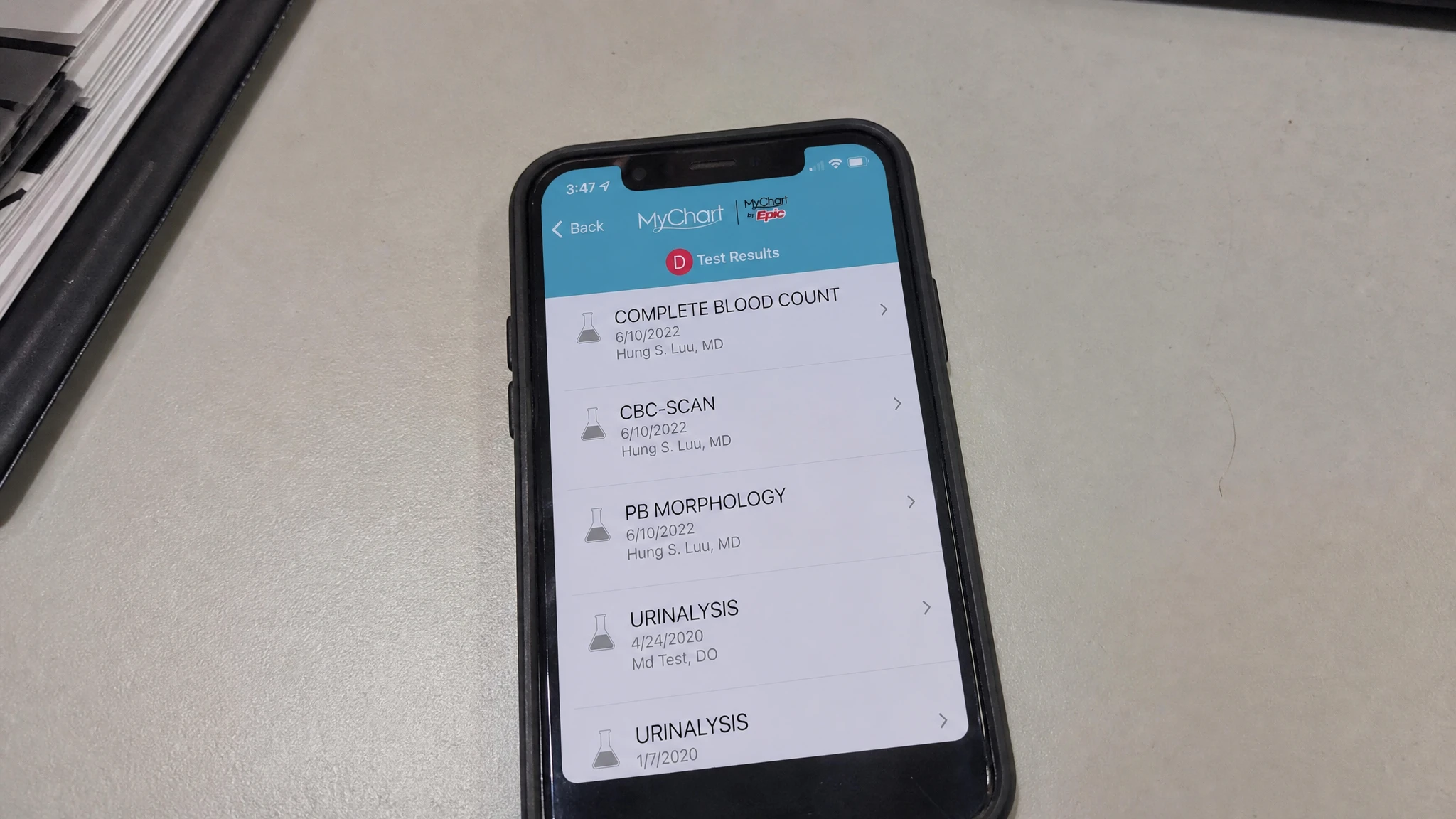
What Is the MyChart Lawsuit?
The MyChart lawsuit is not a single case but a cluster of separate class actions brought against individual hospital systems. Each suit alleges that one health system embedded third-party advertising and analytics trackers on its website and inside its MyChart patient portal, and that those trackers sent patient information to companies such as Meta and Google without consent.
MyChart itself is the patient portal software made by Epic Systems. Hundreds of US hospitals license it so patients can book appointments, read test results, message clinicians, and pay bills. The lawsuits name the hospital that deployed the tracking code, not Epic, because the tracking was added by each provider to its own web properties.
That structure matters for anyone trying to join. There is no master MyChart class and no single claim form. Eligibility depends on which hospital's portal you logged into, and during which dates that hospital's class period ran.
“A Settlement has been reached with The Moses H. Cone Memorial Hospital Operating Corporation, d/b/a Cone Health and The Moses H. Cone Memorial Hospital d/b/a Cone Health ("Defendants" or "Cone Health"), in a class action lawsuit that claims Cone Health improperly tracked the information of users on their website, including the MyChart patient portal. The lawsuit is captioned Singh v. The Moses H. Cone Memorial Hospital Operating Corp., et al., Case No. 1:24-cv-00558, pending in the United States District Court for the Middle District of North Carolina.”
Source: Source: Notice of Proposed Class Action Settlement, Singh v. The Moses H. Cone Memorial Hospital Operating Corp., et al., Case No. 1:24-cv-00558 (M.D.N.C.)
Why Are People Filing MyChart Lawsuits?
People are filing MyChart lawsuits because their hospitals allegedly wired advertising trackers into pages that handle medical information. The complaints describe small pieces of third-party code, commonly the Meta Pixel and Google Analytics, placed on hospital websites and in some cases inside the logged-in portal itself.
Those trackers fire when a patient takes an action. Clicking to book an appointment, searching a condition, or opening a test result can generate an event. The complaints allege that the event data, sometimes alongside identifiers tied to a specific person, was transmitted to advertising platforms while the patient believed the session was private.
Because HIPAA gives patients no private right to sue, plaintiffs generally plead other theories. Common ones include the federal Electronic Communications Privacy Act, state wiretap and eavesdropping statutes such as the California Invasion of Privacy Act, breach of confidence, and unjust enrichment. Hospitals have denied wrongdoing in every settlement reviewed here and settled to end the litigation rather than concede liability.
What Injuries Are Included in the MyChart Lawsuit?
Injuries included in the MyChart lawsuit filings are not physical ones. The complaints instead allege three broad categories of privacy harm, and no case reviewed here requires a claimant to show a diagnosis, a financial loss, or identity theft.
That is why most of these settlements accept claims with no proof beyond confirming you used the portal during the class period.
Disclosure of Protected Health Information
Protected health information is individually identifiable health data that privacy law treats as confidential, such as a diagnosis, a medication, or the fact of an appointment with a particular doctor.
The complaints allege that tracking code transmitted details tied to a patient's care to third parties outside the treatment relationship. Examples pleaded across the cases include provider names, appointment bookings, conditions searched on a hospital site, and in some filings information visible inside the portal itself.
Hospitals dispute this. Bon Secours Mercy Health, for instance, specifically denied that any medical information from either its patient portal or its website was shared with Facebook or Google, while still agreeing to settle.
Interception of Private Communications
Interception of a private communication is the capture of a message or exchange by someone who is not a party to it, which several federal and state statutes treat as unlawful without consent.
This is the theory that carries most of the legal weight. Plaintiffs argue a patient session with a hospital is a private communication, and that a tracker silently copying that session to an advertising platform is an unauthorized third party listening in.
Framing the harm this way lets plaintiffs invoke the federal Electronic Communications Privacy Act and state eavesdropping laws, which do allow private suits and statutory damages. The Memorial Health Services settlement, for example, resolved claims brought under the California Invasion of Privacy Act.
Loss of Privacy and Benefit of the Bargain
Benefit of the bargain is the difference between what a person was promised and what they actually received, used here to describe privacy that patients understood they were getting.
The third category is the value of the privacy itself. Patients were told their portal was secure, the argument runs, and the confidentiality they expected was part of what they received in exchange for their data and their business.
This theory is why these settlements pay every claimant a flat or pro rata amount rather than compensating individual losses. Nobody has to prove a specific injury, because the alleged harm is the disclosure itself.
Who Qualifies for the MyChart Lawsuit?
You may qualify if:
- You were a patient of a health system that has reached a MyChart pixel-tracking settlement, such as Cone Health, Atrium Health, Banner Health, Bayhealth, Memorial Health Services, SSM Health, Mercy Health, Henry Ford Health, or Advocate Aurora Health.
- You logged into that health system's MyChart patient portal, or completed a submission form on its website, during that specific settlement's class period.
- You received a settlement notice by email or mail containing a Login ID and PIN, which is the strongest single indicator that you are in a class.
- You are filing before that settlement's own claim deadline, which is printed on the notice and on the court-approved settlement website.
You may not qualify if:
- You used MyChart only at a hospital that has not been sued or has not settled, since eligibility follows the individual health system rather than the software.
- Your portal use falls outside the class period, even by a short margin, because each class period is defined by fixed dates in that settlement.
- You are an employee, officer, director, or legal representative of the defendant health system, or a judge assigned to the case or their immediate family.
- You validly opted out of the settlement before its exclusion deadline, which preserves your right to sue separately but forfeits the payment.
- The claim deadline for your hospital's settlement has already passed, as happened with Catholic Health, SSM Health, Henry Ford Health, and Memorial Health Services.
Eligibility is decided by the court-appointed settlement administrator for each individual case, not by this page. Check the official settlement website for your specific hospital, and treat the notice you received as the controlling document.
What Is the Current Status of the MyChart Lawsuit?
The current status of the MyChart lawsuit differs from hospital to hospital. Each health system negotiated its own class action settlement in its own court, so some claim windows are open while others have already paid out.
The entries below track the cases with confirmed settlement terms. Dates come from court-approved settlement websites and court filings rather than from aggregator summaries, which have circulated conflicting deadlines for several of these cases.
Singh v. The Moses H. Cone Memorial Hospital Operating Corp., No. 1:24-cv-00558 (M.D.N.C.)
The Cone Health settlement is the largest MyChart claim window still open. The court granted preliminary approval on July 7, 2026, and the court-approved notice sets a single date, October 5, 2026, as the deadline to file a claim, opt out, or object.
Payments here are pro rata rather than fixed. The notice states that after fees, costs, and a service award, the remaining fund is divided equally among valid claims, so the per-person figure depends on how many people file.
| Court | U.S. District Court for the Middle District of North Carolina |
| Settlement fund | $1,765,000 |
| Class period | September 1, 2016 to November 3, 2022 |
| Class size | 375,027 people, per court filings |
| Claim deadline | October 5, 2026 |
| Final approval hearing | November 5, 2026 |
| Settlement website | ConePixelSettlement.com |
Atrium Health pixel settlement
The Atrium Health settlement is the nearest deadline of any case tracked here. Its court-approved website sets a claim postmark deadline of September 28, 2026, with the final approval hearing two days later.
The settlement fund is $1,800,000. Most of it covers claims from patients who logged into the MyAtriumHealth portal between January 1, 2015 and July 31, 2019, with a smaller pool for portal holders outside that window who file a claim.
| Settlement fund | $1,800,000 |
| Class period | January 1, 2015 to July 31, 2019 for the main claim group, with a secondary group covering portal accounts open through April 10, 2024 |
| Claim deadline | September 28, 2026 |
| Opt-out and objection deadline | August 31, 2026 |
| Final approval hearing | September 30, 2026, at 2:30 p.m. ET |
| Administrator | Kroll Settlement Administration LLC |
| Settlement website | AtriumHealthPixelSettlement.com |
Bayhealth MyChart pixel settlement
Bayhealth Medical Center settled a class action over tracking pixels on its website and MyChart portal. Class members who file a claim can receive a flat $25 cash payment with no proof required, plus an optional year of CyEx Privacy Shield.
| Class period | January 1, 2019 to December 31, 2025 |
| Payment | $25 per valid claim, plus optional one year of CyEx Privacy Shield |
| Claim deadline | October 5, 2026 |
| Final approval hearing | October 29, 2026 |
| Settlement website | BayhealthPixelSettlement.com |
Banner Health MyChart pixel settlement
Banner Health's settlement covers patients who logged into a Banner patient account through its web properties or apps. The claim window closed September 5, 2026, and the final approval hearing followed on September 10, 2026; a confirmed outcome from that hearing was not available in sources checked as of September 28, 2026.
| Class period | June 1, 2020 to November 22, 2023 |
| Class size | approximately 1,028,000 people |
| Payment | $20 per class member, plus one year of privacy protection |
| Claim deadline | September 5, 2026, now closed |
| Final approval hearing | September 10, 2026 |
Fiorillo v. St. Joseph Hospital of Nashua, N.H., No. 226-2025-CV-00138 (Hillsborough County Superior Court)
St. Joseph Hospital of Nashua is a newly confirmed entry in this litigation wave, alleging tracking pixels sent patient portal data to Microsoft for advertising rather than to Meta or Google. The court granted preliminary approval on April 30, 2026.
| Court | Superior Court of Hillsborough County, New Hampshire |
| Settlement fund | $1,250,000 |
| Class period | January 1, 2023 to present |
| Payment | $50 per valid claim, no proof required |
| Preliminary approval | April 30, 2026 |
| Final approval hearing | September 14, 2026 |
| Settlement website | StJosephPixelSettlement.com |
Memorial Health Services MyChart settlement (California)
Memorial Health Services settled claims brought under the California Invasion of Privacy Act over Meta Pixel and similar technologies in its portal. The court granted preliminary approval on May 22, 2026, and the claim window has since closed.
| Settlement fund | $750,000 |
| Class period | March 7, 2022 to July 8, 2022 |
| Class size | approximately 182,303 people |
| Preliminary approval | May 22, 2026 |
| Claim deadline | August 21, 2026, now closed |
| Final approval hearing | September 17, 2026 |
SSM Health MyChart privacy settlement
SSM Health paid a fixed amount per claimant rather than a pro rata share, which makes it a useful benchmark for what these cases pay. Payments went out on March 31, 2026, and the claim window is closed.
| Payment | $31.50 per approved claim, plus optional enrollment in a Privacy Shield product |
| Class period | July 6, 2020 to February 10, 2023 |
| Claim deadline | November 25, 2025, now closed |
| Payments distributed | March 31, 2026 |
Larger settled cases: Advocate Aurora Health and Henry Ford Health
These two are the biggest confirmed funds in the MyChart pixel wave, and both are past their claim deadlines. They are listed here because they set the pattern that later, smaller settlements followed.
| Advocate Aurora Health | $12.225 million, class period October 24, 2017 to October 22, 2022, final approval July 10, 2024 |
| Henry Ford Health | $12,293,715, covering roughly 819,000 people, final approval October 7, 2025 |
| Advocate Aurora payment | up to $50 per class member |
| Henry Ford payment | $15 per class member, plus one year of a privacy monitoring product |
How Much Is the MyChart Lawsuit Payout Per Person?
The MyChart lawsuit payout per person has generally run between about $15 and $50, depending on which hospital settled and how the fund was structured. Confirmed examples include $15 per class member from Henry Ford Health, $31.50 from SSM Health, and a cap of up to $50 in the Advocate Aurora Health settlement.
These settlement amounts are not guaranteed for any new claim. Several of the funds, including Cone Health's, divide the money pro rata among valid claims, so the final figure falls as more people file and cannot be known until the claim window closes. Only the court-appointed administrator for your specific settlement can confirm what you will receive.
Total settlement amounts and per-person payments are different numbers, and confusing them is the most common error in coverage of these cases. Cone Health's fund is $1,765,000 in total, but that figure is reduced by attorneys' fees of up to $613,333.33, costs of up to $25,000, a $5,000 service award, and administration expenses before anything reaches claimants.
A widely shared claim about a $10.5 million MyChart payout circulates on social media, and it does not match any settlement confirmed in court records reviewed for this page. Real funds in this wave have ranged from $750,000 to roughly $12.3 million, each tied to one named health system. Treat any figure that is not attached to a specific hospital and a specific court as unverified.
Latest MyChart Lawsuit Updates
Here are the latest MyChart lawsuit updates, covering settlement approvals, claim deadlines, and payment dates as they are confirmed. These cases proceed on separate tracks in separate courts, so the timeline below interleaves events from several hospital systems rather than following one docket. No single nationwide MyChart settlement exists, and none has been proposed.
Full MyChart Lawsuit Timeline
St. Joseph Hospital of Nashua Joins the MyChart Wave at $1.25 Million
St. Joseph Hospital of Nashua, N.H. reached a $1,250,000 settlement in Fiorillo v. St. Joseph Hospital, alleging its patient portal pixels sent data to Microsoft rather than Meta or Google. Its final approval hearing is set for September 14, 2026, and eligible claimants can receive $50 with no proof required.
Bayhealth's Full MyChart Settlement Terms Confirmed
Bayhealth Medical Center's pixel-tracking settlement covers patients who used its MyChart portal between January 1, 2019 and December 31, 2025. Claimants can receive $25 with no proof required, and the case has its own final approval hearing set for October 29, 2026.
Atrium Health and Banner Health Settlement Fund Details Confirmed
Atrium Health's settlement totals $1,800,000, covering patient portal use mainly between January 1, 2015 and July 31, 2019. Banner Health's settlement pays $20 per class member across a class of roughly 1,028,000 people who used its patient accounts between June 1, 2020 and November 22, 2023.
Cone Health MyChart Claim Deadline Arrives
The Cone Health settlement closes its claim, opt-out, and objection window on October 5, 2026, according to the court-approved notice in Singh v. The Moses H. Cone Memorial Hospital Operating Corp. Claimants who miss the date stay bound by the settlement's release without receiving a payment.
Atrium Health Final Approval Hearing Set for 2:30 p.m. ET
The Atrium Health pixel settlement goes before the court for final approval on September 30, 2026, two days after its claim deadline closes.
Atrium Health Pixel Settlement Stops Accepting Claims
Claim forms in the Atrium Health settlement must be submitted online or postmarked by September 28, 2026, per the settlement's court-approved website.
Memorial Health Services Settlement Gets a Final-Approval Hearing
A California federal court held a final approval hearing on September 17, 2026 for the $750,000 Memorial Health Services MyChart pixel-tracking settlement. Class members who wanted a payout had to submit MHS claim forms online or postmarked by August 21, 2026, and compensation will only go out once final approval is granted and any appeals are resolved.
Banner Health's MyChart Settlement Reaches Final Approval Hearing
Banner Health's MyChart tracking-pixel settlement had its final approval hearing on September 10, 2026, after its claim-filing window closed September 5, 2026. The hearing is separate from the other per-hospital MyChart deals already resolved or pending in this litigation.
Court Preliminarily Approves $1,765,000 Cone Health Settlement
A federal judge in the Middle District of North Carolina granted preliminary approval to the Cone Health settlement on July 7, 2026, conditionally certifying a class of 375,027 people who used the MyChart portal or a Cone Health web form between September 1, 2016 and November 3, 2022.
Memorial Health Services Reaches $750,000 California Privacy Deal
Preliminary approval came on May 22, 2026 for the Memorial Health Services settlement, which resolves California Invasion of Privacy Act claims over Meta Pixel and related trackers in its MyChart portal. About 182,303 people fall inside its narrow four-month class period.
SSM Health Sends $31.50 Payments to Approved Claimants
SSM Health distributed settlement payments on March 31, 2026 to patients who logged into its MyChart portal between July 6, 2020 and February 10, 2023. Class members could also enroll in a privacy monitoring product at no cost.
Bon Secours Mercy Health Pays Ohio Class Members
Payments in the Mercy Health privacy settlement went out on December 17, 2025, covering Ohio residents who logged into the Mercy MyChart portal between March 27, 2018 and December 31, 2021. Mercy denied that any medical information was shared with Facebook or Google.
Henry Ford Health Settlement Wins Final Approval at $12,293,715
The Henry Ford Health MyChart settlement received final approval on October 7, 2025. It covers roughly 819,000 people and pays $15 per class member alongside a year of privacy monitoring, making it one of the two largest funds in this litigation wave.
Advocate Aurora Health $12.225 Million Deal Becomes Final
Final approval of the Advocate Aurora Health settlement landed on July 10, 2024, resolving claims over trackers on its websites, its LiveWell app, and its MyChart portal. Class members could receive up to $50 each, a ceiling later settlements often echoed.
FTC and HHS Warn Roughly 130 Providers About Tracking Technologies
On July 20, 2023 the Federal Trade Commission and the HHS Office for Civil Rights sent a joint letter to approximately 130 hospital systems and telehealth providers, warning that online tracking tools could disclose sensitive health data in violation of HIPAA, the FTC Act, or the Health Breach Notification Rule. Plaintiffs' filings lean on this letter as evidence the risk was known and flagged.
OCR Issues Guidance on Tracking Technologies in Healthcare
The HHS Office for Civil Rights published a bulletin in December 2022 titled "Use of Online Tracking Technologies by HIPAA Covered Entities and Business Associates," setting out when tracking tools on health websites implicate HIPAA obligations.
The Markup Reports Hospital Websites Sending Data to Facebook
An investigation published June 16, 2022 by The Markup, with STAT, found Meta Pixel code on the websites of 33 of the 100 largest US hospitals, transmitting appointment details to Facebook. Reporters also found pixels inside the password-protected patient portals of seven health systems. This reporting is the event most of the later complaints point to as the start of the litigation wave.
How to File a MyChart Lawsuit
Filing a MyChart lawsuit generally involves the 7 steps outlined below.
- Identify which hospital portal you used: Work out which health systems you have logged into MyChart for, and roughly when, because the defendant is the hospital rather than MyChart or Epic Systems.
- Check that hospital against the settled cases: Compare your list to the health systems with confirmed settlements, since a hospital that never deployed the trackers or never settled has no class to join.
- Find your settlement notice: Look through email and postal mail for a notice containing a Login ID and PIN, which administrators use to verify claims and which makes online filing far quicker.
- Confirm the class period covers your portal use: Match the dates you used the portal against that settlement's class period, because these windows are narrow and a claim outside them will be rejected.
- File on the court-approved website only: Submit through the official administrator site named in your notice, such as ConePixelSettlement.com, and ignore any generic site promising a single MyChart payout.
- File before that settlement's deadline: Submit online or postmark a paper form by the date on your notice, since deadlines differ by case and the court will not accept late claims.
- Decide whether to stay in or opt out: Staying in means accepting the payment and releasing your claims, while opting out preserves your right to sue that hospital separately at your own expense.
Answer a few questions to see if you can still file a claim. Claims deadline: varies by hospital, with the Cone Health window closing October 5, 2026. Free, no obligation.
A case reviewer will follow up soon.
What Evidence Do I Need for a MyChart Lawsuit Claim?
Evidence needed for a MyChart lawsuit claim is unusually light compared with most litigation. Every settlement reviewed for this page accepts claims without proof of injury, and several accept them without documentation of any kind.
The single most useful document is the settlement notice itself. It carries a Login ID and PIN that the administrator matches against its own class list, which is drawn from the hospital's records rather than from anything you supply. If you have that notice, you generally need nothing else.
Without a notice, you can usually still file by affirming under penalty of perjury that you used the portal during the class period. Anything that helps you fix those dates is worth locating: portal login or password-reset emails, appointment confirmations, billing statements, or the account history inside MyChart itself. Submitting a claim you do not qualify for is a false statement made under oath, and it reduces the pool for people who do qualify.
What Did Hospitals Know About MyChart Tracking Before the Lawsuits?
Hospitals knew about MyChart tracking risks well before most of these lawsuits were filed. The practice was documented publicly in mid-2022 and flagged directly by two federal agencies within the following year, which is why plaintiffs' filings treat the timing as central rather than incidental.
The sequence below is the one the complaints rely on. Each step is drawn from public reporting or an agency's own publication, and together they establish that the risk was identified, published, and then formally communicated to providers.
| Date | Event | Why it matters to the claims |
|---|---|---|
| June 16, 2022 | The Markup and STAT report Meta Pixel on 33 of the 100 largest US hospital websites, plus inside seven password-protected patient portals | Establishes the practice publicly and gives plaintiffs a dated starting point for alleging the conduct was knowable |
| December 2022 | HHS Office for Civil Rights publishes a bulletin on use of online tracking technologies by HIPAA covered entities | Puts providers on formal notice that tracking tools on health pages can implicate HIPAA obligations |
| July 20, 2023 | FTC and HHS send a joint warning letter to approximately 130 hospital systems and telehealth providers | Moves the issue from general guidance to direct, addressed notice, and is cited as accelerating the filing wave |
Every hospital discussed here denies wrongdoing. None of these settlements includes a finding that a health system violated the law, and the Cone Health notice states plainly that there has been no determination by the court that Cone Health did anything wrong. Several settlements also require operational changes, such as confirming vendor agreements or removing trackers from pages that touch patient information.
Is Epic Systems the Defendant in the MyChart Lawsuit?
No. Epic Systems, the company that develops MyChart, is generally not a defendant in these pixel-tracking cases. The named defendant is the hospital or health system that added third-party tracking code to its own websites and portal pages.
This distinction has practical consequences. It explains why searching for a statewide or nationwide MyChart case leads nowhere, why there is no single claim form, and why two patients who both used MyChart can have entirely different rights. It also means unsolicited messages claiming to come from Epic Systems or from a generic MyChart settlement administrator, without naming a specific hospital, do not match how any of these settlements actually work.
Several other cases are routinely confused with this one, and the table below separates them.
| Case type | Who is sued | How it differs |
|---|---|---|
| MyChart pixel-tracking class actions | Individual hospitals and health systems | Alleges advertising trackers disclosed patient information without consent, with payments typically between $15 and $50 |
| Hospital data-breach settlements | The breached hospital or its vendor | Arises from an outside intrusion or ransomware event rather than code the hospital deployed itself, and often involves credit monitoring for identity-theft risk |
| Bayhealth data-incident settlement | Bayhealth Medical Center | A separate case from Bayhealth's own pixel settlement, with its own website and its own deadline, so the notice you received determines which one applies |
| Other health-privacy tracking cases | Telehealth and digital health companies | Same underlying tracking theory applied outside the hospital setting, including matters involving GoodRx, BetterHelp, and Cerebral |
Because these settlements are numerous and widely publicized, impostor sites and cold calls have followed them. Court-appointed administrators already hold your information from the class list and will not call to ask for a Social Security number, a full bank account number, or a routing number. These cases also do not involve compromised payment cards, so an offer of credit repair tied to a MyChart settlement is unrelated to the actual claims.
Frequently Asked Questions
Is there one MyChart class action lawsuit I can join?
There is no single MyChart class action to join. The litigation is a wave of separate class actions against individual hospital systems, each with its own court, class period, settlement fund, and claim deadline. Which one applies to you depends on which hospital's portal you logged into and when.
Is Epic Systems being sued over MyChart?
Epic Systems is generally not being sued in these cases. The defendant is the hospital that installed third-party tracking code on its own website and portal pages, not the vendor that makes the portal software. Any message claiming to come from Epic Systems about a MyChart settlement does not match how these cases are structured.
How much is the MyChart settlement payout?
The MyChart settlement payout has typically fallen between about $15 and $50 per person. Henry Ford Health paid $15 per class member and SSM Health paid $31.50, while Advocate Aurora Health capped payments at $50. Funds such as Cone Health's divide money pro rata instead, so the amount depends on how many valid claims are filed.
What is the MyChart lawsuit eligibility requirement?
MyChart lawsuit eligibility requires that you used a specific settling hospital's patient portal during that settlement's defined class period. No diagnosis, financial loss, or proof of harm is needed in the settlements reviewed here. A settlement notice containing a Login ID and PIN is the clearest sign you are in a class.
Which MyChart claim deadlines are still open?
Claim deadlines still open as of September 20, 2026 include Cone Health, closing October 5, 2026, and Bayhealth's pixel settlement, also closing October 5, 2026. Atrium Health closes September 28, 2026. Windows for Catholic Health, SSM Health, Henry Ford Health, Memorial Health Services, and Banner Health have already passed.
What did the lawsuits say hospitals actually shared?
The lawsuits say hospitals shared patient-linked activity with advertising platforms such as Meta and Google. Pleaded examples include appointment bookings, provider names, conditions searched on hospital sites, and in some filings information inside the logged-in portal. Hospitals deny these allegations and have settled without any admission of liability.