
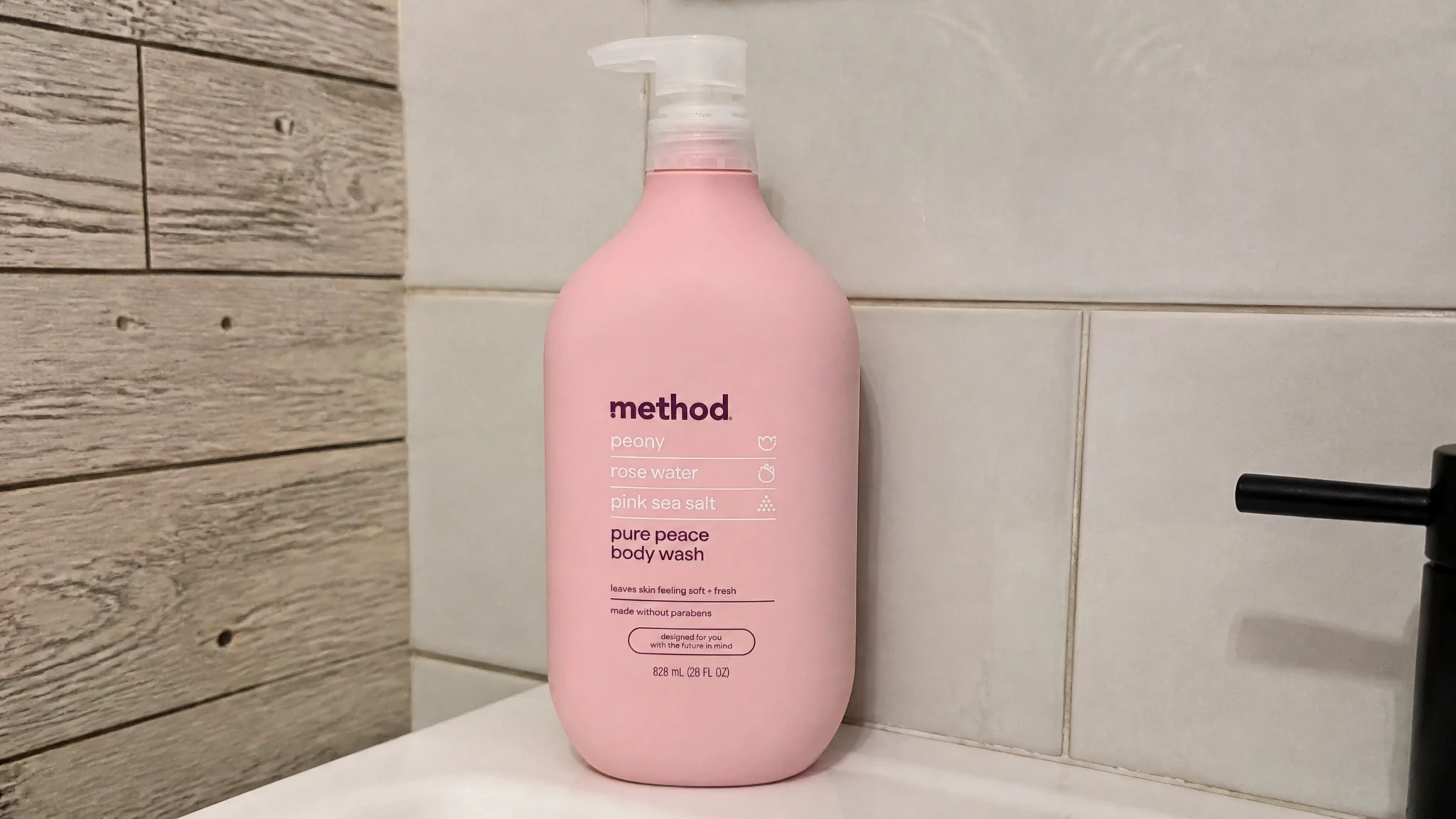
What Is the Method Body Wash Lawsuit?
The Method body wash lawsuit is a name for two closed consumer class actions over how Method products were labeled, and only one of them covered body wash.
That one is Vincent v. People Against Dirty, PBC, No. 7:16-cv-06936, a class action in the U.S. District Court for the Southern District of New York. It challenged "natural" and "naturally derived" claims on Method and Ecover products, and Method Body Wash appears on the settlement's covered product list.
The second case, Connary v. S.C. Johnson & Son, Inc., No. RG20061675, was filed in Alameda County, California over "non-toxic" labels. Its covered product list names cleaning products and no body wash, so searches for a Method body wash lawsuit often land on it by mistake.
“This proposed class action settlement would resolve the claims of purchasers of Defendants’ METHOD and ECOVER branded products.”
Source: Plaintiffs’ Memorandum of Law in Support of Motion for Preliminary Approval, Vincent v. People Against Dirty, PBC, No. 7:16-cv-06936-NSR (S.D.N.Y.), Document 37-1 (filed Dec. 21, 2016)
Why Was the Method Body Wash Lawsuit Filed?
The Method body wash lawsuit was filed because buyers alleged that Method's "natural" and "naturally derived" labels misled them about what was in the bottle, and the defendants denied that.
Plaintiffs in Vincent said Method and Ecover products contained ingredients they called artificial, and their settlement brief named phenoxyethanol, decyl glucoside and tocopheryl acetate as examples. They argued that shoppers paid more for products that sounded natural.
The defendants maintained that the allegations were unsupported and would fail as a matter of law and fact, according to the plaintiffs' own brief. No court decided that question, because the case settled before the parties litigated class certification.
The Connary case grew out of a separate demand letter. It alleged that Method labels and websites called products "non-toxic" and "planet-friendly" even though the labels carried cautionary use language, and SC Johnson said the claims lacked merit.
What Harms Does the Method Body Wash Lawsuit Allege?
The Method body wash lawsuit alleges four categories of harm, and all four concern labeling, price or possible irritation rather than a documented injury. No court decided any of them, and the settlement papers reviewed describe irritation as a possibility.
Misleading Natural Labeling
Misleading labeling is a product claim that gives shoppers a false or unsupported impression, and consumer protection laws let buyers challenge it.
Plaintiffs in Vincent challenged the terms "natural," "naturally derived," "hypo-allergenic," "non-toxic," "plant-derived," "plant-based," "mineral-based" and "bio-based" on Method and Ecover products. Their Second Amended Complaint asserted claims for a nationwide class and for subclasses in California, Florida and New York.
The settlement later limited how Method could use "natural" and "naturally derived" on its labels, which is described in the settlement section below.
Non-Toxic Claims
A non-toxic claim tells shoppers that a product will not poison or harm people, pets or the environment when used as directed.
The Connary plaintiffs said Method labels and websites called products "non-toxic" and "planet-friendly" while the labels also carried cautionary use language. That case covered 20 cleaning products.
The Vincent complaint also listed "non-toxic" among the challenged terms, and its product list did include Method body wash.
Price Premium
A price premium is the extra amount shoppers pay for a product because of a feature it is advertised to have.
The price premium theory says shoppers would not have paid Method's prices without the natural claims. Plaintiffs' counsel in Vincent said they ran a pricing survey and a damages analysis that compared Method's list prices with comparable products and Nielsen sales data.
Possible Skin Irritation
Skin irritation is redness, itching or discomfort that can follow contact with an ingredient, and an allergic reaction is the body's immune response to a substance.
Reporting on the 2016 complaint said it alleged that some ingredients in Method products could cause an allergic reaction or irritation. The Vincent settlement addressed this by requiring a website disclosure, if Method kept using alleged skin irritants such as methylisothiazolinone (MIT) and benzisothiazolinone (BIT), that "hypoallergenic" and "non-toxic" do not mean a product will cause no reaction in anyone.
The Connary release expressly excludes personal injury claims, so neither class action paid for an individual injury.
What Is the Current Status of the Method Body Wash Lawsuit?
The current status of the Method body wash lawsuit is that both related class actions are closed as of November 13, 2026, and no open Method body wash case was found. The case that covered body wash ended in a final judgment, and the case that did not cover body wash ended in a settlement.
Vincent v. People Against Dirty, PBC
Vincent is the case that covered Method body wash. Wesley Vincent filed it on September 2, 2016, and plaintiffs Noelle Morgante, Daniel Richman and Ashley Peluchette joined through amended complaints. Judge Román granted final approval of the class settlement on June 20, 2017.
| Proceeding Type | Class action settled on a settlement-class basis, not an MDL |
| Court | U.S. District Court, Southern District of New York |
| Case Number | 7:16-cv-06936-NSR |
| Judge | Román |
| Defendants | People Against Dirty, PBC and Method Products, PBC |
| Covers Body Wash | Yes, Method Body Wash and four named body wash variants appear on the settlement's product list |
| Preliminary Approval | January 9, 2017 |
| Claim Deadline | April 27, 2017 |
| Final Approval | June 20, 2017 |
| Appeal | Second Circuit No. 17-2218, dismissed August 29, 2017 |
| Status | Closed |
The final order overruled the only objection and noted that one class member opted out. According to Top Class Actions, the class period ran from August 1, 2010 through April 27, 2017, and the settlement covered personal care, dishwashing, laundry and household cleaning products sold under the Method and Ecover brands.
Connary v. S.C. Johnson & Son, Inc.
Connary is the case people often confuse with the body wash case, and it did not cover Method body wash. Four plaintiffs filed it on May 14, 2020, and the parties told the court on December 28, 2020 that they had settled on a class-wide basis.
| Proceeding Type | Class action settled on a settlement-class basis, not an MDL |
| Court | Superior Court of California, County of Alameda |
| Case Number | RG20061675 |
| Defendant | S.C. Johnson & Son, Inc. |
| Class Counsel | Wyatt A. Lison of Feinstein Doyle Payne & Kravec, LLC |
| Class Period | May 14, 2016 to May 13, 2021 |
| Covers Body Wash | No, the settlement lists 20 cleaning products and no body wash |
| Claim Deadline | November 1, 2021 |
| Final Approval Hearing | Scheduled for November 16, 2021 |
| Final Approval Order | Not located in the sources reviewed |
| Status | Closed, listed by Top Class Actions as a closed settlement |
The final approval order itself was not found in the sources reviewed, so this page does not state the date of final approval. Connary is a different case from Clark v. S.C. Johnson, which concerned Windex.
How Much Is the Method Body Wash Lawsuit Worth?
The Method body wash lawsuit was worth $2.8 million in the Vincent settlement, the only settlement that covered Method body wash. The separate Connary settlement was worth $2.25 million and did not cover body wash.
Both settlements are closed, so no Method body wash payout can be claimed as of November 13, 2026. These amounts describe what two closed cases paid, not what any future claim could be worth, and only a qualified attorney can assess an individual situation.
Under Vincent, class members with proof of purchase could claim $1.00 per product with no limit, and members without proof could claim $1.00 for up to 8 products, according to the plaintiffs' preliminary approval brief. If money remained after valid claims, payments could rise pro rata up to 400% of the initial claim amount, and the final order said many class members would receive substantial percentages of the purchase price and in some cases full refunds.
The court awarded class counsel 30% of the fund, or $840,000, plus $25,799.85 in expenses and $10,000 in service awards. The Settlement Administrator reported 54,641 valid claims.
The Vincent injunctive terms barred Method and Ecover labels from using "natural" or "naturally derived" unless Method listed ingredients under industry standards, disclosed each ingredient's origin and function, limited "natural" to qualifying fragrances, and defined both terms on its website.
The Connary fund paid $1 per covered product, up to 10 products without proof of purchase, and SC Johnson agreed to make Method products without unqualified "non-toxic" claims. Top Class Actions readers reported $9.90 payments in May 2022.
Method Body Wash Lawsuit Updates
Here are the latest Method Body Wash lawsuit updates, covering new court filings, rulings, and case-count reports as they're confirmed. The Method body wash class actions settled as of November 2026; the terms and timing are covered in the entries below. Every verified development is listed in the timeline below, in order.
Full Method Body Wash Lawsuit Timeline
Review Finds No Open Method Body Wash Case
A review of settlement news and primary court documents on November 13, 2026 found no open Method body wash class action. The only matters located were the closed Vincent and Connary settlements, and sites describing an active body wash case cited no court or docket number.
Readers Report $9.90 Payments From the Connary Settlement
Top Class Actions reported on May 24, 2022 that readers had received $9.90 payments from the S.C. Johnson settlement over Method "non-toxic" labels in Connary v. S.C. Johnson & Son, Inc.
Connary Final Approval Hearing Set in Alameda County
Top Class Actions listed November 16, 2021 as the final fairness hearing date in Connary v. S.C. Johnson & Son, Inc., No. RG20061675, in Alameda County Superior Court. The resulting order was not found in the sources reviewed.
Connary Claim Deadline Passes
The claim deadline in the Connary settlement over Method "non-toxic" labels fell on November 1, 2021. Claimants without proof of purchase could seek $1 for up to 10 covered products.
Connary Opt-Out and Objection Deadline
Class members in Connary v. S.C. Johnson & Son, Inc. had until October 18, 2021 to opt out of or object to the settlement, according to Top Class Actions.
Connary Class Period Ends at Preliminary Approval
The Connary settlement agreement set the class period from May 14, 2016 to the date of preliminary approval, and Top Class Actions lists that period as ending May 13, 2021. The agreement defines the settlement fund as $2,250,000.
Parties Tell the Alameda Court They Settled Connary
The parties in Connary v. S.C. Johnson & Son, Inc. notified the Alameda County Superior Court on December 28, 2020 that they had reached a class-wide settlement, and the plaintiffs agreed to file an amended complaint matching its terms.
Four Plaintiffs File Connary in Alameda County
Zoriana Pawluk-Florio, Adrienne Andry, Paul Torrecillas and Donna Connary filed Connary v. S.C. Johnson & Son, Inc., No. RG20061675, in Alameda County Superior Court on May 14, 2020.
Mediation Produces a Connary Settlement in Principle
The parties in Connary v. S.C. Johnson & Son, Inc. held a ten-hour mediation on April 22, 2020 with retired U.S. Magistrate Judge Jay C. Gandhi of JAMS and reached a settlement in principle, subject to confirmatory discovery.
NAD Recommends SC Johnson Drop "Non-Toxic" on Method Cleaners
The National Advertising Division recommended on March 24, 2020 that S.C. Johnson discontinue "non-toxic" on certain Method cleaning products after a challenge by The Procter & Gamble Company. SC Johnson said it would appeal to the National Advertising Review Board.
Demand Letter Challenges Method "Non-Toxic" Labels
Feinstein Doyle Payne & Kravec, LLC sent S.C. Johnson a demand letter on November 12, 2019 for plaintiffs Zoriana Pawluk-Florio and Adrienne Andry. The letter alleged that Method labels and websites falsely called products "non-toxic" and "planet-friendly," and it led to the Connary case.
SC Johnson Agrees to Acquire Method and Ecover
S.C. Johnson announced on September 14, 2017 that it had agreed to acquire Method and Ecover from People Against Dirty, PBC, subject to regulatory approvals. The Vincent settlement had already received final approval on June 20, 2017.
Second Circuit Dismisses the Vincent Appeal
The Second Circuit granted a joint motion on August 29, 2017 and dismissed with prejudice the objector's appeal in Vincent v. People Against Dirty, PBC, No. 17-2218. Each party bore its own costs and fees.
Daughtery Case Dismissed With Prejudice
Keith Daughtery and Method Products, PBC filed a stipulation on July 19, 2017 dismissing Daughtery v. Method Products, PBC, No. 1:16-cv-01226, in the Northern District of New York with prejudice. The stipulation cited the Vincent final judgment and said each side would bear its own fees.
Objector Appeals the Vincent Final Approval
Top Class Actions reported that an appeal of the Vincent settlement approval was filed on July 18, 2017 and that claims would not be paid until all appeals were exhausted.
Judge Román Grants Final Approval in Vincent
The Southern District of New York entered a final judgment on June 20, 2017 approving the $2.8 million Vincent class settlement, certifying the settlement class and overruling the only objection. The order records 54,641 valid claims, awards $840,000 in attorneys' fees, and approves $10,000 in service awards.
Vincent Final Approval Hearing Held
Judge Román held the final approval hearing in Vincent v. People Against Dirty, PBC on May 12, 2017. The parties, class members and the objector were given the chance to be heard.
Vincent Claim Deadline and Class Period End
April 27, 2017 was both the claim form deadline and the end of the class period in the Vincent settlement, according to Top Class Actions. Class members without proof of purchase could claim up to eight products.
Vincent Opt-Out and Objection Deadline
Class members in Vincent v. People Against Dirty, PBC had until March 28, 2017 to opt out of or object to the settlement, according to Top Class Actions.
Class Counsel Asks for One-Third of the Vincent Fund
Class counsel in Vincent moved on March 13, 2017 for one-third of the $2.8 million settlement fund as attorneys' fees. The court later awarded 30%.
Vincent Settlement Receives Preliminary Approval
The Southern District of New York preliminarily approved the Vincent class settlement on January 9, 2017 and allowed notice to go to the settlement class.
Plaintiffs Move for Preliminary Approval in Vincent
Plaintiffs in Vincent v. People Against Dirty, PBC filed their motion for preliminary approval on December 21, 2016, attaching the settlement agreement's product list, which includes Method Body Wash.
Parties Sign the Vincent Settlement Agreement
People Against Dirty, PBC, Method Products, PBC and the Vincent plaintiffs signed the class settlement agreement on December 12, 2016, creating a $2.8 million fund and the label changes described in this page.
Wilson Class Action Filed in San Diego County
The Vincent plaintiffs' brief says Wilson v. Method Products, PBC, No. 2016-00038054, was filed in San Diego County on October 27, 2016 with substantially the same claims for a California class. It also lists Labrado v. Method Products, PBC, No. 3:16-cv-05905, filed October 12, 2016. The outcomes of both were not found.
Second Amended Complaint Consolidates the Vincent Claims
Plaintiffs filed a Second Amended Complaint in Vincent on October 13, 2016 that folded in the claims of Daniel Richman and Ashley Peluchette. It asserted claims for a nationwide class and for California, Florida and New York subclasses.
Amended Complaint Adds Method Products, PBC as a Defendant
A First Amended Complaint filed in Vincent v. People Against Dirty, PBC on September 27, 2016 added plaintiff Noelle Morgante and named Method Products, PBC as a co-defendant.
Richman Files a Natural-Label Class Action in California
Daniel Richman and Ashley Peluchette filed Richman v. Method Products, PBC and People Against Dirty, PBC, No. 16-cv-5167, in the Northern District of California on September 7, 2016, challenging "natural" and "naturally derived" labels. They later moved to intervene in Vincent.
Wesley Vincent Sues People Against Dirty
Wesley Vincent filed Vincent v. People Against Dirty, PBC, No. 7:16-cv-06936, in the Southern District of New York on September 2, 2016. The parties told the court the same day that they had reached the framework of a settlement.
Parties Agree on a Settlement Framework in San Francisco
Plaintiffs' counsel from the Sultzer Law Group, Method's outside counsel and Method's interim general counsel met in San Francisco on August 11, 2016 and agreed on a framework for resolving the Vincent claims.
Mediation Session Held in Miami Over the Method Claims
Counsel from Eggnatz, Lopatin & Pascucci, LLP attended an all-day mediation with Method in Miami on June 8, 2016 with mediator Rodney Max. No settlement was reached that day, and talks continued by telephone.
Sultzer Law Group Sends Method a Pre-Suit Notice
The Sultzer Law Group, counsel for Wesley Vincent and Noelle Morgante, sent Method a pre-suit notice letter on May 26, 2016 about its natural labeling claims.
Daniel Richman Serves a California Consumer Notice Letter
Daniel Richman, through Eggnatz, Lopatin & Pascucci, LLP, served Method with a notice letter under California's Consumers Legal Remedies Act on October 27, 2015, alleging that varieties of its cleaning products and soaps were falsely labeled natural.
Who Are the Defendants in the Method Body Wash Lawsuit?
The Method body wash lawsuit named People Against Dirty, PBC and Method Products, PBC as defendants in Vincent, and S.C. Johnson & Son, Inc. in Connary. A court filing describes the first two as Delaware public benefit corporations, and S.C. Johnson is a Wisconsin corporation based in Racine.
The defendants denied that their labels were misleading in both cases. Top Class Actions reports that the Vincent defendants agreed to settle to avoid the burden and expense of continued litigation, and the Connary agreement says SC Johnson maintains the claims are without merit.
| Party | Role | Source |
|---|---|---|
| People Against Dirty, PBC and Method Products, PBC | Defendants in Vincent, the case that covered body wash | S.D.N.Y. No. 7:16-cv-06936 |
| S.C. Johnson & Son, Inc. | Defendant in Connary and acquirer of Method and Ecover, announced September 14, 2017 | Alameda County No. RG20061675; Happi |
| The Procter & Gamble Company | Challenger of Method "non-toxic" claims at the NAD in 2020 | BBB National Programs press release, March 24, 2020 |
| California Air Resources Board | Regulator that settled with Method Products, PBC for $79,000 in March 2021 over a general purpose cleaner that exceeded VOC limits | CARB settlement notice |
The NAD is an advertising self-regulation body, so its recommendation was not a court ruling or a government penalty. The CARB settlement concerned a cleaner, not body wash, and the sources reviewed show no FDA, FTC or CPSC action about Method body wash.
How Does the Method Body Wash Lawsuit Compare to Related Method Cases?
The Method body wash lawsuit differs from related Method cases because only Vincent covered body wash, and every other matter below was consolidated into it, dismissed after it, or concerned different products. Vincent and Connary are described in the case status section above.
| Matter | Court | Relationship to Vincent | Outcome |
|---|---|---|---|
| Richman v. Method Products, PBC and People Against Dirty, PBC, No. 16-cv-5167 | U.S. District Court, N.D. Cal. | Same natural-label claims, plaintiffs sought to intervene in Vincent | Claims folded into the Vincent Second Amended Complaint |
| Daughtery v. Method Products, PBC, No. 1:16-cv-01226 | U.S. District Court, N.D.N.Y. | Same natural-label claims by a separate plaintiff | Stayed on consent, then dismissed with prejudice after Vincent final approval |
| Wilson v. Method Products, PBC, No. 2016-00038054, and Labrado v. Method Products, PBC, No. 3:16-cv-05905 | California courts | California class actions with substantially the same claims, per the Vincent plaintiffs' brief | Outcome not found in the sources reviewed |
Searches for a newer Method body wash case found none. Some settlement-news sites describe an active Method body wash lawsuit but cite no court, docket number or filing date, so those claims should be treated as unverified. A federal docket search was not available for this review.
Frequently Asked Questions
What is the Method body wash lawsuit about?
The Method body wash lawsuit is about labeling claims such as "natural" and "naturally derived" on Method and Ecover products, which buyers said overstated how natural the ingredients were. The case that covered Method body wash, Vincent v. People Against Dirty, PBC, settled in 2017, and the defendants denied that the labels were misleading.
Is the Method body wash lawsuit a class action?
Yes. The Method body wash lawsuit was a class action, and it was not an MDL. Vincent was certified as a settlement class of U.S. purchasers in the Southern District of New York, and Connary was a separate nationwide settlement class in Alameda County, California.
Did Method settle the body wash lawsuit?
Yes. Method settled the body wash lawsuit in Vincent for $2.8 million, and the court gave final approval on June 20, 2017. The agreement also changed how Method and Ecover labels could use "natural" and "naturally derived."
Can I still file a claim in the Method body wash lawsuit?
No. You cannot file a claim in the Method body wash lawsuit today, because the Vincent claim deadline was April 27, 2017 and the Connary claim deadline was November 1, 2021. A qualified attorney can say whether any other option exists for an individual situation.
Was Method body wash covered by the $2.25 million SC Johnson settlement?
No. Method body wash was not covered by the $2.25 million SC Johnson settlement, because the Connary product list names 20 cleaning products and no body wash. Body wash appeared on the Vincent product list instead.
Which Method body wash products were covered by the Vincent settlement?
The Method body wash products covered by the Vincent settlement included Method Body Wash, Foaming Body Wash, Marine Naturals Body Wash, Moisturizing Body Wash and Gel Body Wash. The list also named Body Bar Soap and baby products such as Baby Body Wash and Baby Hair + Body Wash.
Is there a new Method body wash lawsuit in 2026?
No new Method body wash lawsuit was found as of November 13, 2026. The sources reviewed show only the two closed class actions, and websites describing an active case cite no docket number.