
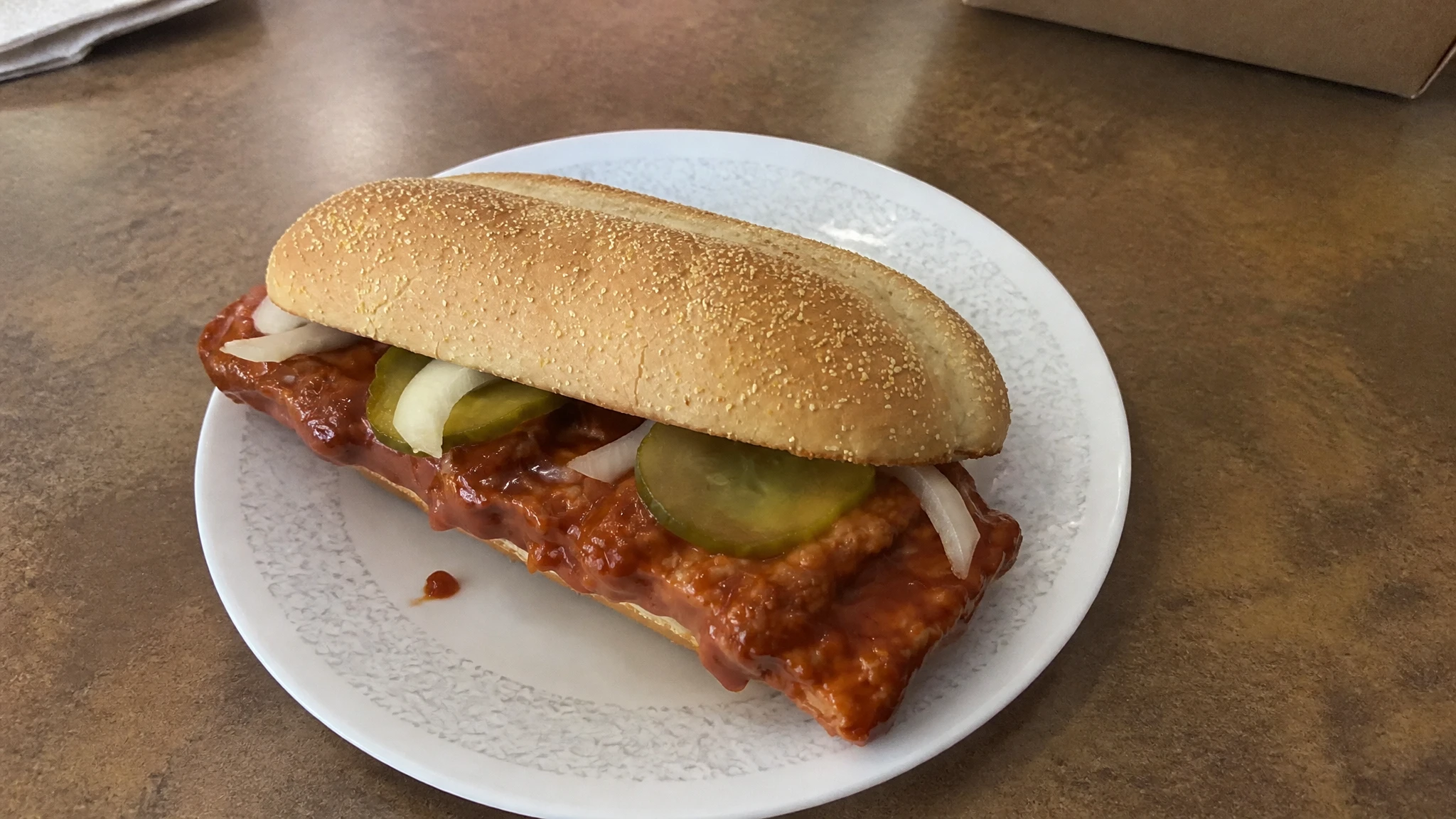
What Is the McRib Lawsuit?
The McRib lawsuit is Le v. McDonald's Corp., a proposed consumer class action alleging McDonald's sold its McRib sandwich as rib meat when the patty contains none. Four consumers filed it in the Northern District of Illinois in December 2025, and it is pending before Judge April M. Perry.
The plaintiffs say the McRib's name and its rib-shaped patty lead shoppers to expect pork rib meat. McDonald's denies the claims.
The McRib lawsuit is a false-advertising and consumer-fraud case, not a food-safety case. Coverage of the complaint describes it as a dispute over how the name and shape are interpreted, and the court has since allowed the core claims to proceed without deciding whether they are true.
“Since 1981, McDonald's has offered the McRib on a periodic, limited-time basis throughout the United States. At all times relevant to this action, the sandwich has been deliberately marketed and sold under the 'McRib' name, which communicates to reasonable consumers that its meat patty includes, in some meaningful quantity, actual pork rib meat.”
Source: Le v. McDonald's Corp., No. 1:25-cv-15609 (N.D. Ill.), Class Action Complaint, Document 1, paragraph 18 (December 23, 2025)
Why Was the McRib Lawsuit Filed?
The McRib lawsuit was filed because the plaintiffs say the McRib's name and rib-shaped patty led them to pay a premium for a sandwich with no rib meat.
The four named plaintiffs live in California, New York, Illinois, and the District of Columbia, and each says they bought the sandwich during its late 2024 return. They say they would not have bought it, or would have paid less, had they known what it contains.
The complaint asks for compensatory damages, restitution, and a court order stopping what it calls deceptive naming and marketing of the McRib. It also asks a jury to decide the case.
What Harms Does the McRib Lawsuit Allege?
The McRib lawsuit includes three distinct harms the plaintiffs allege: a misleading product name, an inflated price, and lower-grade pork in place of rib meat. McDonald's denies the ingredient allegations, and none of the three harms has been proven in court. The complaint pleads economic losses only and does not allege that anyone was physically hurt.
Deceptive Product Name
Deceptive naming is the use of a product name that leads an ordinary shopper to expect an ingredient or quality the product does not have.
The complaint alleges the name "McRib" and the patty's rib-like shape communicate that the sandwich contains actual pork rib meat. It says McDonald's shapes the patty to resemble a cooked rack of spare ribs or baby back ribs, and that its advertising emphasizes that shape. These allegations underlie several of the 16 counts, including the fraud claims and the state consumer protection claims.
Consumer protection claims of this kind generally ask whether a reasonable consumer would be misled by the name or label. Whether the McRib name meets that test is the central question the court has yet to answer on the evidence.
Price Premium
A price premium is the extra amount a buyer pays for a feature or quality that the product allegedly does not have.
The plaintiffs allege they overpaid because of the rib implication. The complaint says the McRib cost up to $7.89 before tax, which it describes as among the most expensive single items on McDonald's menu when the sandwich is offered.
The complaint does not state a dollar amount of damages for the plaintiffs. It seeks compensatory damages and restitution, and any recovery would depend on class certification and on proof of what rib-named buyers paid compared with what the sandwich was worth.
Alleged Lower-Grade Pork
Restructured pork is a manufactured meat product made by grinding pork pieces and forming them into a set shape.
The complaint alleges the patty is restructured from lower-grade pork products, listing pork shoulder, heart, tripe, and scalded stomach as examples. It says true pork rib meat comes from the rib cage as spare ribs or baby back ribs and is a premium cut.
The complaint introduces the ingredient list with the Latin phrase "inter alia," which means the cuts named are examples, not a full ingredient inventory.
What Is the Current Status of the McRib Lawsuit?
The current status of the McRib lawsuit is active, with the core consumer deception, fraud, and unjust enrichment claims allowed to proceed. McDonald's response to the complaint is still pending, and no class has been certified.
Le v. McDonald's Corp.
Judge April M. Perry of the Northern District of Illinois denied McDonald's motion to dismiss in part on October 30, 2026. She allowed the consumer deception, fraud, and unjust enrichment claims to proceed and dismissed five other claims without prejudice, which lets the plaintiffs try to replead them.
| Court | U.S. District Court, Northern District of Illinois, Eastern Division |
| Case Number | 1:25-cv-15609 |
| Judge | April M. Perry |
| Filed | December 23, 2025 |
| Plaintiffs | Peter Le (California), Charles Lynch (New York), Dorien Baker (Illinois), Derrick Wilson (District of Columbia) |
| Defendant | McDonald's Corporation, doing business as McDonald's |
| Plaintiffs' Counsel | Thiago M. Coelho, Wilshire Law Firm, PLC |
| Claims Pleaded | 16 counts, including fraud, negligent misrepresentation, breach of warranty, breach of contract, unjust enrichment, and consumer protection statutes in California, New York, Illinois, and the District of Columbia |
| Proposed Class | Nationwide class of people who bought a McRib from McDonald's in the four years before filing, plus California (four years), New York, Illinois, and District of Columbia (three years each) subclasses |
| Relief Sought | Compensatory damages, restitution, injunctive relief; jury trial demanded |
| Class Action or MDL | Proposed class action, not an MDL; no class certified |
| Motion to Dismiss | Denied in part on October 30, 2026; five claims dismissed without prejudice |
| Settlement | None reported |
Judge Perry found it premature to accept McDonald's argument that no reasonable consumer could expect the McRib to contain rib meat, citing the plaintiffs' allegations and their survey evidence. She rejected the argument that the McRib's trademarked name shields the company, noting that other McDonald's names, including the McChicken and the Egg McMuffin, describe their ingredients. She also said advertising that stresses the sandwich's rib-like shape could support the intent element of the fraud claim, though the plaintiffs will need more evidence to prove it.
The ruling decided only that the claims were adequately pleaded, not that the allegations are true. ABC News reported that McDonald's has until November 20, 2026 to respond to the complaint. Discovery and a class certification motion would follow, and no trial date has been reported.
Has the McRib Lawsuit Settled?
No. The McRib lawsuit has not settled, and no settlement fund, claim form, or deadline exists as of November 10, 2026.
The complaint does not state a specific damages demand for the class. It alleges that revenue from McRib sales made through the allegedly misleading advertising reached at least tens of millions of dollars, and it invokes a $5 million federal jurisdiction threshold, which is a filing requirement and not a settlement estimate.
A court-approved settlement would generally be needed to resolve a class action, and it would come only after the court certifies a class or the parties agree to settle on a class basis. Reporting on the case notes that a certified class often raises settlement pressure, while a denial of certification would leave only the four named plaintiffs' claims.
Only a qualified attorney reviewing individual facts can say whether a person could someday recover money. Anyone who bought a McRib should treat any sign-up page promising a payout as unconfirmed until the court issues a notice.
Latest McRib Lawsuit Updates
The latest McRib lawsuit updates and news, including new filings, rulings, and case-count reports, are tracked below as they're confirmed. The McRib class action (Le v. McDonald's Corp.) continues in active pretrial proceedings as of November 2026, with no global settlement reached. See the full timeline below for every confirmed development since the litigation began.
Full McRib Lawsuit Timeline
No Settlement, Class Certification, or Trial Date Reported
A search of coverage on November 10, 2026 found no settlement, class certification ruling, or trial date in Le v. McDonald's Corp. since the October 30 ruling. ABC News reported that McDonald's response to the complaint is due November 20, 2026.
Judge Perry Denies McDonald's Motion to Dismiss in Part
U.S. District Judge April M. Perry in Chicago let the McRib consumer deception, fraud, and unjust enrichment claims against McDonald's proceed on October 30, 2026. She dismissed five other claims without prejudice, and she wrote that the plaintiffs' reading of the McRib name was neither unreasonable nor fanciful.
McDonald's Publicly Responds and Says the Suit Distorts the Facts
McDonald's told USA Today on January 5, 2026 that the McRib lawsuit distorts the facts and that many of its claims are inaccurate. The company said the McRib is made from 100 percent pork sourced from U.S. farmers and suppliers.
Four Consumers File the McRib Class Action in Chicago
Peter Le, Charles Lynch, Dorien Baker, and Derrick Wilson filed a 45-page class action complaint against McDonald's Corporation on December 23, 2025 in the Northern District of Illinois. The complaint pleads 16 counts and asks the court to certify a nationwide class of McRib buyers.
McDonald's Brings Back the McRib and the Plaintiffs Buy It
McDonald's announced the McRib's return in a November 20, 2024 corporate release. The complaint says Peter Le bought a McRib around November 15, 2024 and Derrick Wilson around November 28, 2024, and that Charles Lynch and Dorien Baker bought it in December 2024.
McDonald's Hires Grant Imahara to Tour a McRib Processing Facility
McDonald's hired former MythBusters host Grant Imahara in 2014 to tour a processing facility and address rumors about the McRib. The Independent reported that the tour showed the patty made from ground pork, water, salt, dextrose, and preservatives.
Chicago Magazine Publishes a Report on the McRib's Invention
Chicago Magazine published "The Invention of the McRib and Why It Disappears from McDonald's" on October 25, 2011. The McRib complaint cites the article in support of its allegation about how the patty is made.
McDonald's Launches a McRib Farewell Tour
McDonald's ran a McRib farewell tour from 2005 to 2007, according to the Louisville Courier Journal. The sandwich then returned in 2020 and again with regional limited-time runs in 2024 and 2025.
McDonald's Introduces the McRib
McDonald's introduced the McRib in 1981, according to the complaint and published histories. The chain pulled the sandwich in 1985 after poor sales, brought it back in 1989, and has since offered it only on a limited-time basis.
What Evidence Does the McRib Lawsuit Rely On?
The McRib lawsuit relies on two plaintiff-commissioned consumer surveys, USDA pork price data, and published articles about how the patty is made.
The first survey showed 215 screened respondents a McRib menu advertisement and asked what meats they expected. A total of 155 respondents, or 72 percent, expected rib meat. The second survey asked 174 screened respondents how important rib meat was to a purchase, and 118, or 67 percent, called it important or very important. The plaintiffs conducted both surveys, and the court has not tested the results.
The complaint also cites the USDA National Daily Pork Report for November 17, 2025, which valued pork rib meat at $152.32 per 100 pounds, compared with $108.84 for pork butt and $85.90 for pork loin. The plaintiffs use those figures to argue that rib meat is a premium cut.
For the ingredient allegation, the complaint's footnotes cite the 2011 Chicago Magazine article and an online article on the McRib. Medical Daily noted that the complaint does not cite laboratory testing or a government finding, which means the ingredient claim currently rests on published reporting.
What Did McDonald's Allegedly Know About the McRib's Ingredients?
McDonald's allegedly knew the McRib's ingredients because the plaintiffs say only McDonald's knows what is in the patty and that it benefits each time the sandwich returns. The complaint says McDonald's had exclusive knowledge of the sandwich's true composition and knew or should have known consumers would be misled.
The complaint also points to sales. It says McDonald's same-store sales rise every time the McRib returns, and it cites a 2009 Maxim article reporting more than 30 million McRib sandwiches sold in a single year. It adds that the sandwich's limited availability creates urgency that discourages shoppers from checking what is in it.
McDonald's says the McRib is made with 100% pork sourced from farmers and suppliers across the U.S. and that no hearts, tripe, or scalded stomach are used in the patty. The company calls the lawsuit's claims meritless. No regulator warning or enforcement action tied to the McRib's name appears in the coverage reviewed.
| Point | What the complaint alleges | What McDonald's says |
|---|---|---|
| Patty contents | Restructured pork from shoulder, heart, tripe, and scalded stomach | 100% pork from U.S. farmers and suppliers, with no hearts, tripe, or scalded stomach |
| Name and shape | The name and rib-shaped patty imply real rib meat | The name does not mislead, and its ingredient list names pork as the main ingredient |
| Sales motive | Sales spike with each limited-time return | No public response found in the coverage reviewed |
McDonald's has addressed ingredient rumors before. It hired Grant Imahara in 2014 to tour a processing facility, and the tour was reported to show a patty of ground pork, water, salt, dextrose, and preservatives.
How Does the McRib Lawsuit Compare to Other Fast-Food Menu Cases?
The McRib lawsuit compares to other fast-food menu cases as a claim that a name or image misleads buyers about what they receive. It is separate from each case below, which involves a different defendant and a different product.
Reporting by Fortune noted that a district judge dismissed a lawsuit against Subway in 2023 over claims its tuna product contained ingredients other than tuna, and that Subway called those claims meritless. The Burger King case below is the closer parallel on procedure, since it also survived a motion to dismiss.
| Case | Allegation | Reported outcome |
|---|---|---|
| McRib (Le v. McDonald's Corp.) | Name and shape imply rib meat the patty lacks | Core claims allowed to proceed; no class certified |
| Burger King Whopper advertising (S.D. Fla.) | Menu photos allegedly overstate burger size | Judge Roy Altman rejected a motion to dismiss in May 2025 and declined to certify a nationwide class in late November 2025 |
| Subway tuna | Tuna product allegedly contained other ingredients | Dismissed in 2023, according to Fortune; Subway called the claims meritless |
The Burger King ruling shows a risk the McRib plaintiffs also face. Judge Altman found the Whopper claims too varied for a nationwide class because state consumer laws differ and individual burgers varied. The McRib complaint proposes a nationwide class plus four state subclasses, and McDonald's can be expected to raise similar arguments.
Frequently Asked Questions
What is the McRib lawsuit about?
The McRib lawsuit is about whether McDonald's misled customers by selling a sandwich named McRib when the patty allegedly contains no pork rib meat. Four consumers filed Le v. McDonald's Corp. in the Northern District of Illinois on December 23, 2025. McDonald's denies the claims.
Is the McRib lawsuit a class action?
The McRib lawsuit is a proposed class action, and no class has been certified. It is not an MDL, because it is one case before Judge April M. Perry. The plaintiffs ask the court to certify a nationwide class of McRib buyers plus subclasses in California, New York, Illinois, and the District of Columbia.
Can I join the McRib class action lawsuit?
You cannot join the McRib class action lawsuit yet, because no class has been certified and no sign-up page, claim form, or deadline exists. The proposed nationwide class covers people who bought a McRib from McDonald's in the four years before December 23, 2025. If a class is certified, members would generally be told by court notice, and a qualified attorney can confirm how that affects any individual buyer.
Has the McRib lawsuit settled?
No. The McRib lawsuit has not settled, and no settlement fund or claim form exists as of November 10, 2026. A court-approved settlement would generally be needed to resolve a class action.
Did the judge dismiss the McRib lawsuit?
The judge did not dismiss the McRib lawsuit entirely. On October 30, 2026, Judge April M. Perry let the consumer deception, fraud, and unjust enrichment claims proceed and dismissed five other claims without prejudice. The ruling decided only that the claims were adequately pleaded, not that the allegations are true.
Does the McRib contain rib meat?
The McRib lawsuit alleges the McRib contains no pork rib meat, while McDonald's says the patty is made with 100% pork and contains no hearts, tripe, or scalded stomach. No court has decided which account is correct, and the complaint cites published reporting for the ingredient allegation, not laboratory testing.
Is the McRib lawsuit the same as the Burger King Whopper lawsuit?
No. The McRib lawsuit is a separate case against McDonald's, while the Whopper lawsuit is a case against Burger King in federal court in Florida over burger size in menu photos. Judge Roy Altman declined to certify a nationwide class in the Whopper case in late November 2025, and that ruling does not decide the McRib case.