
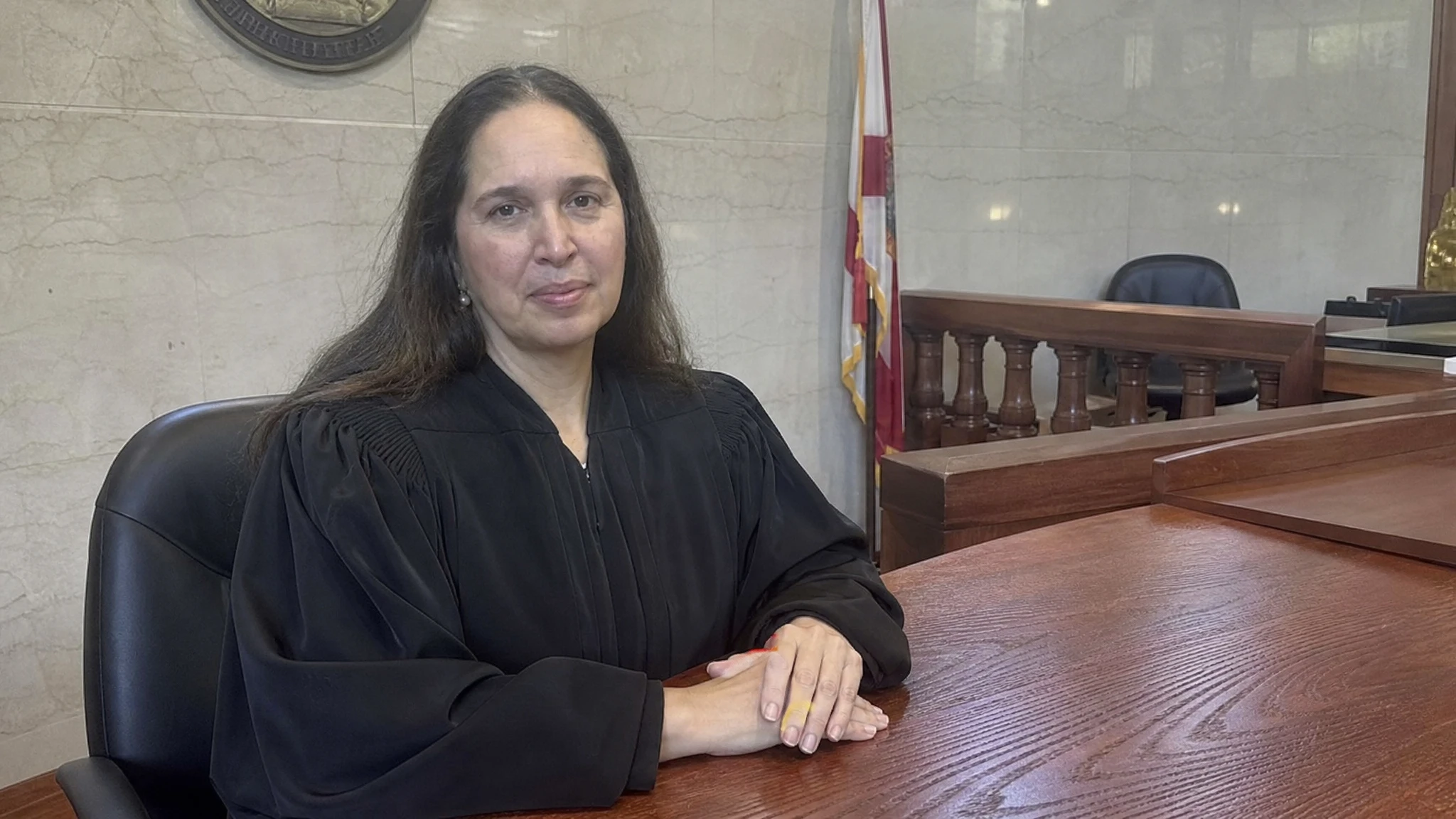
What Is the Judge Talwani Trump Grant Lawsuit?
The Judge Talwani Trump grant lawsuit is a federal declaratory-judgment case over a regulation called the Termination Clause, not a class action or a personal-injury suit. Twenty states led by New Jersey, three governors acting in their official capacities, and the District of Columbia sued the U.S. Office of Management and Budget, OMB Director Russell Vought, and the heads of eleven federal grant-making agencies in the U.S. District Court for the District of Massachusetts.
The case is docketed as State of New Jersey, et al. v. U.S. Office of Management and Budget, et al., Civil Action No. 1:25-cv-11816-IT, and was filed June 24, 2025. It asks the court to clarify what a 2020 OMB regulation, 2 C.F.R. § 200.340, actually permits: whether a federal agency can terminate a grant it already awarded on the ground that the grant no longer fits agency priorities the administration adopted after the money was committed. The plaintiffs are not seeking damages for grants already cut; they asked only for a declaratory ruling on how the regulation may be used going forward.
Judge Indira Talwani granted the states summary judgment on Count I of their amended complaint on July 17, 2026, ruling that the Termination Clause does not authorize cutting a grant based on priorities an agency identifies only after the award was made. The court denied the government's motion to dismiss that same count, while two additional counts pled as alternative theories remain pending.
“This case concerns the "Termination Clause" in 2 C.F.R. § 200.340 (the "Regulation"), which was promulgated by OMB in 2020 and revised in 2024, and in parallel regulations issued by the Defendant grant-making agencies.”
Source: U.S. District Court, District of Massachusetts, State of New Jersey v. U.S. Office of Management and Budget, Civil Action No. 1:25-cv-11816-IT, Memorandum & Order, Document 122, at 1 (July 17, 2026)
Why Was the Judge Talwani Trump Grant Lawsuit Filed?
The states filed the Judge Talwani Trump grant lawsuit because federal agencies began terminating billions of dollars in previously awarded grants starting in early 2025, citing a regulation the states say was never written to allow that. Two executive orders set the terminations in motion: a January 20, 2025 order creating the Department of Government Efficiency, and a February 26, 2025 order directing every agency head to review existing grants and terminate or modify them to "reduce overall Federal spending" and "advance the policies of the Administration."
Agencies then invoked 2 C.F.R. § 200.340(a)(4), the Termination Clause, in the cancellation letters themselves. According to the states' court filings, a Department of the Interior letter to California cited the clause because a Fish and Wildlife Service award "no longer effectuates the priorities" of the agency, and an EPA letter to Colorado stated that "the objectives of the award are no longer consistent with EPA funding priorities." The states argue the clause was written to let agencies end a grant when new evidence shows the project itself cannot achieve its original goals, not to let an incoming administration cancel a grant because its own priorities are different from the ones in place when the money was awarded.
Separate executive orders targeting "equity-related" grants, "gender ideology" in federally funded programs, and funding tied to sanctuary jurisdictions supplied additional grounds agencies cited when canceling specific awards, which the states' complaint treats as evidence of the same underlying practice rather than as separate legal claims.
What Harms Does the Judge Talwani Trump Grant Lawsuit Allege?
The Judge Talwani Trump grant lawsuit identifies three categories of programs that lost federal funding under the disputed terminations: public-safety and hate-crimes grants, school food-security grants, and university research grants. Each is a financial and programmatic loss to a state agency or institution, not a personal injury, and the states' court filings cite specific terminated awards for each category.
Public-Safety and Hate-Crimes Grant Losses
A hate-crimes grant is federal funding awarded to a state or local agency specifically to investigate, prosecute, or prevent crimes motivated by bias, distinct from general law-enforcement funding.
New Jersey's court declaration states that the U.S. Department of Justice terminated two awards to the state under the Matthew Shepard and James Byrd Hate Crimes Prevention Program, funding the states' filings describe as supporting work to combat violent crime and hate crimes. The termination letters the states filed with the court cite the Termination Clause as the stated basis for ending the awards.
School Food-Security Grant Losses
A cooperative agreement in this context is a federal grant structure in which USDA jointly administers a program, here local food purchasing for schools and child care providers, with the awarded state agency.
Illinois's court declaration states that USDA terminated an approximately $26 million award to the Illinois State Board of Education under the Local Food for Schools and Child Care Cooperative Agreement program, funding the states describe as supporting local food purchasing for school and child care meal programs.
University Research Grant Losses
A federal research grant to a public university funds a specific, already-approved research or program activity at that institution, distinct from a state agency's own operating budget.
Wisconsin's court declaration describes numerous grant terminations affecting the University of Wisconsin-Madison. The states' broader filings describe additional terminated research and initiative funding across multiple plaintiff states, cited in the litigation as part of the same pattern of Termination Clause-based cancellations rather than as isolated, unrelated cuts.
What Is the Current Status of the Judge Talwani Trump Grant Lawsuit?
The current status of the Judge Talwani Trump grant lawsuit is that the states have won on the central legal question, while two remaining counts in the case stay open. Judge Talwani granted the states' motion for summary judgment on Count I on July 17, 2026, denied the government's motion to dismiss that count, and left Counts II and III, pled as alternative theories, pending for further proceedings.
State of New Jersey v. U.S. Office of Management and Budget
The states filed their original complaint on June 24, 2025, and an amended complaint on July 31, 2025, in the U.S. District Court for the District of Massachusetts. Judge Indira Talwani, an Obama appointee, has presided over the case throughout.
| Court | U.S. District Court, District of Massachusetts |
| Case Number | 1:25-cv-11816-IT |
| Judge | Indira Talwani |
| Filed | June 24, 2025 (amended complaint July 31, 2025) |
| Plaintiffs | 20 states, 3 governors, and the District of Columbia |
| Ruling | Summary judgment granted to plaintiffs on Count I, July 17, 2026 |
The July 17, 2026 order resolved only Count I, the states' claim under the Declaratory Judgment Act and the Administrative Procedure Act. The court's order directed the states to advise whether they still wish to pursue Counts II and III, pled as alternative theories, now that Count I has been decided in their favor, and the government's motion to dismiss those two counts remains pending.
Did the States Win Money Damages in the Judge Talwani Trump Grant Lawsuit?
No. The Judge Talwani Trump grant lawsuit did not seek or win money damages, because the states asked only for a declaratory judgment clarifying what the Termination Clause regulation permits going forward.
The states' amended complaint expressly states they do not seek damages or any other relief concerning grants that have already been terminated. The practical value of the July 17, 2026 ruling to the plaintiff states is that it blocks agencies from relying on the same Termination Clause theory to cancel other currently awarded grants or grants awarded to the plaintiff states in the future, not a payout tied to funds already cut.
Judge Talwani Trump Grant Lawsuit Updates
Judge Talwani Trump grant lawsuit updates track one federal case, not a consolidated multidistrict litigation, so this section follows the docket's own procedural history rather than a monthly pending-case count. As of September 2026, the central legal question has been decided in the states' favor, and two remaining counts are still pending before the same court.
Full Judge Talwani Trump Grant Lawsuit Timeline
Judge Talwani Grants Summary Judgment to the States
Judge Indira Talwani ruled that 2 C.F.R. § 200.340's Termination Clause does not permit terminating a grant based on agency priorities identified only after the award was made, granting the states' motion for summary judgment on Count I and denying the government's motion to dismiss that count.
States File an Amended Complaint
The plaintiff states filed their amended complaint on July 31, 2025, the operative pleading the July 2026 summary judgment ruling was decided on, adding factual declarations from individual state agencies documenting specific terminated grants.
Twenty States File the Original Complaint
New Jersey, Massachusetts, New York, and seventeen other states, later joined by three governors and the District of Columbia, filed the original complaint against OMB and the grant-making agencies on June 24, 2025.
Executive Order Directs Agencies to Review and Terminate Grants
President Trump's Executive Order 14222 directed every agency head to review existing contracts and grants within 30 days and terminate or modify those that did not align with the administration's cost-cutting and policy goals, the order the states' complaint identifies as the trigger for the terminations at issue.
How Did OMB and the Trump Administration Defend the Grant Terminations?
OMB and the co-defendant agencies argued in court filings that the Termination Clause imposes no binding condition on the states at all, and that requiring agencies to honor a grant's original priorities would improperly limit a president's authority to redirect the executive branch's own spending priorities. Judge Talwani rejected both arguments in the July 17, 2026 order.
On the first point, the government's reply brief argued that no state "can reasonably claim to be surprised" that an agency invoked authority already written into the Code of Federal Regulations. The court disagreed, applying the Supreme Court's Pennhurst standard for conditions attached to federal spending, which requires that a state be able to "ascertain what is expected of it" at the time it accepts a grant. Because the Termination Clause's own rulemaking history showed OMB adopted it to cover cases where new evidence proves a project's original goals are unachievable, not cases where an incoming administration's priorities simply differ, the court held that letting agencies retroactively redefine "agency priorities" after the award denies states the clear notice Pennhurst requires.
On the second point, defendants argued that the states' reading of the clause would improperly constrain OMB's core function of "supporting each President in implementing his or her vision across the Executive Branch." The court found this did not follow from its ruling, noting that nothing in its interpretation stops a president or agency from setting new program goals and priorities before awarding new grants; the ruling requires only that grantees be told the termination conditions that will apply before, not after, they accept an award.
Is the Judge Talwani Trump Grant Lawsuit the Same as Her Mail-In Voting Ruling?
No. Judge Talwani separately presided over a different federal case challenging a 2025 Trump executive order that sought to restrict mail-in ballot counting, brought by a similar coalition of Democratic-led states and reported on extensively through mid-2026 by outlets including the Associated Press and Democracy Docket. That case involves different named defendants (the U.S. Postal Service and related federal officials, not OMB and grant-making agencies), a different legal question (the constitutionality of an elections-related executive order, not the meaning of a grant-termination regulation), and a separate docket, and it has followed its own path through emergency stay requests, including proceedings before the U.S. Supreme Court in 2026. Sharing the same presiding judge and a similar list of plaintiff states is not evidence the two cases are legally connected.
| Case | Subject | Defendants | Status as of September 2026 |
|---|---|---|---|
| States v. OMB (this page) | Whether agencies can terminate grants based on new priorities | OMB, OMB Director Vought, grant-making agency heads | States won summary judgment on Count I, July 17, 2026; two counts pending |
| Mail-in voting executive order case (unrelated) | Constitutionality of restricting mail ballot counting | U.S. Postal Service and related federal officials | Contested through 2026 with Supreme Court involvement; separate docket |
Frequently Asked Questions
What is the Judge Talwani Trump grant lawsuit about?
The Judge Talwani Trump grant lawsuit is a federal case in which 20 states, three governors, and the District of Columbia sued the U.S. Office of Management and Budget and grant-making agency heads over a regulation the government used to cancel already-awarded federal grants, arguing the regulation does not permit terminations based on priorities adopted after the grants were made.
Is the Judge Talwani Trump grant lawsuit a class action?
No. It is a declaratory-judgment case brought directly by state governments and three governors, not a class action or multidistrict litigation, and there is no private class of consumers or claimants to join.
Did the states get any money from the lawsuit?
No money changed hands. The states asked only for a declaratory ruling clarifying what the Termination Clause regulation permits, and their complaint specifically disclaimed any damages claim for grants that had already been terminated.
What did Judge Talwani actually rule in the case?
Judge Talwani ruled on July 17, 2026 that 2 C.F.R. § 200.340's Termination Clause does not allow a federal agency to cancel a grant because the agency's own priorities changed after the grant was awarded, granting the states summary judgment on that claim and denying the government's motion to dismiss it.
Is the case over?
Not entirely. The July 17, 2026 ruling resolved only Count I of the states' amended complaint. Two additional counts, pled as alternative legal theories, remained pending before the court as of this writing, and the government's motion to dismiss those counts had not yet been decided.
Is this the same case as Judge Talwani's mail-in voting ruling?
No. The grant-termination case covered on this page and Judge Talwani's separate ruling on Trump's mail-in voting executive order are two distinct federal cases with different defendants and different legal questions. They share the same presiding judge and a similar group of plaintiff states, which is not evidence the cases are connected.