
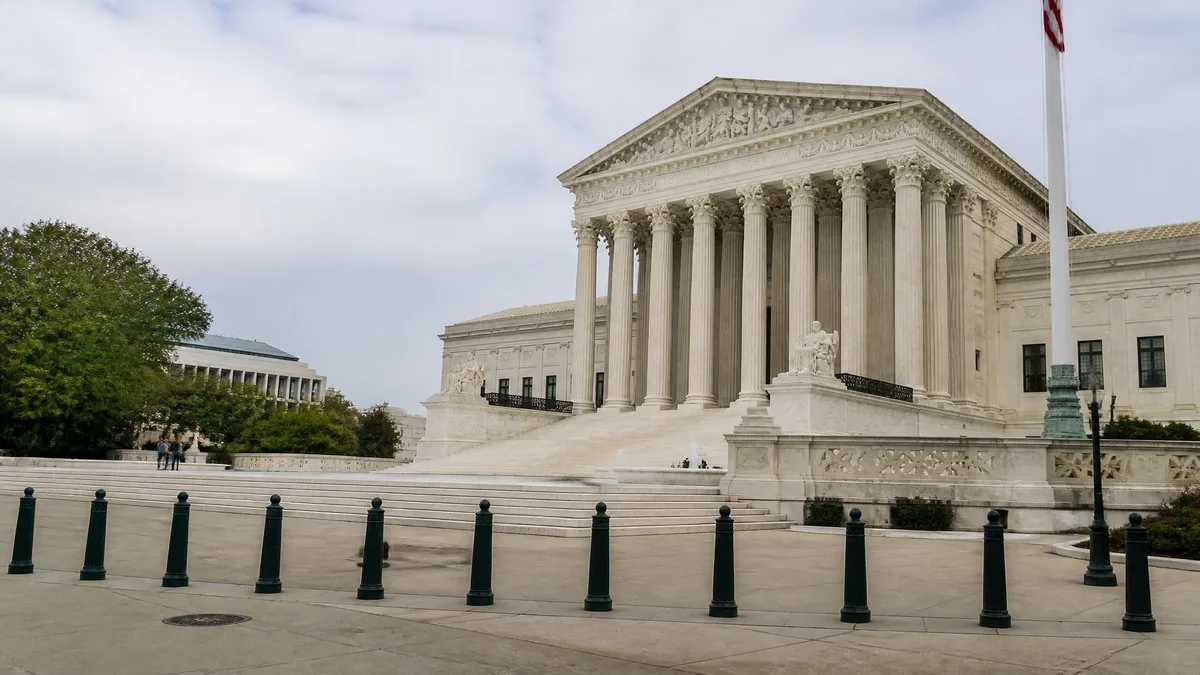
What Is the GOP Senate Campaign Finance Lawsuit?
The GOP Senate Campaign Finance lawsuit is National Republican Senatorial Committee v. Federal Election Commission, the constitutional challenge in which Republican party committees asked the courts to strike down federal limits on party coordinated spending. The U.S. Supreme Court decided it as No. 24-621 on June 30, 2026, by a 6-3 vote.
The plaintiffs are the National Republican Senatorial Committee, the National Republican Congressional Committee, then-Senator JD Vance, and then-Representative Steve Chabot. The defendants are the Federal Election Commission and its commissioners. The case began in the U.S. District Court for the Southern District of Ohio in 2022.
It is a civil suit about whether a federal statute is constitutional. It is not a class action or an MDL, and the plaintiffs sought no money damages. Other proceedings involving the same party committees carry similar labels, so a separate section below tells them apart.
“But FECA still limits a political party’s coordinated expenditures. As the name implies, a political party’s coordinated expenditures are the party’s expenditures on, for example, advertisements produced or distributed in consultation with a candidate’s campaign.”
Source: National Republican Senatorial Committee v. Federal Election Commission, No. 24-621, 609 U.S. ___ (2026), Opinion of the Court (Kavanaugh, J.), slip op. at 2 (June 30, 2026)
Why Was the GOP Senate Campaign Finance Lawsuit Filed?
The GOP Senate Campaign Finance lawsuit was filed because the Republican Party's national Senate and House committees, then-Senator JD Vance, and then-Representative Steve Chabot wanted to end the federal limits on how much a party may spend in coordination with its candidates. They filed the complaint on November 4, 2022, in the Southern District of Ohio.
The limits sit in 52 U.S.C. § 30116(d) and vary by state and by office. Under the 2026 figures in the Supreme Court's opinion, a national party committee could spend from $130,600 to $4,071,800 in coordination with one Senate candidate. For one House candidate the range was $65,300 to $130,600.
The plaintiffs argued that the limits violate the First Amendment. They said a 2001 Supreme Court decision upholding the limits, known as Colorado II, had been undermined by later rulings in McCutcheon v. FEC (2014) and FEC v. Ted Cruz for Senate (2022). Their complaint asked for a declaration that the limits are unenforceable and an injunction barring the FEC from enforcing them.
Congress kept the limits for one main reason. The Supreme Court's opinion describes it as preventing a donor from circumventing the caps on contributions to candidates by giving a large sum to a party that then supports a particular candidate.
What Harms Does the GOP Senate Campaign Finance Lawsuit Allege?
The GOP Senate Campaign Finance lawsuit alleges three distinct harms from the coordinated spending limits: restricted party speech, added costs and redundancy, and weakened parties compared with outside groups. Each is a constitutional or institutional harm to the party committees rather than an injury to a group of individual claimants. Each is defined below in plain language, followed by what the court record says about it.
Restricted Party Speech
Restricted party speech means a legal cap on how much a political party can spend to communicate its message, for example through advertising.
The plaintiffs argued that parties have a First Amendment right to spend as they see fit on political advertising in coordination with their own candidates. The Sixth Circuit recorded that, under the limits in effect for the 2021-2022 cycle, the National Republican Senatorial Committee spent roughly $15.5 million on coordinated expenditures with Republican Senate nominees. The National Republican Congressional Committee spent roughly $8.3 million with House nominees.
The Supreme Court majority accepted this framing. It wrote that the spending limits necessarily abridge political parties' freedom of speech, because most communication today requires spending money.
Added Costs and Redundancy
Redundancy costs are the extra expenses an organization bears when it must duplicate work to stay legally separate from a campaign.
The Sixth Circuit described the plaintiffs' second complaint this way: the no-coordination requirements raise costs, create redundancies, and discourage parties from communicating with their candidates and spending money efficiently.
The Supreme Court's syllabus lists the same point among the ways the limits burden parties. It says they impose additional monetary costs and burdens on political parties.
Weakened Parties Against Outside Groups
Outside groups, such as super PACs, are organizations that spend on elections independently of candidates and parties.
The plaintiffs said the limits left parties weaker than outside groups, which may spend without these caps. The plaintiffs pointed to the diminished relative power of parties over the last 25 years as undermining a key premise of Colorado II, according to the Court's opinion.
Justice Kavanaugh pressed the same point at the December 2025 argument. He observed that a donor can give huge money to an outside group but not to a party, which leaves parties weaker, according to the Associated Press.
What Is the Current Status of the GOP Senate Campaign Finance Lawsuit?
The current status of the GOP Senate Campaign Finance lawsuit is decided at the Supreme Court and returned to the lower courts. The Court held 6-3 on June 30, 2026 that the party coordinated expenditure limits violate the First Amendment. It reversed the en banc Sixth Circuit and remanded the case. This research found no reported ruling after the remand as of October 29, 2026.
National Republican Senatorial Committee v. Federal Election Commission
Justice Brett Kavanaugh wrote the majority opinion, joined by Chief Justice Roberts and Justices Thomas, Alito, Gorsuch, and Barrett. Justice Elena Kagan wrote the dissent, joined by Justices Sotomayor and Jackson.
The Court also rejected the argument that the case had become moot. It found the dispute justiciable because Vice President Vance still has an active Statement of Candidacy on file with the FEC showing his intent to run for Senate in 2028, and a campaign committee that has raised money for a Senate race.
| Court | Supreme Court of the United States |
| Case Number | 24-621 |
| Plaintiffs | National Republican Senatorial Committee; National Republican Congressional Committee; JD Vance; Steve Chabot |
| Defendants | Federal Election Commission and its commissioners |
| Intervenors | Democratic National Committee; Democratic Senatorial Campaign Committee; Democratic Congressional Campaign Committee |
| Court-Appointed Amicus | Roman Martinez, defending the Sixth Circuit judgment |
| Statute at Issue | 52 U.S.C. § 30116(d), the Federal Election Campaign Act's party coordinated expenditure limits |
| Lower Courts | S.D. Ohio, No. 1:22-cv-00639 (Judge Douglas R. Cole); Sixth Circuit en banc, No. 24-3051, 117 F.4th 389 (decided Sept. 5, 2024) |
| Argued | December 9, 2025 |
| Decided | June 30, 2026 |
| Disposition | Reversed and remanded |
| Proceeding Type | Constitutional challenge by party committees, not a class action or MDL |
Does the GOP Senate Campaign Finance Lawsuit Involve a Settlement?
No. The GOP Senate Campaign Finance lawsuit ended in a Supreme Court judgment rather than a settlement, and the plaintiffs sought no money damages.
The complaint's prayer for relief asked for a declaratory judgment that the party coordinated expenditure limits are unenforceable and a permanent injunction against the FEC enforcing them. No payout fund exists, and nobody can file a claim for compensation under this case.
The ruling does not lift every limit on political money. The opinion rests on the combination of base contribution limits, earmarking rules, and disclosure requirements, which remain the tools for guarding against circumvention.
Justice Kagan's dissent argued the effect on donors will still be large. It said a donor could give a party as much as half a million dollars to cover a candidate's bills, compared with the $7,000 that donor can give the candidate directly. The majority concluded that earmarking rules and disclosure requirements are enough to address circumvention.
GOP Senate Campaign Finance Lawsuit Updates
These GOP Senate Campaign Finance lawsuit updates track each verified filing, argument, and ruling, newest first. The Supreme Court decided the main case on June 30, 2026, with no settlement involved. Entries about Senate Majority PAC v. FEC are labeled because that is a separate proceeding.
Full GOP Senate Campaign Finance Lawsuit Timeline
Judge Howell Dismisses Senate Majority PAC's Suit Against the FEC
Judge Beryl A. Howell of the U.S. District Court for the District of Columbia dismissed Senate Majority PAC v. FEC, No. 26-cv-336, without prejudice on September 15, 2026, granting the National Republican Senatorial Committee's motion to dismiss. This is a separate case from NRSC v. FEC, brought by a Democratic-aligned super PAC over the FEC's inaction on its complaint against the NRSC.
Supreme Court Strikes Down Party Coordinated Expenditure Limits 6-3
The Supreme Court ruled in National Republican Senatorial Committee v. FEC, No. 24-621, that the Federal Election Campaign Act's limits on political party coordinated expenditures violate the First Amendment. Justice Kavanaugh wrote for six Justices, the Court overruled Colorado II to the extent it retained any vitality, and Justice Kagan dissented for three.
FEC Tells D.D.C. It Lacks a Quorum in Senate Majority PAC's Case
The FEC filed a notice on April 6, 2026 in Senate Majority PAC v. FEC saying it lacked the four-commissioner quorum needed to litigate, and the NRSC moved to intervene the next day. The FEC had been without a quorum since April 2025, according to Judge Howell's later opinion.
Senate Majority PAC Sues the FEC Over Its Complaint Against the NRSC
Senate Majority PAC filed its suit in the District of Columbia on February 5, 2026, 176 days after it filed an administrative complaint on August 13, 2025. The complaint alleged the NRSC paid for candidate television ads using funds from specialty accounts, in violation of the contribution limits.
Supreme Court Hears Oral Argument in NRSC v. FEC
The Supreme Court heard argument in NRSC v. FEC on December 9, 2025, with four advocates: Noel Francisco for the Republican plaintiffs, a Justice Department lawyer for the government, court-appointed amicus Roman Martinez, and Marc Elias for the intervening Democratic committees. Reporting at the time described Justices Thomas, Alito, and Kavanaugh as skeptical of the limits.
Supreme Court Grants Review
The Supreme Court granted certiorari in No. 24-621 in 2025, as the opinion's citation to 606 U.S. 931 shows. The government ultimately agreed with the plaintiffs, so the Court appointed Roman Martinez as amicus curiae to defend the Sixth Circuit's judgment.
En Banc Sixth Circuit Upholds the Limits Under Colorado II
The en banc Sixth Circuit, in an opinion by Chief Judge Sutton in No. 24-3051, answered the certified question in the negative and upheld the coordinated expenditure limits on September 5, 2024. The court said it was bound by the Supreme Court's 2001 Colorado II decision, although several judges questioned that precedent in separate writings.
Sixth Circuit Hears the Case En Banc
The full Sixth Circuit heard argument in NRSC v. FEC, No. 24-3051, on June 12, 2024. The case reached the en banc court because the Federal Election Campaign Act directs district courts to certify constitutional challenges to it, under 52 U.S.C. § 30110.
Judge Cole Opens a Three-Month Discovery Period
Judge Douglas R. Cole of the Southern District of Ohio ordered a three-month discovery period in August 2023, according to a report quoted on the Election Law Blog. The Sixth Circuit's opinion confirms that the parties conducted discovery for three months before the district court certified the constitutional question.
Republican Committees, Vance, and Chabot File Suit in Ohio
The National Republican Senatorial Committee, the National Republican Congressional Committee, JD Vance, and Steve Chabot filed their complaint against the FEC and its commissioners on November 4, 2022, as No. 1:22-cv-00639 in the Southern District of Ohio. The complaint challenged the party coordinated expenditure limits under the First Amendment.
What Position Did the FEC Take in the GOP Senate Campaign Finance Lawsuit?
The FEC defended the coordinated expenditure limits in the lower courts but switched sides before the Supreme Court, where the United States agreed with the plaintiffs that Colorado II no longer retains vitality. The Associated Press reported that the FEC changed its view after President Trump took office for his second term.
Because the government stopped defending the statute, the Court appointed Roman Martinez as amicus curiae to argue for the Sixth Circuit's judgment. The Democratic National Committee, the Democratic Senatorial Campaign Committee, and the Democratic Congressional Campaign Committee also intervened to defend the limits.
The dissent put the opposing case in terms of corruption risk. Justice Kagan wrote that the limits prevent circumvention of the contribution caps, and that the majority again disregards stare decisis by overruling Colorado II.
| Party | Role | Position |
|---|---|---|
| National Republican Senatorial Committee and National Republican Congressional Committee | Plaintiffs | The limits violate the First Amendment |
| JD Vance and Steve Chabot | Plaintiffs, then a Senate candidate and a member of the House | The limits violate the First Amendment |
| Federal Election Commission and the United States | Defendants | Defended the limits in the lower courts, then agreed at the Supreme Court that they are unconstitutional |
| Roman Martinez | Court-appointed amicus curiae | Defended the Sixth Circuit judgment and the limits |
| DNC, DSCC, and DCCC | Intervenors | The limits remain constitutional |
How Does the GOP Senate Campaign Finance Lawsuit Compare to Related Cases?
The GOP Senate Campaign Finance lawsuit is separate from other cases that involve the same committees, and a shared name does not make them the same case. The main distinction is between NRSC v. FEC, which struck down the party spending limits, and Senate Majority PAC v. FEC, a different suit that targeted the NRSC.
Senate Majority PAC, a Democratic-aligned super PAC, sued the FEC in the District of Columbia in 2026 to force action on its complaint accusing the NRSC of using specialty accounts to pay for candidate ads. The FEC said it lacked a quorum, the NRSC intervened, and Judge Howell dismissed the case without prejudice on September 15, 2026. It did not address the First Amendment question that NRSC v. FEC decided.
NRSC v. FEC also sits in a line of earlier Supreme Court decisions. Colorado II upheld the limits in 2001, and the new ruling overruled it to the extent it retained any vitality. Citizens United v. FEC, decided in 2010, opened the door to unlimited independent spending, which the Associated Press described as the background to this ruling.
| Case | Parties | Subject | Status |
|---|---|---|---|
| NRSC v. FEC, No. 24-621 | Republican party committees, Vance, and Chabot against the FEC | First Amendment challenge to party coordinated expenditure limits | Decided in 2026, limits struck down |
| Senate Majority PAC v. FEC, No. 26-cv-336 (D.D.C.) | Senate Majority PAC against the FEC, with the NRSC intervening | FEC inaction on a complaint about NRSC specialty account spending | Dismissed without prejudice on Sept. 15, 2026 |
| FEC v. Colorado Republican Federal Campaign Committee (Colorado II) | FEC and a Colorado party committee | Constitutionality of the same coordinated expenditure limits | Decided in 2001, overruled in 2026 to the extent it retained any vitality |
| Citizens United v. FEC | Citizens United and the FEC | Independent political spending by corporations | Decided in 2010, not overruled |
Frequently Asked Questions
What is the GOP Senate Campaign Finance lawsuit about?
The GOP Senate Campaign Finance lawsuit is National Republican Senatorial Committee v. Federal Election Commission, a challenge by Republican party committees, JD Vance, and Steve Chabot to the federal limits on how much a party may spend in coordination with its candidates.
Is the GOP Senate Campaign Finance lawsuit a class action or an MDL?
No. The GOP Senate Campaign Finance lawsuit is a single constitutional challenge brought by party committees and two candidates, not a class action or an MDL, and no group of claimants can join it.
Did the GOP Senate Campaign Finance lawsuit succeed at the Supreme Court?
Yes. The Supreme Court ruled 6-3 on June 30, 2026 that the party coordinated expenditure limits violate the First Amendment, reversed the en banc Sixth Circuit, and remanded the case.
Does the GOP Senate Campaign Finance ruling remove all campaign donation limits?
No. The ruling strikes down only the limits on party coordinated expenditures, and the opinion relies on base contribution limits, earmarking rules, and disclosure requirements as the remaining safeguards.
Was JD Vance a plaintiff in the GOP Senate Campaign Finance lawsuit?
Yes. JD Vance joined the lawsuit as a plaintiff when he was a candidate for Senate, and the Court found the dispute still justiciable because he keeps an active Statement of Candidacy on file for a 2028 Senate run.
Is the GOP Senate Campaign Finance lawsuit the same as Senate Majority PAC v. FEC?
No. The GOP Senate Campaign Finance lawsuit challenged the party spending limits and was decided by the Supreme Court, while Senate Majority PAC v. FEC was a separate District of Columbia suit over FEC inaction that Judge Howell dismissed without prejudice on September 15, 2026.