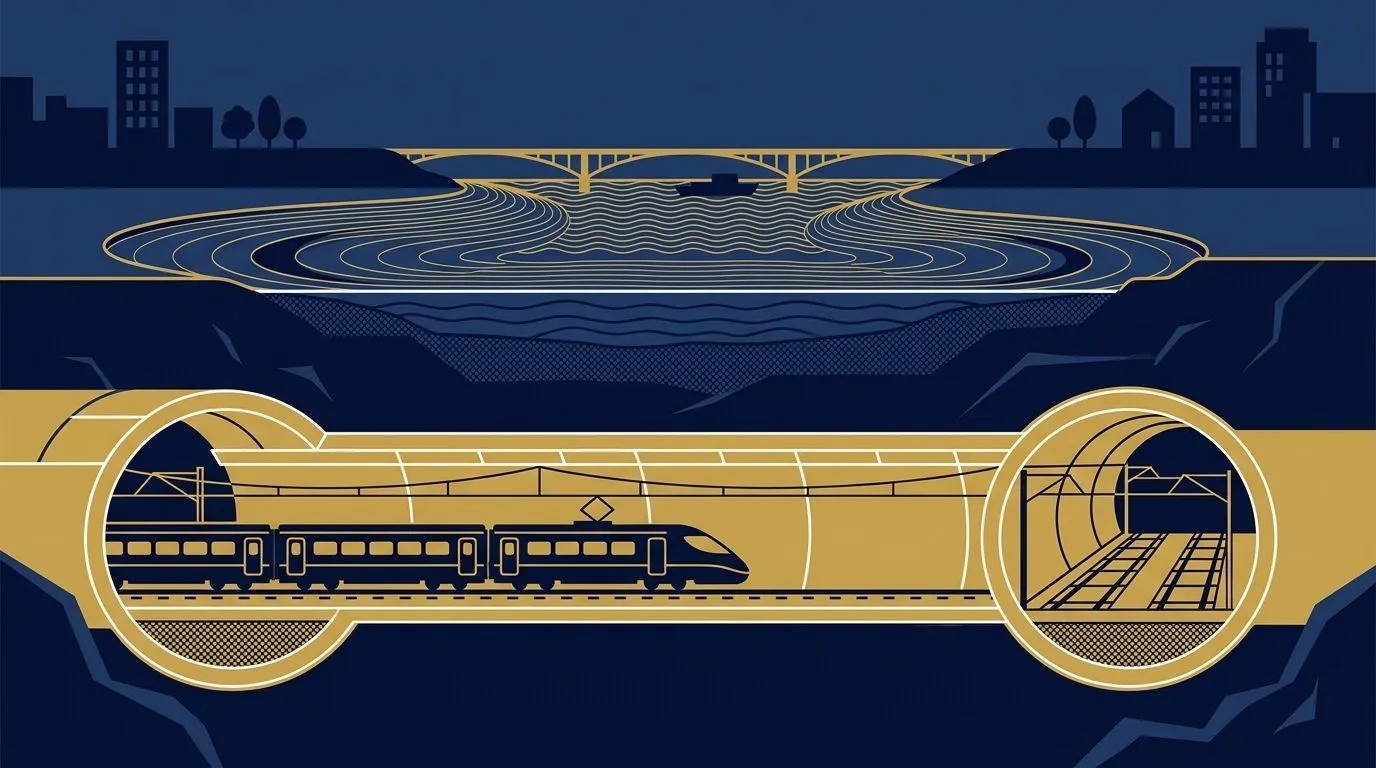
The Gateway Tunnel project, a long-running effort to build new rail tunnels under the Hudson River between New Jersey and Manhattan, has received a commitment of $70 million as part of an ongoing push to keep the estimated $20 billion initiative moving forward. The funding is a small fraction of the total price tag, but backers say incremental commitments like this one help sustain momentum on one of the largest and most complex infrastructure undertakings in the country.
Why the tunnel is needed
At the center of the Gateway Program is the aging North River Tunnel, which has carried Amtrak and NJ Transit trains under the Hudson River since 1910. The century-old tunnel suffered significant saltwater damage during Superstorm Sandy in 2012, corroding electrical and signal systems and accelerating wear on its aging infrastructure.
The Northeast Corridor, which the tunnel serves, is the most heavily used passenger rail line in the country and runs through a region that accounts for roughly a fifth of the nation's economic output.
Funding history and political back-and-forth
The Gateway Program has had a difficult funding history, stalling for years amid disagreements between federal and state governments over how costs should be split. Momentum picked up when the federal government agreed to fund a majority of the project through a combination of grants and loans, with New York, New Jersey, and Amtrak also contributing.
Even with major funding agreements in place, the project has periodically faced delays and disputes over the release of already-approved money, illustrating how even well-funded megaprojects remain vulnerable to shifts in federal budgeting.
Why small commitments still matter
A $70 million commitment is modest next to a $20 billion project, but incremental funding plays an important role in how large infrastructure programs actually get built. Megaprojects like Gateway are typically funded in phases tied to construction milestones and budget cycles.
Each new commitment is also a signal: it shows a funding partner remains engaged and that the project retains enough political and institutional support to keep drawing new dollars, even when the overall funding picture is not yet complete.