
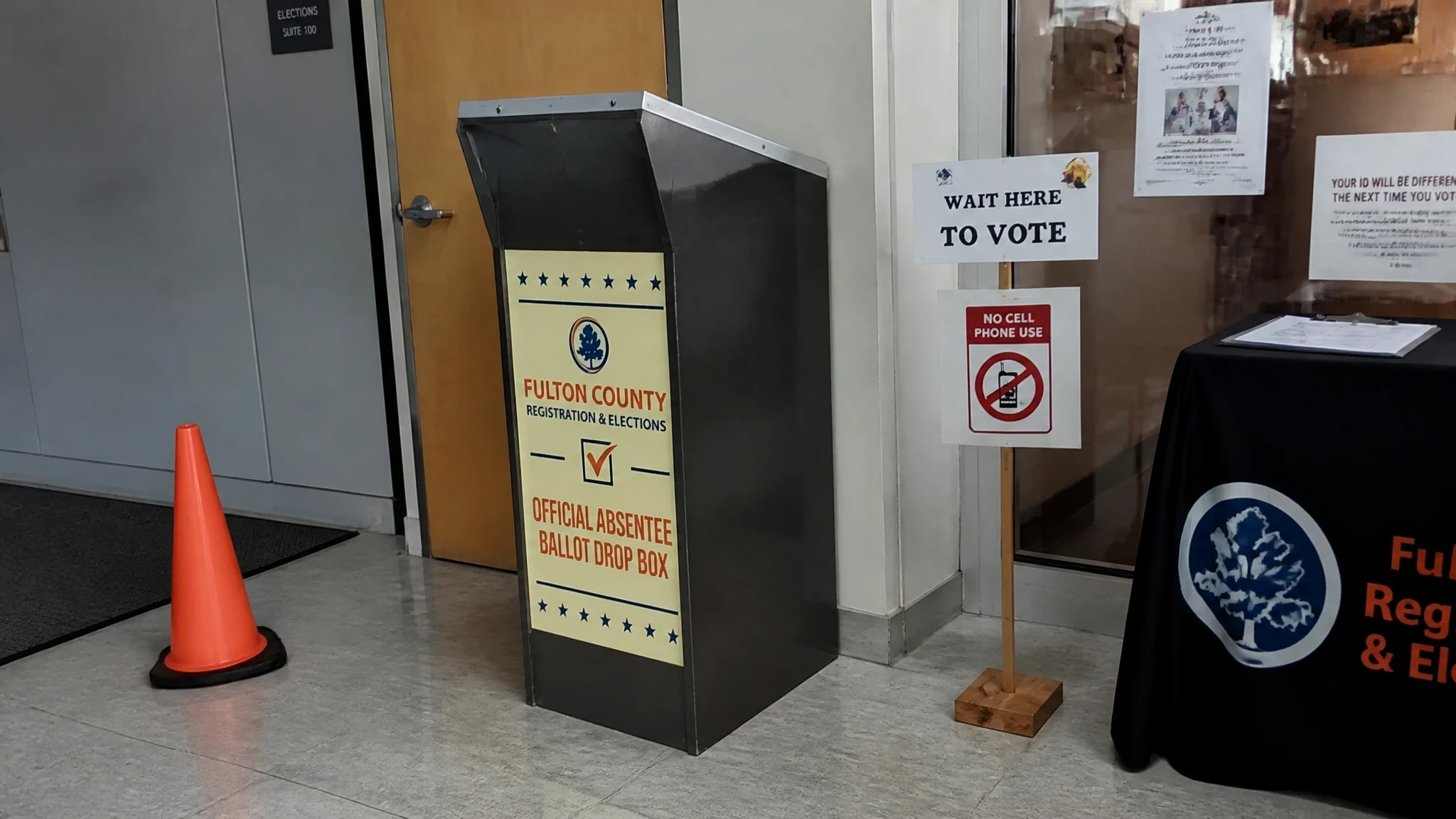
What Is the Fulton County Ballots Return Lawsuit?
The Fulton County Ballots Return lawsuit is a federal civil proceeding, Pitts v. United States, in which Fulton County, Georgia asked a court to order the return of 2020 election records that the FBI seized on January 28, 2026. It is not a class action or a multidistrict litigation.
The petitioners are county officials and county bodies, and the respondent is the United States. They moved under Federal Rule of Criminal Procedure 41(g), the rule that lets a person aggrieved by a government seizure ask a court to return the property. The Fulton County Ballots Return lawsuit was assigned to U.S. District Judge J.P. Boulee, who denied the motion on May 6, 2026.
The seizure grew out of a federal criminal investigation into the 2020 presidential election in Fulton County. Georgia's 2020 presidential votes were counted three times, including once by hand, and each count affirmed Joe Biden's win, according to the Associated Press.
“On January 28, 2026, after obtaining a search warrant signed by a United States Magistrate Judge (hereinafter, the “Magistrate Judge”), the Federal Bureau of Investigation (“FBI”) seized over 600 boxes of Fulton County's 2020 election records. Soon after, on February 5, 2026, Petitioners filed an Emergency Motion for Return of Property pursuant to Federal Rule of Criminal Procedure 41(g).”
Source: Pitts v. United States, No. 1:26-cv-00809-JPB (N.D. Ga. May 6, 2026), Order, Document 108, pages 1 and 2
Why Was the Fulton County Ballots Return Lawsuit Filed?
The Fulton County Ballots Return lawsuit was filed because county officials argued that the FBI's seizure of their original 2020 election records was improper and unconstitutional. Fulton County Board of Commissioners Chairman Robb Pitts, the county, its elections board, and its court clerk asked the court to order the records back.
According to the court's order, the county argued that the warrant lacked probable cause, that the supporting affidavit left out important facts, and that the manner of the seizure was flawed. The county also argued that the seizure violated its Tenth Amendment role in administering elections and that the warrant was sought in bad faith after the Justice Department met resistance in a separate civil case over the same records, according to CBS News. The court rejected the Tenth Amendment and bad-faith arguments.
The government's side of the story is a criminal inquiry. The Justice Department has said it is investigating “irregularities that occurred during the 2020 presidential election in the County” and has pointed to two federal laws, one requiring election records to be kept for 22 months and one barring false or fraudulent ballots, according to the Associated Press. The court found that the investigation began with a January 5, 2026 referral from Kurt Olsen, the presidentially appointed Director of Election Security and Integrity.
What Harms Does the Fulton County Ballots Return Lawsuit Allege?
The Fulton County Ballots Return lawsuit alleges three distinct categories of harm tied to the seizure. Each one is the county's own characterization, and the court ruled against the county on the legal test that decides whether it may hear the dispute.
Unreasonable Seizure
An unreasonable seizure is a government taking of property without a valid legal basis, such as a warrant that lacks probable cause or is carried out improperly.
The county alleged that the warrant was defective and that the affidavit omitted facts that undercut probable cause. The court agreed the affidavit was imperfect, including a passing statement about 2020 recount totals that the judge said may have been misleading. It still held that the county did not show the government acted with callous disregard for its rights.
Intrusion on Election Administration
Election administration is the work of running elections, including keeping the ballots, tapes, and records that document how votes were cast and counted.
The county argued that a federal seizure of its original election records interferes with the role the Constitution leaves to states and their local officials. The court rejected the Tenth Amendment argument, according to CBS News.
Loss of Access to Original Records
Loss of access means being unable to inspect or use the original documents that a person or office is responsible for keeping.
The county said it needed the originals to answer public records requests and to rebut attacks on the 2020 election. The judge found the county had not shown a need or irreparable harm, because the government had already given the county digital copies of the seized records.
What Is the Current Status of the Fulton County Ballots Return Lawsuit?
The current status of the Fulton County Ballots Return lawsuit is that the district court denied the county's return motion on May 6, 2026 and directed the clerk to close the case. County leaders told Atlanta News First they intend to appeal to the Eleventh Circuit, but no appeal docket was located when this page was last updated, so whether an appeal is pending is unconfirmed.
Pitts v. United States, No. 1:26-cv-00809-JPB (N.D. Ga.)
Judge J.P. Boulee held an evidentiary hearing on March 27, 2026, accepted additional evidence through April 27, 2026, and ruled in a 68-page order on May 6, 2026. He applied the four-factor Richey test that governs pre-indictment return motions and found every factor weighed against exercising equitable jurisdiction.
| Court | U.S. District Court for the Northern District of Georgia, Atlanta Division |
| Case Number | No. 1:26-cv-00809-JPB |
| Judge | J.P. Boulee |
| Petitioners | Robert L. "Robb" Pitts, Fulton County Board of Registration and Elections, Fulton County, Georgia, and Che Alexander, Clerk of Court |
| Respondent | United States of America |
| Motion Filed | February 5, 2026 (amended February 17, 2026) |
| Rule Invoked | Federal Rule of Criminal Procedure 41(g) |
| Result | Motion denied May 6, 2026, case closed |
| Appeal Status | County stated an intent to appeal, no appeal confirmed |
| Class Action or MDL | No |
The Richey factors ask whether the government showed callous disregard for constitutional rights, whether the petitioner needs the material, whether denial causes irreparable injury, and whether an adequate legal remedy exists. The order found the county failed on each one, though it called the seizure “certainly not perfect.”
Is There a Settlement in the Fulton County Ballots Return Lawsuit?
No. There is no settlement in the Fulton County Ballots Return lawsuit, and no one is seeking money damages in it.
The county asked only for the return of seized property. The court denied that request on May 6, 2026, so there is nothing to settle and no compensation fund or claims process attached to the case.
The separate Justice Department suit over the same records, United States v. Alexander, was stayed after the seizure, according to the May 6 order, and it also seeks records rather than damages.
Fulton County Ballots Return Lawsuit Updates
Here are the latest Fulton County Ballots Return lawsuit updates, covering new court filings, rulings, and case-count reports as they're confirmed. No settlement date has been set as of November 2026; the Pitts v. United States case over the seized Fulton County 2020 election records remains in active pretrial litigation. Every verified development is listed in the timeline below, in order.
Full Fulton County Ballots Return Lawsuit Timeline
Fulton Elections Board Sues to Quash State Subpoenas
The Fulton County Board of Registration and Elections filed Allen v. State of Georgia in Fulton County Superior Court in November 2024, asking the court to quash two State Election Board subpoenas for the county's 2020 election materials.
State Election Board Issues a New Subpoena
Georgia's State Election Board issued a new subpoena on October 6, 2025 for all used and void 2020 ballots, ballot stubs, signature envelopes, and corresponding envelope digital files in Fulton County, and the county's elections board moved to quash it.
Justice Department Sues the Fulton County Clerk
The U.S. Attorney General filed United States v. Alexander on December 11, 2025, suing Fulton County Clerk of Court Che Alexander under 52 U.S.C. 20703 for the same 2020 election materials the State Election Board had subpoenaed.
Superior Court Denies the Motion to Quash
The Fulton County Superior Court denied the elections board's motion to quash on December 22, 2025 and ordered the board to provide the materials to the State Election Board once production costs were paid.
Referral to the FBI and Motion to Dismiss
Kurt Olsen, the Director of Election Security and Integrity, formally referred the Fulton County 2020 election matter to the FBI by 9:03 AM on January 5, 2026, and the same day the clerk filed a motion to dismiss the Justice Department's civil suit.
Warrant Application Filed
Thomas C. Albus, U.S. Attorney for the Eastern District of Missouri and a Special Attorney to the Attorney General, submitted a search warrant application and FBI Special Agent Hugh Raymond Evans's supporting affidavit to a magistrate judge on January 27, 2026.
FBI Seizes More Than 600 Boxes in Fulton County
FBI agents executed the warrant on January 28, 2026 and seized more than 600 boxes of Fulton County's 2020 election records from the county's elections hub near Atlanta.
Fulton County Files an Emergency Rule 41(g) Motion
Pitts, the Fulton County Board of Registration and Elections, Fulton County, and Clerk Che Alexander filed an emergency motion for return of property on February 5, 2026, opening Pitts v. United States before Judge J.P. Boulee.
County Amends the Return Motion
The petitioners filed an amended motion for return of property on February 17, 2026, which became the motion the court ultimately decided.
Evidentiary Hearing Held
Judge Boulee held an evidentiary hearing in Pitts v. United States on March 27, 2026, after briefing closed and the parties had tried to mediate. He later allowed the county to submit additional evidence by April 27, 2026, and the county did so.
Judge Denies Fulton County's Request for Return of the Records
Judge Boulee denied the county's amended motion in a 68-page order on May 6, 2026, finding that each of the four Richey factors weighed against exercising equitable jurisdiction, and directed the clerk to close the case.
Judge Ray Quashes the Election Worker Subpoena
Judge William Ray II of the Northern District of Georgia quashed a grand jury subpoena on July 7, 2026 that sought names and contact details of Fulton County employees and volunteers who worked the 2020 election, calling the request's scope staggering and writing that the statute of limitations for any 2020 crime had long expired.
Court Dismisses the NAACP Rule 41(g) Case
Judge Boulee dismissed NAACP v. United States, No. 1:26-cv-01205-JPB, without prejudice on August 19, 2026, holding that Rule 41(g) does not support injunctive relief limiting the government's use of the seized Fulton County records when the petitioners do not ask for the property's return.
What Evidence Matters in the Fulton County Ballots Return Lawsuit?
The evidence that matters in the Fulton County Ballots Return lawsuit is the FBI's search warrant affidavit and the testimony taken at the March 27, 2026 hearing. The affidavit was sworn by FBI Special Agent Hugh Raymond Evans and focused on missing ballot images, duplicate ballots, tabulator tapes, so-called pristine ballots, and the 2020 risk-limiting audit.
The court also weighed earlier reviews of the 2020 election. A report by Seven Hills Strategies, a 2023 report by the Fulton County Performance Review Board, and three Georgia Secretary of State reports from 2022 to 2024 found irregularities and human error, and the first two found no indications of fraud or intentional malfeasance by election officials. The Secretary of State's final report did find possible violations of State Election Board counting rules.
Who Are the Parties in the Fulton County Ballots Return Lawsuit?
The parties in the Fulton County Ballots Return lawsuit are four Fulton County petitioners and the United States as respondent. Several other officials appear in the court's account of how the seizure came about.
| Person or body | Role |
|---|---|
| Robert L. "Robb" Pitts, Chairman, Fulton County Board of Commissioners | Petitioner |
| Fulton County Board of Registration and Elections; Fulton County, Georgia | Petitioners |
| Che Alexander, Clerk of Court for Fulton County | Petitioner |
| United States of America | Respondent |
| J.P. Boulee, U.S. District Judge | Presiding judge |
| Kurt Olsen, Director of Election Security and Integrity | Made the January 5, 2026 referral to the FBI |
| Hugh Raymond Evans, FBI Special Agent | Swore the warrant affidavit |
| Thomas C. Albus, U.S. Attorney, Eastern District of Missouri | Submitted the warrant application on January 27, 2026 |
These roles come from the May 6, 2026 order. The order also notes that Georgia's State Election Board had separately subpoenaed the same records before the seizure.
How Does the Fulton County Ballots Return Lawsuit Compare to Related Cases?
The Fulton County Ballots Return lawsuit is one of several separate proceedings over Fulton County's 2020 election records, and each has its own docket and its own question for the court. Only the first row below is the case this page tracks.
| Matter | Court and status |
|---|---|
| Pitts v. United States, No. 1:26-cv-00809-JPB (this case) | N.D. Ga.; return motion denied May 6, 2026 |
| United States v. Alexander, No. 1:25-cv-07084 | N.D. Ga.; filed December 11, 2025 under 52 U.S.C. 20703, stayed after the seizure as of the May 6 order |
| Allen v. State of Georgia, No. 24CV014632 | Fulton County Superior Court; motion to quash State Election Board subpoenas denied December 22, 2025, stayed after the seizure as of the May 6 order |
| NAACP v. United States, No. 1:26-cv-01205-JPB | N.D. Ga.; dismissed without prejudice August 19, 2026 |
| Grand jury subpoena for 2020 election worker information | N.D. Ga.; quashed July 7, 2026 by Judge William Ray II |
The NAACP case, brought by the NAACP, its Georgia and Atlanta affiliates, the Georgia Coalition for the People's Agenda, and Fulton County voters, did not seek the records back. It asked the court to limit how the government could use them, and Judge Boulee held Rule 41(g) does not allow that kind of request on its own. A separate Republican National Committee suit over Fulton County absentee ballot drop-off locations concerns how voters return ballots in current elections and has no connection to the seized 2020 records.
Frequently Asked Questions
What is the Fulton County ballots return lawsuit about?
The Fulton County ballots return lawsuit is about whether a federal court should order the FBI to return more than 600 boxes of 2020 election records seized from Fulton County, Georgia on January 28, 2026. County officials filed it as Pitts v. United States, and Judge J.P. Boulee denied the request on May 6, 2026.
Is the Fulton County ballots return lawsuit a class action or MDL?
No. The Fulton County ballots return lawsuit is a single federal case, Pitts v. United States, brought by a county, its elections board, its chairman, and its court clerk, so there is no class to join and no multidistrict litigation.
Did the judge order the ballots returned to Fulton County?
No. The judge did not order the ballots returned to Fulton County. Judge Boulee found on May 6, 2026 that the county did not meet the four-factor Richey test, partly because the government had already given the county copies of the records.
Is the Fulton County ballots return lawsuit being appealed?
County leaders said they intend to appeal the Fulton County ballots return ruling to the Eleventh Circuit, but no appeal docket was located when this page was last updated. Whether an appeal is pending remains unconfirmed.
Is there a settlement in the Fulton County ballots return lawsuit?
No. There is no settlement in the Fulton County ballots return lawsuit. The county sought the return of property rather than money, and the court denied that request, so no compensation or claims process exists.
Is the Fulton County ballots return lawsuit the same as the lawsuit over absentee ballot drop-off?
No. The Fulton County ballots return lawsuit concerns seized 2020 election records, while the Republican National Committee's separate suit concerns where voters may return absentee ballots in current elections. They are different cases with different parties.