
What Is the Depo-Provera Lawsuit?
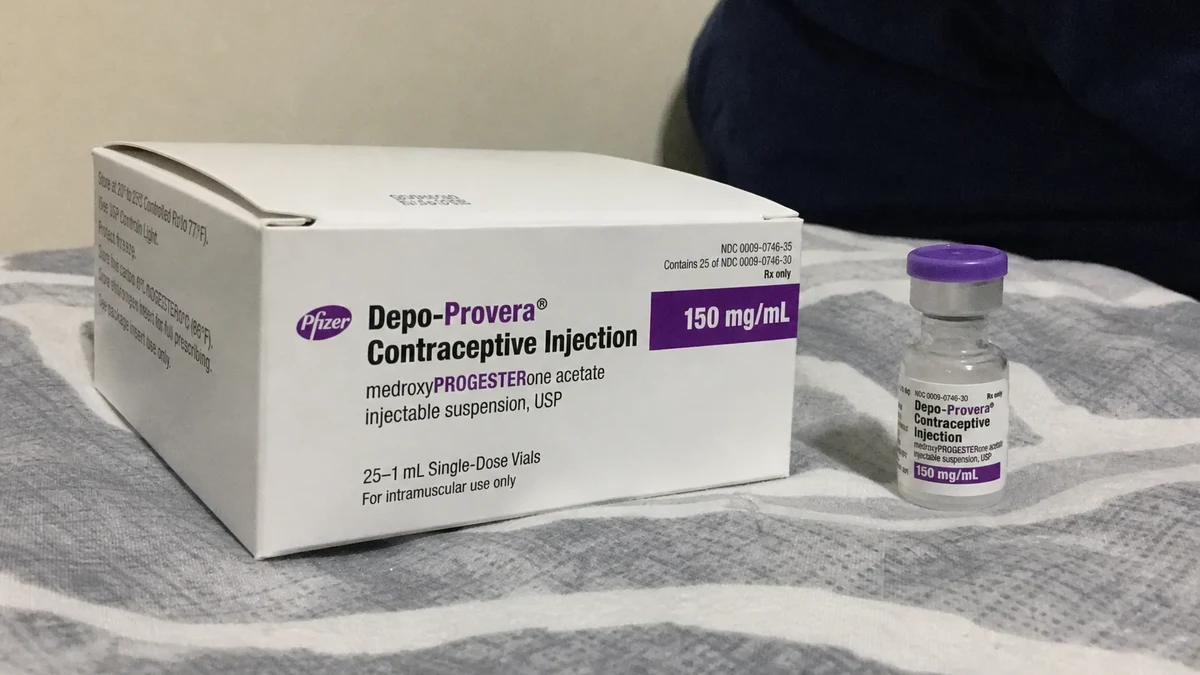
The Depo-Provera lawsuit refers to a federal multidistrict litigation against Pfizer Inc. and related manufacturers over claims that the birth control shot causes brain tumors. That MDL, formally In re: Depo-Provera (Depot Medroxyprogesterone Acetate) Products Liability Litigation, MDL No. 3140, was created on February 7, 2025 and is centralized before U.S. District Judge M. Casey Rodgers in the U.S. District Court for the Northern District of Florida.
Individual patients filed the underlying lawsuits after research linked long-term use of Depo-Provera to an increased risk of intracranial meningioma, a typically benign but potentially serious tumor that grows in the lining of the brain or spine. Pfizer Inc., Pharmacia & Upjohn Co. LLC and Pharmacia LLC are named as defendants over the brand-name drug, while Prasco LLC and Greenstone LLC/Viatris Inc. are named in claims involving the authorized generic version distributed after a 2020 divestiture.
Pfizer and plaintiffs' leadership signed a Master Settlement Agreement on July 21, 2026, expected to resolve roughly 80% of the cases pending in the MDL, though the agreement did not disclose a dollar figure and attorneys continue accepting new claims from patients not yet part of the litigation.
“Plaintiffs in each action allege that they used Depo-Provera (depot medroxyprogesterone acetate), which was approved by the U.S. Food and Drug Administration as an injectable contraceptive in 1992. Plaintiffs allege that recent scientific studies demonstrate that long-term use of Depo-Provera can result in an increased risk of developing one or more meningiomas (a type of brain tumor).”
Source: U.S. Judicial Panel on Multidistrict Litigation, In re: Depo-Provera (Depot Medroxyprogesterone Acetate) Products Liability Litigation, MDL No. 3140, Transfer Order, Document 120 (February 7, 2025)
Why Are People Filing Depo-Provera Lawsuits?
People are filing Depo-Provera lawsuits because they developed a meningioma after using the birth control shot and allege Pfizer failed to adequately warn patients and doctors about that risk. The complaints also allege the drug was defectively designed, since a lower-dose version, Depo-SubQ Provera 104, administered subcutaneously rather than intramuscularly, is alleged to carry a lower risk.
A 2024 study published in The BMJ found that women with long-term Depo-Provera use had 5.6 times greater odds of developing an intracranial meningioma compared to non-users, research plaintiffs cite as the basis for their failure-to-warn claims. Pfizer proposed a label update reflecting the meningioma risk in 2024, which the FDA initially rejected; the agency ultimately approved a label change adding the warning in December 2025.
Pfizer has argued in the litigation that it could not have added the warning sooner because of the FDA's 2024 rejection, framing that as a federal-preemption defense to at least some of the claims. That defense does not appear to have foreclosed the litigation, since Pfizer went on to sign the July 2026 Master Settlement Agreement covering most pending cases.
What Injuries Are Included in the Depo-Provera Lawsuit?
The Depo-Provera lawsuit centers on one primary alleged harm, intracranial meningioma linked to long-term use of the birth control shot, though the underlying claims break down into a few distinct legal theories a reader may see referenced separately.
Pfizer has not admitted that Depo-Provera causes meningioma, and the Master Settlement Agreement was reached without any finding by a court on the merits of the underlying medical or legal claims.
Intracranial Meningioma
A meningioma is a tumor that grows in the meninges, the layers of tissue covering the brain and spinal cord; most are noncancerous but can still cause serious symptoms or require surgery depending on size and location.
Plaintiffs allege that long-term use of Depo-Provera, generally defined in the litigation as use for one year or more, increases the risk of developing one or more meningiomas. The 2024 BMJ study cited across the litigation found 5.6 times greater odds of intracranial meningioma among long-term users compared to non-users.
Depending on size and location, a meningioma can require monitoring, surgery, or radiation treatment, and plaintiffs in the MDL generally must show an image-confirmed diagnosis of a cranial or spinal meningioma to qualify for the litigation.
Failure to Warn
A failure-to-warn claim alleges a drug manufacturer knew or should have known about a risk and did not adequately disclose it to patients and doctors, a distinct legal theory from a claim that the product itself was defectively designed.
Plaintiffs allege Pfizer knew or should have known about the meningioma risk well before the FDA approved a label change in December 2025, and that patients and prescribing doctors were not adequately warned during the years covered by the litigation. Pfizer disputes this timeline, pointing to the FDA's 2024 rejection of its proposed label update as evidence it acted as quickly as federal law allowed.
The FDA's eventual December 2025 approval of a meningioma warning is cited by plaintiffs as confirmation the risk was real and warnable, though it does not by itself resolve when Pfizer's duty to warn should have been satisfied.
Design Defect
A design-defect claim alleges a product's design itself is unreasonably dangerous compared to a safer, practical alternative design that was available, a different theory from a failure-to-warn claim about labeling alone.
Some plaintiffs allege Depo-Provera was defectively designed because a lower-dose, subcutaneously injected alternative, Depo-SubQ Provera 104, was available and is alleged to carry a lower meningioma risk. The Judicial Panel's transfer order notes that whether defendants failed to promote this safer alternative is one of the common factual questions the MDL was created to resolve.
Not every plaintiff in the MDL pleads a design-defect claim in addition to failure to warn, and the two theories can apply to the same underlying diagnosis without being identical claims.
Who Qualifies for the Depo-Provera Lawsuit?
You may qualify if:
- You used Depo-Provera, Depo-SubQ Provera 104, or an approved generic version, generally for one year or more
- You received an image-confirmed diagnosis of an intracranial or spinal meningioma after that use
- Your claim falls within your state's statute of limitations, which can be as short as one year from diagnosis in some states
You may not qualify if:
- You used Depo-Provera for less than a year with no documented long-term-use pattern the litigation's medical theory relies on
- You have not received an image-confirmed meningioma diagnosis, since a general worry about risk without a diagnosis does not currently support a claim
- You are looking for a payout amount today, since the July 2026 Master Settlement Agreement has not published a dollar figure or an individual payout schedule as of this writing
MDL 3140 consolidates cases for shared federal pretrial proceedings; it is not a certified class action, so each patient's case, and eligibility for the Master Settlement Agreement specifically, is still evaluated on its own facts. Only a qualified attorney reviewing your own medical records and your state's statute of limitations can confirm whether you qualify.
What Is the Current Status of the Depo-Provera MDL?
The current status of the Depo-Provera MDL is that Pfizer and plaintiffs' leadership signed a Master Settlement Agreement on July 21, 2026, while the underlying federal litigation itself remains open. The settlement is expected to resolve roughly 80% of pending cases, not all of them, and attorneys continue accepting new claims from patients not yet part of the MDL.
No settlement dollar amount, aggregate or per-claimant, had been made public as of this writing, and the claims-administration process that will determine individual payouts was still being finalized.
In re: Depo-Provera (Depot Medroxyprogesterone Acetate) Products Liability Litigation, MDL No. 3140
The Judicial Panel on Multidistrict Litigation centralized federal Depo-Provera meningioma lawsuits into MDL 3140 on February 7, 2025, assigning them to Judge M. Casey Rodgers in the Northern District of Florida. The MDL consolidated 27 actions pending across eight districts at creation, with 41 additional related actions already identified, and continues accepting new filings even after the July 2026 settlement.
| Court | U.S. District Court, Northern District of Florida (federal MDL) |
| MDL Number | 3140 |
| Judge | Hon. M. Casey Rodgers |
| MDL Created | February 7, 2025 |
| Actions at Creation | 27 actions in 8 districts |
| Actions Now Pending | 6,403, per the JPML's September 1, 2026 report |
| Master Settlement Agreement Signed | July 21, 2026 |
| Settlement Administrator | BrownGreer PLC, appointed August 5, 2026 under Case Management Order No. 13 |
| Current Stage | Settlement agreement signed for most cases; settlement registration expected complete November 2026, claims review and first payments expected Q1 2027; still accepting new filings |
The Master Settlement Agreement is expected to cover roughly 80% of pending cases; the remainder, along with any new claims filed after the agreement, would proceed through the MDL's ordinary pretrial process unless separately resolved.
How Much Is the Depo-Provera Lawsuit Settlement Worth?
No official Depo-Provera settlement amount has been released. Pfizer's Master Settlement Agreement, signed July 21, 2026, did not include a public dollar figure, aggregate or per-claimant. Attorneys involved in the litigation have offered individual estimates only, not confirmed figures.
Some attorneys have estimated individual payouts could range from roughly $75,000 to $1.5 million or more depending on the severity of the tumor, the treatment required, and the strength of a claimant's evidence, but these are estimates, not confirmed or guaranteed amounts, and the actual claims-administration process had not been finalized as of this writing. Only a qualified attorney reviewing your own medical records can give a case-specific estimate.
The Master Settlement Agreement is expected to resolve about 80% of the more than 6,400 cases pending in MDL 3140 as of this writing, meaning a meaningful share of plaintiffs, plus anyone who files after the agreement, would not automatically be covered by it.
Judge M. Casey Rodgers appointed BrownGreer PLC as settlement administrator on August 5, 2026 under Case Management Order No. 13, with settlement registration expected to be completed in November 2026 and claims review and first payments expected to begin in the first quarter of 2027, per multiple litigation trackers citing the court's own case management orders.
Depo-Provera Lawsuit Updates
The latest Depo-Provera lawsuit updates and news, including new filings, rulings and settlement developments, are listed below as they're confirmed.
Full Depo-Provera Lawsuit Timeline
The BMJ publishes the study linking long-term Depo-Provera use to meningioma
Researchers published a study in The BMJ finding that women with long-term Depo-Provera use had 5.6 times greater odds of developing an intracranial meningioma than non-users, research that became the central scientific basis for the litigation.
The FDA initially rejects Pfizer's proposed label update
Pfizer proposed a label change reflecting the meningioma risk, which the FDA rejected in 2024, a decision Pfizer later cited as a federal-preemption defense against some failure-to-warn claims.
An early Depo-Provera action is voluntarily dismissed before centralization
One of the actions originally listed among the motions to centralize the litigation was voluntarily dismissed in the Northern District of California just before the Judicial Panel ruled on centralization.
The JPML creates MDL 3140 and assigns it to Judge Rodgers
The Judicial Panel on Multidistrict Litigation centralized 27 pending federal Depo-Provera meningioma lawsuits into MDL 3140, assigning the litigation to Judge M. Casey Rodgers in the Northern District of Florida over Pfizer's preference for the Southern District of New York.
The FDA approves a Depo-Provera label change adding a meningioma warning
The FDA approved an updated label for Depo-Provera adding a warning about intracranial meningioma risk, a decision plaintiffs cite as confirmation the risk was real, based in part on the 2024 BMJ study.
Pfizer and plaintiffs' leadership reach an agreement in principle
Pfizer and plaintiffs' leadership in MDL 3140 announced an agreement in principle on a global settlement that could resolve a substantial majority of the pending cases, ahead of a formal signed agreement the following month.
Pfizer signs the Depo-Provera Master Settlement Agreement
Pfizer and plaintiffs' leadership signed a Master Settlement Agreement expected to resolve roughly 80% of the cases pending in MDL 3140, though the agreement did not disclose a dollar amount.
MDL 3140 reaches 6,403 pending federal cases
The Judicial Panel on Multidistrict Litigation's monthly report showed 6,403 actions pending in MDL 3140 as of September 1, 2026, up from 27 actions when the MDL was created in February 2025, even after the July 2026 settlement agreement.
Judge Rodgers appoints BrownGreer as Depo-Provera settlement administrator
Judge M. Casey Rodgers signed Case Management Order No. 13 naming BrownGreer PLC as settlement administrator for MDL 3140. Rodgers also appointed Matt Garretson as Allocation Master for a Supplemental Compensation Fund and CPA Randall Sansom to administer the Qualified Settlement Fund. Source: flnd.uscourts.gov (CMO No. 13).
Judge Rodgers hears Pfizer's Daubert challenge to general-causation experts
Judge M. Casey Rodgers held a Rule 702 hearing on September 18, 2026 on whether plaintiffs' expert testimony that Depo-Provera can cause meningioma is admissible. Pre-Trial Order 30 makes Rodgers' ruling on this general-causation question binding across every case in MDL 3140, including those outside the July 2026 settlement. Source: tortadvisor.com.
How to File a Depo-Provera Lawsuit
To file a Depo-Provera lawsuit, review and follow the 5 steps below.
- Confirm your diagnosis: Gather imaging reports and medical records confirming an intracranial or spinal meningioma diagnosis, since MDL 3140 generally requires an image-confirmed diagnosis to participate.
- Document your Depo-Provera use: Collect pharmacy records, prescription history, or injection records showing how long you used Depo-Provera, Depo-SubQ Provera 104, or an approved generic version.
- Check your state's statute of limitations: Deadlines to file can be as short as one year from diagnosis in some states, so confirm your deadline early since missing it can permanently bar a claim.
- Consult a mass-tort attorney: An attorney experienced with MDL 3140 can evaluate whether your facts fit the litigation and whether your case may qualify for the July 2026 Master Settlement Agreement or would proceed separately.
- File the individual lawsuit: Your attorney files a complaint naming Pfizer Inc. and, if applicable, the generic manufacturer, which is then coordinated with the existing MDL 3140 docket in the Northern District of Florida.
Answer a few questions to see if you can still file a claim. Free, no obligation.
A case reviewer will follow up soon.
What Evidence Do You Need for a Depo-Provera Lawsuit?
Evidence for a Depo-Provera lawsuit claim centers on proof of long-term use paired with an image-confirmed meningioma diagnosis, since the MDL 3140 theory ties the two together directly. The clearer the documented link, the more the claim resembles the kind of case the MDL and the July 2026 settlement were built around.
- Imaging reports: MRI or CT scans confirming an intracranial or spinal meningioma diagnosis.
- Pharmacy and prescription records: documentation of how long and how often Depo-Provera, Depo-SubQ Provera 104, or a generic version was used.
- Treatment records: surgery, radiation, or ongoing monitoring records related to the tumor.
- Medical bills and lost-income records: documentation of costs and lost wages connected to diagnosis and treatment.
Preserve these records as early as possible and consult an attorney promptly, since some states' statutes of limitations for this type of claim can run as short as one year from diagnosis.
What Did Pfizer Allegedly Know About Depo-Provera's Meningioma Risk?
Plaintiffs allege Pfizer knew or should have known about a meningioma risk associated with long-term Depo-Provera use well before the FDA approved a label update, a timeline dispute that sits at the center of the failure-to-warn claims. Pfizer disputes the characterization that it delayed unreasonably, pointing to the FDA's own 2024 rejection of its proposed label change.
The FDA's eventual approval of a meningioma warning in December 2025, based in part on the 2024 BMJ study, is the clearest regulatory action tied to this litigation, and plaintiffs cite it as confirmation that the underlying risk was real and should have been disclosed sooner.
| Event | Actor | Date | Outcome |
|---|---|---|---|
| Study linking Depo-Provera to meningioma | Researchers, published in The BMJ | 2024 | 5.6x greater odds of intracranial meningioma with long-term use |
| Proposed label update rejected | U.S. Food and Drug Administration | 2024 | Pfizer's proposed meningioma warning update was rejected |
| Label update approved | U.S. Food and Drug Administration | December 16, 2025 | Meningioma warning added to the Depo-Provera label |
| Master Settlement Agreement signed | Pfizer and MDL 3140 plaintiffs' leadership | July 21, 2026 | Expected to resolve roughly 80% of pending cases, no admission of liability |
Pfizer has not admitted liability or wrongdoing in signing the Master Settlement Agreement, and no court has issued a ruling on the merits of the failure-to-warn or design-defect theories still pending for cases outside the settlement.
Frequently Asked Questions
Is there a current Depo-Provera lawsuit I can join?
A current Depo-Provera lawsuit that individuals can still join is MDL 3140, the federal meningioma litigation, which remains open and accepting new filings even after Pfizer's July 2026 Master Settlement Agreement, since that agreement covers roughly 80% of existing cases rather than closing the MDL to new claims.
Is the Depo-Provera lawsuit a class action or an MDL?
The Depo-Provera lawsuit is a federal multidistrict litigation, MDL 3140, not a certified class action. An MDL consolidates many individual lawsuits for shared pretrial handling and lets a settlement agreement, like the one Pfizer signed in July 2026, resolve a large group of cases at once without merging them into a single certified class.
How much is the Depo-Provera lawsuit settlement worth?
How much the Depo-Provera lawsuit settlement is worth per claimant has not been publicly disclosed, since Pfizer's July 2026 Master Settlement Agreement did not include a dollar figure. Some attorneys have estimated individual payouts could range from roughly $75,000 to $1.5 million or more depending on severity, but these are unconfirmed estimates, not official figures.
Who qualifies for the Depo-Provera meningioma lawsuit?
Qualifying for the Depo-Provera meningioma lawsuit generally depends on having used Depo-Provera, Depo-SubQ Provera 104, or an approved generic for a year or more and having received an image-confirmed intracranial or spinal meningioma diagnosis, filed within your state's statute of limitations. Only a qualified attorney reviewing your medical records can confirm eligibility, including whether your case may fall within the July 2026 settlement.
Did Pfizer admit Depo-Provera causes brain tumors?
Pfizer has not admitted that Depo-Provera causes brain tumors. The company signed the July 2026 Master Settlement Agreement without any admission of liability, and the FDA's December 2025 label update added a meningioma warning without itself constituting a court finding on causation in the pending lawsuits.
Can I still file a Depo-Provera lawsuit after the settlement?
Filing a Depo-Provera lawsuit after the July 2026 settlement is still possible, since the Master Settlement Agreement is expected to resolve only about 80% of pending cases and attorneys continue accepting new claims. Whether a new claim would be added to the existing settlement or proceed separately through MDL 3140 depends on facts only a reviewing attorney can evaluate.