
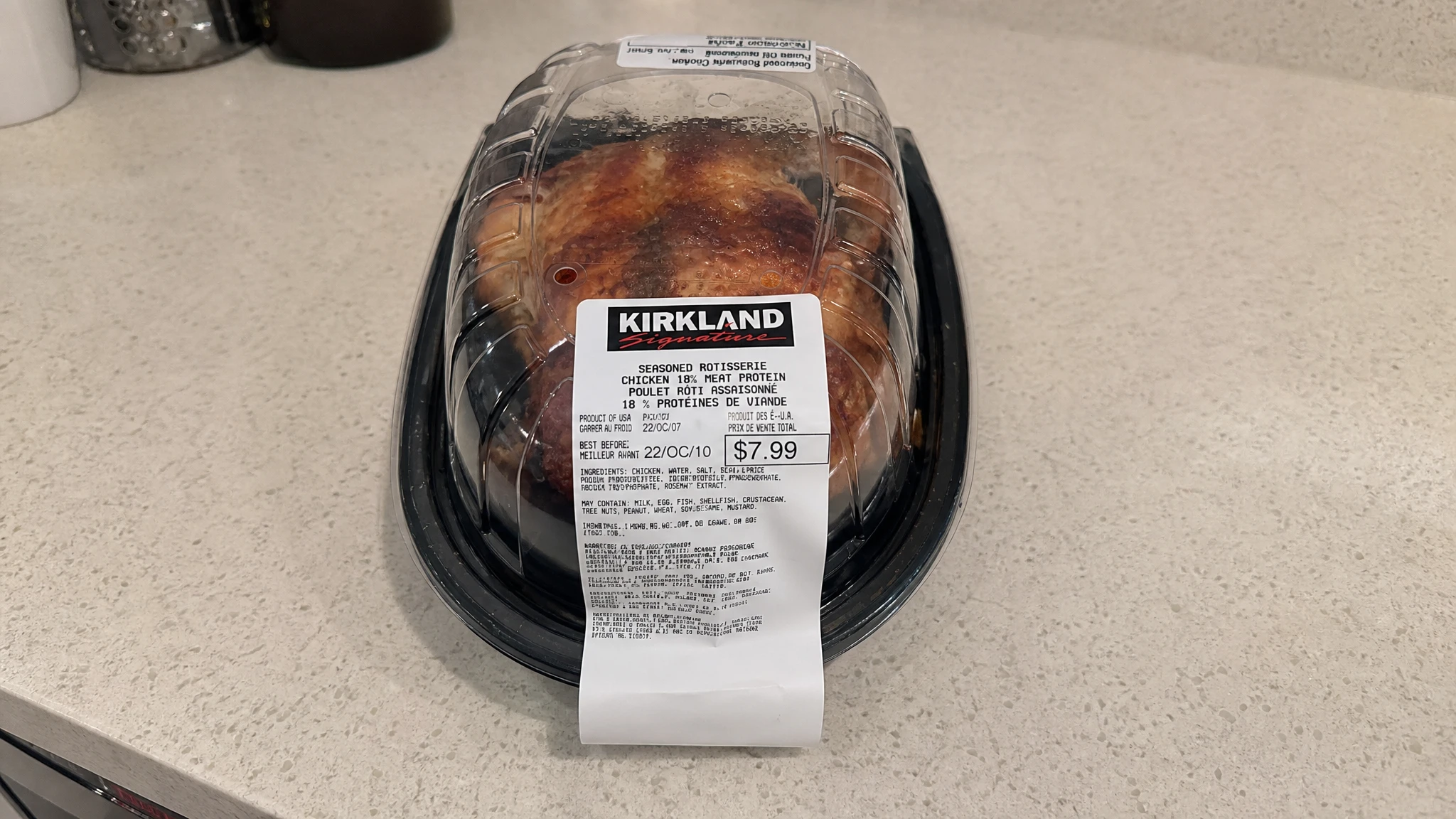
What Is the Costco Rotisserie Chicken Lawsuit?
The Costco Rotisserie Chicken lawsuit refers to two separate federal proposed class actions against Costco Wholesale Corporation over its Kirkland Signature rotisserie and raw chicken products. The first, Johnston et al. v. Costco Wholesale Corporation, Case No. 3:26-cv-00403-AJB-AHG, was filed January 22, 2026 in the U.S. District Court for the Southern District of California and alleges Costco falsely advertised its Kirkland Signature Seasoned Rotisserie Chicken as containing 'no preservatives.'
The second, Taylor v. Costco Wholesale Corp., was filed in February 2026 in the U.S. District Court for the Western District of Washington and alleges chronic salmonella contamination at the Nebraska poultry plant that supplies Costco's Kirkland Signature chicken products.
Neither case is a federal multidistrict litigation; each is an individually filed proposed class action proceeding in its own court, and neither has reached a settlement or class certification as of this writing.
“Costco's representations that its Rotisserie Chicken contains 'no preservatives' signals to reasonable consumers, like Plaintiffs, that the Rotisserie Chicken has no additives that function to preserve the taste, flavor, texture, or shelf-life of the product.”
Source: Johnston, et al. v. Costco Wholesale Corporation, No. 3:26-cv-00403-AJB-AHG (S.D. Cal.), Class Action Complaint, Document 1, paragraph 2 (January 22, 2026)
Why Are People Filing Costco Rotisserie Chicken Lawsuits?
People are filing Costco Rotisserie Chicken lawsuits because they say Costco's marketing and food-safety practices did not match what the label and in-store signage promised. The two proceedings allege different conduct: the Johnston case alleges a false 'No Preservatives' claim, while the Taylor case alleges Costco understated a real salmonella contamination risk at its poultry supplier.
The Johnston complaint states that Costco displayed large in-store signs and online listings claiming the Kirkland Signature Seasoned Rotisserie Chicken has 'no preservatives,' 'no artificial flavors,' 'no artificial colors' and is 'MSG free,' while the product's own ingredient list includes sodium phosphate and carrageenan, ingredients the complaint alleges function as preservatives. Costco removed the 'no preservatives' language from its signage and website after the suit was filed, saying in a statement that it did so 'to maintain consistency' across its labeling.
The Taylor complaint alleges Costco's dedicated poultry plant, operated by Lincoln Premium Poultry in Nebraska, received the USDA's worst food safety rating, Category 3, in roughly 92% of reporting periods since 2019, and failed every monthly salmonella test from late 2023 through mid-2025. The suit alleges Costco kept the chicken at its $4.99 price point without meaningfully disclosing those conditions to shoppers.
What Injuries Are Included in the Costco Rotisserie Chicken Lawsuit?
The Costco Rotisserie Chicken lawsuit includes two distinct categories of alleged harm, a false advertising claim over the 'No Preservatives' label and a food safety claim over salmonella contamination risk, pursued in two separate cases rather than one combined complaint.
Costco has not admitted wrongdoing in either case and has moved to dismiss both, arguing the preservative claim rests on a mislabeling of ordinary seasoning ingredients and that the salmonella claim does not allege any specific plaintiff actually became ill.
False 'No Preservatives' Advertising
A false advertising claim alleges a seller made a factual representation about a product that was untrue or misleading, inducing consumers to buy the product or pay more for it than they otherwise would have.
The Johnston complaint alleges Costco's 'No Preservatives' signage and online claims created a false impression that its Kirkland Signature Seasoned Rotisserie Chicken contained no preservative-functioning ingredients, when the product's own ingredient list includes sodium phosphate and carrageenan. Plaintiffs allege these additives function to retain moisture, texture and product consistency, which they argue makes them preservatives regardless of how the FDA classifies the terms on a label.
Costco disputes the characterization. Costco's attorney, Charles Sipos, has argued in court filings that sodium phosphate and carrageenan are not defined as preservatives under FDA regulations and are unambiguously listed in the seasoning portion of the ingredient list, not concealed.
Salmonella Contamination Risk
Salmonella is a group of bacteria that is a leading cause of foodborne illness in the United States, capable of causing symptoms ranging from diarrhea and fever to, in severe cases, hospitalization.
The Taylor complaint alleges Costco's dedicated Nebraska poultry plant experienced 'chronic, uncontrolled and unresolved' salmonella contamination, citing USDA inspection records showing the plant earned the agency's worst food safety rating, Category 3, in nearly all reporting periods since 2019 and failed every monthly salmonella test from late 2023 through mid-2025.
Costco has moved to dismiss the case, arguing the complaint does not allege that the specific chicken any named plaintiff purchased actually contained salmonella or caused illness, and that properly cooking the chicken to a safe internal temperature eliminates the salmonella risk regardless of the plant's inspection history.
Who Qualifies for the Costco Rotisserie Chicken Lawsuit?
You may qualify if:
- You purchased a Kirkland Signature Seasoned Rotisserie Chicken from Costco in the U.S. and relied on the 'No Preservatives' claim on in-store signage or Costco's website
- You purchased a Kirkland Signature rotisserie or raw chicken product from Costco between January 1, 2019 and the present
- Your claim falls within your state's statute of limitations for consumer-protection or false-advertising claims
You may not qualify if:
- You purchased the chicken with no awareness of or reliance on the 'No Preservatives' signage, since Costco removed that language from its stores and website after the Johnston suit was filed in 2026
- You are seeking compensation for a confirmed salmonella illness rather than a general contamination-risk claim, since the Taylor case's proposed class theory does not currently require proof that a specific purchase caused illness
- You are looking for a settlement payout today, since neither the Johnston nor the Taylor case has reached a settlement or a certified class as of this writing
Neither Costco Rotisserie Chicken case is a certified class action yet, both are proposed class actions with a Costco motion to dismiss pending, so eligibility for any future recovery is not yet determined in either case. Only a qualified attorney reviewing your purchase records and your state's statute of limitations can confirm whether you may have a claim.
What Is the Current Status of the Costco Rotisserie Chicken Lawsuit?
The current status of the Costco Rotisserie Chicken lawsuit is that both federal proposed class actions remain pending, each with a Costco motion to dismiss awaiting a ruling. Neither case has reached a settlement, and neither proposed class has been certified by a court.
The two proceedings are tracked separately below since they involve different courts, different named plaintiffs and different legal theories, even though both target the same defendant and product line.
Johnston et al. v. Costco Wholesale Corporation, No. 3:26-cv-00403-AJB-AHG
Bianca Johnston and Anatasia Chernov filed this proposed class action against Costco Wholesale Corporation on January 22, 2026 in the U.S. District Court for the Southern District of California, alleging Costco's 'No Preservatives' claims on its Kirkland Signature Seasoned Rotisserie Chicken violated California and Washington consumer-protection statutes. Costco moved to dismiss the case on June 4, 2026, and plaintiffs filed their opposition to that motion on June 22, 2026.
| Court | U.S. District Court, Southern District of California |
| Case Number | 3:26-cv-00403-AJB-AHG |
| Filed | January 22, 2026 |
| Plaintiffs | Bianca Johnston and Anatasia Chernov |
| Claims Alleged | Washington's Consumer Protection Act; California's Consumers Legal Remedies Act, Unfair Competition Law, and False Advertising Law |
| Current Stage | Costco's motion to dismiss pending; a hearing had been scheduled for September 17, 2026 |
No ruling on Costco's motion to dismiss had been publicly confirmed as of this writing. Costco's attorneys have called the plaintiffs' claims 'fatally flawed,' arguing sodium phosphate and carrageenan are not classified as preservatives under FDA regulations.
Taylor v. Costco Wholesale Corp.
Lisa Taylor filed this separate proposed class action against Costco Wholesale Corp. in February 2026 in the U.S. District Court for the Western District of Washington, alleging chronic salmonella contamination at the Nebraska poultry plant supplying Costco's Kirkland Signature chicken products. Costco had moved to dismiss the case by mid-April 2026.
| Court | U.S. District Court, Western District of Washington |
| Filed | February 2026 |
| Plaintiff | Lisa Taylor |
| Proposed Class | U.S. purchasers of Kirkland Signature rotisserie or raw chicken products from January 1, 2019 to the present |
| Claims Alleged | Consumer protection and food-safety-related claims tied to the Nebraska plant's USDA inspection history |
| Current Stage | Costco's motion to dismiss pending |
Costco has argued in its motion that the complaint does not allege any named plaintiff's chicken actually contained salmonella or caused illness, and that proper cooking eliminates the risk. No ruling had been publicly confirmed as of this writing.
What Is the Costco Rotisserie Chicken Lawsuit Payout?
No Costco Rotisserie Chicken lawsuit payout has been announced. Neither the Johnston 'No Preservatives' case nor the Taylor salmonella case has reached a settlement, and no court has certified a class in either proceeding as of this writing.
Both cases still have a Costco motion to dismiss pending, a step that comes before any settlement talks or payout figures would normally emerge. Any estimate of a future payout at this stage would be speculative; only a qualified attorney tracking either case's docket can give an informed, case-specific estimate once and if a settlement is reached.
The Johnston complaint invokes federal jurisdiction under the Class Action Fairness Act on the basis that the amount in controversy for the proposed nationwide class exceeds $5,000,000, a jurisdictional threshold, not a settlement figure or a guarantee of that amount being recovered.
Costco Rotisserie Chicken Lawsuit Updates
The latest Costco Rotisserie Chicken lawsuit updates and news, including new filings, rulings and case developments in both proceedings, are listed below as they're confirmed.
Costco Rotisserie Chicken Lawsuit Timeline of Events
Johnston and Chernov file the 'No Preservatives' class action
Bianca Johnston and Anatasia Chernov filed a proposed class action against Costco Wholesale Corporation in the Southern District of California, alleging the Kirkland Signature Seasoned Rotisserie Chicken's 'No Preservatives' claim was false because the product contains sodium phosphate and carrageenan.
Lisa Taylor's salmonella contamination lawsuit becomes public
A separate proposed class action from plaintiff Lisa Taylor, filed in the Western District of Washington, alleged Costco's Nebraska poultry supplier had a chronic salmonella contamination problem tied to its Kirkland Signature chicken products.
Costco moves to dismiss the Taylor salmonella case
Costco asked the Western District of Washington to dismiss Taylor's salmonella claims, arguing the complaint does not allege that any named plaintiff's own chicken was actually contaminated or caused illness.
Costco moves to dismiss the Johnston 'No Preservatives' case
Costco filed a motion in the Southern District of California asking the court to dismiss the Johnston complaint, calling the false-advertising theory 'fatally flawed' and arguing sodium phosphate and carrageenan are not defined as preservatives under FDA regulations.
Plaintiffs oppose Costco's dismissal motion in the Johnston case
Johnston and Chernov filed their opposition to Costco's motion to dismiss, arguing that whether the ingredients function as preservatives in this product is a factual question for discovery, not one a court can resolve at the pleading stage.
A hearing on Costco's motion to dismiss is scheduled in the Johnston case
The Southern District of California scheduled a hearing on Costco's motion to dismiss the Johnston complaint for September 17, 2026; no ruling had been publicly confirmed as of this writing.
How to File a Costco Rotisserie Chicken Lawsuit
Here are the 5 steps to file a Costco Rotisserie Chicken lawsuit.
- Save your receipts: Keep or locate receipts, Costco membership purchase history, or credit card statements showing your Kirkland Signature rotisserie or raw chicken purchases and their dates.
- Photograph the packaging and signage: If you still have the packaging or photos of the in-store 'No Preservatives' signage from your purchase, save them, since the Johnston case's theory depends on what representations were actually displayed.
- Note any illness or financial harm: Write down the date, symptoms, and any medical treatment if you believe a purchase made you sick, or the amount you believe you overpaid if your claim is based on the preservative-free pricing premium.
- Consult a consumer-protection or mass-tort attorney: An attorney can evaluate whether your facts fit either pending case, or whether a new individual claim makes more sense given your state's statute of limitations.
- Watch for a class notice: If either case is later certified as a class action or settles, class members are typically notified and given a claims process; acting on your own records early makes that process easier.
Answer a few questions and a case reviewer will follow up. Free, no obligation.
A case reviewer will follow up soon.
What Evidence Do You Need for a Costco Rotisserie Chicken Lawsuit?
Evidence for a Costco Rotisserie Chicken lawsuit claim centers on proof of purchase paired with documentation tied to whichever theory applies, the 'No Preservatives' claim or the salmonella contamination risk. The clearer the documented link between your purchase and the specific allegation, the more useful the record becomes if either case is later certified or settled.
- Proof of purchase: receipts, Costco membership purchase history, or credit card statements showing Kirkland Signature rotisserie or raw chicken purchases and their dates.
- Packaging and signage: photos of the product packaging or in-store 'No Preservatives' signs, if available, for the false-advertising theory.
- Medical records: documentation of any diagnosed foodborne illness and its timing relative to a purchase, for the salmonella theory.
- Correspondence with Costco: any customer service records, refund requests, or complaints you made about either issue.
Preserve these records as early as possible and consult an attorney promptly, since consumer-protection statutes of limitations vary by state and can run from the date of purchase or discovery of the alleged harm.
What Did Costco Allegedly Know About Its Rotisserie Chicken?
Plaintiffs in both cases allege Costco had information suggesting a problem with its rotisserie chicken program well before either lawsuit was filed. In the Johnston case, plaintiffs allege Costco's own ingredient list contradicted its marketing, while in the Taylor case, plaintiffs allege years of USDA inspection data showed a persistent food safety problem at Costco's dedicated supplier.
The Taylor complaint specifically ties the alleged contamination pattern to Costco's vertically integrated poultry supply chain, arguing that the same control that let Costco hold its $4.99 price point for decades also gave it visibility into the plant's repeated USDA Category 3 ratings. Costco disputes both theories and has not been found liable in either case.
| Event | Actor | Date | Outcome |
|---|---|---|---|
| 'No Preservatives' signage displayed in stores and online | Costco Wholesale Corporation | Prior to January 2026 | Alleged in the Johnston complaint as the basis for the false-advertising claim |
| Kirkland Signature poultry plant receives USDA Category 3 ratings | USDA / Lincoln Premium Poultry (Nebraska) | Roughly 92% of reporting periods since 2019 | Cited in the Taylor complaint as evidence of chronic contamination risk |
| 'No Preservatives' signage removed | Costco Wholesale Corporation | After January 2026 | Costco said the change was made 'to maintain consistency' across its labeling |
| Motions to dismiss filed in both cases | Costco Wholesale Corporation | April and June 2026 | Both motions remained pending as of this writing, no ruling on the merits in either case |
Costco has not admitted liability or wrongdoing in either case, and no court has ruled on the merits of the false-advertising or food-safety theories as of this writing.
Frequently Asked Questions
Is there a current Costco Rotisserie Chicken lawsuit I can join?
A current Costco Rotisserie Chicken lawsuit that involves a proposed class is either the Johnston 'No Preservatives' case in the Southern District of California or the Taylor salmonella case in the Western District of Washington, both still pending with no certified class yet, so there is no active claims process to join in either case as of this writing.
Is the Costco Rotisserie Chicken lawsuit a class action or an MDL?
The Costco Rotisserie Chicken lawsuit is two separate proposed class actions, not a federal multidistrict litigation. Each case, Johnston and Taylor, was filed individually in its own federal court and has not been consolidated with the other or centralized into an MDL.
What is the Costco Rotisserie Chicken lawsuit payout?
The Costco Rotisserie Chicken lawsuit payout has not been determined, since neither the Johnston nor the Taylor case has reached a settlement or class certification as of this writing. Any payout figure circulating before a settlement is reached should be treated as speculation, not a confirmed amount.
Has Costco settled the rotisserie chicken lawsuit?
Costco has not settled the rotisserie chicken lawsuit. Both the Johnston 'No Preservatives' case and the Taylor salmonella case remain in active pretrial litigation, each with a Costco motion to dismiss still pending as of this writing.
What is Costco's response to the rotisserie chicken lawsuit?
Costco's response to the rotisserie chicken lawsuit has been to deny wrongdoing and move to dismiss both cases. In the Johnston case, Costco's attorneys argue sodium phosphate and carrageenan are not defined as preservatives under FDA regulations; in the Taylor case, Costco argues the complaint does not allege a specific contaminated purchase or illness.
Does the salmonella lawsuit mean Costco's rotisserie chicken is unsafe to eat?
The salmonella lawsuit does not establish that Costco's rotisserie chicken is unsafe to eat, since the allegations are unproven and Costco disputes them. Properly cooking chicken to a safe internal temperature reduces salmonella risk regardless of a supplier's inspection history, which is part of Costco's own argument for dismissing the case.