
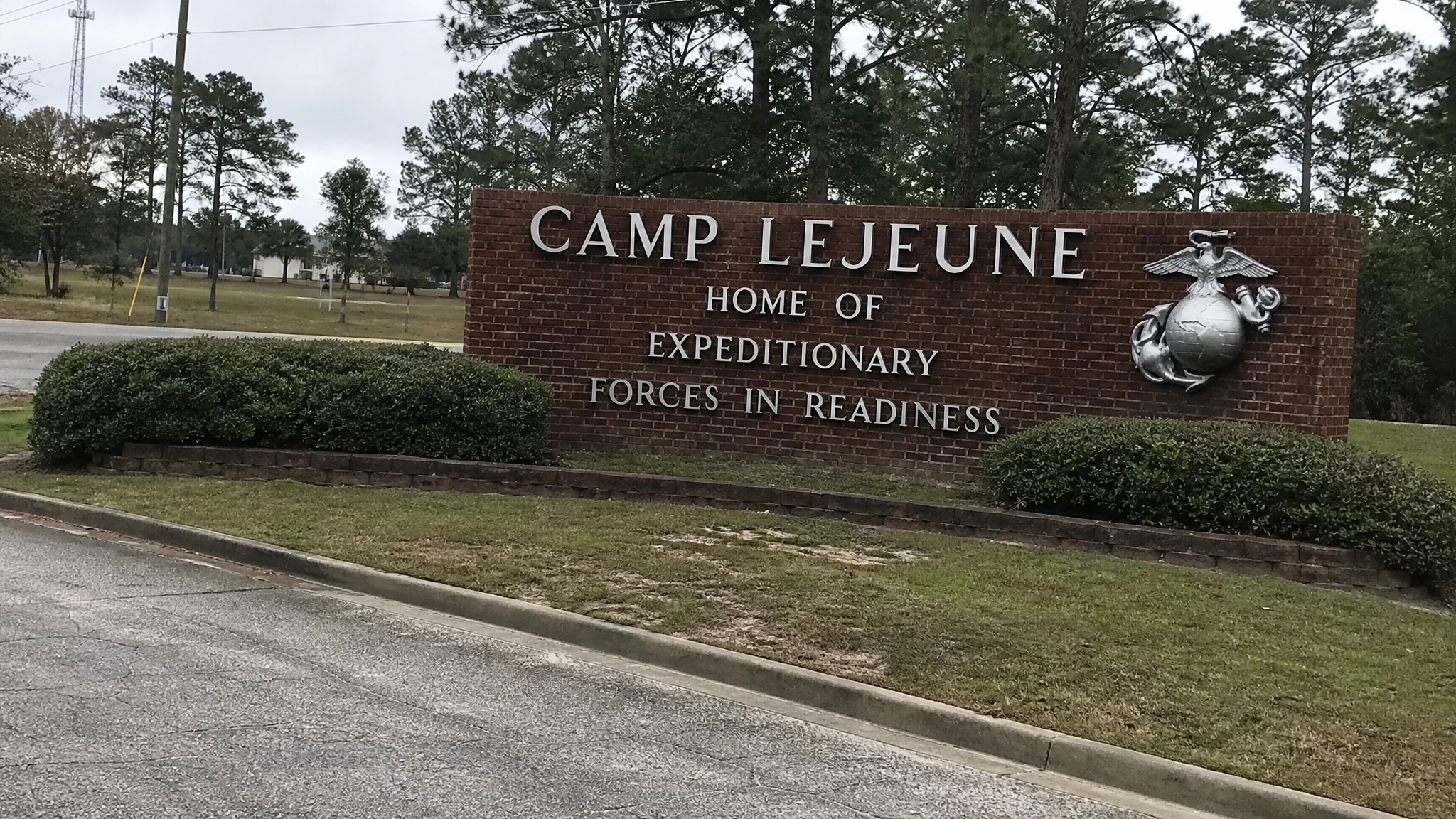
What Is the Camp Lejeune Lawsuit?
The Camp Lejeune lawsuit is a federal claims process created by the Camp Lejeune Justice Act (CLJA), a 2022 law that lets people who were exposed to contaminated water at the North Carolina Marine Corps base sue the United States government for resulting illness. It is not a class action and not a JPML-consolidated multidistrict litigation; the CLJA itself directs every claim into one federal venue, the U.S. District Court for the Eastern District of North Carolina.
The Department of Justice describes itself as defending cases filed under the "Honoring our Promise to Address Comprehensive Toxics Act of 2022," which included the Camp Lejeune Justice Act. Congress passed the CLJA specifically because North Carolina's own statute of repose had previously barred Camp Lejeune water-contamination claims from reaching court at all, and the Act removes that state-law barrier for CLJA claims.
A claimant must first file an administrative claim with the Department of the Navy. If the Navy denies the claim or does not resolve it within six months, the claimant can then file suit in the Eastern District of North Carolina. Most claims settle through the Navy's Elective Option program rather than going to trial.
“The Camp Lejeune Justice Act Section is defending cases filed under the Honoring our Promise to Address Comprehensive Toxics Act of 2022, which included the Camp Lejeune Justice Act of 2022. As of August 10, 2026, Camp Lejeune Justice Act settlement offers exceed $1 billion and settlement payouts exceed $827 million.”
Source: U.S. Department of Justice, Civil Division, Camp Lejeune Justice Act Claims (updated Aug. 10, 2026)
Why Are People Filing Camp Lejeune Lawsuits?
People are filing Camp Lejeune lawsuits because they allege the Marine Corps knew its on-base drinking water was contaminated for decades and failed to warn the Marines, family members, and civilian workers who lived and worked there. From 1953 to 1987, wells serving base housing drew water contaminated with industrial solvents, primarily trichloroethylene (TCE) and tetrachloroethylene (PCE) from an off-base dry cleaning company, plus benzene and vinyl chloride from on-base fuel and waste-disposal sites.
The Agency for Toxic Substances and Disease Registry estimates as many as one million people, service members, spouses, children, and civilian employees, may have been exposed. Before 2022, most of these claims were legally blocked. A 2016 federal ruling (in an earlier, now-dismissed multidistrict litigation, MDL-2218) held that North Carolina's 10-year statute of repose barred the claims outright, and that ruling survived an appeal to the Eleventh Circuit. Congress passed the CLJA in 2022 specifically to override that state-law bar and open a federal path to compensation.
Because the CLJA claims run directly against the federal government rather than a private manufacturer, they proceed differently than a typical product-liability mass tort: no jury trial, a Navy-run administrative and settlement process before any lawsuit, and a hard statutory filing deadline rather than a state-by-state statute of limitations.
What Injuries Are Included in the Camp Lejeune Lawsuit?
The Camp Lejeune lawsuit covers a wide range of alleged harms tied to specific contaminants found in the base's drinking water. Below are the categories most frequently named in filed claims and in the CLJA's own Elective Option settlement grid, defined in plain language, followed by what claimants specifically allege.
Kidney Cancer
Kidney cancer is a malignant tumor that begins in the cells of the kidney, one of the cancers most strongly linked in scientific studies to TCE exposure.
Kidney cancer claims make up the first Track 1 bellwether cases, with the Mousser case scheduled for trial on November 9, 2026 and the Fancher case following on November 16, 2026, both before U.S. District Judge Terrence Boyle. These are the first Camp Lejeune cases expected to reach a verdict since the CLJA became law.
Non-Hodgkin's Lymphoma and Leukemia
Non-Hodgkin's lymphoma and leukemia are cancers of the lymphatic system and blood-forming tissue, respectively, both included among the CLJA's presumptive service-connected conditions for VA benefits purposes.
These blood-cancer claims are also part of the litigation's Track 1 grouping alongside kidney cancer. Government attorneys have challenged a significant number of these claims on causation and documentation grounds, and case-tracking sources describe this category as facing heavier scrutiny than other Track 1 diagnoses as the litigation moves toward trial.
Parkinson's Disease
Parkinson's disease is a progressive neurological disorder that affects movement, caused by the loss of dopamine-producing brain cells; some research has linked TCE exposure to an increased risk of developing it.
Parkinson's disease is one of eight conditions the VA already treats as presumptively connected to Camp Lejeune water exposure for disability-benefits purposes, and it is separately pled as a qualifying injury in CLJA litigation and Elective Option claims.
Birth Defects and Fetal Injury
A birth defect is a structural or functional abnormality present at birth; claimants allege prenatal exposure to contaminated water through a pregnant parent caused these conditions in children born to Camp Lejeune families.
Family members who were exposed in utero, not only service members themselves, are eligible claimants under the CLJA, and birth-defect and childhood-illness claims are among the categories represented in the more than 500,000 administrative claims filed with the Navy before the August 2024 deadline.
Who Qualifies for the Camp Lejeune Lawsuit?
You may qualify if:
- You (or the family member you are filing for) lived, worked, or were otherwise exposed to water at Camp Lejeune or MCAS New River for at least 30 total days between August 1, 1953 and December 31, 1987
- You were later diagnosed with a qualifying illness or condition that a doctor or documented medical record connects to that exposure
- You filed an administrative claim with the Department of the Navy before the CLJA's August 10, 2024 filing deadline
- Your claim has not already been fully resolved through an Elective Option settlement or a court judgment
You may not qualify if:
- You never lived or worked at Camp Lejeune, or your time there totaled fewer than 30 days
- You cannot document your presence at the base or your diagnosis with military, medical, or VA records
- You did not file an administrative claim with the Navy before the August 10, 2024 statutory deadline (narrow tolling exceptions exist for minors and legally incompetent claimants, confirm any exception with an attorney)
Only a qualified attorney reviewing your specific service records, medical records, and claim-filing date can confirm whether your existing claim remains eligible or whether a tolling exception applies to you, this page does not determine eligibility on its own.
What Is the Current Status of the Camp Lejeune Lawsuit?
The current status of the Camp Lejeune lawsuit is active pretrial and trial-track litigation in the Eastern District of North Carolina, running alongside the Navy's ongoing Elective Option settlement program for claims that do not proceed to a lawsuit. No jury is involved; a February 2024 federal ruling held the CLJA does not guarantee claimants the right to a jury trial, so cases that reach trial are decided by a judge.
Camp Lejeune Justice Act Litigation, E.D.N.C.
Every CLJA lawsuit is filed in the U.S. District Court for the Eastern District of North Carolina, the venue the Act itself designates, and pretrial matters are overseen jointly by the court's federal judges, including Judge Terrence Boyle and Judge James Dever. More than 3,700 individual lawsuits had been filed as of July 15, 2026, on top of the 500,000-plus administrative claims filed directly with the Navy.
| Court | U.S. District Court, Eastern District of North Carolina |
| Presiding Judges | Hon. Terrence Boyle (Track 1 kidney cancer bellwethers) and Hon. James Dever (leukemia/non-Hodgkin's lymphoma claims) |
| Statutory Basis | Camp Lejeune Justice Act of 2022 (part of the Honoring our PACT Act) |
| Trial Type | Bench trial before a judge; no jury, per a February 2024 federal ruling |
| Lawsuits Filed (July 15, 2026) | 3,700+ |
| Administrative Claims Filed | 500,000+ |
The litigation is organized into disease-based tracks rather than one single master complaint. Track 1, covering kidney cancer and the blood cancers described above, is furthest along and produced the first scheduled trial dates. Track 2, covering additional disease categories, was still awaiting a discovery scheduling plan as of mid-2026.
Elective Option (EO) Settlement Program
The Department of Justice and the Department of the Navy announced the CLJA Elective Option on September 6, 2023, a framework designed to resolve certain claims faster than full litigation. Claims are matched to one of several injury tiers, and settlement offers are calculated from a fixed payment grid rather than negotiated case by case.
| Administering Agencies | Department of Justice and Department of the Navy |
| Announced | September 6, 2023 |
| Tier 1 Payment Range | $150,000 to $450,000, based on documented exposure duration |
| Settlement Offers (Aug. 10, 2026) | Exceed $1 billion |
| Settlement Payouts (Aug. 10, 2026) | Exceed $827 million |
Accepting an Elective Option offer resolves that claim without a lawsuit, but a claimant with more than one qualifying diagnosis is paid at the higher-value tier rather than for each diagnosis separately. Claims that do not qualify for or accept an Elective Option offer proceed through ordinary litigation in the Eastern District of North Carolina instead.
When Will the Camp Lejeune Lawsuit Be Settled?
No single global settlement has resolved the Camp Lejeune litigation, but individual claims are already settling through the Navy's Elective Option program, which pays qualifying claimants between $150,000 and $450,000 depending on diagnosis tier and documented length of exposure. As of August 10, 2026, the government has made settlement offers exceeding $1 billion and paid out more than $827 million.
A claim that does not qualify for or accept an Elective Option offer is valued individually through litigation instead, and the Congressional Budget Office's $21 billion total-liability estimate is a government-wide projection across all claimants, not a prediction for any one case.
The first Track 1 bellwether trials, over kidney cancer claims, are scheduled for November 2026, and outcomes there are widely expected to shape how the government and plaintiffs' attorneys value the remaining litigated claims going forward.
Camp Lejeune Lawsuit Updates
Here are the latest Camp Lejeune lawsuit updates, covering new court filings, rulings, and case-count reports as they're confirmed. As of September 2026, the federal Camp Lejeune Justice Act litigation in the Eastern District of North Carolina remains in active pretrial litigation with no settlement announced. The full timeline below covers every verified development since the first case was filed.
Camp Lejeune Lawsuit Timeline of Events
First Camp Lejeune Kidney Cancer Trial Dates Set
Judge Terrence Boyle scheduled the first two Track 1 bellwether trials for kidney cancer claims, the Mousser case for November 9, 2026 and the Fancher case for November 16, 2026, the first Camp Lejeune cases expected to reach a verdict since the CLJA became law.
Settlement Payouts Pass $827 Million
The Department of Justice reported that Camp Lejeune Justice Act settlement offers had exceeded $1 billion and settlement payouts had exceeded $827 million as of August 10, 2026, two years to the day after the CLJA's filing deadline closed.
More Than 3,700 Camp Lejeune Lawsuits Filed
Case-tracking sources reported more than 3,700 individual Camp Lejeune lawsuits had been filed in the Eastern District of North Carolina by mid-July 2026, on top of the 500,000-plus administrative claims already on file with the Navy.
All Four Presiding Judges Hold Joint Case-Status Hearing
The Eastern District of North Carolina's four Camp Lejeune judges held a joint hearing on March 25, 2025 and urged both sides to keep working toward a broader negotiated resolution of the remaining claims.
CLJA Filing Deadline Closes
The Camp Lejeune Justice Act's two-year statute of limitations expired on August 10, 2024, closing the window for new administrative claims and pushing the litigation into its next phase of resolving the claims already filed.
Court Rules CLJA Claims Proceed Without a Jury
Federal judges in the Eastern District of North Carolina ruled in February 2024 that the Camp Lejeune Justice Act does not guarantee claimants a jury trial, meaning litigated claims are decided by a judge in a bench trial instead.
DOJ and Navy Announce the Elective Option
The Department of Justice and the Department of the Navy announced the CLJA Elective Option settlement program on September 6, 2023, creating a tiered payment grid intended to resolve qualifying claims faster than full litigation.
President Biden Signs the Camp Lejeune Justice Act
President Biden signed the Camp Lejeune Justice Act into law on August 10, 2022 as part of the Honoring our PACT Act, opening a federal claims path for people exposed to contaminated water at the base between 1953 and 1987 and starting the Act's own two-year filing clock.
How to File a Camp Lejeune Lawsuit
To file a Camp Lejeune lawsuit, review and follow the 5 steps below.
- Confirm your claim was filed on time: Because the CLJA's filing deadline closed August 10, 2024, first confirm with an attorney whether your existing administrative claim or lawsuit is still active, rather than assuming a new claim can be started today.
- Gather your service and medical records: Collect records showing at least 30 days of presence at Camp Lejeune or MCAS New River between 1953 and 1987, plus medical documentation connecting your diagnosis to that exposure.
- Review any Elective Option offer carefully: If the Navy has extended a settlement offer under the Elective Option program, have an attorney confirm the offer reflects the correct diagnosis tier and documented exposure duration before you accept it.
- Track your case's litigation track: If your claim did not settle through the Elective Option, confirm with your attorney whether your specific diagnosis falls under Track 1 (already moving toward trial) or Track 2 (still awaiting a discovery schedule).
- Consult a mass-tort attorney about tolling exceptions: A small number of claimants, including minors and legally incompetent individuals at the time of the deadline, may still qualify for a limited tolling exception; only an attorney reviewing your specific circumstances can confirm this.
Camp Lejeune Lawsuit is no longer accepting new claims. The Camp Lejeune Justice Act's two-year statute of limitations expired on August 10, 2024, so a new administrative claim generally can no longer be filed. The Navy, the Department of Justice, and the federal court in the Eastern District of North Carolina are still processing more than 500,000 claims already on file through the Elective Option settlement program and ongoing litigation.
What Did the Government Allegedly Know About Camp Lejeune's Water?
Claimants allege the Department of the Navy and Marine Corps knew or should have known the base's drinking water was contaminated for years before residents were warned or the wells were shut down. The United States government, not a private manufacturer, is the named defendant in every CLJA claim, since the contamination originated from military waste-disposal practices and an off-base dry cleaning company whose runoff reached on-base wells.
Two water-treatment systems, Tarawa Terrace and Hadnot Point, drew from wells contaminated primarily with tetrachloroethylene (PCE) and trichloroethylene (TCE), respectively, along with lower levels of benzene and vinyl chloride. The Agency for Toxic Substances and Disease Registry has documented contamination levels at points far above today's regulatory limits, in some readings hundreds of times higher. The Navy shut down the most contaminated wells in 1985, decades after some contamination is believed to have begun.
Because the government is a defendant rather than a private company, CLJA cases proceed under the Federal Tort Claims Act's procedural framework, including a federal cap of 20 to 25 percent on the contingency fees an attorney can collect, a limit the Department of Justice has stated applies to every CLJA claim regardless of how it resolves.
How Does the Camp Lejeune Lawsuit Compare to Other Toxic Water Cases?
The current Camp Lejeune Justice Act litigation is a separate, later proceeding from an earlier lawsuit over the same contamination that was dismissed years before the CLJA existed, and the two should not be confused when researching this case.
Before 2022, roughly 850 Camp Lejeune claimants pursued relief through an earlier federal multidistrict litigation, MDL-2218, seeking close to $4 billion. That MDL was dismissed in December 2016 after a court ruled North Carolina's 10-year statute of repose barred the claims, a ruling upheld on appeal to the Eleventh Circuit. Congress passed the CLJA in 2022 specifically to override that state-law barrier, and every claim filed since then proceeds under the newer statute, not the dismissed MDL.
| Proceeding | Status | Legal Basis | Outcome |
|---|---|---|---|
| Camp Lejeune Justice Act claims (this page) | Active litigation and settlements | Camp Lejeune Justice Act of 2022 (federal statute) | Ongoing; $827M+ paid as of Aug. 2026 |
| MDL-2218 (unrelated, earlier) | Closed | North Carolina state tort law | Dismissed Dec. 5, 2016 on statute-of-repose grounds, affirmed on appeal |
| VA disability benefits claims | Separate, ongoing | PACT Act presumptive-conditions list | Administered by the VA, not this litigation, can be pursued alongside a CLJA claim |
Frequently Asked Questions
What is the Camp Lejeune lawsuit about?
The Camp Lejeune lawsuit is a federal claims process under the Camp Lejeune Justice Act, alleging the government's contaminated drinking water at the North Carolina Marine base caused cancers, birth defects, and other illnesses among people who lived or worked there between 1953 and 1987.
Is the Camp Lejeune lawsuit a class action or an MDL?
No. It is neither a class action nor a JPML-consolidated multidistrict litigation. The Camp Lejeune Justice Act itself routes every individual claim into one federal court, the Eastern District of North Carolina, against the United States government as the sole defendant.
Can I still file a Camp Lejeune lawsuit?
Generally, no. The CLJA's two-year statute of limitations expired on August 10, 2024, closing the window for new administrative claims, though narrow tolling exceptions may apply to minors or legally incompetent claimants, which only an attorney can confirm.
Has the Camp Lejeune lawsuit settled?
No single global settlement has resolved the litigation, but individual claims are settling through the Navy's Elective Option program, which had paid out more than $827 million as of August 10, 2026, while other claims continue toward trial.
How much is the Camp Lejeune lawsuit worth per person?
Elective Option settlements for Tier 1 diagnoses range from $150,000 to $450,000 depending on documented exposure length, while claims that proceed to litigation instead are valued individually and are not bound by that fixed grid, only an attorney reviewing a specific claim can estimate its value.
Is the current Camp Lejeune lawsuit the same as the one dismissed in 2016?
No. The dismissed case was a separate, earlier multidistrict litigation (MDL-2218) thrown out in 2016 because North Carolina's statute of repose barred the claims. Congress passed the Camp Lejeune Justice Act in 2022 specifically to override that barrier, and every current claim proceeds under the newer law.