
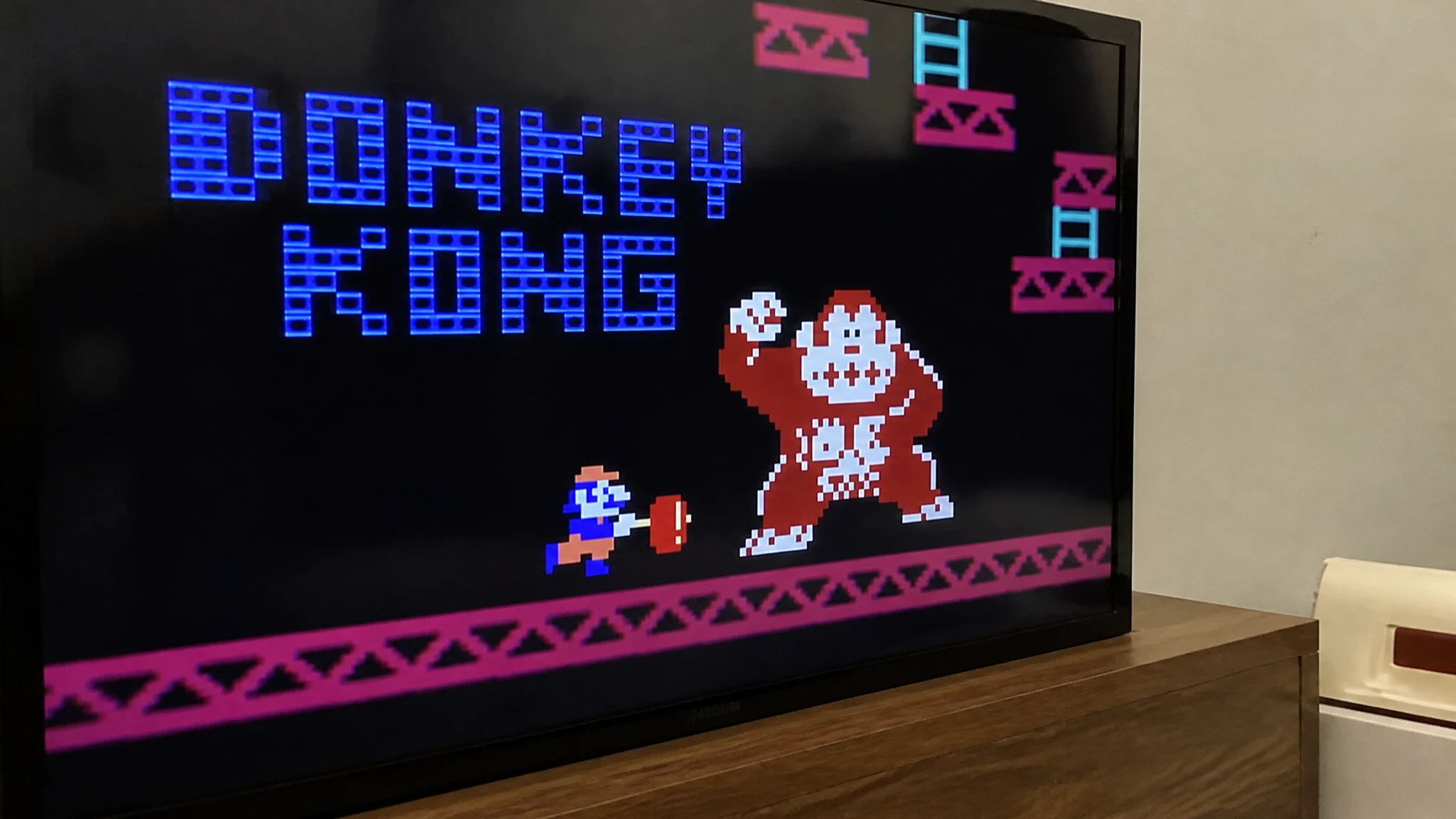
What Is the 1983 Universal vs Nintendo Lawsuit?
The 1983 Universal vs Nintendo lawsuit is a federal trademark case over the Donkey Kong arcade game. Universal City Studios sued Nintendo and said Donkey Kong infringed Universal's rights in King Kong. Nintendo Co., Ltd. and Nintendo of America, Inc. defended the case in New York as docket number 82 Civ. 4259.
Judge Robert W. Sweet ruled for Nintendo in December 1983, which is why this page uses that year. The case then continued through Nintendo's counterclaims until the Second Circuit affirmed the final judgment in 1986. The case is closed, and it was a dispute between companies, not a class action or multidistrict litigation.
“This is a dispute over two gorillas. Defendants Nintendo Co., Ltd., a Japanese corporation, and Nintendo of America, Inc. (referred to herein collectively as "Nintendo"), have moved for summary judgment to dismiss the trademark and unfair competition complaint of plaintiff Universal Studios, Inc. ("Universal"), a California corporation which seeks to enforce certain rights with respect to King Kong.”
Source: Universal City Studios, Inc. v. Nintendo Co., Ltd., 578 F. Supp. 911, No. 82 Civ. 4259 (S.D.N.Y. Dec. 22, 1983)
Why Was the 1983 Universal vs Nintendo Lawsuit Filed?
The 1983 Universal vs Nintendo lawsuit was filed because Universal said Donkey Kong infringed its King Kong rights.
Universal held those rights through a December 1976 assignment. Richard Cooper, heir of King Kong creator Merian C. Cooper, sold Universal his claimed rights for $200,000. That assignment followed Universal's earlier California litigation over a King Kong remake.
Universal executives learned of Donkey Kong in April 1982. At that time Universal was discussing an investment in Coleco, which held the home cartridge license for the game. On April 27, Universal executive Sid Sheinberg told Coleco's president that Donkey Kong infringed King Kong. The next day Universal telexed Coleco and Nintendo. The telexes demanded that sales stop and offered 48 hours to settle.
Coleco agreed to pay Universal a royalty of three percent. Nintendo refused. At a May 6 meeting Nintendo asked Universal to prove it owned King Kong. Universal's representatives promised a chain of title, but in discovery Universal pointed only to unspecified documents. Universal sued in June 1982, after a second meeting on May 21 failed to produce a deal.
Universal's own view, recorded by the court, was that it had asserted its rights in good faith.
What Harms Does the 1983 Universal vs Nintendo Lawsuit Allege?
The 1983 Universal vs Nintendo lawsuit alleges six legal harms, three from Universal and three from Nintendo.
Universal pleaded trademark infringement, dilution and unfair competition. Nintendo's counterclaims pleaded tortious interference, vicarious copyright infringement and unjust enrichment. All six are commercial harms between companies, and the court decided each one on the written record.
Trademark Infringement
Trademark infringement is the use of a name or symbol likely to confuse buyers about who makes a product.
Universal brought this claim under Section 43(a) of the Lanham Act. It said the Donkey Kong name and gorilla evoked King Kong.
Judge Sweet rejected the claim on three grounds. Universal did not own a King Kong trademark. Trademark rights cannot be transferred apart from a business or its goodwill. King Kong also no longer pointed to a single source, since RKO, De Laurentiis and Cooper each held other rights. Buyers were not likely to confuse the games. The opinion called Donkey Kong "at best" a parody of King Kong.
Dilution
Dilution is a state-law claim that a distinctive mark loses force when a similar mark appears on other goods.
Universal pleaded dilution under section 368-d of the New York General Business Law.
The court dismissed it because King Kong lacked the distinctiveness that statute requires. It also found no triable issue showing that Donkey Kong blurred any King Kong mark.
Unfair Competition
Unfair competition is a claim that a business gained an advantage by misleading buyers or copying another company's identity.
Universal pleaded unfair competition and common-law trademark infringement as state-law claims beside its federal claim.
The court dismissed those pendent claims together with the rest of the complaint in its December 1983 ruling.
Tortious Interference
Tortious interference is a claim that one party improperly caused another party to break or lose a contract.
Nintendo said Universal's January 3, 1983 letters pushed its licensees to stop paying royalties or stop making Donkey Kong products.
The 1985 ruling found liability for the licensees that stopped paying after those letters. It found no liability tied to Coleco, Atari or Ruby-Spears, because those three licensees kept paying Nintendo. The Second Circuit affirmed both parts in 1986.
Vicarious Copyright Infringement
Vicarious copyright infringement is liability for another party's copying when a person profits from that copying and could control it.
Nintendo said Universal's license of a King Kong game to Tiger Electronics infringed Nintendo's copyright in Donkey Kong.
The court agreed. It found that the interaction of Donkey Kong's characters, obstacles, background and music was protectable expression. A Universal vice president had also admitted to Nintendo that the Tiger game infringed. The Second Circuit affirmed the finding.
Unjust Enrichment
Unjust enrichment is a claim that one party unfairly kept money or benefits that belong to another party.
Nintendo asked for the royalties Universal collected from Coleco, Atari and Ruby-Spears, and the court denied that counterclaim.
The Second Circuit explained that Nintendo had sold its Donkey Kong rights to those three licensees under its own agreements. Any injustice therefore harmed the three licensees that paid Universal, not Nintendo.
What Is the Current Status of the 1983 Universal vs Nintendo Lawsuit?
The current status of the 1983 Universal vs Nintendo lawsuit is closed, with no pending proceeding in this case. The Second Circuit affirmed the district court's judgment on July 15, 1986. No later ruling in this case turned up in the sources reviewed for this page.
Universal City Studios, Inc. v. Nintendo Co., Ltd.
Judge Robert W. Sweet handled every district-court stage of this case. He decided summary judgment in 1983 and then presided over a bench trial of Nintendo's counterclaims.
| Court | U.S. District Court, Southern District of New York, with appeals to the Second Circuit |
| Case Number | No. 82 Civ. 4259 (RWS) |
| Judge | Robert W. Sweet |
| Plaintiff | Universal City Studios, Inc. |
| Defendants | Nintendo Co., Ltd. and Nintendo of America, Inc. |
| Filed | June 1982 (the 1985 findings give both June 6 and June 29, 1982) |
| Claims | Lanham Act Section 43(a), New York anti-dilution law and state unfair competition. Counterclaims: tortious interference, copyright infringement and unjust enrichment |
| Summary Judgment | December 22, 1983, 578 F. Supp. 911, for Nintendo |
| First Appeal | Affirmed October 4, 1984, 746 F.2d 112 |
| Counterclaim Ruling | July 29, 1985, 615 F. Supp. 838, for Nintendo in part |
| Second Appeal | Affirmed July 15, 1986, 797 F.2d 70 |
| Status | Closed; final judgment affirmed |
No later dispute between Universal and Nintendo over King Kong or Donkey Kong turned up in the sources reviewed. The companies now work together. Universal released The Super Mario Bros. Movie in 2023, a film that Universal and Nintendo co-financed. Universal Studios Japan has also added a Donkey Kong Country area to Super Nintendo World.
Did Nintendo Win Damages in the 1983 Universal vs Nintendo Lawsuit?
Yes. Nintendo won damages and attorney's fees in the 1983 Universal vs Nintendo lawsuit. The 1985 counterclaim ruling awarded them, and the Second Circuit affirmed in 1986.
The courts ordered five amounts, which add up to about $1.6 million by the calculation on this page. The largest was $1,142,545.70 in attorney's fees for defending Universal's trademark claim. Punitive damages of $222,498.28 covered other defense costs that were not taxable as court costs. The court also awarded $94,219.41 for tortious interference and $56,689.41 for Universal's profits on the Tiger license. A further $83,525.05 covered copyright attorney's fees.
No settlement ended this case. The money came from court-ordered awards, and the opinions do not report whether Universal paid each amount in full. Published totals differ, with some sources citing $1.6 million and others $1.8 million.
Universal collected $4,765,371.48 in royalties from Coleco, Atari and Ruby-Spears under its covenants not to sue. Nintendo did not recover that sum. The Second Circuit said any repayment belonged to those three licensees, and Coleco sued Universal separately in 1984.
1983 Universal vs Nintendo Lawsuit Updates
The 1983 Universal vs Nintendo lawsuit updates are historical, because the case closed in 1986. The timeline below runs from Universal's 1975 King Kong litigation to the April 2026 release of the case files.
1983 Universal vs Nintendo Lawsuit Timeline of Events
Universal Starts the California King Kong Litigation
Universal sued RKO Radio Pictures, the Dino De Laurentiis Corporation and Cooper in 1975 over a King Kong remake. Universal argued in that litigation that the King Kong story was in the public domain.
Universal Buys Cooper's King Kong Rights for $200,000
Richard Cooper assigned Universal all of his claimed King Kong rights on December 15, 1976, for $200,000. The assignment, together with the Cooper Judgment, later became the only documented source of the rights Universal asserted against Nintendo.
Donkey Kong Reaches the U.S. Market
Nintendo introduced Donkey Kong in the United States in July 1981. The 1983 opinion later recorded more than $180 million in U.S. and Canadian sales from about 60,000 arcade machines.
Universal Licenses Tiger Electronics for King Kong Games
Universal signed an exclusive King Kong license with Tiger Electronics in September 1981. It covered handheld and tabletop games and home video cartridges. Tiger had asked for the license after seeing Donkey Kong in Tokyo.
Sheinberg Accuses Coleco of Infringing King Kong
Sid Sheinberg told Coleco's president on April 27, 1982 that Universal owned King Kong and that Donkey Kong infringed it. The remark came during talks about a Universal investment in Coleco.
Universal Sends Telexes to Nintendo and Coleco
Universal telexed Nintendo and Coleco the next day, April 28, 1982. The telexes demanded an end to Donkey Kong sales, an accounting of profits and destruction of inventory. They offered 48 hours to settle.
Coleco Signs a Covenant Not to Sue
Coleco agreed to pay Universal royalties on Donkey Kong products for a covenant not to sue. The covenant was executed May 12, 1982. The deal followed an agreement in principle reached by May 5.
Nintendo Refuses to Pay at a Second Meeting
Nintendo's representatives told Universal at a May 21, 1982 lunch that they would not pay a royalty. The court recorded that Sheinberg cited Universal's litigation record and urged Nintendo to start saving for attorney's fees.
Universal Sues Nintendo in New York
Universal filed the lawsuit against Nintendo Co., Ltd. and Nintendo of America, Inc. in New York in June 1982. The case carried docket number 82 Civ. 4259 before Judge Robert W. Sweet.
Universal Writes to Nintendo's Licensees
Universal wrote to Nintendo's licensees on January 3, 1983. The letters demanded that they stop selling Donkey Kong products or take a Universal license. Several licensees stopped paying Nintendo royalties afterward.
Court Hears the Summary Judgment Motion With a Live Demonstration
Judge Sweet heard Nintendo's summary judgment motion on August 8, 1983. A game master demonstrated Donkey Kong in court. The judge also reviewed parts of the 1933 and 1976 King Kong films.
Judge Sweet Grants Summary Judgment to Nintendo
Judge Sweet dismissed Universal's complaint on December 22, 1983. His opinion held that Universal owned no King Kong trademark. It also held that buyers were not likely to confuse the games.
Coleco Sues Universal to Recover Royalties
Coleco filed its own suit against Universal in New York on April 12, 1984, docketed as 84 Civ. 2596. The Second Circuit later pointed to that case as the proper place to decide whether Universal must repay licensee payments.
Second Circuit Affirms the Dismissal
The Second Circuit upheld the summary judgment on October 4, 1984, at 746 F.2d 112. It rested on the absence of any likelihood of confusion between Donkey Kong and King Kong.
Judge Sweet Rules on Nintendo's Counterclaims
Judge Sweet ruled on Nintendo's counterclaims on July 29, 1985. Nintendo won on tortious interference and vicarious copyright infringement, lost on unjust enrichment, and received punitive damages and attorney's fees.
Second Circuit Affirms the Counterclaim Judgment
The Second Circuit affirmed the counterclaim judgment on July 15, 1986, at 797 F.2d 70, after argument on June 16. Each side had appealed the claims it lost, and the court left the district court's awards in place.
Gaming Historian Publishes the Case Files
YouTuber Norman Caruso, known as Gaming Historian, uploaded scans of the case documents to the Internet Archive in April 2026. Coverage describes depositions of Shigeru Miyamoto and Gunpei Yokoi and a list of rejected names for Donkey Kong.
What Evidence Mattered in the 1983 Universal vs Nintendo Lawsuit?
The evidence that mattered most in the 1983 Universal vs Nintendo lawsuit was Universal's chain of title.
Nintendo asked for proof of ownership at the May 6, 1982 meeting. A Universal representative called the question "open and shut" and promised a chain of title. During discovery Universal relied only on the Cooper Judgment and the Cooper assignment. The court held that those documents transferred no trademark.
Universal's survey was its main evidence of confusion. It found that 18 percent of video arcade operators thought the King Kong filmmakers had approved Donkey Kong. The court held that this result, with no evidence of consumer confusion, did not create a triable issue.
Nintendo's design history also mattered. Designer Shigeru Miyamoto testified that he had seen King Kong films and called his gorilla "King Kong" while designing. The game, however, began with Popeye characters, and Nintendo chose the "Kong" name because its designers thought it meant gorilla. Coverage of the released files says one document lists other names Nintendo considered, such as Bill Kong and Kong Holiday.
What Did Universal Know About Its King Kong Rights in the 1983 Universal vs Nintendo Lawsuit?
Universal knew it lacked clear King Kong rights in the 1983 Universal vs Nintendo lawsuit, according to the 1985 findings. Judge Sweet found that Universal knew from its California litigation that it owned no visual image of King Kong.
The Second Circuit agreed that Universal had no good-faith basis for its conduct. It noted that Universal had argued in 1975 that King Kong lacked secondary meaning. Universal offered no explanation for reversing that position.
Universal disagreed. It described its conduct as the good-faith assertion of undefined rights. It also said it acted on advice of counsel. The court rejected the advice defense because no research or memorandum supported the claim.
| Evidence | Date | What the Court Found |
|---|---|---|
| Universal's California litigation against RKO | 1975 to 1981 | Universal argued that King Kong lacked secondary meaning, then asserted the opposite against Nintendo |
| In-house counsel memorandum to Sheinberg | April 8, 1982 | Counsel wrote that RKO owns the visual representation of the King Kong ape |
| Testimony of licensing manager Loretta Sifuentes | After the February 1982 Toy Fair | Court found credible her account that Universal decided it had no King Kong rights to license; counsel denied it |
| Universal's telex to Nintendo and Coleco | April 28, 1982 | Universal claimed sole ownership of all King Kong rights except book publishing rights |
Is the 1983 Universal vs Nintendo Lawsuit the Same as the Coleco, RKO and Betamax Cases?
No. The 1983 Universal vs Nintendo lawsuit is separate from the Coleco, RKO and Betamax cases. Each of them involves Universal, but none decides the Donkey Kong dispute.
| Case | Court | Link to This Lawsuit |
|---|---|---|
| Universal City Studios v. RKO General, No. 75-3526 | U.S. District Court, Central District of California | Origin of the King Kong rights Universal later asserted against Nintendo |
| Coleco Industries v. Universal City Studios, 84 Civ. 2596 | U.S. District Court, Southern District of New York | Licensee suit over royalties paid to Universal; the outcome did not appear in the sources reviewed |
| Sony Corp. of America v. Universal City Studios, 464 U.S. 417 | U.S. Supreme Court, 1984 | Betamax case that Sheinberg cited at the May 21, 1982 meeting; it did not decide Donkey Kong |
The 2026 release of the case files is a document archive, not a new lawsuit. Nintendo's recent patent suit against Pocketpair is also unrelated, and the Nintendo Palworld lawsuit page covers it.
Frequently Asked Questions
What is the 1983 Universal vs Nintendo lawsuit about?
The 1983 Universal vs Nintendo lawsuit is about whether Donkey Kong infringed Universal's King Kong rights. Universal City Studios sued Nintendo in 1982 and lost. The court found that Universal owned no King Kong trademark. It also found that buyers were not likely to confuse the games.
Why is it called the 1983 Universal vs Nintendo lawsuit?
The 1983 Universal vs Nintendo lawsuit carries that year because Judge Sweet issued the key ruling on December 22, 1983. Universal filed the case in June 1982, and the final judgment was affirmed in July 1986.
Is the 1983 Universal vs Nintendo lawsuit a class action?
No. The 1983 Universal vs Nintendo lawsuit is not a class action or multidistrict litigation. One company sued two related companies in New York. No class exists to join, and no claim form exists to file.
Who won the 1983 Universal vs Nintendo lawsuit?
Nintendo won the 1983 Universal vs Nintendo lawsuit. Judge Sweet granted summary judgment on December 22, 1983. The Second Circuit affirmed on October 4, 1984, and affirmed the counterclaim judgment on July 15, 1986.
How much did Nintendo win in the 1983 Universal vs Nintendo lawsuit?
Nintendo won about $1.6 million in the 1983 Universal vs Nintendo lawsuit, by the calculation on this page. That total covers five court-ordered amounts. The largest was $1,142,545.70 in attorney's fees. Some sources cite $1.8 million instead.
Why did Universal sue Nintendo over Donkey Kong?
Universal sued Nintendo over Donkey Kong because it said the game infringed its King Kong rights. Those rights came from a 1976 assignment by Richard Cooper. The court held that the assignment did not create a King Kong trademark.
Is the 1983 Universal vs Nintendo lawsuit the same as the Coleco lawsuit?
No. The 1983 Universal vs Nintendo lawsuit is separate from Coleco's 1984 suit against Universal. Coleco sued to recover royalties it had paid Universal, and the sources reviewed did not report the outcome.
Are Universal and Nintendo still in a dispute?
Universal and Nintendo are not in a dispute over King Kong or Donkey Kong, based on the sources reviewed. The companies have since worked together on The Super Mario Bros. Movie and Super Nintendo World.