
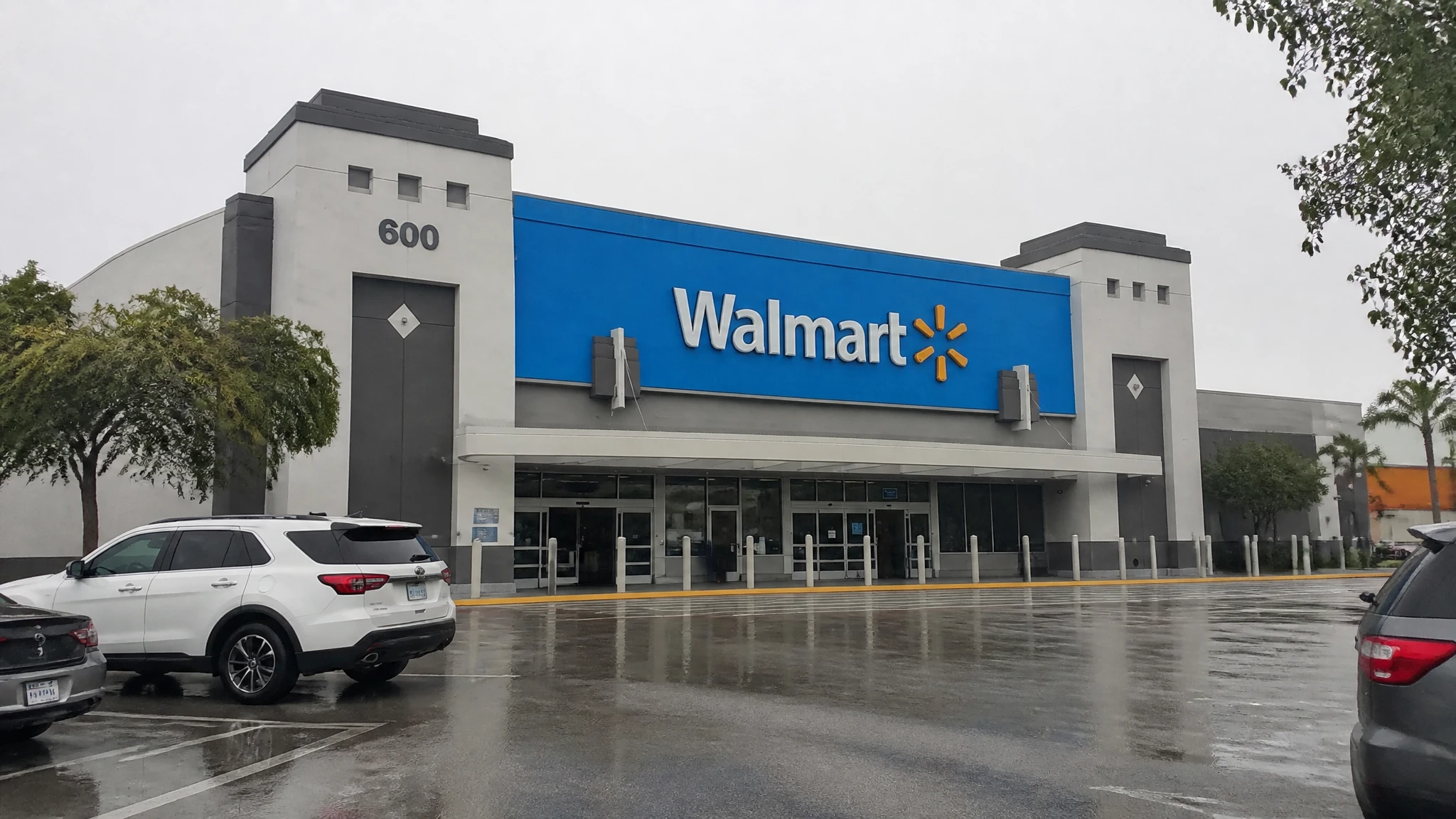
What Is the Walmart Lawsuit?
The Walmart lawsuit is a federal consumer class action, Kukorinis v. Walmart Inc., that Walmart settled for $45 million. Plaintiff Vassilios Kukorinis sued Walmart Inc. on October 19, 2022, in the U.S. District Court for the Middle District of Florida, Tampa Division.
The case covers weighted goods and bagged citrus. Weighted goods are variable-weight meat, poultry, pork and seafood sold with a price-embedded barcode. Bagged citrus means organic oranges, grapefruit, tangerines and navel oranges sold in mesh or plastic bags.
Walmart has also resolved several separate government cases, including actions over driver pay, opioid dispensing and expired products. This page keeps those distinct from the class action and compares them in the related-cases section.
“Plaintiff Vassilios Kukorinis initiated this putative class action against Defendant Walmart on October 19, 2022, asserting 'nationwide claims against Walmart for alleged violations [of] state consumer protection acts and unjust enrichment.' More specifically, Plaintiff alleged that people who bought weighted goods or bagged citrus at Walmart stores paid more than the lowest in-store advertised price for the products.”
Source: U.S. District Court, M.D. Fla., Kukorinis v. Walmart, Inc., No. 8:22-cv-02402-VMC-TGW, Order granting final approval, Doc. 132 (June 28, 2024)
Why Are People Filing Walmart Lawsuits?
People are filing Walmart lawsuits because shoppers, drivers, workers and government agencies each say Walmart's conduct cost them money or rights. The disputes fall into separate groups rather than one case.
Shoppers sued over grocery pricing, which produced the class action described above. Delivery drivers and regulators challenged how Spark driver pay and tips were presented. Federal prosecutors targeted how Walmart pharmacies filled controlled-substance prescriptions, and California prosecutors targeted expired infant formula and over-the-counter drugs.
Walmart denies the allegations in the weighted goods case. The company has said it believed settling was in the best interest of both sides, according to a statement it gave the Associated Press.
What Injuries Are Included in the Walmart Lawsuit?
The Walmart lawsuit includes three categories of harm, and all of them are financial rather than physical injuries. Each category matches a claim pleaded in the amended complaint.
Overcharging on Weighted Goods
Overcharging means charging a customer more than the lowest price the seller advertised for the same item.
The complaint alleges Walmart charged shoppers more than the lowest in-store advertised price for weighted meat, poultry, pork and seafood. The settlement documents note that items near their expiration dates sometimes carried a yellow sticker with a discounted "You Pay!" price.
Overcharging on Bagged Citrus
Bagged citrus is fruit such as oranges, grapefruit and tangerines sold together in a mesh or plastic bag.
The same pricing theory reaches organic oranges, grapefruit, tangerines and navel oranges sold in bags. The covered products are identified by UPC codes, and the settlement website offers a searchable list of them.
Unjust Enrichment
Unjust enrichment is a legal claim that someone kept a benefit, such as money, that fairness says belongs to another person.
The unjust enrichment count alleges Walmart kept the extra money collected through the pricing practices. The amended complaint pairs it with Florida's Deceptive and Unfair Trade Practices Act, plus alternative claims under Connecticut, New Jersey and New York consumer laws.
Who Qualifies for the Walmart Lawsuit?
You may qualify if:
- You bought variable-weight meat, poultry, pork or seafood in person at a Walmart store, supercenter or neighborhood market in the United States or Puerto Rico.
- You bought organic oranges, grapefruit, tangerines or navel oranges sold in mesh or plastic bags at one of those locations.
- Your purchase happened between October 19, 2018 and January 19, 2024.
You may not qualify if:
- Your purchase was not made in person at a Walmart location, because the class covers in-person purchases.
- You are a judge on the case, a Walmart director, officer or executive, class counsel, or someone who timely opted out.
These criteria come from the court's class definition. The claims window has closed, so a new claim is generally not possible. Only the court-appointed administrator can confirm the status of a claim already filed.
What Is the Current Status of the Walmart Class Action?
The Walmart class action is settled and closed to new claims, because the court entered final judgment in 2024. Payment administration continued afterward.
Kukorinis v. Walmart Inc.
The court certified the settlement class, approved the settlement, awarded class counsel fees and expenses, and dismissed the action by final judgment. Class counsel told the court that neither the plaintiff nor any class member appealed.
| Court | U.S. District Court, Middle District of Florida, Tampa Division |
| Case Number | 8:22-cv-02402-VMC-TGW |
| Judge | Virginia M. Hernandez Covington |
| Class Counsel | Chimicles Schwartz Kriner & Donaldson-Smith LLP |
| Claims Administrator | Angeion Group |
| Preliminary Approval | January 19, 2024 |
| Claims Deadline | June 5, 2024 (passed) |
| Final Approval | June 28, 2024 (Order, Doc. 132) |
| Judgment Effective | July 30, 2024, per class counsel |
The last filings this page could review show the administrator expected to distribute the net settlement fund in early to mid 2025, subject to court approval. No court source confirming the payment date was available after February 2025. Claimants should check the official settlement website for their own claim status.
How Much Is the Walmart Lawsuit Settlement Payout?
The Walmart lawsuit settlement payout ranged from $10 to $25 without proof of purchase and up to $500 with documentation. Without receipts, the tiers were $10 for up to 50 items, $15 for 51 to 75 items, $20 for 76 to 100 items, and $25 for 101 or more.
Claimants with receipts or other documentation were entitled to 2 percent of the cost of the substantiated goods, capped at $500. The settlement subjects every amount to a pro rata increase or decrease, so the final payment depends on how many valid claims the administrator approves.
The $45 million fund pays claimants, notice and administration costs, and attorneys' fees. The court approved $9,000,000 in fees and $114,870.41 in expenses for class counsel. Class counsel estimated the fund at 11 to 14 percent of a complete nationwide recovery.
The claims administrator received 3,905,158 claim forms as of June 2, 2024, and preliminarily flagged 1,240,998 as suspected fraud. Money left after claims are paid goes out in supplemental pro rata distributions, and any residual may go to nonprofits with court approval.
Latest Walmart Lawsuit Updates
The latest Walmart lawsuit updates and news, including new filings, rulings, and case-count reports, are tracked below as they're confirmed. A settlement in the Kukorinis v. Walmart weighted goods class action was reached as of October 2026, detailed in the timeline below. The full timeline below covers every verified development since the first case was filed.
Walmart Lawsuit Timeline
California expired-product judgment entered
Seven California county prosecutors secured a $16 million settlement with Walmart over expired infant formula and over-the-counter drugs. They had sued on July 14, 2026, and Alameda County Superior Court executed the final judgment and a six-year compliance injunction, according to Top Class Actions.
Walmart pays $50 million to end the DOJ opioid case
The Justice Department and the DEA announced that Walmart Inc. agreed to pay $50 million to resolve a civil case in the District of Delaware over opioid dispensing. The government said its claims are allegations only, with no determination of liability.
FTC and 11 states announce $100 million Spark driver judgment
The Federal Trade Commission and 11 states filed a complaint and stipulated order in the Northern District of California. It concerns how Walmart's Spark Driver program presented earnings, and Walmart agreed to a $100 million judgment.
California prosecutors settle Walmart pricing case for about $5.6 million
District attorneys from four California counties settled their 2022 consumer protection suit against Walmart over prices above the lowest advertised amount and underweight goods. The court ordered $5.5 million in civil penalties plus about $140,000 in investigation costs.
Class counsel reports a verified claim
Class counsel told the Tampa court that the administrator had verified and approved one claimant's Option 1 claim in Kukorinis v. Walmart after the claimant supplied updated contact details.
Class counsel answers payment-delay complaints
In Kukorinis v. Walmart, class counsel reported that the administrator had flagged 2,372,248 claims as initially rejected for unverifiable information and that no appeal was delaying payment. The administrator's distribution estimate moved to the end of the first quarter or start of the second quarter of 2025.
Class counsel projects distribution timing
Class counsel filed a status notice saying the Kukorinis v. Walmart administrator had processed over 3.9 million claims. Distribution was expected by about the end of the first quarter of 2025. The plaintiff separately wrote the court on December 30, 2024 with concerns about the administration, which class counsel disputed.
Rejection notices start going out
Angeion Group began sending rejection notices to Kukorinis v. Walmart claimants whose claims it could not verify. Claimants could cure the problem through a one-time passcode process.
Judgment becomes effective and final
According to class counsel, the June 28 judgment in Kukorinis v. Walmart became effective and final on July 30, 2024 under the terms of the settlement.
Judge Covington grants final approval
Judge Virginia M. Hernandez Covington found the $45 million Walmart settlement fair, reasonable and adequate. The order also certified the settlement class and approved the requested attorneys' fees and expenses.
Final approval hearing takes place
The Tampa federal court heard the final approval motion in Kukorinis v. Walmart. Of the people who filed notices of intent to appear, only the class representative attended the hearing.
Opt-out and objection counts reported
The Kukorinis v. Walmart administrator reported 160 timely opt-out requests as of June 10, 2024. The court had received six objections to the settlement by then.
Claims deadline passes
Claims in the Walmart weighted goods settlement closed on June 5, 2024. As of June 2, the administrator had received 3,905,158 claim forms, a 4.87 percent claims rate.
New Jersey announces $1.64 million Walmart pricing settlement
New Jersey officials announced a $1.64 million settlement with Walmart over unlawful unit pricing at its 64 stores in the state. Inspectors had recorded more than 2,000 violations in early 2023.
Final approval and fee motions filed
Class counsel in Kukorinis v. Walmart asked the court for final approval of the settlement. The filing sought $9,000,000 in attorneys' fees and $114,870.41 in litigation expenses.
Preliminary approval of the $45 million settlement
Judge Covington preliminarily approved the settlement, appointed Angeion Group as claims administrator and fixed the class period as October 19, 2018 through January 19, 2024.
Settlement agreement submitted to the court
Class counsel moved for preliminary approval of a Kukorinis v. Walmart settlement agreement dated November 15, 2023. A JAMS mediator, Robert Meyer, had assisted the negotiations.
Parties report a settlement in principle
Kukorinis and Walmart told the Tampa court they had reached a settlement in principle and asked it to stay the case.
Amended complaint adds state-law claims
After the court partly granted Walmart's motion to dismiss, Kukorinis amended the complaint. It pleaded Florida's FDUTPA, declaratory relief, alternative Connecticut, New Jersey and New York consumer claims, and unjust enrichment.
Kukorinis files the class action
Vassilios Kukorinis filed a putative nationwide class action against Walmart Inc. in the Middle District of Florida. The complaint alleged state consumer protection and unjust enrichment violations over weighted goods and bagged citrus pricing.
How to File a Walmart Lawsuit
Below are the 5 steps involved in filing a Walmart lawsuit.
- Identify your type of claim: Pricing overcharges, driver pay, workplace discrimination and store injuries follow different legal rules, so match your problem to the right category first.
- Check for an existing settlement: The weighted goods claim window is closed. Government settlements, such as the FTC's Spark driver case, may list their own payment processes on agency websites.
- Gather your records: Collect receipts, Walmart account purchase history, screenshots and dates, because documented losses are easier for an attorney to evaluate.
- Consult an attorney: Only a qualified consumer or employment attorney can review your records and confirm whether you have a claim worth filing.
- File before the deadline: File in the correct state or federal court, or small claims court for modest amounts, before your state's statute of limitations expires.
Walmart Lawsuit is no longer accepting new claims. The claims deadline in the weighted goods settlement has passed, and the court has already entered final judgment.
What Evidence Do I Need for a Walmart Lawsuit?
The evidence needed for a Walmart lawsuit depends on the claim. Dated proof of the purchase or the work sits at the center of most cases. Receipts are the strongest proof of a pricing overcharge.
Shoppers without paper receipts can look up past purchases in a Walmart account, according to ABC News reporting on the weighted goods settlement. Photographs of a shelf tag next to the matching register price can also help show a pricing mismatch.
Spark drivers can preserve screenshots of the pay and tip shown when they accepted an offer, alongside the amount they received. An attorney can say which records matter for a specific claim.
What Have Regulators Found About Walmart's Pricing Practices?
Regulators have found pricing problems at Walmart in two states, and both matters ended in settlements separate from the class action. New Jersey's Attorney General announced a $1.64 million settlement in June 2024 over inaccurate unit prices at 64 stores. The state said its civil penalty was the largest its Office of Weights and Measures had obtained.
In August 2025, four California district attorney offices settled a 2022 suit alleging prices above the lowest advertised amount and underweight prepared goods. The court ordered $5.5 million in civil penalties, and Walmart said it was pleased the matter was resolved.
How Does the Walmart Lawsuit Compare to Other Walmart Cases?
The Walmart lawsuit compares to other Walmart cases mainly by who sued and whether consumers can claim money. The weighted goods case is the only one here that was a consumer class action with a public claims process.
The table summarizes five separate matters. The opioid settlement is also separate from the $3.1 billion state and local opioid settlement Walmart announced in 2022.
| Case | Court or agency | Amount | Status |
|---|---|---|---|
| Opioid dispensing, DOJ and DEA v. Walmart | U.S. District Court, District of Delaware | $50 million | Settled August 28, 2026; no liability determination |
| Spark driver pay, FTC and 11 states v. Walmart | N.D. Cal., No. 3:26-cv-01655 | $100 million judgment | Stipulated order filed February 26, 2026 |
| Expired products, People v. Walmart | Alameda County Superior Court, No. 26CV199003 | $16 million | Final judgment executed September 18, 2026 |
| Disability discrimination, EEOC v. Walmart Stores East | E.D. Wis., No. 17-cv-70 | $125.15 million verdict, reduced to a $300,000 cap | Jury verdict in 2021; the statutory cap reduced the award |
| Check-payment disclosures, Morris v. Walmart (TeleCheck) | D. Mont., No. 1:22-cv-00016 | Not confirmed | Pending; summary judgment motions denied August 6, 2025 |
Consumer-law websites report a proposed $1.85 million settlement in the TeleCheck matter that would change check-payment disclosures. This page could not confirm those terms against the court docket.
The weighted goods plaintiff also sued Walmart in 2019 in the Southern District of Florida, No. 1:19-cv-20592, which ended in a final judgment on September 21, 2021. Class counsel told the court that earlier case alleged different misconduct, so it is not part of this page's narrative.
Frequently Asked Questions
What is the Walmart lawsuit about?
The Walmart lawsuit is about alleged overcharging on weighted meat, poultry, pork, seafood and bagged citrus at Walmart stores. The plaintiff, Vassilios Kukorinis, said shoppers paid more than the lowest advertised in-store price. Walmart denies the allegations.
Is the Walmart lawsuit a class action?
Yes. The Walmart lawsuit is a federal class action, Kukorinis v. Walmart Inc., in the Middle District of Florida. The court resolved it as a single federal case, and Walmart also settled separate government cases that are not class actions.
How much is the Walmart lawsuit settlement?
The Walmart lawsuit settlement is a $45 million non-reversionary fund. Claimants without proof of purchase could receive $10 to $25. Claimants with documentation could receive 2 percent of substantiated purchases, capped at $500, subject to pro rata adjustment.
Can I still file a claim in the Walmart lawsuit settlement?
No, generally. The claims deadline in the Walmart lawsuit settlement was June 5, 2024, and the court entered final judgment on June 28, 2024. The official settlement website can confirm the status of an existing claim.
When will the Walmart lawsuit settlement be paid?
The Walmart lawsuit settlement payment date depends on the administrator, which estimated distribution in early to mid 2025 subject to court approval. This page could not confirm a payment date from a court source after February 2025, so claimants should check the settlement website.
Is the Walmart opioid settlement part of the Walmart lawsuit?
No. The Walmart opioid settlement is a separate $50 million resolution of a Justice Department and DEA civil case in Delaware. It is a government case rather than a consumer class action, and the announcement describes no consumer claims process.