
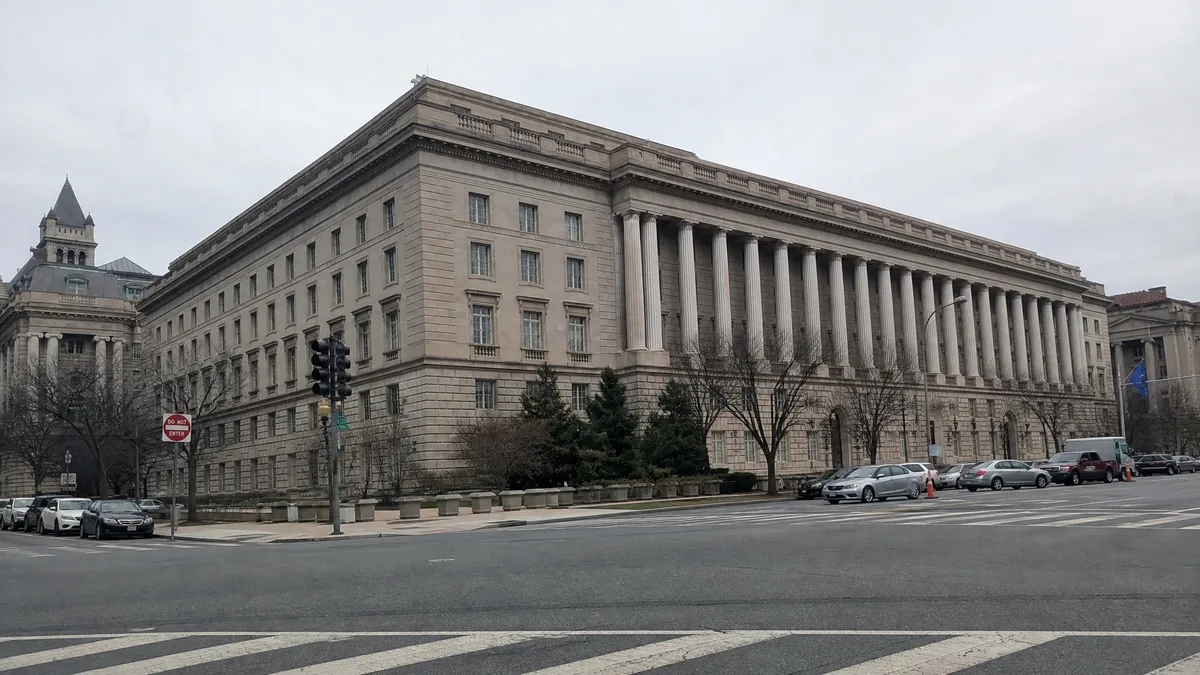
What Is the Trump IRS Lawsuit?
The Trump IRS lawsuit is a $10 billion civil case that President Donald Trump, his sons Donald Trump Jr. and Eric Trump, and the Trump Organization filed against the Internal Revenue Service and the Treasury Department in the U.S. District Court for the Southern District of Florida on January 29, 2026. The complaint rests on a past crime. Charles Littlejohn, a former IRS contractor, accessed tax returns of Trump and thousands of other wealthy taxpayers and passed them to news outlets between 2019 and 2020, and he received a five-year prison sentence in January 2024.
The case never reached a trial. Trump dropped it on May 18, 2026 under a settlement with his own administration, and a federal judge later found the suit was collusive. Those events, more than the original leak, explain why the lawsuit stays in the news. This page covers that one case. Other lawsuits that involve Trump are separate proceedings, and the comparison section below tells them apart.
“On January 29, 2026, Plaintiffs filed a complaint in the U.S. District Court for the Southern District of Florida, stating that a former IRS employee/contractor, Charles Littlejohn had illegally obtained access to, and illegally disclosed, Plaintiffs' tax returns and/or tax return information to media outlets in violation of the Internal Revenue Code and the Privacy Act.”
Source: U.S. Department of Justice, Settlement Agreement, Trump v. IRS, No. 1:26-cv-20609-KMW (S.D. Fla.), Recital A (effective May 18, 2026)
Why Was the Trump IRS Lawsuit Filed?
The Trump IRS lawsuit was filed because Trump and his co-plaintiffs say the government failed to protect their tax returns from a contractor who illegally disclosed them. The settlement agreement's own recitals describe the complaint as alleging violations of the Internal Revenue Code and the Privacy Act, and they say plaintiffs' counsel planned to amend the complaint, likely to add a putative class claim, if the case had continued. The complaint sought at least $10 billion in damages.
The filing was unusual because the defendants, the IRS and the Treasury Department, sit inside the executive branch that Trump leads. The Justice Department, which defends those agencies, is also led by his appointees. Critics argued from the start that this left no real opponent in the courtroom, and a federal judge later agreed, as the case status section below explains.
The disclosures themselves are not in dispute as a matter of criminal law. Littlejohn pleaded guilty to unlawfully disclosing return information in October 2023, according to a House Judiciary Committee Democrats fact sheet. The same disclosure scheme led the IRS to apologize publicly in 2024 to hedge fund founder Kenneth Griffin, whose own suit, Griffin v. IRS (No. 1:22-cv-24023, S.D. Fla.), the Trump settlement agreement cites as a model.
What Harms Does the Trump IRS Lawsuit Allege?
The Trump IRS lawsuit involves three distinct categories of alleged harm, two pled by Trump and one raised against the lawsuit itself. Trump's complaint alleges an unauthorized disclosure of tax returns and a Privacy Act violation. A federal judge and a group of former judges separately describe the suit as a fraud on the court. No court has decided Trump's own damages claims on the merits.
Unauthorized Disclosure of Tax Returns
Federal law generally treats tax returns and return information as confidential, and it lets a taxpayer sue the United States for damages when an official or contractor discloses them without authorization.
Trump's central claim alleges that Littlejohn illegally obtained and disclosed the plaintiffs' returns and return information to media outlets, and that the IRS and the Treasury Department answer for it under 26 U.S.C. §§ 6103 and 7431. The settlement agreement lists those two sections as the basis of the case. Whether the government is liable for a contractor's crime, and whether the two-year filing window had already closed, were never decided, because Trump dismissed the case before any ruling on them.
Privacy Act Violation
The Privacy Act of 1974 limits how federal agencies may collect and share records about individuals, and it lets a person seek damages when an agency breaks those limits and causes harm.
The second statutory ground in the complaint is the Privacy Act, which the settlement agreement names alongside the Internal Revenue Code. This claim is the one plaintiffs' counsel said they would expand into a putative class claim before the settlement ended the case. Because Trump dropped the suit with prejudice, that amended class theory was never filed, and no other taxpayer joined the case.
Fraud on the Court
Fraud on the court is a legal term for conduct that corrupts the judicial process itself, such as presenting a staged dispute to a judge, and courts have broad inherent power to respond to it.
Thirty-five former federal judges told Judge Williams in a May 2026 filing that the announced settlement raised profound questions about the parties' candor toward the court. Judge Williams reopened the closed case to examine those concerns, and her July 2026 findings, summarized in the case status section below, adopted the core of that charge. Trump's lawyers dispute it and are appealing.
What Is the Current Status of the Trump IRS Lawsuit?
The current status of the Trump IRS lawsuit is that the original case is closed in district court, the sanctions order against Trump's lawyers is on appeal, and a separate challenge to the settlement's audit protection continues in Virginia. As of October 7, 2026, no ruling on that amended Virginia complaint appears in the sources reviewed for this page.
President Donald J. Trump et al. v. Internal Revenue Service et al.
Trump, Donald Trump Jr., Eric Trump, and the Trump Organization filed the complaint on January 29, 2026, and the case was assigned to Judge Kathleen M. Williams. Plaintiffs dismissed it with prejudice on May 18, 2026 under the settlement, and Judge Williams reopened the case on May 29, 2026 to examine concerns about collusion.
On July 13, 2026, Judge Williams issued a 56-page ruling that, according to CBS News and The Hill, found no genuine adverseness between the parties, no case or controversy, and bad faith by Trump and his two older sons. She wrote that the suit was brought for an improper purpose, to gain judicial legitimacy for a settlement with no viable basis in law or fact. She also barred the parties from citing the arrangement as a settlement in official proceedings.
| Court | U.S. District Court, Southern District of Florida |
| Case Number | 1:26-cv-20609-KMW |
| Judge | Kathleen M. Williams |
| Plaintiffs | Donald J. Trump, Donald J. Trump Jr., Eric Trump, The Trump Organization LLC |
| Defendants | Internal Revenue Service, U.S. Department of the Treasury |
| Filed | January 29, 2026 |
| Dismissed | May 18, 2026 (with prejudice, by plaintiffs); reopened May 29, 2026 |
The July 13 order sanctioned two of Trump's lawyers. Judge Williams referred Alejandro Brito to the Florida Bar for possible discipline and limited Daniel Epstein's ability to practice in the Southern District of Florida. She also sent copies of the order to the bar associations of Acting Attorney General Todd Blanche (D.C.) and Associate Attorney General Stanley Woodward Jr. (New York), and she allowed monetary sanctions to reimburse the amici who raised the concerns.
Trump et al. v. Thirty-Five Former Federal Judges (11th Cir.)
Trump's lawyers filed a notice of appeal from the July 13 order on or about July 31, 2026 and asked for the sanctions to be paused. On September 29, 2026, a three-judge Eleventh Circuit panel of Judges Adalberto Jordan, Robin Rosenbaum, and Kevin Newsom declined to pause them while the appeal proceeds. The panel wrote that the appellants had not offered evidence to show the suit and settlement were not collusive, and had not made a strong showing of clear error. The merits of the appeal remain pending.
| Court | U.S. Court of Appeals for the Eleventh Circuit |
| Case Number | 26-12692 |
| Appeal From | Judge Williams's July 13, 2026 order |
| Stay Panel | Jordan, Rosenbaum, Newsom |
| Stay Ruling | Denied, September 29, 2026 |
| Merits | Pending; further review by the full court or the Supreme Court is possible |
Floyd et al. v. U.S. Department of Justice et al.
A separate group of plaintiffs sued on May 22, 2026 to block the Anti-Weaponization Fund that the settlement created. Judge Leonie M. Brinkema halted the fund's implementation, with a hearing set for June 12, 2026 and a preliminary injunction order that day. After the Justice Department rescinded the fund on August 2, 2026, plaintiffs amended their complaint on August 6 to challenge the audit protection order that Blanche issued on May 19, 2026.
The plaintiffs allege the audit protection order violates the Internal Revenue Code's ban on presidential interference in audits and the Constitution's emoluments clause, according to the plaintiffs' lawyers at Democracy Forward. The government has not conceded either point in the sources reviewed.
| Court | U.S. District Court, Eastern District of Virginia |
| Case Number | 1:26-cv-01399 |
| Judge | Leonie M. Brinkema |
| Plaintiffs | Andrew Floyd, Jonathan Caravello, City of New Haven, National Abortion Federation, Common Cause, National Treasury Employees Union |
| Defendants | Department of Justice, Blanche, Woodward, Treasury Department, Treasury Secretary Scott Bessent, the Anti-Weaponization Fund |
| Filed | May 22, 2026 |
| Amended Complaint | August 6, 2026 |
How Much Money Was at Stake in the Trump IRS Lawsuit?
The money at stake in the Trump IRS lawsuit was at least $10 billion in damages sought, but the settlement agreement says Trump and the other plaintiffs receive a formal apology from the United States and no monetary payment of any kind.
The deal still carried financial weight. The Justice Department announced on May 18, 2026 that the Attorney General would create a $1.776 billion Anti-Weaponization Fund from the Treasury's Judgment Fund to pay people who say the government targeted them. The agreement states that the fund is based on projected future claims, not the value of any claim by Trump, and it has since been rescinded.
The audit protection may be worth more than the fund ever was. On May 19, 2026, Acting Attorney General Blanche issued an order barring the IRS from pursuing claims against Trump, his family, and related businesses over matters before May 18, 2026. Earlier reporting carried by ABC News said that protection could erase more than $100 million in back taxes. Blanche later narrowed it in writing to the settlement's plaintiffs only.
No payment from the fund appears in the sources reviewed. A federal court halted its implementation in late May 2026, the Justice Department announced it was not moving forward in early June, and Blanche signed a formal order ending it on August 2, 2026. Michael Caputo was reported as the first person to file a claim before the fund was blocked.
Trump IRS Lawsuit Updates and Case Status
Trump IRS lawsuit updates follow one dismissed federal case, a sanctions appeal, and a separate Virginia challenge, not a multidistrict litigation, so this timeline tracks orders and filings rather than case counts. As of October 2026, the Eleventh Circuit has declined to pause Judge Williams's sanctions while the appeal continues.
Trump IRS Lawsuit Timeline of Events
Littlejohn Pleads Guilty to Disclosing Tax Returns
Former IRS contractor Charles Littlejohn pleaded guilty in October 2023 to a federal charge of unlawfully disclosing tax return information, the leak that the later Trump IRS lawsuit would cite, according to a House Judiciary Committee Democrats fact sheet.
Littlejohn Receives a Five-Year Prison Sentence
A federal court sentenced Littlejohn to five years in prison in January 2024 for leaking tax returns of Trump and thousands of other wealthy taxpayers to The New York Times and ProPublica.
IRS Apologizes to Kenneth Griffin Over the Same Leak
The IRS publicly apologized to hedge fund founder Kenneth Griffin by late June 2024, ending his Southern District of Florida suit (Griffin v. IRS, No. 1:22-cv-24023) over Littlejohn's disclosure of his tax data, a precedent the Trump settlement agreement later cited by name.
Trump Sues the IRS and Treasury for $10 Billion
President Trump, Donald Trump Jr., Eric Trump, and the Trump Organization filed the Trump IRS lawsuit on January 29, 2026 in the Southern District of Florida (No. 1:26-cv-20609), seeking at least $10 billion over Littlejohn's disclosure of their returns, and the case went to Judge Kathleen M. Williams.
Judge Williams Questions Whether the Parties Are Adverse
In April 2026, Judge Williams questioned whether the Trump IRS lawsuit had a real dispute between adverse parties and ordered briefing on jurisdiction, while the parties were separately discussing settlement.
News Reports Surface That DOJ Is Weighing a Settlement
The New York Times reported on May 12, 2026 that the Justice Department was considering a settlement of the Trump IRS lawsuit that could include a permanent end to IRS audits of Trump, his family, and his businesses.
Trump Drops the Case and DOJ Announces the Anti-Weaponization Fund
Plaintiffs dismissed the Trump IRS lawsuit with prejudice on May 18, 2026 under a settlement agreement giving them a formal apology and no money, and the Justice Department announced a $1.776 billion Anti-Weaponization Fund funded from the Treasury's Judgment Fund.
Blanche Issues the Tax Audit Protection Order
Acting Attorney General Todd Blanche issued an order on May 19, 2026 barring the IRS from pursuing claims against Trump, his family, and related businesses over matters before May 18, 2026, an addition to the Trump IRS settlement that was not part of the signed agreement text.
Floyd Plaintiffs Sue to Block the Fund
Andrew Floyd, Jonathan Caravello, the City of New Haven, the National Abortion Federation, and Common Cause sued the Justice Department on May 22, 2026 in the Eastern District of Virginia (No. 1:26-cv-01399) to stop the Anti-Weaponization Fund created by the Trump IRS settlement.
Thirty-Five Former Federal Judges Raise Fraud-on-the-Court Concerns
Thirty-five former federal judges asked Judge Williams on May 27, 2026 to examine whether the Trump IRS settlement was a product of collusion and a fraud on the court, arguing the parties' candor toward the court was in question.
Williams Reopens the Case and Brinkema Pauses the Fund
Judge Williams reopened the closed Trump IRS lawsuit on May 29, 2026 to explore the collusion allegations, and the same day Judge Leonie Brinkema in Virginia temporarily blocked creation of the Anti-Weaponization Fund pending a hearing.
Blanche Says the Fund Is Not Moving Forward but Audit Protection Stays
Acting Attorney General Blanche told a House appropriations subcommittee on June 2, 2026 that the Justice Department was not moving forward with the Anti-Weaponization Fund, while confirming that the agreement ending audits of the Trump family and businesses would remain.
Brinkema Issues a Preliminary Injunction Against the Fund
Judge Brinkema entered a preliminary injunction order in Floyd v. Department of Justice on June 12, 2026 halting further implementation of the Anti-Weaponization Fund, and the plaintiffs' lawyers say the government declined to give sworn assurances that the fund was dead.
Williams Finds the Trump IRS Lawsuit Collusive and Sanctions Two Lawyers
Judge Williams issued a 56-page ruling on July 13, 2026 finding the Trump IRS lawsuit non-adversarial and brought in bad faith for an improper purpose, referring attorney Alejandro Brito to the Florida Bar, limiting attorney Daniel Epstein's practice in the Southern District of Florida, and barring the parties from citing the arrangement as a settlement in official proceedings.
Trump's Lawyers Appeal and Ask for a Stay
Trump's lawyers filed a notice of appeal from Judge Williams's July 13 order on or about July 31, 2026 and asked that her sanctions be paused, starting the Eleventh Circuit appeal docketed as No. 26-12692.
Blanche Formally Terminates the Anti-Weaponization Fund
Acting Attorney General Blanche signed an order on August 2, 2026 terminating the $1.776 billion Anti-Weaponization Fund after Senators John Cornyn and Thom Tillis, who were holding up his nomination, demanded written assurances, while the narrowed audit protection for the Trump IRS plaintiffs stayed in place.
Floyd Plaintiffs Amend Their Complaint to Challenge the Audit Protection
The Floyd plaintiffs, now joined by the National Treasury Employees Union, amended their Eastern District of Virginia complaint on August 6, 2026 to challenge Blanche's May 19 audit protection order as unlawful under the Internal Revenue Code and the emoluments clause.
Eleventh Circuit Refuses to Pause the Sanctions
A three-judge Eleventh Circuit panel of Judges Jordan, Rosenbaum, and Newsom declined on September 29, 2026 to stay Judge Williams's sanctions in the Trump IRS lawsuit, writing that the appellants offered no evidence that the suit and settlement were not collusive.
What Did the IRS Know Before the Trump IRS Lawsuit Was Filed?
The IRS knew about the Littlejohn leak years before Trump sued, and it had already acknowledged fault to another victim. Littlejohn pleaded guilty in October 2023 and was sentenced in January 2024, and the agency apologized to Kenneth Griffin in June 2024 after he sued over the same disclosure scheme. The Trump settlement agreement itself cites that Griffin apology as its template for a formal apology, with no payment.
Government lawyers also appear to have doubted Trump's claim. According to a fact sheet from Rep. Jamie Raskin, the House Judiciary Committee's ranking Democrat, IRS lawyers wrote a 25-page memo arguing the agency was not liable for a contractor's crime and that the suit was time-barred, because Trump filed in January 2026 after an October 2025 deadline. Political appointees reportedly overrode that view. That account comes from a partisan source, and the memo itself was not available for this page.
Trump has described the arrangement in terms that fed the collusion concern. The same fact sheet quotes him as saying a settlement with the IRS would be like a settlement with himself, a statement the sources reviewed attribute to Trump but that this page could not trace to a primary transcript.
How Does the Trump IRS Lawsuit Differ From Other Trump Lawsuits?
The Trump IRS lawsuit differs from other Trump lawsuits because it is one specific case with its own docket, and searches for a generic Trump lawsuit return many unrelated proceedings. Trump is a plaintiff in some of them, such as his defamation case against the BBC. In others, states, cities, advocacy groups, and political committees are suing his administration over its actions. The Lawfare Media tracker listed 358 active cases of that second kind on its current page.
The Floyd case in the table below is the one closest to this page, because it challenges the settlement that ended the Trump IRS lawsuit and is covered in the case status section above.
| Case | Who Is Suing Whom | Court | Relationship to This Page |
|---|---|---|---|
| Trump v. IRS (this page) | Trump and family against the IRS and Treasury | S.D. Fla. 1:26-cv-20609 | The subject of this page |
| Floyd v. Department of Justice | Former prosecutor, city, and groups against DOJ | E.D. Va. 1:26-cv-01399 | Challenges the settlement's fund and audit protection |
| Trump v. BBC | Trump against the British Broadcasting Corporation | S.D. Fla. 1:25-cv-25894 | Separate defamation case |
| White House ballroom case | National Trust for Historic Preservation against federal agencies | D.D.C. 1:25-cv-04316 | Separate challenge to an administration project |
| DNC et al. v. Trump | Democratic committees against Trump over Executive Order 14215 | D.D.C. 25-587 | Separate challenge to an executive order |
Other suits in the same search results, including seven-state challenges to federal funding actions filed on October 1, 2026, are also unrelated to the IRS settlement. Each has its own plaintiffs and docket, so treat them as separate cases.
Frequently Asked Questions
What is the Trump IRS lawsuit about?
The Trump IRS lawsuit is a $10 billion civil case that President Trump, his sons, and the Trump Organization filed on January 29, 2026 against the IRS and the Treasury Department over a contractor's illegal disclosure of their tax returns to news outlets. It ended in a May 18, 2026 settlement with Trump's own administration, which a federal judge later found to be collusive.
Is the Trump IRS lawsuit a class action?
No. The Trump IRS lawsuit is a single case brought by four plaintiffs, not a class action or multidistrict litigation, and no other taxpayer is a party to it. Plaintiffs' counsel said they would likely have added a putative class claim if the case had continued, but the settlement ended the case first.
Did Trump get paid in the IRS lawsuit?
No. Trump did not get paid in the IRS lawsuit, because the settlement agreement gives the plaintiffs a formal apology and no monetary payment of any kind. He did receive audit protection for past tax filings under an order from Acting Attorney General Blanche, which remains under challenge in court.
Is the Anti-Weaponization Fund from the Trump IRS settlement still active?
No. The Anti-Weaponization Fund from the Trump IRS settlement was terminated by an order Acting Attorney General Blanche signed on August 2, 2026. A federal judge in Virginia had already halted its implementation, and the sources reviewed show no payments from it.
What did the court decide about the Trump IRS lawsuit?
Judge Kathleen Williams decided on July 13, 2026 that the Trump IRS lawsuit was collusive and brought for an improper purpose, and she sanctioned two of Trump's lawyers. The Eleventh Circuit declined on September 29, 2026 to pause those sanctions, and Trump's appeal on the merits continues.
Is the Trump IRS lawsuit the same as the Trump BBC lawsuit?
No. The Trump IRS lawsuit and the Trump BBC lawsuit are separate cases with different defendants, dockets, and subject matter. The IRS case concerns leaked tax returns and was dismissed in May 2026, while the BBC case is a defamation suit over a documentary edit and is covered on its own page.
Can anyone join or claim money from the Trump IRS lawsuit?
No one can join the Trump IRS lawsuit or claim money from it now. The case is closed in district court, no class was ever certified, and the Anti-Weaponization Fund that would have paid claimants was rescinded. Anyone with questions about their own situation would need to ask a licensed attorney.