
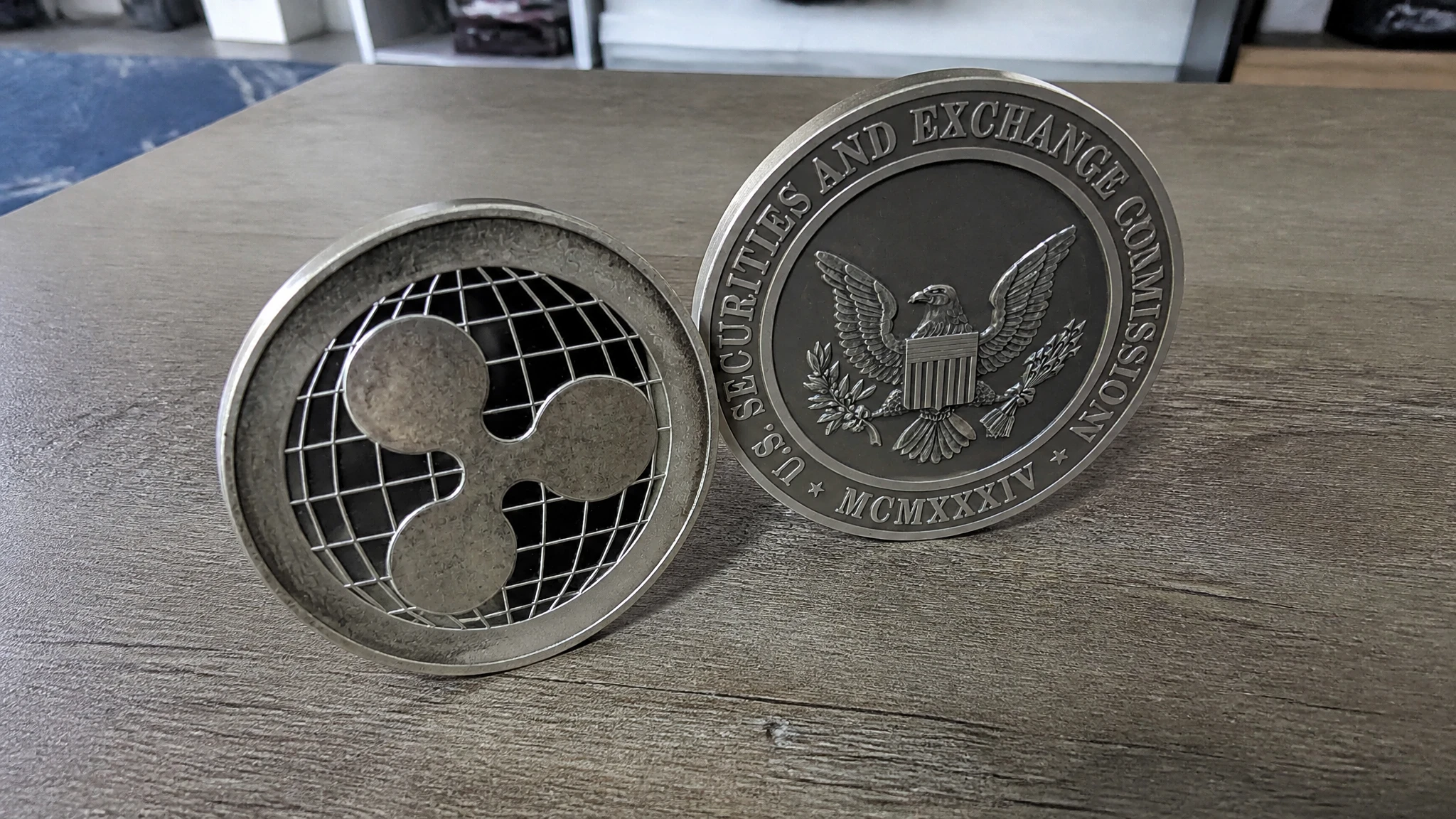
What Is the Ripple XRP SEC Lawsuit?
The Ripple XRP SEC lawsuit is a federal civil enforcement case, SEC v. Ripple Labs, Inc., No. 1:20-cv-10832, filed on December 22, 2020 in the U.S. District Court for the Southern District of New York. The Securities and Exchange Commission sued Ripple Labs, Inc., its CEO Bradley Garlinghouse, and its co-founder Christian A. Larsen. The SEC alleged that the defendants sold XRP, a digital token, as an unregistered security. Its press release said the defendants raised over $1.3 billion this way, starting in 2013.
Judge Analisa Torres presided over the case. The Ripple XRP SEC lawsuit is not a class action or a multidistrict litigation, because a federal agency was the only plaintiff. The case ended in August 2025, when both sides dismissed their appeals.
“Plaintiff, the Securities and Exchange Commission (the ‘SEC’), brings this action against Defendants Ripple Labs, Inc. (‘Ripple’) and two of its senior leaders, Bradley Garlinghouse and Christian A. Larsen, alleging that Defendants engaged in the unlawful offer and sale of securities in violation of Section 5 of the Securities Act of 1933 (the ‘Securities Act’), 15 U.S.C. §§ 77e(a) and (c). The SEC also alleges that Garlinghouse and Larsen aided and abetted Ripple’s Section 5 violations.”
Source: SEC v. Ripple Labs, Inc., No. 20 Civ. 10832 (AT), Order, ECF No. 874 (S.D.N.Y. July 13, 2023)
Why Was the Ripple XRP SEC Lawsuit Filed?
The Ripple XRP SEC lawsuit was filed because the SEC said Ripple sold XRP to investors without registering those sales. Section 5 of the Securities Act requires a seller of securities to register them with the SEC before offering them to the public. The SEC argued that XRP sales were "investment contracts," a type of security. Under the test from SEC v. W.J. Howey Co., an investment contract exists when a buyer invests money in a common enterprise. The buyer must also expect profits from the efforts of others.
Ripple's position was that XRP works like a currency and is not a security. The company also argued that the SEC had never given fair notice that XRP sales were regulated. The court rejected that fair notice defense for the institutional sales. Those were the only sales it found unlawful.
The SEC also named two executives because it alleged they sold XRP personally and helped structure Ripple's sales. Those claims are covered under the harm categories below.
What Harms Does the Ripple XRP SEC Lawsuit Allege?
The Ripple XRP SEC lawsuit alleges harms in four categories of XRP transactions, and the court sorted them into one violation and three non-violations. The SEC pleaded one count of unregistered offers and sales under Section 5, plus an aiding and abetting count against two executives. The court described the SEC's theory this way. Investors were deprived of information about XRP and Ripple's business that would let them make informed decisions. The categories below follow the transaction types named in the July 13, 2023 summary judgment order. They describe what the SEC alleged, not proven investor losses.
Institutional Sales of XRP
Institutional sales are direct sales of a token by its issuer to sophisticated buyers, such as hedge funds, under written contracts.
The SEC alleged that Ripple sold approximately $728.9 million of XRP to institutional buyers, hedge funds, and On-Demand Liquidity (ODL) customers. Ripple made these sales through wholly owned subsidiaries under written contracts. It used the proceeds to fund its operations.
Judge Torres granted the SEC summary judgment on this category. She held that these sales were the unregistered offer and sale of investment contracts in violation of Section 5. The court pointed to Ripple's marketing of XRP and to contract terms such as lockups and resale limits. It also rejected the SEC's alternate theory. That theory said the institutional buyers acted as underwriters for sales to the public.
The SEC pleaded this category as part of the same Section 5 count as the three categories below.
Programmatic Sales on Exchanges
Programmatic sales are sales made on public trading platforms through automated trading, where buyer and seller do not know each other.
The SEC alleged that Ripple sold approximately $757.6 million of XRP on digital asset exchanges using trading algorithms. These were blind bid and ask transactions. Ripple did not know its buyers, and the buyers did not know Ripple was the seller.
The court ruled for Ripple on this category. It found that the record did not establish the third Howey element, a reasonable expectation of profit from Ripple's efforts. Judge Torres noted that Ripple's programmatic sales were less than 1% of global XRP trading volume since 2017. She wrote that she was not deciding whether resales on the secondary market are investment contracts.
Other Distributions of XRP
Other distributions are transfers of a token as payment for services or grants rather than in exchange for cash.
The SEC alleged that Ripple recorded $609 million in consideration other than cash for XRP it handed to employees and outside companies. Some of that XRP paid employee compensation. Some funded third parties building applications through Ripple's Xpring initiative.
The court ruled for Ripple here as well. It found no "investment of money," the first Howey element, because recipients paid Ripple nothing and Ripple paid them in XRP. The SEC's argument that recipients later resold the XRP to the public failed because that money never traced back to Ripple.
Executive Sales by Garlinghouse and Larsen
Executive sales are personal sales of a token by a company's officers or founders rather than sales made by the company itself.
The SEC alleged that Christian Larsen made at least $450 million selling XRP on exchanges between 2013 and 2020. It alleged that Bradley Garlinghouse sold approximately $150 million from April 2017 through 2020. The SEC's own press release put the executives' combined sales near $600 million.
The court granted the defendants summary judgment on these sales. Like Ripple's programmatic sales, they were blind bid and ask trades on exchanges. The court also denied the SEC's motion on its aiding and abetting claim. It found a triable question about whether Larsen kept assisting Ripple after 2017.
The SEC and both executives then stipulated to dismiss the remaining claims with prejudice. The filings reviewed do not state why the SEC agreed to the dismissal.
What Is the Current Status of the Ripple XRP SEC Lawsuit?
The current status of the Ripple XRP SEC lawsuit is closed. The district court's final judgment remains in force, and no appeal is pending. The two entries below track the trial court and the Second Circuit, the two courts that decided and reviewed the case.
SEC v. Ripple Labs, Inc., et al.
Judge Analisa Torres granted summary judgment in part to each side on July 13, 2023. She entered final judgment against Ripple on August 7, 2024. The judgment permanently enjoins Ripple from violating Section 5 and imposes a civil penalty. A September 4, 2024 order stayed enforcement of the money portion. It required Ripple to deposit 111 percent of the penalty in an interest-bearing account held in its counsel's name.
| Case Number | 1:20-cv-10832 (AT) (SN) |
| Court | U.S. District Court for the Southern District of New York |
| Presiding Judge | Hon. Analisa Torres |
| Filed | December 22, 2020 |
| Summary Judgment Order | July 13, 2023 (ECF No. 874) |
| Final Judgment | August 7, 2024 (ECF No. 974) |
| Civil Penalty | $125,035,150 |
| Injunction | Permanent, bars violations of Section 5 of the Securities Act |
| Plaintiff | U.S. Securities and Exchange Commission |
| Defendants | Ripple Labs, Inc.; Bradley Garlinghouse; Christian A. Larsen |
The final judgment runs against Ripple alone. The claims against the two executives ended earlier.
Second Circuit Appeal No. 24-2648
The appeals never reached a merits decision. The SEC and Ripple jointly stipulated to dismiss them on August 7, 2025, and each side bore its own costs. The SEC's litigation release says the stipulation also resolves the action against the defendants.
| Appeal Numbers | 24-2648(L) and 24-2705(XAP) |
| Court | U.S. Court of Appeals for the Second Circuit |
| Order Appealed | Final Judgment of August 7, 2024 |
| SEC Notice of Appeal | October 2, 2024 |
| Ripple Notice of Cross-Appeal | October 10, 2024 |
| Disposition | Joint stipulation of dismissal, August 7, 2025 |
| Merits Decision | None |
Did the Ripple XRP SEC Lawsuit Settle?
No. The Ripple XRP SEC lawsuit did not settle on its announced $50 million terms. Judge Torres refused to say she would dissolve the injunction and cut the penalty, and the parties dropped their appeals instead.
The May 8, 2025 settlement agreement would have paid the SEC $50 million of the $125,035,150 penalty and returned the rest to Ripple. That deal took effect only if the court first signaled it would dissolve the injunction. The court declined on May 15, 2025 and again on June 26, 2025. The SEC said it chose to resolve the case to support reform of its crypto approach. It added that this was not an assessment of the merits.
Ripple's penalty therefore stays at the full $125,035,150, because the final judgment was never modified. The sum is a civil penalty owed to the government. The filings reviewed describe no fund that pays XRP buyers.
The injunction also stays in place. It bars Ripple from violating the registration provisions of Section 5, and the court imposed it after finding a reasonable probability of future violations. Reports say the escrowed penalty is to go to the U.S. Treasury, but the court filings reviewed do not show the transfer.
XRP holders who bought on exchanges received nothing from the SEC case. A separate private class action by XRP purchasers is covered in the related-cases section below.
Latest Ripple XRP SEC Lawsuit Updates
The latest Ripple XRP SEC lawsuit updates and case status run from the December 22, 2020 complaint to a January 2026 ruling in a related private case. Each entry names the court, the order, and the actor. New filings are added as they are confirmed.
Ripple XRP SEC Lawsuit Timeline
Ninth Circuit Affirms Ripple Win in Private XRP Class Action
The Ninth Circuit affirmed summary judgment for Ripple Labs in the private XRP purchaser case In re Ripple Labs Litigation, Nos. 24-7599 and 25-483, in an unpublished memorandum. The panel held that the Securities Act's three-year statute of repose barred lead plaintiff Bradley Sostack's federal claim. The ruling did not decide whether XRP is a security, and it is a different case from the SEC enforcement action.
SEC and Ripple Dismiss Both Second Circuit Appeals
The SEC and Ripple Labs filed a joint stipulation in the Second Circuit dismissing the SEC's appeal and Ripple's cross-appeal in No. 24-2648, with each side bearing its own costs. SEC Litigation Release No. 26369 states that the final judgment, a $125,035,150 civil penalty plus an injunction against Section 5 violations, remains in effect.
Judge Torres Denies the Renewed Request to Cut Ripple's Penalty
Judge Analisa Torres denied the renewed Rule 62.1 request in ECF No. 989 because the parties showed no exceptional circumstances. She wrote that a change in SEC policy did not justify vacating an injunction and a penalty already imposed. The order told the parties they were free to withdraw their appeals if they wanted to end the litigation.
SEC and Ripple Renew Their Request for an Indicative Ruling
The SEC and Ripple filed a letter motion, ECF No. 987, under Rules 62.1 and 60(b) asking the court to say it would dissolve Ripple's injunction and release the escrowed penalty. Under their plan, $50 million would go to the SEC and the remainder to Ripple. The letter argued that exceptional circumstances now justified the change.
Judge Torres Rejects the First Indicative Ruling Request as Procedurally Improper
Judge Torres denied the first joint request, ECF No. 983, in an order docketed as ECF No. 984. She wrote that the parties had made no effort to meet the burden of Rule 60. Their request did not even mention the Rule. The order left the injunction and the $125,035,150 penalty untouched.
SEC and Ripple Sign a Settlement Agreement That Needs Court Approval
The SEC filed a settlement agreement with Ripple and announced it in Litigation Release No. 26306. The agreement split the $125,035,150 penalty into $50 million for the SEC and the rest for Ripple. It took effect only if the court first indicated it would dissolve the injunction. The SEC said its choice was not an assessment of the claims' merits.
Ripple Files a Notice of Cross-Appeal
Ripple filed a one-sentence notice of cross-appeal, ECF No. 980, eight days after the SEC's notice. The appeals were docketed together in the Second Circuit as No. 24-2648. Ripple's chief legal officer Stuart Alderoty said the cross-appeal was meant to leave nothing on the table.
SEC Files a Notice of Appeal From the Final Judgment
The SEC filed its notice of appeal, ECF No. 978, challenging Judge Torres's final judgment in the Second Circuit. The notice did not list the issues. Reporting on the SEC's later filing says it targeted the rulings on exchange sales, other distributions, and the executives' exchange sales.
Court Stays Enforcement of the Monetary Judgment
Judge Torres entered an order, ECF No. 977, staying enforcement of the money portion of the final judgment. The order required Ripple to deposit 111 percent of the civil penalty in an interest-bearing account. The account was held in the name of Ripple's counsel while the appeals ran.
Court Enters Final Judgment Against Ripple
Judge Torres entered the final judgment, ECF No. 974, granting the SEC's remedies motion in part. The judgment permanently enjoins Ripple from violating Section 5 and imposes a $125,035,150 civil penalty. The SEC had asked in March 2024 for a penalty near $1 billion, according to the court's later description.
SEC Stipulates to Dismiss Its Remaining Claims Against Garlinghouse and Larsen
The SEC and the two executives filed a stipulation, ECF No. 921, dismissing the remaining claims against Bradley Garlinghouse and Christian Larsen with prejudice. The SEC had told the court on October 19, 2023 that it was dropping the aiding and abetting claims. Only the remedies question against Ripple stayed open.
Summary Judgment Order Splits the XRP Sales
Judge Torres issued the summary judgment order, ECF No. 874, granting the SEC's motion for Ripple's institutional sales and denying it otherwise. The order granted Ripple's motion for the programmatic sales, the other distributions, and the executives' sales. It held that XRP as a digital token is not in and of itself an investment contract. Each type of sale turns on its own circumstances.
SEC Files Its Complaint Against Ripple, Garlinghouse, and Larsen
The SEC filed its complaint in the Southern District of New York against Ripple Labs, Bradley Garlinghouse, and Christian Larsen. It alleged an unregistered, ongoing digital asset securities offering that raised over $1.3 billion beginning in 2013. The SEC sought an injunction, disgorgement with interest, and civil penalties.
What Did Ripple Allegedly Fail to Register in the Ripple XRP SEC Lawsuit?
Ripple allegedly failed to register its XRP offers and sales with the SEC before selling to the public. XRP's ledger launched in 2012 with a fixed supply of 100 billion tokens, and Ripple received 80 billion of them. The SEC named three defendants, and the case ended differently for each.
| Party | Role in the Case | Outcome |
|---|---|---|
| Ripple Labs, Inc. | Issuer of XRP and defendant on the Section 5 count | Final judgment entered against Ripple, detailed in the case status section |
| Bradley Garlinghouse | Ripple CEO since January 1, 2017 | No liability found on his personal sales; remaining claims dismissed with prejudice |
| Christian A. Larsen | Co-founder, CEO until December 2016, then executive chairman | No liability found on his personal sales; remaining claims dismissed with prejudice |
| Securities and Exchange Commission | Plaintiff and appellant | Dropped its appeal on August 7, 2025 |
The SEC's own posture changed during the appeal. The parties told the court in 2025 that the SEC had launched a crypto task force. They said it had dismissed several crypto enforcement cases by joint stipulation. Judge Torres answered that none of those cases involved an injunction or a civil penalty. She refused to treat the policy shift as grounds to undo her judgment.
How Does the Ripple XRP SEC Lawsuit Compare to Related Cases?
The Ripple XRP SEC lawsuit differs from three matters that share its token, its legal theory, or its policy backdrop.
| Matter | Court and Case Number | Plaintiff | Status |
|---|---|---|---|
| In re Ripple Labs Litigation (Sostack) | N.D. Cal. No. 4:18-cv-06753-PJH; 9th Cir. Nos. 24-7599 and 25-483 | Private XRP purchasers, lead plaintiff Bradley Sostack | Ninth Circuit affirmed summary judgment for Ripple on statute-of-repose grounds, January 27, 2026 |
| SEC enforcement actions against Coinbase and Kraken | Separate federal dockets, not reviewed | SEC | Reported as dropped in 2025 under the SEC's new crypto approach |
| SEC v. Telegram Group Inc. and SEC v. Kik Interactive Inc. | S.D.N.Y., 448 F. Supp. 3d 352 and 492 F. Supp. 3d 169 | SEC | Cited by Judge Torres as consistent with her institutional-sales holding |
The private class action shares a defendant and a token with the SEC case but not a legal question. The Ninth Circuit decided only whether the three-year statute of repose had expired. Its ruling does not touch the Section 5 findings made in New York.
Frequently Asked Questions
What is the Ripple XRP SEC lawsuit about?
The Ripple XRP SEC lawsuit is a federal case filed on December 22, 2020. In it, the SEC alleged that Ripple Labs, CEO Bradley Garlinghouse, and co-founder Christian Larsen sold XRP as an unregistered security. Judge Analisa Torres decided that only Ripple's institutional sales broke the registration rules.
Is the Ripple XRP SEC lawsuit a class action or an MDL?
No. The Ripple XRP SEC lawsuit is neither a class action nor a multidistrict litigation. The SEC filed it as the only plaintiff against three named defendants. A separate private class action by XRP purchasers exists, but it is a different case.
Did Ripple win the SEC lawsuit?
Ripple did win part of the SEC lawsuit and lose part of it. The court ruled for Ripple on its exchange sales, its other distributions, and its executives' personal sales. It ruled for the SEC on about $728.9 million of institutional sales.
Is the Ripple XRP SEC lawsuit over?
The Ripple XRP SEC lawsuit is over. The SEC and Ripple dismissed both appeals on August 7, 2025, which left the August 7, 2024 final judgment in force.
How much is the Ripple XRP SEC lawsuit penalty?
The Ripple XRP SEC lawsuit penalty is $125,035,150, imposed in the August 7, 2024 final judgment. The SEC and Ripple agreed in May 2025 to reduce it to $50 million, but Judge Torres refused to approve that change.
Did the Ripple XRP SEC lawsuit decide that XRP is a security?
The Ripple XRP SEC lawsuit did not decide that XRP is a security in every sale. The court held that XRP is not in and of itself an investment contract, and it found one only in the institutional sales.
Can XRP buyers join the Ripple XRP SEC lawsuit?
XRP buyers cannot join the Ripple XRP SEC lawsuit, because it is closed and the SEC, not investors, brought it. The court filings reviewed describe no fund for purchasers, and only a qualified attorney can advise on any other claim.
Is the Ripple XRP SEC lawsuit the same as the Ripple class action?
The Ripple XRP SEC lawsuit is not the same as the Ripple class action. The SEC case is No. 1:20-cv-10832 in New York. The private case, In re Ripple Labs Litigation, was heard in Northern California and ended at the Ninth Circuit on January 27, 2026.