
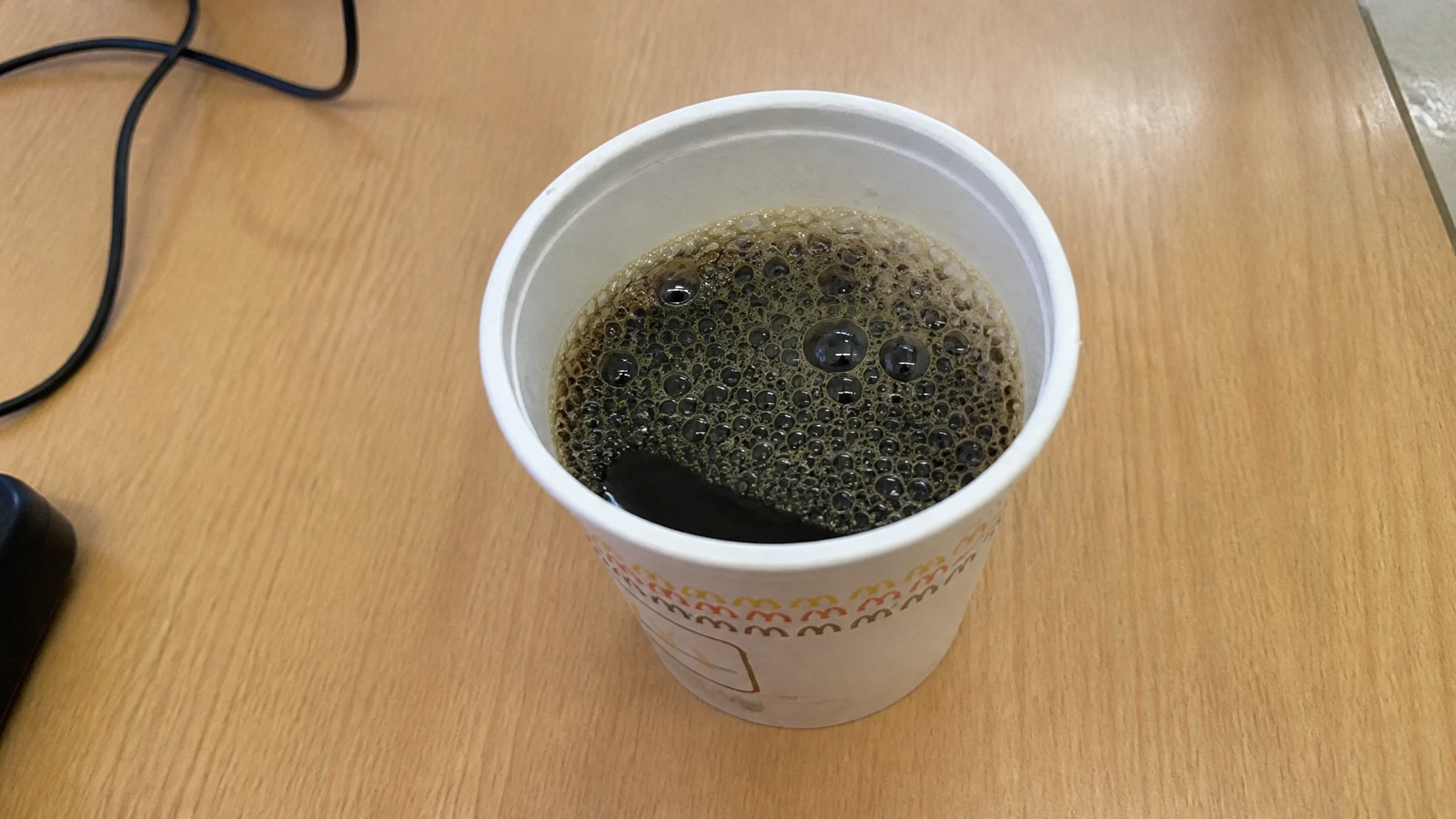
What Is the McDonald's Coffee Lawsuit?
The McDonald's coffee lawsuit is Liebeck v. McDonald's Restaurants, a 1994 New Mexico product liability case over a cup of McDonald's coffee that burned a customer. Stella Liebeck, then 79, sued McDonald's after the coffee spilled in her lap in February 1992.
A state jury in Albuquerque found McDonald's mostly responsible and awarded compensatory and punitive damages. The trial judge later reduced the punitive award, and the parties settled confidentially.
The McDonald's coffee lawsuit was one plaintiff's civil action. It was not a class action or an MDL, and no claims process exists for other people to join.
Public retellings often get the case wrong. Liebeck was not driving, because her grandson had parked the car before the spill. The case became a late-night punch line and a Seinfeld joke. The 2011 documentary Hot Coffee later challenged that version of the story.
Why Was the McDonald's Coffee Lawsuit Filed?
The McDonald's coffee lawsuit was filed because McDonald's refused to cover Liebeck's medical costs and kept serving coffee her attorneys called unreasonably dangerous.
Liebeck first asked McDonald's for about $20,000 to cover her medical bills and related costs, according to the Tort Museum. McDonald's offered $800.
She then hired attorneys S. Reed Morgan and Kenneth Wagner. They pursued product liability and negligence theories, and they argued the cup warned only that its contents were hot.
Accounts describe Liebeck as a first-time plaintiff. Her family also wrote to McDonald's asking it to check its coffee temperature. Reader's Digest reports this from a 2013 New York Times documentary.
What Harms Does the McDonald's Coffee Lawsuit Allege?
The McDonald's coffee lawsuit alleged three connected harms: severe burns, a long hospital and surgical recovery, and lasting scarring and disability. These descriptions come from trial accounts and published case summaries, and the jury awarded compensatory damages for her injuries.
Third-Degree Burns
A third-degree burn is an injury that destroys the full thickness of the skin and often reaches the tissue underneath.
Liebeck suffered third-degree burns on her inner thighs, buttocks, and groin area when the coffee soaked into her sweatpants. Reports put the third-degree burns at about 6 percent of her body. Including lesser burns, the total burned area was about 16 percent. Many summaries cite only the 16 percent figure.
The Tort Museum's account says the sweatpants held the liquid against her skin. Her attorneys argued that coffee served at McDonald's temperature could cause this kind of burn within seconds.
Hospitalization and Skin Grafts
A skin graft is a surgery that replaces damaged skin with healthy skin taken from another part of the body.
Liebeck spent eight days in the hospital and underwent skin graft surgery, according to trial accounts. Her surgeon, Dr. David Arredondo, testified that liquid at that temperature can cause full-thickness burns that need grafting.
Past medical expenses were about $10,500 at the time of the case, according to published summaries. Some law-firm accounts cite higher totals, so the figure is approximate.
Lasting Scarring and Disability
Disability in a personal injury case means a lasting limit on a person's ability to move, work, or care for themselves.
Liebeck's recovery lasted about two years, according to the Tort Museum. Case summaries describe permanent scarring and partial disability.
A plaintiff-side attorney's summary says she lost about 20 pounds and needed full-time care for three weeks after leaving the hospital. Those details come from the plaintiff's side and were not independently confirmed.
What Is the Current Status of the McDonald's Coffee Lawsuit?
The current status of the McDonald's coffee lawsuit is closed. The jury returned its verdict in August 1994, and both sides reportedly appealed in December 1994 before the parties settled confidentially. No later court activity in the Liebeck case has been reported.
Liebeck v. McDonald's Restaurants
Stella Liebeck sued McDonald's Restaurants in New Mexico state court in Albuquerque. A jury found for Liebeck in August 1994, and Judge Robert H. Scott later reduced the punitive award.
| Court | New Mexico Second Judicial District Court, Bernalillo County (state court) |
| Case Number | D-202-CV-93-02419, as cited in published case summaries |
| Presiding Judge | Robert H. Scott |
| Plaintiff | Stella Liebeck, age 79 at the time of the February 1992 spill |
| Defendant | McDonald's Restaurants |
| Claims | Product liability and negligence |
| Fault Allocation | McDonald's 80 percent, Liebeck 20 percent |
| Jury Verdict | $200,000 compensatory (reduced to $160,000) and $2.7 million punitive |
| Post-Trial Ruling | Punitive damages reduced to $480,000 |
| Class Action or MDL | No |
| Outcome | Confidential settlement after the verdict, amount undisclosed |
The case is closed. Published summaries say both sides appealed after the trial judge's ruling, and the settlement then ended the appeals. No appellate opinion in the Liebeck case has been located.
How Much Was the McDonald's Coffee Lawsuit Payout?
The McDonald's coffee lawsuit payout was a confidential settlement that news accounts put at less than $600,000. That is far below the verdict's headline figure.
The parties never disclosed the exact amount. The Tort Museum cites news accounts of less than $500,000 and other summaries cite less than $600,000, so neither figure is confirmed.
The jury awarded $200,000 in compensatory damages and found Liebeck 20 percent at fault, which reduced that award to $160,000. It added $2.7 million in punitive damages, and Judge Robert H. Scott cut that award to $480,000. The jury's headline total of about $2.9 million was therefore never paid. The reduced awards left about $640,000 on paper before the settlement.
The jury awarded punitive damages after finding the coffee defective and McDonald's conduct deserving of punishment, according to the Associated Press. Plaintiff's attorneys said the $2.7 million equaled about two days of McDonald's coffee sales. The Tort Museum says Judge Scott called the company's conduct willful, wanton, and reckless. The reduced figure equals three times the compensatory award.
No settlement fund or claims process exists for other people. Only Liebeck's own case produced a payment.
Latest McDonald's Coffee Lawsuit Updates
These McDonald's coffee lawsuit updates trace the Liebeck case from the 1992 spill to the 1994 settlement. They also cover the hot drink suits that followed. The Liebeck case is closed, and no new development in it has been reported as of October 24, 2026.
McDonald's Coffee Lawsuit Timeline
Liebeck Case Remains Closed
Searches of news coverage and case summaries on October 24, 2026 found no court activity in Liebeck v. McDonald's Restaurants after the confidential 1994 settlement. The case is cited today mainly as a reference point for product liability, punitive damages, and public debate over tort reform.
News 12 Reports a New Jersey Man's Hot Coffee Suit Against a McDonald's Franchise
News 12 reported on May 30, 2024 that Joseph Megara of New Jersey sued the owners of a McDonald's franchise. He says an employee negligently spilled a cup of coffee in his lap in January. The suit says the coffee was served too hot. McDonald's had not commented when the report ran.
Mabel Childress Files a Hot Coffee Suit Against a San Francisco McDonald's
Mabel Childress, a woman in her 80s, filed suit in San Francisco Superior Court on September 14, 2023 against McDonald's Restaurants of California. She alleges an unsecured lid let hot coffee spill into her lap in June 2023 and cause severe burns. The franchisee said it takes complaints seriously and was reviewing the claim.
Paulette Carr Sues Over a Coffee Spill at a Van Nuys McDonald's
Paulette Carr filed suit in Los Angeles County Superior Court, reported in January 2014, over a January 2012 coffee spill at a Van Nuys McDonald's. Her complaint blamed an improperly placed lid, not the coffee's temperature.
The New York Times Publishes a Documentary on the Case
The New York Times published its documentary Scalded by Coffee, Then the News Media on October 22, 2013. The film includes interviews with Liebeck's family and revisits how news coverage shaped public opinion of the lawsuit.
The Hot Coffee Documentary Premieres at Sundance
Susan Saladoff's documentary Hot Coffee premiered at the Sundance Film Festival in 2011 and later aired on HBO. The film examines the Liebeck case and how it was used in the tort reform debate.
Both Sides Appeal, Then McDonald's and Liebeck Settle
Published case summaries say McDonald's and Liebeck both appealed in December 1994, and the parties then settled out of court. The amount was never disclosed, and news accounts put it at less than $600,000.
Albuquerque Jury Finds McDonald's Mostly at Fault
After a trial in mid-August 1994, a New Mexico jury found McDonald's 80 percent at fault and Liebeck 20 percent at fault. It awarded $200,000 in compensatory damages and $2.7 million in punitive damages. Newspapers dated August 18, 1994 reported the verdict.
Mediator Suggests $225,000 and McDonald's Declines
Before the trial, Liebeck's side reportedly offered to settle for $300,000, and a court mediator suggested $225,000. McDonald's declined both figures, and the case went to a jury.
Liebeck Sues McDonald's in New Mexico State Court
Liebeck sued McDonald's Restaurants in the Second Judicial District Court in Albuquerque. The case number cited in published summaries, D-202-CV-93-02419, carries a 1993 year code.
McDonald's Offers $800 After Liebeck Asks for About $20,000
In the months after the spill, Liebeck asked McDonald's for about $20,000 to cover her medical expenses and related costs. McDonald's responded with an offer of $800.
Stella Liebeck Is Burned by McDonald's Coffee in Albuquerque
On February 27, 1992, Stella Liebeck, 79, was a passenger in her grandson's parked Ford Probe outside an Albuquerque McDonald's. The coffee spilled when she removed the lid to add cream and sugar, and she was taken to the hospital with severe burns.
How Hot Was the Coffee in the McDonald's Coffee Lawsuit?
The coffee in the McDonald's coffee lawsuit was served at 180 to 190 degrees Fahrenheit under McDonald's own franchise requirements. That is about 82 to 88 degrees Celsius.
Plaintiff's experts testified that liquid at that temperature can cause third-degree burns in roughly two to seven seconds. The Center for Justice and Democracy reports this. The Tort Museum cites a span of under three seconds. Both figures describe a serious burn within moments of contact.
Other temperatures framed the comparison. The Tort Museum says other restaurants served coffee at about 160 degrees, which takes about 20 seconds to cause a third-degree burn. Attorney Kenneth Wagner said most home coffee makers produce coffee at 135 to 150 degrees.
McDonald's had a reason for the range. Reporting from the Wall Street Journal, summarized by Reader's Digest, says coffee experts told the company the heat improved flavor.
What Did McDonald's Know About Its Coffee Temperature Before the Lawsuit?
McDonald's knew about its coffee temperature burn risk before the lawsuit, according to the trial evidence as later summarized.
The central evidence was a record of earlier complaints. From 1982 to 1992, McDonald's received more than 700 reports of coffee burns. It had paid more than $500,000 to settle some scalding claims.
The company's quality assurance manager, Christopher Appleton, testified that McDonald's knew of the risk and had not planned to lower the temperature. According to Credible Law's account, he called the number of burn reports small next to the number of cups sold.
| Evidence Topic | What the Trial Accounts Say |
|---|---|
| Warning on the cup | Wagner said the cup said only that the contents were hot, which he argued was not enough. |
| Industry warning | The Center for Justice and Democracy says the Shriners Burn Institute in Cincinnati had warned food businesses about serving beverages above 130 degrees. |
| Customer awareness | The Center for Justice and Democracy says McDonald's witnesses admitted that customers did not know the extent of the burn risk. |
| Fitness for consumption | The same source says McDonald's admitted its coffee was not fit for consumption at the temperature it was sold. |
McDonald's defense blamed Liebeck. A plaintiff-side attorney's summary says the company argued she did not remove her clothing fast enough and that her age made the injuries worse. The jury assigned her a share of the fault but found McDonald's mostly responsible.
How Does the McDonald's Coffee Lawsuit Compare to Later Hot Drink Cases?
The McDonald's coffee lawsuit differs from later hot drink cases because it turned on serving temperature and earlier complaints. Several later suits focus on lids and employee handling.
The table lists the best-documented related matters. Each is a separate case with its own court and facts, and none is part of Liebeck's case.
| Case | Court | Allegation | Outcome |
|---|---|---|---|
| Childress v. McDonald's Restaurants of California | San Francisco Superior Court | Unsecured lid let hot coffee spill in her lap in June 2023 | Filed September 2023, no outcome found |
| Megara suit against a New Jersey McDonald's franchise | Not identified in reports | Employee negligently spilled coffee, which the suit says was served too hot | Reported May 2024, no outcome found |
| Carr v. McDonald's (Van Nuys restaurant) | Los Angeles County Superior Court | Lid improperly placed on the cup | Reported January 2014, no outcome found |
| McMahon v. Bunn-O-Matic Corp., 150 F.3d 651 | U.S. Court of Appeals, Seventh Circuit | Coffeemaker held coffee near 179 degrees | Court of appeals upheld judgment for the manufacturer in 1998 |
| Bogle v. McDonald's Restaurants Ltd. | England and Wales High Court, [2002] EWHC 490 (QB) | Burns from hot drinks at McDonald's | Claim rejected in 2002 |
Fox Business noted that Childress mainly cites employee negligence. Liebeck's case sought to convince McDonald's to lower its coffee temperature. The Yvette Hinds suit on this site is a different McDonald's case with different facts.
Frequently Asked Questions
What is the McDonald's coffee lawsuit about?
The McDonald's coffee lawsuit is about Stella Liebeck's 1992 burn injuries from McDonald's coffee and her product liability case against the company. A New Mexico jury found McDonald's mostly at fault in August 1994.
Is the McDonald's coffee lawsuit a class action or MDL?
No. The McDonald's coffee lawsuit is not a class action or MDL. It was one woman's individual civil case with no class of claimants.
How hot was the coffee in the McDonald's coffee lawsuit?
The coffee in the McDonald's coffee lawsuit was served at 180 to 190 degrees Fahrenheit under McDonald's franchise requirements. Plaintiff's experts said that range could cause third-degree burns within seconds.
Did the McDonald's coffee lawsuit settle?
Yes. The McDonald's coffee lawsuit settled confidentially after the 1994 verdict, and news accounts put the amount below $600,000.
How much did Stella Liebeck get from the McDonald's coffee lawsuit?
Stella Liebeck received a confidential settlement after the verdict, and the exact amount was never disclosed. Her compensatory award was $160,000 after her fault share, and the $2.7 million punitive award was cut to $480,000 before the settlement.
Was Stella Liebeck driving when the coffee spilled?
No. Stella Liebeck was not driving when the McDonald's coffee spilled, because she was a passenger in her grandson's parked car.
Is the McDonald's coffee lawsuit the same as the Childress case?
No. The Childress case is a separate 2023 San Francisco lawsuit that alleges an unsecured lid, and it is not related to Liebeck's 1994 case.