
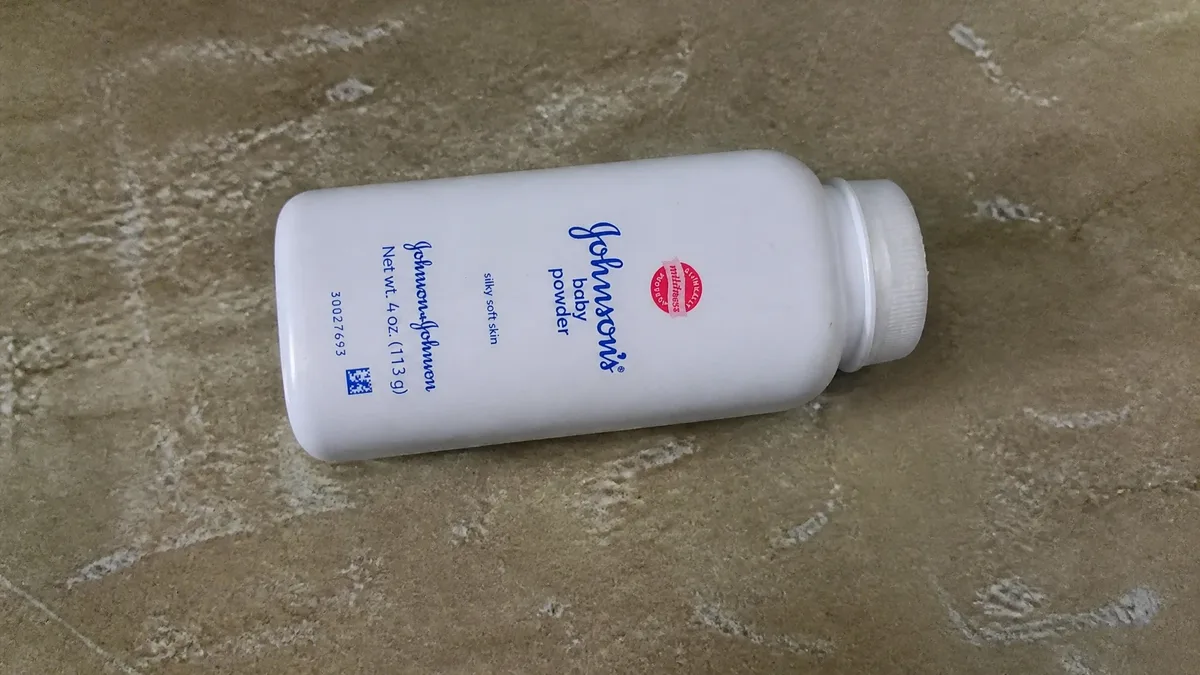
What Is the Johnson & Johnson Lawsuit?
The Johnson & Johnson lawsuit is the litigation over claims that Johnson's Baby Powder caused ovarian cancer and mesothelioma. Most cases sit in one federal proceeding, MDL No. 2738, and the rest are tried in state courts.
The litigation is not a class action. Each plaintiff keeps an individual case, and a federal judge in New Jersey coordinates the shared pretrial work.
The Judicial Panel on Multidistrict Litigation centralized the first cases on October 4, 2016. In a 2022 order, the Panel described the MDL's scope this way:
“From its outset, though, this MDL has encompassed consumer class claims alleging that defendants deceptively marketed Johnson & Johnson’s talcum powder products for feminine hygienic use without disclosing talc’s alleged carcinogenic properties.”
Source: U.S. Judicial Panel on Multidistrict Litigation, In re: Johnson & Johnson Talcum Powder Products Marketing, Sales Practices and Products Liability Litigation, MDL No. 2738, Transfer Order, Document 2791 (January 31, 2022)
Why Are People Filing Johnson & Johnson Lawsuits?
People are filing Johnson & Johnson lawsuits because they say the company's talc products contained asbestos and that it never warned users. Plaintiffs allege that exposure caused their ovarian cancer or mesothelioma.
Talc is a soft mineral that is mined from the earth. BBC reporting notes that talc is found in seams close to asbestos, which is a known carcinogen.
Plaintiffs argue that Johnson & Johnson's testing missed asbestos fibers and that the company kept selling the product as safe. Some also claim they were misled about the product's safety, without alleging an injury.
Johnson & Johnson denies every one of these claims. The company says talc is safe, contains no asbestos, and does not cause cancer.
Ovarian cancer claims make up the large majority of filings. Mesothelioma claims are fewer, and they are mostly tried one at a time in state courts.
What Injuries Are Included in the Johnson & Johnson Lawsuit?
The Johnson & Johnson lawsuit includes three kinds of claims: ovarian cancer, mesothelioma, and economic loss from alleged deceptive marketing. Johnson & Johnson denies all three, and the outcomes differ by case. Juries have found the company liable in several mesothelioma trials, and the company says it has won others.
Ovarian Cancer
Ovarian cancer is a cancer that starts in the ovaries, the organs that produce a woman's eggs.
Most plaintiffs in MDL No. 2738 allege that long-term use of talc powder in the genital area caused their ovarian cancer. The Panel's later orders describe the claims as ovarian or other gynecological cancer after that kind of use.
An Independent report noted that the vast majority of the talc claims involve ovarian cancer. The company disputes that talc causes it, and the timeline below covers the rulings on expert evidence.
Mesothelioma
Mesothelioma is a rare cancer of the lining of the lungs or other organs, caused mainly by asbestos exposure.
Mesothelioma plaintiffs allege that asbestos in talc powder caused the disease. Most of these cases are tried in state courts, which is why verdicts have come from California, Maryland, Minnesota and other states.
The company said in its July 2026 release that about 95% of filed mesothelioma lawsuits were already settled. Its position is that the talc claims lack scientific merit, and it says it will appeal adverse verdicts.
Deceptive Marketing and Economic Loss
A deceptive marketing claim says a company misled buyers about a product's safety or qualities.
Some claims involve no physical injury. They say Johnson & Johnson sold talc powder as safe without disclosing alleged cancer risks. That is the theory behind consumer class claims in the MDL.
State attorneys general brought a similar theory. These claims seek money or product changes, not payment for an illness.
Who Qualifies for the Johnson & Johnson Lawsuit?
You may qualify if:
- You used Johnson's Baby Powder, Shower to Shower or another Johnson & Johnson talc product for years.
- You were diagnosed with ovarian cancer after long-term genital use of talc powder, or a family member died of it.
- You were diagnosed with mesothelioma and can document exposure to talc products.
- A qualified attorney confirms that your records support the claim and that your state deadline has not passed.
You may not qualify if:
- Your diagnosis has no documented link to talc use.
- Your state's statute of limitations has generally expired.
- You only used cornstarch-based baby powder, which the company sells in place of talc.
- Your ovarian claim is new, since the proposed settlement covers only existing claims, as reported.
Eligibility depends on the diagnosis, the product, the years of use and the state where you file. Only a qualified attorney reviewing your records can confirm whether you qualify.
What Is the Current Status of the Johnson & Johnson Lawsuit?
The current status of the Johnson & Johnson lawsuit is a proposed $5.5 billion ovarian cancer settlement that is not yet final, plus mesothelioma cases in state courts. The settlement needs at least 95% of remaining claims to participate. No source reviewed reports that threshold being met as of October 2026.
MDL No. 2738 (Federal Ovarian Cancer Cases)
MDL No. 2738 is the federal proceeding for most ovarian cancer cases against Johnson & Johnson. It is a multidistrict litigation, so each plaintiff keeps an individual case and no class has been certified for the injury claims.
| Court | U.S. District Court, District of New Jersey |
| MDL Number | 2738 |
| Judge | Michael A. Shipp, reassigned on January 31, 2023 after Judge Freda Wolfson retired |
| Centralized | October 4, 2016 |
| Pending Actions | 69,340 (JPML report dated October 1, 2026) |
| Total Actions Filed | 72,024 (same report) |
| Claims | Ovarian cancer from talc products, plus consumer deceptive-marketing claims |
| Stage | Pretrial; settlement proposed July 27, 2026, pending 95% participation |
The pending count has climbed steadily. The JPML reported 58,205 pending actions in January 2025, and the count passed 69,000 in September 2026. The count measures filed cases and does not measure case strength.
Mesothelioma Cases in State Courts
Mesothelioma cases against Johnson & Johnson have no single docket. They proceed in individual state courts, and several have reached verdicts since mid-2025.
| Forum | Individual state courts, including California, Maryland, Minnesota, Florida, Massachusetts and Connecticut |
| Claims | Mesothelioma allegedly caused by asbestos in talc products |
| Settlement Status | The July 2026 release does not say whether these claims are covered, and reports describe the deal as ovarian-focused |
| Stage | Individual trials and appeals; the company says it appeals adverse verdicts |
When Will the Johnson & Johnson Lawsuit Be Settled?
The Johnson & Johnson lawsuit could settle for about $5.5 billion, but only if at least 95% of remaining ovarian cancer claims participate. The company announced the proposal on July 27, 2026. It covers about 76,000 claims.
Johnson & Johnson denies that talc causes cancer, and the proposal is not an admission of liability. No source reviewed for this page reports court approval, final terms, or individual payout amounts.
The company expects to pay no more than $3 billion in 2027 and nothing further before 2028, according to its own release.
Plaintiffs' attorney Chris Seeger said the total could reach $7 billion or more, because claims receive set values instead of a cap, as reported.
Individual amounts have not been made public. One law firm summary says payouts will likely vary by diagnosis, age and length of talc use, which this page could not confirm.
Searchers often see $2.1 billion. That figure comes from a 2018 Missouri verdict cut from $4.7 billion on appeal, and it is not the current settlement.
Johnson & Johnson Lawsuit Updates
Here are the latest Johnson & Johnson lawsuit updates, covering new rulings, verdicts and case-count reports as they are confirmed. As of October 2026, the proposed $5.5 billion ovarian settlement is not final, and MDL No. 2738 remains in pretrial proceedings. The full timeline below runs from the first verdict to today.
Full Johnson & Johnson Lawsuit Timeline
MDL No. 2738 Reaches 69,340 Pending Actions
The JPML's October 1, 2026 report lists 69,340 pending actions in MDL No. 2738 before Judge Michael A. Shipp, out of 72,024 filed in total. The count rose from 69,250 a month earlier.
Johnson & Johnson Announces $5.5 Billion Ovarian Talc Resolution
Johnson & Johnson announced an agreement with the plaintiff firms leading the federal MDL and related state cases on July 27, 2026. The company committed $5.5 billion for about 76,000 claims, conditioned on at least 95% participation.
MDL Court Orders Plaintiffs to Show Cause on Causation
The MDL court ordered plaintiffs on July 22, 2026 to show why remaining claims should not be dismissed for lack of proof of specific causation. Johnson & Johnson's release says plaintiffs had withdrawn specific causation experts in two bellwether cases.
Supreme Court Declines J&J Talc Securities Appeal
The U.S. Supreme Court denied Johnson & Johnson's petition on April 20, 2026, leaving in place a class certification ruling in an investor lawsuit over talc safety statements. That case is separate from the injury claims in MDL No. 2738.
Special Master Allows Plaintiffs' Ovarian Cancer Experts
Retired Judge Freda Wolfson, serving as special master, ruled on January 20, 2026 that plaintiffs may present expert testimony linking talc to ovarian cancer, according to Reuters. The ruling cleared the way for a first federal trial.
Baltimore Jury Awards More Than $1.5 Billion in Mesothelioma Case
A Baltimore City jury awarded plaintiff Cherie Craft more than $1.5 billion on December 22, 2025, finding the company failed to warn her about asbestos in its baby powder. Johnson & Johnson called the award unconstitutional and said it would appeal.
Minnesota Jury Awards $65.5 Million to Mesothelioma Plaintiff
A Ramsey County, Minnesota jury awarded $65.5 million to Anna Jean Houghton Carley, who used Johnson's Baby Powder as a child and later developed mesothelioma. Johnson & Johnson said it would appeal.
Los Angeles Jury Awards $40 Million in Ovarian Cancer Bellwether
A Los Angeles jury awarded $40 million to two women with ovarian cancer, with $22 million to Debra Schultz and $18 million to Monica Kent, according to LawFirm.com. The jury awarded no punitive damages.
Los Angeles Jury Orders $966 Million for Mesothelioma Death
A Los Angeles jury ordered Johnson & Johnson to pay $966 million to the family of Mae Moore on October 6, 2025, including $950 million in punitive damages. The company called the verdict egregious and said it would appeal immediately.
MDL No. 2738 Pending Count Reaches 66,910
The JPML's September 2, 2025 report listed 66,910 pending actions in MDL No. 2738, up from 59,571 in June. The federal cases had resumed after the third bankruptcy attempt ended.
Judge Dismisses Third J&J Talc Bankruptcy, Red River Talc
U.S. Bankruptcy Judge Christopher Lopez denied confirmation of the Red River Talc plan and dismissed the case on March 31, 2025. Reports cited voting irregularities and third-party release problems, and the federal cases resumed.
Red River Talc Files Prepackaged Chapter 11 in Texas
Red River Talc LLC, a Johnson & Johnson subsidiary, filed a prepackaged Chapter 11 case in the Southern District of Texas on September 20, 2024. It aimed to resolve about 90,000 talc claims through a trust.
States Settle Talc Marketing Claims for $700 Million
Johnson & Johnson agreed to pay $700 million to settle claims by 42 states and the District of Columbia that it misled customers about talc powder safety. The deal does not admit wrongdoing, and the company agreed to stop selling talc powders in those states.
Second LTL Management Bankruptcy Dismissed
U.S. Bankruptcy Judge Michael Kaplan ruled that LTL Management's second Chapter 11 case had to be dismissed, as the first was. The talc claims did not create financial distress. Johnson & Johnson said it would appeal.
Johnson & Johnson Proposes $8.9 Billion Talc Settlement
Johnson & Johnson announced an $8.9 billion proposal to resolve talc claims in April 2023, tied to its LTL Management bankruptcy strategy. Courts later rejected the bankruptcy path.
JPML Reassigns MDL No. 2738 to Judge Shipp
The Judicial Panel on Multidistrict Litigation reassigned MDL No. 2738 to Judge Michael A. Shipp on January 31, 2023, after Judge Freda Wolfson retired. Wolfson had presided over the MDL since 2016.
Third Circuit Orders First J&J Talc Bankruptcy Dismissed
The Third Circuit ruled in January 2023 that LTL Management was not in financial distress when it filed its Chapter 11 case in 2021. It sent the case back with instructions to dismiss it.
LTL Management Files Chapter 11, Pausing Federal Talc Cases
Johnson & Johnson's subsidiary LTL Management filed for bankruptcy in October 2021 to hold its talc liabilities. The filing paused the federal MDL cases for more than three years.
Supreme Court Rejects J&J Appeal of $2.1 Billion Missouri Verdict
The U.S. Supreme Court denied Johnson & Johnson's appeal on June 1, 2021, leaving in place a Missouri judgment of about $2.1 billion for women with ovarian cancer. The verdict had been $4.7 billion in 2018 before it was reduced on appeal.
Johnson & Johnson Ends Talc Baby Powder Sales in North America
Johnson & Johnson announced on May 19, 2020 that it would stop selling talc-based baby powder in the United States and Canada. The company said it would keep defending the product in court.
St. Louis Jury Awards $4.7 Billion to 22 Women
A St. Louis jury ordered Johnson & Johnson to pay $4.7 billion to 22 women with ovarian cancer in July 2018. An appeals court later cut the total to about $2.1 billion.
JPML Centralizes Talc Cases as MDL No. 2738
The Judicial Panel on Multidistrict Litigation created MDL No. 2738 on October 4, 2016, sending the first talc actions to the District of New Jersey under Judge Freda Wolfson. The order is reported at 220 F. Supp. 3d 1356.
How to File a Johnson & Johnson Lawsuit
To file a Johnson & Johnson lawsuit, start with the 6 steps below.
- Confirm your diagnosis: Gather pathology reports and doctor notes that name ovarian cancer or mesothelioma and the date you were diagnosed.
- Document your talc use: Write down which Johnson & Johnson products you used, how often, and for how many years.
- Collect your medical records: Request treatment records, hospital bills and any death certificate if you are filing for a family member.
- Check your state deadline: Statutes of limitations differ by state and often run from the date of diagnosis, so check yours early.
- Consult a mass tort attorney: A lawyer experienced in talc cases can confirm eligibility, choose the right court and handle the filing.
- Ask about the settlement: Ask whether your ovarian claim is one of the roughly 76,000 existing claims or needs a separate filing.
Answer a few questions and a case reviewer will follow up. Free, no obligation.
A case reviewer will follow up soon.
What Evidence Do I Need for a Johnson & Johnson Lawsuit?
A Johnson & Johnson lawsuit generally requires evidence of both diagnosis and talc use. The documents below are the ones attorneys commonly ask for, and your lawyer will say which apply.
- Medical records: pathology reports, oncologist notes and treatment history confirming ovarian cancer or mesothelioma.
- Product use history: a written timeline of brands, frequency and years of use, with receipts or photos where they exist.
- Exposure details: who used the product, such as a parent applying powder to a child, for mesothelioma claims.
- Financial records: medical bills and lost income records, which support damages.
Memory can fill gaps. Family members who saw the product used can often provide statements, and attorneys can also request records from providers.
What Did Johnson & Johnson Allegedly Know About Talc and Asbestos?
What Johnson & Johnson allegedly knew about talc and asbestos is disputed in every proceeding. Plaintiffs rely on internal documents, and the company says decades of studies show talc is safe.
At a June 2026 trial, plaintiffs' lawyers cited a 1973 internal document, according to LawFirm.com. They said an executive worried about asbestos at the company's talc mines after finding fibers in baby powder that "might be classified" as asbestos.
The same lawyers said the company did not switch to a cornstarch formula until 2020. Those are lawyers' characterizations from a trial, not court findings.
The FDA has proposed standardized asbestos testing for talc-containing cosmetics. That proposal is a rule for the industry and is not a finding about Johnson & Johnson.
| Proceeding | What the claim says | Johnson & Johnson's stated position |
|---|---|---|
| MDL No. 2738 ovarian cases | Talc was contaminated with asbestos and users were not warned | Studies show talc is safe, asbestos-free and does not cause cancer |
| Mesothelioma trials | Asbestos in talc caused mesothelioma and the company's testing missed it | Claims rest on junk science, and the company appeals adverse verdicts |
| State attorney general claims | The company deceptively marketed talc powders without disclosing asbestos risk | Settled for $700 million without admitting wrongdoing |
| Investor class action | Investors were misled about talc safety and cancer risk | Asked the Supreme Court to review class certification, denied April 20, 2026 |
Johnson & Johnson says it kept all talc liabilities when its consumer business became Kenvue, and it agreed to indemnify Kenvue for related U.S. and Canadian costs. The company called ending talc baby powder sales a commercial decision.
How Does the Johnson & Johnson Lawsuit Compare to Related Cases?
The Johnson & Johnson talc lawsuit differs from other cases against the company, which involve different products. None of the cases below changes the status of MDL No. 2738.
| Case | Subject | Reported status |
|---|---|---|
| Texas Tylenol lawsuit | Texas alleges deceptive marketing of acetaminophen in pregnancy, naming Johnson & Johnson and Kenvue | Filed October 2025; the company says it divested consumer health and lacks Texas ties, and the case moved between state and federal court |
| Opioid litigation | Sale and marketing of prescription opioid painkillers | Johnson & Johnson agreed to pay up to $5 billion of a roughly $26 billion multistate settlement over nine years |
| Risperdal litigation | Breast growth claims in boys and men linked to the drug Risperdal | Johnson & Johnson reportedly settled substantially all outstanding U.S. cases for $800 million |
Each case has its own court, claimants and deadlines. A person with a Tylenol or Risperdal claim cannot join the talc settlement, and a talc plaintiff cannot join those cases.
Frequently Asked Questions
What is the Johnson & Johnson lawsuit about?
The Johnson & Johnson lawsuit is about claims that the company's talc baby powder contained asbestos and caused ovarian cancer and mesothelioma. Johnson & Johnson denies that talc contains asbestos or causes cancer.
Is the Johnson & Johnson lawsuit a class action?
No, the Johnson & Johnson lawsuit is mainly a multidistrict litigation, not a class action. MDL No. 2738 coordinates the federal cases while each plaintiff keeps an individual claim. A separate investor class action over talc safety statements also exists.
How much is the Johnson & Johnson talc settlement?
The Johnson & Johnson talc settlement is proposed at about $5.5 billion for roughly 76,000 ovarian cancer claims. It is conditioned on at least 95% participation, and no source reviewed reports it as final.
Did Johnson & Johnson settle the mesothelioma lawsuits?
Johnson & Johnson says about 95% of filed mesothelioma lawsuits were already settled, but reports describe no nationwide mesothelioma settlement. The July 2026 proposal is described as ovarian-focused, so remaining mesothelioma cases are tried in state courts.
How many Johnson & Johnson talc cases are pending?
MDL No. 2738 listed 69,340 pending Johnson & Johnson talc actions on October 1, 2026, out of 72,024 filed. That count covers the federal cases and does not include state-court mesothelioma suits.
Is Johnson's Baby Powder still sold?
Talc-based Johnson's Baby Powder is no longer sold by Johnson & Johnson. The company ended U.S. and Canadian sales in 2020 and worldwide sales in 2023, and cornstarch-based powder remains available.
Can I still file a Johnson & Johnson talc lawsuit?
You may still be able to file a Johnson & Johnson talc lawsuit, depending on your diagnosis, product use and state deadline. The proposed ovarian settlement covers existing claims only, and only an attorney reviewing your records can confirm your options.
Is the Johnson & Johnson Tylenol lawsuit the same as the talc lawsuit?
No, the Johnson & Johnson Tylenol lawsuit is a separate case. Texas sued Johnson & Johnson and Kenvue in October 2025 over acetaminophen marketing, and it has no connection to the talc litigation.