
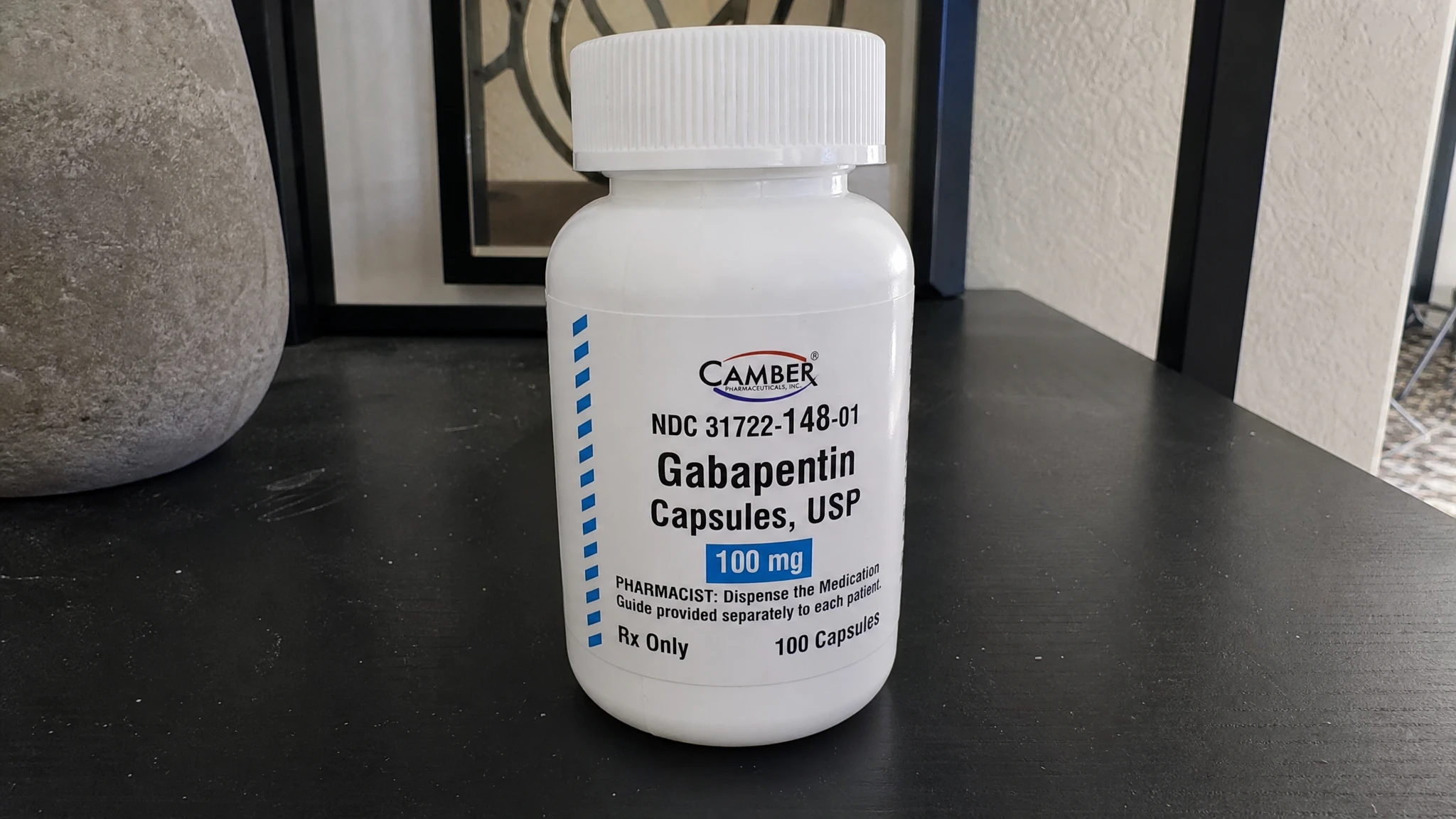
What Is the Gabapentin Lawsuit?
The gabapentin lawsuit is a group of individual product liability claims over dementia and mild cognitive impairment. Patients allege that gabapentin makers failed to warn about a cognitive risk tied to long-term use.
Gabapentin is an anticonvulsant sold under brand names including Neurontin and Gralise, and as a generic. Doctors prescribe it for seizures and nerve pain, and often for other conditions off label.
No multidistrict litigation or class action exists for these claims as of October 2026. Each patient sues separately, and law firms are still screening and building cases. An older set of Neurontin marketing lawsuits ended in settlements and did not involve dementia.
Why Are People Filing Gabapentin Lawsuits?
People are filing gabapentin lawsuits because they allege gabapentin makers did not warn patients about a possible dementia risk.
The claims followed a study by Eghrari and colleagues in Regional Anesthesia & Pain Medicine, first published online on July 10, 2025. It used TriNetX patient records from 2004 to 2024. After matching, the analysis covered 26,416 adults with chronic low back pain.
Adults with six or more gabapentin prescriptions showed a higher dementia risk, with a relative risk of 1.29. Their relative risk for mild cognitive impairment was 1.85. The authors describe an association, not proof of cause, and advise doctors to monitor cognition.
Plaintiffs' firms argue that gabapentin labeling does not warn about dementia, which is the failure-to-warn theory. Proving that the drug caused the condition, rather than coexisting with it, is the central hurdle.
What Injuries Are Included in the Gabapentin Lawsuit?
The gabapentin lawsuit includes two injuries: dementia and mild cognitive impairment. Plaintiffs' firms treat them as separate categories of harm. No court has ruled that gabapentin causes either condition.
Dementia
Dementia is a long-term decline in memory, thinking, and daily function that is severe enough to interfere with independent living.
Plaintiffs' firms concentrate on dementia diagnosed before age 65, often called early-onset dementia. The 2025 study found its strongest signal in adults aged 18 to 64, with a relative risk of 2.10 for dementia. Dementia in older adults has many other recognized causes, which is why firms emphasize earlier-onset cases.
Mild Cognitive Impairment
Mild cognitive impairment is a noticeable decline in memory or thinking that does not yet prevent a person from handling daily activities.
The 2025 study reported a relative risk of 2.50 for mild cognitive impairment in adults aged 18 to 64. Risk rose with prescription count, at 1.65 for 12 or more prescriptions compared with 3 to 11. Mild cognitive impairment does not always progress to dementia, so firms treat it as its own injury.
Who Qualifies for the Gabapentin Lawsuit?
You may qualify if:
- You received six or more gabapentin prescriptions, a threshold several firms borrow from the 2025 study
- Your doctor prescribed gabapentin for a reason other than seizures or nerve pain, such as low back pain
- You were diagnosed with early-onset dementia before age 65, or with mild cognitive impairment
- You have prescription and medical records that show when you took gabapentin and when symptoms began
You may not qualify if:
- You took gabapentin only for seizures or nerve pain, uses that firms screening these cases generally do not accept
- You have a history of traumatic brain injury, schizophrenia, or a known genetic marker linked to Alzheimer's disease, which some firms screen out
- Your state's filing deadline has passed, and firms describe deadlines as running from the date you discovered the injury
No court has set eligibility rules for gabapentin claims. These are screening criteria published by law firms, and they differ from firm to firm. Only a qualified attorney reviewing your records and your state's deadline can confirm whether you qualify.
What Is the Current Status of the Gabapentin Lawsuit?
The current status of the gabapentin lawsuit is early stage. Individual dementia claims exist, but no court has consolidated them into an MDL or certified a class.
Individual Gabapentin Dementia Claims (No MDL or Class Action)
The Judicial Panel on Multidistrict Litigation's October 1, 2026 report lists 162 active MDLs, and none concerns gabapentin, Neurontin, or dementia. A Robert King Law Firm release dated July 13, 2026 says patients are filing individual civil suits in state courts, not class actions. Simmons Hanly Conroy's gabapentin page, last modified August 27, 2026, says the firm is no longer accepting gabapentin cases.
This page located no public docket, case number, or pending-case count for any gabapentin dementia complaint.
| Proceeding Type | Individual product liability claims (no MDL, no certified class action) |
| Court | Individual state and federal courts, no consolidated docket located |
| MDL Number | None (the JPML's October 1, 2026 report lists 162 active MDLs, none for gabapentin) |
| Named Defendants | Pfizer (maker of Neurontin) and other gabapentin manufacturers, per law firms |
| Alleged Claims | Failure to warn, negligence, and misrepresentation, per law firms |
| Pending Cases | Not publicly reported |
| Stage | Early claim investigation and intake |
An MDL could form if enough similar federal cases are filed and a party asks the Panel to centralize them. No motion to centralize gabapentin cases appeared in the sources reviewed.
In re Neurontin Marketing and Sales Practices Litigation, MDL No. 1629 (Closed)
The Judicial Panel on Multidistrict Litigation created MDL No. 1629 on November 11, 2004, in the U.S. District Court for the District of Massachusetts. It consolidated 27 class actions and nine other suits over how Pfizer marketed Neurontin. Judge Patti B. Saris presided over the litigation.
Plaintiffs included insurers, benefit plans, and consumers who alleged Pfizer promoted Neurontin for unapproved uses. The MDL involved marketing and payment claims, not dementia, and it no longer appears on the JPML's active list.
| Proceeding Type | Closed federal multidistrict litigation (marketing and sales practices) |
| Court | U.S. District Court, District of Massachusetts |
| MDL Number | MDL No. 1629 |
| Judge | Hon. Patti B. Saris |
| Created | November 11, 2004 |
| Resolution | $325 million third-party payer settlement, final approval November 2014 |
| Link to Dementia Claims | None, marketing and payment claims only |
What Is the Gabapentin Lawsuit Payout Per Person?
The gabapentin lawsuit payout per person has not been set, because no settlement or verdict exists for the dementia claims.
Any dollar figure circulating online is speculation, since no gabapentin dementia claim has settled or gone to trial. Only a qualified attorney reviewing your records can estimate what an individual claim might be worth.
Two large Neurontin payouts exist, but neither compensated dementia claimants. Warner-Lambert, a Pfizer unit, agreed in 2004 to pay more than $430 million to resolve federal criminal and civil marketing charges. Pfizer agreed in 2014 to pay $325 million to settle third-party payer claims.
The payout date question has no answer yet. No court has set a trial date, bellwether schedule, or settlement hearing for gabapentin dementia claims.
A separate $17.85 million state attorney general settlement is covered in the related cases section below.
Latest Gabapentin Lawsuit Updates
The latest gabapentin lawsuit updates and news cover individual claims, court records, and regulatory actions, tracked below as they're confirmed. No MDL, class action, or settlement exists for the dementia claims as of October 2026.
Gabapentin Lawsuit Timeline
JPML Report Lists No Gabapentin MDL
The Judicial Panel on Multidistrict Litigation's report dated October 1, 2026 listed 162 active MDLs, and none concerned gabapentin, Neurontin, or dementia.
Simmons Hanly Conroy Page Says Firm Has Stopped Taking Gabapentin Cases
The gabapentin page of Simmons Hanly Conroy, last modified August 27, 2026, states that the firm is no longer accepting gabapentin cases. It describes the claims as individual, with no class action.
Law Firm Release Describes Individual Suits Against Pfizer
A Robert King Law Firm press release dated July 13, 2026 said patients were filing individual civil suits against Pfizer and other gabapentin makers. It said no class action or MDL existed.
State Attorneys General Announce $17.85 Million Generic Drug Settlements
A coalition of state attorneys general announced settlements with Lannett ($13.77 million) and Bausch ($4.08 million) over alleged generic drug price-fixing. The New York attorney general's release names digoxin and does not mention gabapentin.
FDA Classifies Gabapentin 100 mg Capsule Recall as Class II
The FDA classified a recall of gabapentin 100 mg capsules distributed by Major Pharmaceuticals as Class II. The Harvard Drug Group started the recall on October 10, 2025 after stability testing found an out-of-specification unknown impurity. The issue is unrelated to the dementia claims.
Eghrari Study Links Gabapentin Prescriptions to Dementia Risk
Eghrari and colleagues published a retrospective TriNetX cohort study in Regional Anesthesia & Pain Medicine. It reported higher dementia and mild cognitive impairment risk among adults with chronic low back pain who received six or more gabapentin prescriptions.
FDA Requires Breathing Warnings for Gabapentin and Pregabalin
The FDA issued a Drug Safety Communication on serious breathing problems with gabapentin and pregabalin. It required new respiratory depression warnings and abuse-potential trials, and it did not address dementia.
Court Grants Final Approval to $325 Million Neurontin Payer Settlement
The District of Massachusetts granted final approval in November 2014 to Pfizer's $325 million settlement of third-party payer claims in MDL No. 1629, which Pfizer had agreed to in principle in April 2014.
First Circuit Affirms Verdicts Against Pfizer in Kaiser Neurontin Case
The U.S. Court of Appeals for the First Circuit affirmed the jury verdicts for Kaiser Foundation Health Plan against Pfizer and Warner-Lambert in Nos. 11-1904 and 11-2096, an appeal from MDL No. 1629.
JPML Centralizes Neurontin Marketing Suits in Massachusetts
The Judicial Panel on Multidistrict Litigation created MDL No. 1629 in the District of Massachusetts, consolidating 27 class actions and nine other suits over Pfizer's marketing of Neurontin.
Warner-Lambert Agrees to Plead Guilty Over Neurontin Marketing
The Justice Department announced that Warner-Lambert, through its Parke-Davis division, would plead guilty to two federal counts. The company agreed to pay more than $430 million, including a $240 million criminal fine, over off-label Neurontin promotion.
FDA Approves Neurontin for Adjunctive Seizure Treatment
The FDA approved Neurontin in December 1993 solely for adjunctive anti-seizure use in epilepsy patients, the approval that later off-label promotion exceeded.
How to File a Gabapentin Lawsuit
Filing a Gabapentin lawsuit typically follows the 5 steps below.
- Gather your prescription and pharmacy records: Collect pharmacy fill histories for every gabapentin or Neurontin prescription, with dates, doses, and the reason your doctor prescribed it.
- Document your cognitive diagnosis: Request records of your dementia or mild cognitive impairment diagnosis, including neurology notes and any memory or cognitive testing.
- List other possible causes: Write down other conditions, medications, or head injuries, since a defendant can argue they explain your symptoms.
- Confirm your state's filing deadline: Product liability deadlines vary by state and often run from when you discovered, or should have discovered, the injury.
- Consult a product liability attorney: Because no MDL or class action exists, an attorney decides whether to file your claim as an individual suit in state or federal court.
Answer a few questions and a case reviewer will follow up. Free, no obligation.
A case reviewer will follow up soon.
What Evidence Do I Need for a Gabapentin Lawsuit?
A gabapentin dementia claim generally depends on records that show exposure, injury, and timing. Pharmacy fill histories prove how many prescriptions you received and when. Neurology and primary care notes document the diagnosis and when symptoms started.
Records of other risk factors matter just as much. Defendants can point to head injuries, other sedating drugs, and family history as alternative explanations. Plaintiffs' attorneys use a full medical history to address those explanations early.
What Has Pfizer Been Accused of in the Gabapentin Litigation?
Pfizer has been accused of failing to warn about gabapentin's cognitive risks, according to law firms that name Pfizer as the Neurontin maker. No public complaint located for this page spells out what Pfizer allegedly knew about dementia, so those allegations remain unverified.
Pfizer's separate history with Neurontin is documented in public records. In May 2004, Warner-Lambert, through its Parke-Davis division, agreed to plead guilty to two counts under the Food, Drug and Cosmetic Act. The Justice Department said the company promoted Neurontin for uses the FDA had not approved, including bipolar disorder and migraine.
In a civil case, a federal jury in the District of Massachusetts found for Kaiser Foundation Health Plan against Pfizer. The First Circuit affirmed those verdicts on April 3, 2013.
The FDA required new respiratory depression warnings for gabapentin and pregabalin on December 19, 2019. That action concerned breathing problems, particularly with opioids, and did not address dementia.
How Does the Gabapentin Lawsuit Compare to Related Cases?
The gabapentin lawsuit is distinct from three other matters that share the gabapentin or Neurontin name. None of them compensates people for dementia.
| Matter | What It Covers | Status |
|---|---|---|
| Neurontin marketing MDL No. 1629 | Payer and consumer claims over off-label promotion | Closed, settled in 2014 |
| State attorney general generic drug settlements | Alleged generic drug price-fixing, with $17.85 million from Lannett and Bausch announced February 2, 2026 | Subject to court approval, gabapentin not named in the New York release |
| Gabapentin 100 mg capsule recall | Class II recall for an out-of-specification unknown impurity, classified October 17, 2025 | Quality recall, not a personal injury lawsuit |
Consumers who bought certain generics from Lannett or Bausch between May 2009 and December 2019 may claim through AGGenericDrugs.com. A law firm article linked gabapentin to that settlement, and this page could not confirm the link. Check the settlement site's drug list before filing.
Frequently Asked Questions
Is there a lawsuit against gabapentin?
Yes. A lawsuit against gabapentin makers exists as individual dementia claims that law firms say patients are filing against Pfizer and other manufacturers. No class action or MDL exists. This page located no public docket.
Is the gabapentin lawsuit a class action or an MDL?
No. The gabapentin lawsuit is neither a class action nor an MDL as of October 2026. The JPML's October 1, 2026 report lists no gabapentin MDL, and patients file individual claims.
Can gabapentin cause dementia?
Whether gabapentin can cause dementia has not been established. A 2025 study of 26,416 matched adults with chronic low back pain found an association, not proof of causation. The authors urged cognitive monitoring.
How much is the gabapentin lawsuit payout per person?
The gabapentin lawsuit payout per person has not been set, since no dementia claim has settled or reached trial. Earlier Neurontin settlements of more than $430 million in 2004 and $325 million in 2014 went to governments and payers.
How do I join the gabapentin lawsuit?
You can join the gabapentin lawsuit only by retaining an attorney who files an individual claim for you. There is no class to opt into. The attorney first reviews your prescription records, diagnosis records, and state deadline.
Did Pfizer settle the Neurontin lawsuits?
Pfizer settled the Neurontin marketing lawsuits, and those settlements did not involve dementia. Warner-Lambert agreed in 2004 to pay more than $430 million, and Pfizer agreed in 2014 to pay $325 million to third-party payers.
Is the $17.85 million drug settlement part of the gabapentin lawsuit?
The $17.85 million settlement is not confirmed as part of the gabapentin lawsuit. The New York attorney general's release names digoxin, so check AGGenericDrugs.com for the drug list before filing.