
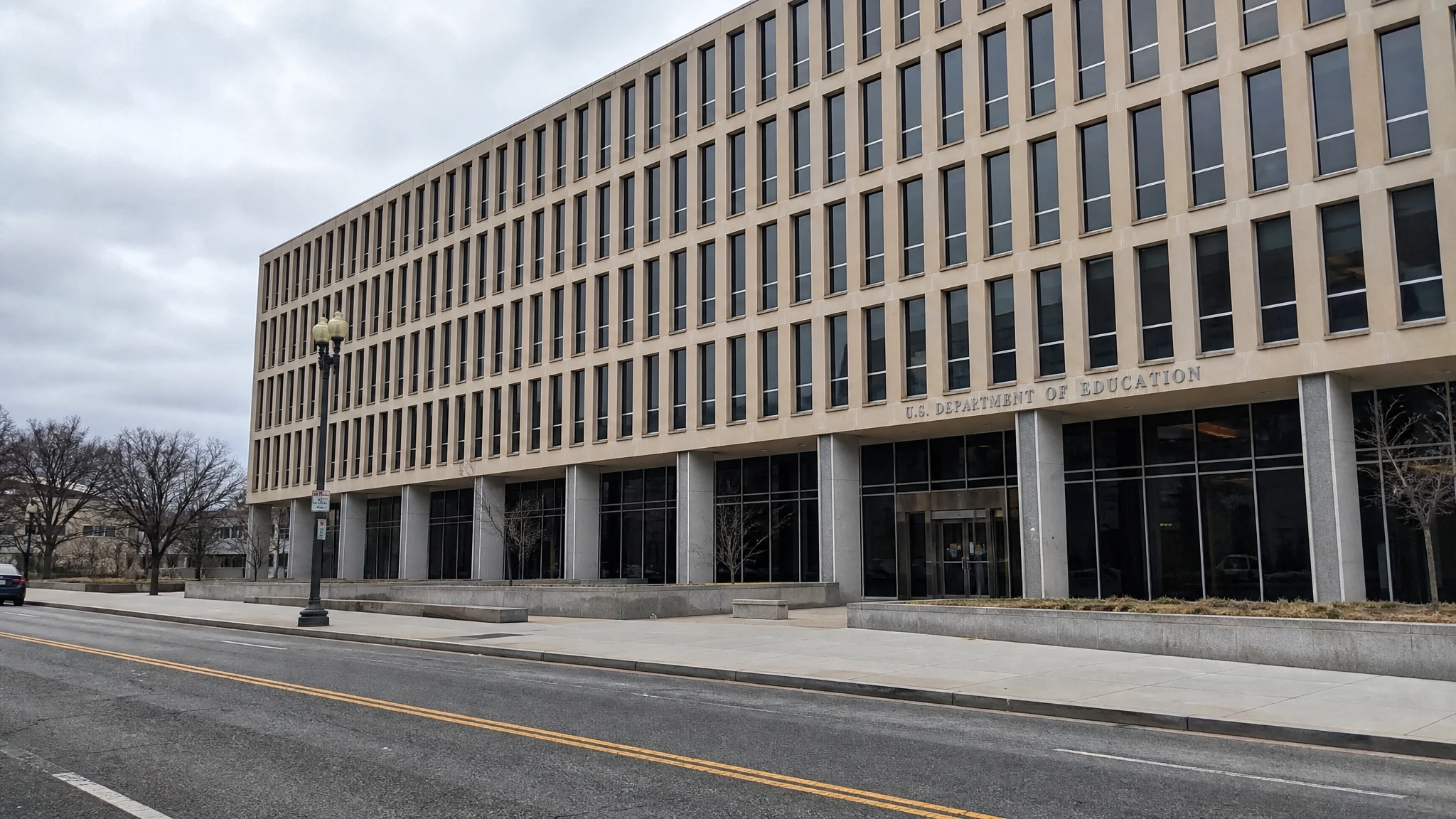
What Is the Federal Student Loan Discharge Lawsuit?
The federal student loan discharge lawsuit is chiefly Sweet v. McMahon, a certified class action against the U.S. Department of Education over borrower defense loan discharges. Two newer 2026 suits ask whether promised discharges were actually delivered.
Sweet v. McMahon, formerly Sweet v. DeVos and Sweet v. Cardona, is No. 4:19-cv-03674-HSG in the U.S. District Court for the Northern District of California. Theresa Sweet and six other borrowers filed it on June 25, 2019. Secretary of Education Linda McMahon and the Department of Education are the defendants.
The case is a Rule 23(b)(2) class action, not a multidistrict litigation. The Project on Predatory Student Lending (PPSL) represents the borrowers. Borrower defense is the federal rule that lets students seek loan cancellation after alleged school misconduct.
“Named plaintiffs accordingly brought this suit to require the Secretary to adjudicate these applications. They argued the Secretary's delay constituted unlawful stonewalling.”
Source: U.S. District Court for the Northern District of California, Sweet v. Cardona, No. 3:19-cv-03674-WHA, Order Granting Final Settlement Approval, Dkt. 345 (Nov. 16, 2022)
Why Are People Filing Federal Student Loan Discharge Lawsuits?
People are filing federal student loan discharge lawsuits because the Department of Education allegedly left borrower defense applications undecided for years. Borrower defense lets a student seek loan cancellation when a school allegedly misled them. The 2015 collapse of Corinthian Colleges, which had more than 100 campuses, set off a flood of such claims.
The Sweet plaintiffs say the backlog and later form denials were unlawful under the Administrative Procedure Act. They did not ask the court to decide their individual claims. They asked it to make the Department start deciding them.
Newer suits target a second problem. Between April 2022 and January 2025, the Department announced ten group discharges for more than 1.5 million borrowers. PPSL says it keeps hearing from borrowers whose approved loans remain outstanding, and that complaint drives the 2026 filings.
What Injuries Are Included in the Federal Student Loan Discharge Lawsuit?
The federal student loan discharge lawsuit includes four categories of alleged harm. All four are financial or credit harms, not physical injuries. Each category below is tied to the proceeding that raises it. The Department of Education has not been found liable for any of them in a final judgment.
Delayed Borrower Defense Decisions
A borrower defense decision is the Department of Education's written ruling on whether alleged school misconduct entitles a borrower to loan cancellation.
The Sweet plaintiffs allege the Department stopped deciding applications and left borrowers in limbo. The final approval order records that borrowers had filed 272,721 applications by June 2019, and 210,168 were still pending. The Department issued no decisions for eighteen months, according to that order.
The 2022 settlement later set decision deadlines to address that backlog.
Form Denials Without Individual Review
A form denial is a standardized rejection notice sent without an explanation tailored to the borrower's own facts.
The Department told the court that, since December 2019, it had used four templates to deny 118,300 of 131,800 reviewed applications. That is a denial rate of 89.8%. Class counsel said the notices violated the Administrative Procedure Act.
The court found no meeting of the minds on the first proposed settlement. It rejected that deal on October 19, 2020. The plaintiffs then added claims of a presumption-of-denial policy under the APA and the Fifth Amendment's due process clause.
Promised Discharges Not Delivered
A group discharge is a Department of Education announcement that cancels the federal loans of borrowers who attended a listed school.
PPSL alleges the Department has never publicly shown whether its ten group discharges reached the borrowers it promised. PPSL says it hears from hundreds of approved borrowers whose loans are still outstanding. The records lawsuit described in the status section asks the court to order disclosure.
This claim differs from Sweet, which is about decisions and deadlines. This page found no ruling on the records claim as of October 7, 2026.
Inaccurate Credit Reporting of Discharged Loans
Credit reporting is the process by which a lender or servicer tells credit bureaus the balance and status of a borrower's loan.
The Woods plaintiffs allege the Department keeps reporting cancelled federal loans as active, interest-bearing debt. They say that violates the Fair Credit Reporting Act's accuracy requirements. A news report says plaintiff Mandy Woods sees a $71,901 balance and plaintiff Jorge Cortes sees $21,586.
This page found no Department response. No court has certified the proposed class as of October 7, 2026.
Who Qualifies for the Federal Student Loan Discharge Lawsuit?
You may qualify if:
- You borrowed a Direct Loan or Federal Family Education Loan (FFEL) to pay for a program of higher education
- You asserted a borrower defense to repayment, and the Department had not granted or denied it on the merits when the class was defined
- You filed a borrower defense application after June 22, 2022 and before final approval on November 16, 2022, which makes you a post-class applicant
- For the proposed Woods class only: you hold a Direct or FFEL account, qualified for a group discharge, and still see the loan reported as owed
You may not qualify if:
- You were a member of the Corinthian class in Calvillo Manriquez v. DeVos, a separate action the Sweet class definition excludes
- Your loans are private student loans, because the Sweet class covers only Direct and FFEL loans
- You filed your borrower defense application after November 16, 2022, because the post-class window closed with final approval
Class membership depends on the Department's records and the settlement's definitions. The Woods class is only proposed, and no court has certified it. Only PPSL, the Department's notice, or a qualified attorney can confirm whether a specific borrower is covered.
What Is the Current Status of the Federal Student Loan Discharge Lawsuit?
The current status of the federal student loan discharge lawsuit is that Sweet v. McMahon is in its enforcement phase, as of October 7, 2026. Two newer suits against the Department of Education were filed in July and September 2026.
Sweet v. McMahon, No. 4:19-cv-03674-HSG
Judge William Alsup approved the class settlement in 2022. After Judge Alsup took inactive status, the case moved to Judge Haywood S. Gilliam Jr. The Department missed the January 28, 2026 decision deadline for Exhibit C post-class applicants. That triggered automatic full settlement relief for roughly 170,000 borrowers. It sent their eligibility notices around March 30, 2026, and relief is due within one year of each notice.
For post-class applicants from other schools, the deadline was April 15, 2026. About 30,000 of those borrowers received notices in mid-June 2026, with the same one-year clock.
The Ninth Circuit unanimously rejected the Department's appeal on July 17, 2026, and issued its mandate on September 8, 2026. On August 18, 2026, PPSL moved to enforce the settlement and to hold the Department in contempt. PPSL says at least 807 original class members still await discharges or refunds.
| Proceeding Type | Certified Rule 23(b)(2) class action settlement (not an MDL) |
| Court | U.S. District Court for the Northern District of California, Oakland |
| Judge | Judge Haywood S. Gilliam Jr. (originally Judge William Alsup) |
| Class Counsel | Project on Predatory Student Lending (PPSL) |
| Defendants | Secretary of Education Linda McMahon and the U.S. Department of Education |
| Appeal | Ninth Circuit No. 26-1136, judgment July 17, 2026, mandate September 8, 2026 |
| Pending Motions | Motion to enforce the settlement and motion for contempt, filed August 18, 2026 |
PPSL v. U.S. Department of Education, No. 1:26-cv-13040
PPSL sued the Department in the District of Massachusetts on July 1, 2026. The complaint says the Department failed to answer fifteen Freedom of Information Act requests within the statutory deadlines. Five requests date from November 2023, and ten date from April 2025.
The requests seek implementation records for ten group discharges announced between April 2022 and January 2025. Those discharges covered more than 1.5 million borrowers and more than $23 billion in debt. PPSL estimates, from public data, that the Department still reports $4.6 billion of that debt as owed, affecting more than 300,000 people.
| Proceeding Type | Individual FOIA suit by a nonprofit, not a class action |
| Court | U.S. District Court for the District of Massachusetts |
| Filed | July 1, 2026 |
| Plaintiff | Project on Predatory Student Lending |
| Defendant | U.S. Department of Education |
| Relief Sought | An order requiring the Department to search for and produce the requested records; no loan cancellation is sought |
Woods v. U.S. Department of Education, No. 1:26-cv-03335
Mandy Woods and Jorge Cortes filed a proposed class action in the District of Columbia on or about September 24, 2026. They allege the Department keeps reporting discharged federal loans to credit bureaus as active debt. They bring the claim under the Fair Credit Reporting Act.
The proposed class covers people with U.S. addresses who held Direct or FFEL accounts and qualified for a group discharge. It applies only if their loans are still reported as owed. No court has certified the class.
| Proceeding Type | Proposed class action, not yet certified |
| Court | U.S. District Court for the District of Columbia |
| Filed | On or about September 24, 2026 (news reports give September 24 or 25) |
| Named Plaintiffs | Mandy Woods and Jorge Cortes |
| Defendant | U.S. Department of Education |
| Claim | Fair Credit Reporting Act accuracy violations |
Did the Federal Student Loan Discharge Lawsuit Settle?
Yes. The Department of Education and the Sweet class settled the federal student loan discharge lawsuit in a 2022 settlement that discharges loans and refunds payments. The deal also repairs credit for eligible borrowers. Judge Alsup granted final approval on November 16, 2022. The two 2026 suits have not settled.
No court has set one payout figure per borrower, because relief is cancellation of the loan balance plus refunds of past payments. Totals depend on which borrowers qualify and what each owed. Only PPSL, the Department's notice, or a qualified attorney can confirm how the settlement applies to a specific loan.
The settlement sorts class members into three groups. The first group had roughly 200,000 borrowers, or 75% of the class, who attended one of 151 Exhibit C schools. They receive automatic discharge, cash refunds, and credit repair. The court estimated that relief at about $6 billion.
The second group had roughly 64,000 borrowers. They are owed written decisions within set periods under a streamlined process that favors the borrower. The Department owes automatic relief if it misses its date. The court estimated about $1.5 billion for that group.
The third group is post-class applicants, who applied after the June 22, 2022 execution date and before final approval. The Department said in November 2025 that this group's outstanding balances total $11.8 billion. Roughly half of the decided applications had been denied by then.
PPSL says total Sweet relief now reaches at least $23 billion. That figure comes from PPSL, not from a court order, so this page treats it as an advocate's estimate.
Federal Student Loan Discharge Lawsuit Updates and Case Status
Here is the current status of the Federal Student Loan Discharge lawsuit, updated with new filings, rulings, and case-count reports as they're confirmed. The Sweet v. McMahon borrower defense class action settled as of October 2026; the terms and timing are covered in the entries below. See the full timeline below for every confirmed development since the litigation began.
Federal Student Loan Discharge Lawsuit Timeline
Woods Class Action Filed Over Credit Reporting of Discharged Loans
Mandy Woods and Jorge Cortes filed Woods v. U.S. Department of Education, No. 1:26-cv-03335, in the District of Columbia on or about September 24, 2026. The proposed class action alleges the Department still reports discharged federal loans to credit bureaus as owed. The suit invokes the Fair Credit Reporting Act.
Ninth Circuit Issues Its Mandate in the Sweet Appeal
The Ninth Circuit clerk issued the mandate in Sweet v. McMahon, No. 26-1136, on September 8, 2026. The mandate made the court's July 17, 2026 judgment take effect, leaving the Northern District of California's deadline orders in place.
PPSL Moves to Enforce the Sweet Settlement and Seek Contempt
On August 18, 2026, PPSL asked the Northern District of California to enforce the Sweet settlement and set a firm deadline for remaining relief. A separate motion seeks to hold the Department of Education in contempt. PPSL says at least 807 original class members still await discharges or refunds, some for more than a year and a half.
Ninth Circuit Rejects the Department's Deadline Appeal
A three-judge Ninth Circuit panel of Judges Wardlaw, Owens, and Bress unanimously rejected the Department's appeal in Sweet v. McMahon on July 17, 2026. The panel left in place orders requiring relief for post-class borrowers who missed the decision deadlines.
PPSL Sues the Department for Group Discharge Records
PPSL filed PPSL v. U.S. Department of Education, No. 1:26-cv-13040, in the District of Massachusetts on July 1, 2026. The Freedom of Information Act suit seeks records on ten group discharges announced between April 2022 and January 2025. It asks whether the Department delivered them.
Notices Go Out to About 30,000 Non-Exhibit C Borrowers
The Department began emailing roughly 30,000 post-class borrowers from non-Exhibit C schools on June 12, 2026. Its notice deadline was June 15. Each notice confirms eligibility for full settlement relief, which is due within one year.
Decision Deadline Passes for Non-Exhibit C Post-Class Applicants
April 15, 2026 was the court-ordered deadline for post-class applications from non-Exhibit C schools in Sweet v. McMahon. Applications the Department had not decided by that date qualified for automatic full settlement relief.
Notices of Full Relief Reach Exhibit C Post-Class Borrowers
Around March 30, 2026, the Department sent eligibility notices to roughly 170,000 Exhibit C post-class borrowers. Their applications went undecided by January 28. Relief is due by March 30, 2027, one year after the notices.
Ninth Circuit Denies the Department's Emergency Stay Motion
The Ninth Circuit denied the Department's emergency motion to stay the January deadline orders in Sweet v. McMahon, No. 26-1136, on March 25, 2026, according to the court's order. Judges Wardlaw, Owens, and Bress sat on the panel.
Judge Gilliam Rejects the Department's Renewed Delay Request
Judge Haywood S. Gilliam Jr. denied the Department's renewed request for an 18-month extension in Sweet v. McMahon on February 24, 2026. He found no extraordinary circumstances that justified the delay, according to PPSL's account of the ruling.
Supreme Court Denies the Schools' Certiorari Petition
The U.S. Supreme Court denied Everglades College's certiorari petition, No. 25-492, on February 23, 2026. The petition challenged the Ninth Circuit's November 2024 decision, so the 2022 settlement approval stands.
Decision Deadline Passes for Exhibit C Post-Class Applicants
The Department did not decide most Exhibit C post-class applications by the January 28, 2026 deadline. The settlement made those borrowers eligible for automatic full relief.
Judge Alsup Largely Denies the Department's 18-Month Extension
Judge William Alsup ruled from the bench on December 11, 2025, largely denying the Department's request for an 18-month extension. He kept the January 28, 2026 deadline for Exhibit C schools and set April 15, 2026 for the rest.
Department Asks to Push the Post-Class Deadline to July 2027
In a November 6, 2025 filing in Sweet v. McMahon, the Department said it lacked resources to decide the post-class applications. It asked to move the January 2026 deadline to July 2027. It projected about 193,000 applications would still be undecided, with $11.8 billion in balances.
Ninth Circuit Rejects the Schools' Challenge to the Settlement
On November 5, 2024, the Ninth Circuit decided the intervening schools' appeal, No. 23-15049, and left the Sweet settlement approval intact. Everglades College, Lincoln Educational Services, and others had objected to being named on the Exhibit C list.
Supreme Court Denies the Schools' Stay Application
The U.S. Supreme Court denied a stay application, No. 22A867, on April 13, 2023. Everglades College, Lincoln Educational Services, and American National University had asked Justice Kagan to pause the Sweet judgment.
District Court Denies a Stay Pending Appeal
The Northern District of California denied the intervening schools' request for a stay pending appeal on February 24, 2023. The Ninth Circuit summarily denied a stay on March 29, 2023.
Judge Alsup Grants Final Approval of the Sweet Settlement
Judge William Alsup granted final approval of the Sweet class settlement on November 16, 2022, in Dkt. 345. He entered final judgment in Dkt. 346. The court kept jurisdiction to oversee implementation and ruled the Secretary had authority to settle.
Court Preliminarily Approves the Second Settlement
The Northern District of California preliminarily approved the Sweet settlement on August 4, 2022. The parties had filed the executed agreement on June 22, 2022, after the 2020 attempt failed.
Court Rejects the First Proposed Settlement
On October 19, 2020, the Northern District of California denied the first Sweet settlement and restarted discovery. The order followed the Department's disclosure that it denied 89.8% of the applications it had reviewed using four form templates.
First Proposed Settlement Receives Preliminary Approval
A May 22, 2020 order preliminarily approved the first Sweet settlement. It set an eighteen-month deadline for decisions and a twenty-one-month deadline for relief on claims filed by April 7, 2020.
Court Certifies the Sweet Borrower Class
On October 30, 2019, in Dkt. 46, Judge William Alsup certified a Rule 23(b)(2) class of Direct Loan and FFEL borrowers. Their borrower defense claims were undecided. Borrowers in the separate Calvillo Manriquez class were excluded.
Theresa Sweet and Six Borrowers File the Lawsuit
Theresa Sweet and six other borrowers filed Sweet v. DeVos, No. 3:19-cv-03674, in the Northern District of California on June 25, 2019. The complaint asked the court to compel the Department to decide borrower defense applications.
How to File a Federal Student Loan Discharge Lawsuit
These 7 steps outline how to file a Federal Student Loan Discharge lawsuit.
- Check whether you are already in the Sweet class: Borrowers who applied for borrower defense by November 16, 2022 are generally covered, and the Department's emails come from noreply@studentaid.gov.
- Search every inbox and spam folder for your notice: A notice of eligibility for full settlement relief starts a one-year clock for the Department to deliver your discharge.
- Email PPSL if no notice arrived: PPSL asks borrowers to write to info@ppsl.org, copying sweet@ed.gov, with a name, email, borrower defense number, and application date.
- Ask about reconsideration if the Department denied your application: PPSL publishes information on a Borrower Defense Reconsideration Application, and eligibility depends on your facts.
- Watch for the Woods class if your discharged loan still shows as owed: The Woods suit is only a proposed class, so no court has opened a claims process for it.
- Use only official channels: Scammers target borrowers awaiting relief, so confirm any message with studentaid.gov or PPSL before sharing personal details.
- Consult a qualified attorney about individual claims: Borrowers outside the Sweet class, such as private loan holders, may have different options that only a lawyer can assess.
Federal Student Loan Discharge Lawsuit is no longer accepting new claims. The Sweet class is closed, because the window for post-class borrower defense applications ended with final approval on November 16, 2022. Borrowers already in the class do not need to file anything new.
What Evidence Do Borrowers Need in the Federal Student Loan Discharge Lawsuit?
Borrowers in the federal student loan discharge lawsuit need little new evidence, because Sweet relief runs on the Department's own records. The key items are the borrower defense application number, the application date, and the Department's notice email.
PPSL asks a borrower who never received a notice to send those details, along with a name and email address. PPSL's reconsideration information explains what a borrower denied relief can submit.
A credit-reporting claim like Woods turns on different proof. A borrower would likely rely on credit reports from Equifax, Experian, or TransUnion that still show the discharged loan as owed.
What Has the Department of Education Said in the Federal Student Loan Discharge Lawsuit?
The Department of Education has said it lacked the staff and funding to decide the post-class applications by the court's deadlines. In a November 6, 2025 filing, it said Congress ignored requests for more adjudication funding. It also said its Federal Student Aid office had lost staff.
Under Secretary Nicholas Kent said the January deadline was unreasonable and warned of about $6 billion in windfall discharges for ineligible borrowers. The Department also said it decides roughly 1,500 applications a month for the final group.
The Ninth Circuit found the Department had not shown changed circumstances that justified modifying the deadlines. The Department has not publicly answered the two 2026 suits that this page could find.
| Party | Role | Position |
|---|---|---|
| U.S. Department of Education and Secretary Linda McMahon | Defendants in Sweet, PPSL, and Woods | Says it lacked resources for the deadlines and sought an extension; the courts denied it |
| Project on Predatory Student Lending | Class counsel in Sweet and plaintiff in the records suit | Says the Department must keep its settlement and group discharge promises |
| Everglades College, Lincoln Educational Services, American National University, Chicago School of Professional Psychology | Intervening schools in Sweet | Objected to appearing on the Exhibit C list; Everglades College's challenge ended with a certiorari denial in February 2026 |
The 2022 final approval order says the settlement is not a finding of school misconduct. A listed school keeps its due process rights.
How Does the Federal Student Loan Discharge Lawsuit Compare to Related Cases?
The federal student loan discharge lawsuit differs from four related matters, and each is legally distinct from the three proceedings above.
| Matter | What It Involves | Relationship to This Case |
|---|---|---|
| Calvillo Manriquez v. DeVos, No. 17-cv-07210 (N.D. Cal.) | A separate class action, assigned to Judge Sallie Kim, on behalf of Corinthian Colleges borrowers, filed December 20, 2017 | Corinthian borrowers in that class are excluded from the Sweet class |
| Pratt v. Cardona (formerly Pratt v. DeVos) | A class action challenging a 2019 partial-relief formula; plaintiffs voluntarily dismissed it in late 2021 after the Department dropped the policy | Separate case on the amount of relief; about 13,000 borrowers received full relief afterward, according to PPSL |
| Biden v. Nebraska, 600 U.S. 477 (2023) | A June 30, 2023 Supreme Court decision. It held 6 to 3 that the HEROES Act did not authorize a roughly $430 billion forgiveness plan | A different program on different authority; the Sweet order said its settlement was separate from that plan |
| Schuberg v. U.S. Department of Education and MOHELA, No. 3:26-cv-235-SI (D. Or.) | A self-represented borrower's suit over a loan the plaintiff says was taken out fraudulently. The court dismissed it without prejudice on February 10, 2026 | Same agency, unrelated claim; it involves one borrower and identity theft, not borrower defense or group discharges |
None of these matters changes what Sweet members are owed. Settlement relief comes from the 2022 agreement and the court's deadline orders.
Frequently Asked Questions
What is the federal student loan discharge lawsuit about?
The federal student loan discharge lawsuit is mainly about the Department of Education's handling of borrower defense claims in Sweet v. McMahon. Borrowers allege the Department delayed or form-denied applications, and a 2022 settlement set deadlines for decisions or automatic relief.
Is the federal student loan discharge lawsuit a class action or an MDL?
The federal student loan discharge lawsuit Sweet v. McMahon is a certified class action, not a multidistrict litigation. Judge William Alsup certified the Rule 23(b)(2) class on October 30, 2019. The two 2026 suits are a records suit and a proposed class action.
Did the federal student loan discharge lawsuit settle?
Yes, the Sweet part of the federal student loan discharge lawsuit settled, and the court granted final approval on November 16, 2022. The two 2026 suits have not settled, and a motion to enforce the Sweet settlement was filed on August 18, 2026.
When will borrowers receive relief in the federal student loan discharge lawsuit?
Borrowers receive relief in the federal student loan discharge lawsuit within one year of their notice of eligibility. Exhibit C post-class borrowers were notified around March 30, 2026, so relief is due by March 30, 2027. Other post-class borrowers received notices in June 2026.
Can I still join the federal student loan discharge lawsuit?
No, new borrowers cannot join the Sweet class in the federal student loan discharge lawsuit. The post-class window closed on November 16, 2022. The Woods class is only proposed, and borrowers should confirm any rights with a qualified attorney.
What did the Ninth Circuit decide in the federal student loan discharge lawsuit?
The Ninth Circuit decided in the federal student loan discharge lawsuit that the Department failed to justify extending the Sweet deadlines. A unanimous panel ruled on July 17, 2026, and the court issued its mandate on September 8, 2026.
Is the federal student loan discharge lawsuit the same as President Biden's loan forgiveness plan?
No, the federal student loan discharge lawsuit is not President Biden's loan forgiveness plan. The Supreme Court struck down that roughly $430 billion plan in Biden v. Nebraska, while Sweet enforces a borrower defense settlement on separate authority.
Is the federal student loan discharge lawsuit the same as the group discharge records lawsuit?
No, the group discharge records lawsuit is a separate case from Sweet within the federal student loan discharge litigation. PPSL filed it in Massachusetts on July 1, 2026 to obtain records, not to cancel loans.