
What Is the Cape Cod Cliff House Mortgage Lawsuit?
The Cape Cod Cliff House mortgage lawsuit is a single-plaintiff federal case asking a court to void a $3.85 million mortgage on an eroding Wellfleet, Massachusetts house. The case is Bonomi v. JPMorgan Chase Bank, N.A., No. 1:25-cv-07664, in the U.S. District Court for the Southern District of New York. Retired New York attorney John Bonomi is the plaintiff, and Judge Gregory H. Woods presides.
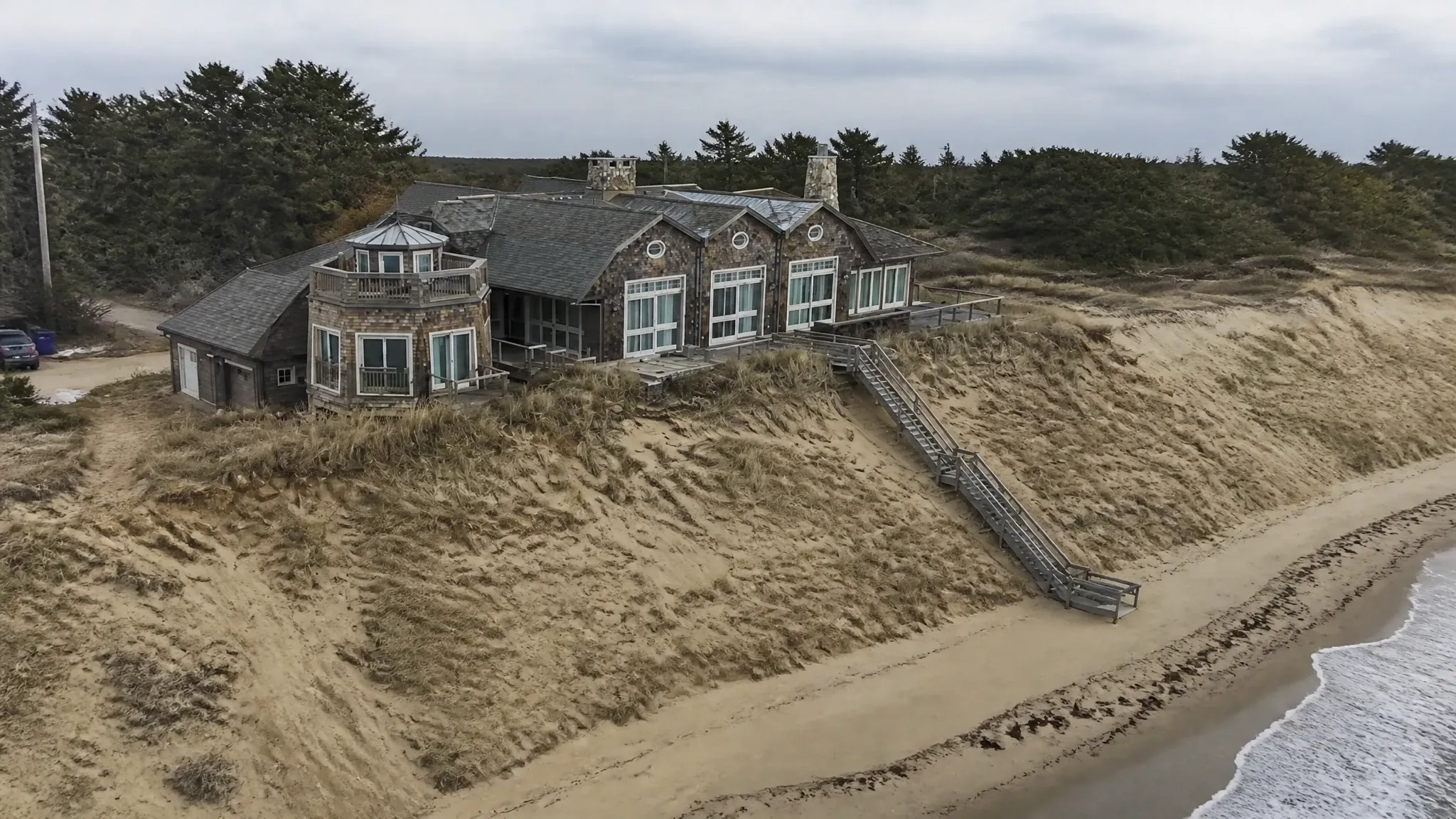
News coverage calls the property the Cape Cod cliff house. Local reporters know it as the Blasch house, after the family that built it in 2010 at 1440 Chequessett Neck Road. Bonomi bought it in November 2021 for $5.5 million. The house was demolished in early 2025, and Bonomi says the loan should never have been enforceable. JPMorgan Chase denies the allegations.
“The plaintiff, John Bonomi, brings this action to void a mortgage and note for three million eight hundred and fifty thousand dollars ($3,850,000), plus interest, because he lacked the capacity to enter into the contract at the time it was made, in November, 2021. He also seeks damages because the defendant took unconscionable advantage of his condition.”
Source: John Bonomi v. JPMorgan Chase Bank, N.A., U.S. District Court, S.D.N.Y., Case No. 1:25-cv-07664-GHW, Complaint, Dkt. 6, Preliminary Statement (filed October 18, 2025)
Why Was the Cape Cod Cliff House Mortgage Lawsuit Filed?
The Cape Cod Cliff House mortgage lawsuit was filed because Bonomi wants out of a $3.85 million loan secured by a house that no longer exists. His complaint says he signed the loan during a protracted manic episode that was part of his chronic bipolar condition. It adds that the house stood 12 to 14 feet from a sand dune cliff when he bought it, and that the land now holds little remaining value.
The note attached to the complaint is dated November 24, 2021, carries a fixed 2.990% rate, and matures December 1, 2051. The complaint says Bonomi paid $21,053.05 a month from November 2021 until September 2024. He then stopped making mortgage and tax payments, and the complaint says interest continues to accrue. It also says Chase has never sought to foreclose.
Bonomi sued in New York rather than Massachusetts because, the complaint says, he lives in New York City and negotiated and signed the loan there. The suit invokes diversity jurisdiction, since Bonomi and the bank are citizens of different states. The mortgage itself selects the law of the jurisdiction where the property sits.
What Harms Does the Cape Cod Cliff House Mortgage Lawsuit Allege?
The Cape Cod Cliff House mortgage lawsuit alleges three distinct harms, one for each count in Bonomi's complaint. Two counts ask the court to declare the loan voidable. The third seeks money damages. JPMorgan Chase denies the allegations and leaves Bonomi to his proofs, and no court has ruled on any count.
Lack of Legal Capacity
Legal capacity is a person's ability to understand a contract well enough to be bound by it, and a contract signed without it can be voidable.
Count One asks for a declaration under 28 U.S.C. § 2201 that the note and mortgage are voidable. Bonomi alleges he was acting under an uncontrollable manic psychosis. He says he has been diagnosed with bipolar disorder since 2009 and had a second extreme manic episode in September 2019. The count also alleges Chase was aware, or willfully avoided acknowledging, that he was not competent to sign.
The complaint pleads this count under New York law, even though the mortgage selects the law of the property's jurisdiction. Attorney Ted Folkman argued in August 2026 that capacity for a land transaction may follow the law of the place where the land sits, and he expects Chase to argue Massachusetts law governs.
Press coverage points to Ortelere v. Teachers' Retirement Board, a 1969 New York decision, as authority that can allow rescission for mental defect when the other party knew of it. Fordham law professor Ethan Leib called Bonomi's burden difficult, citing the bank's knowledge and his payments for nearly three years. Bonomi's attorney told the Boston Globe he knows of no case where a similar argument voided a mortgage.
Unconscionability
Unconscionability is a contract-law doctrine that lets a court refuse to enforce terms so one-sided that they shock the conscience.
Count Two asks for the same declaration on a different ground. It alleges the note and mortgage are so grossly unreasonable that no person in his senses would make them and no honest and fair person would accept them. The count also alleges Chase took unconscionable advantage of Bonomi's impaired mental state.
The note attached to the complaint is a standard Fannie Mae and Freddie Mac uniform instrument, Form 3200. The count appears to rest on the circumstances of the loan, not on unusual contract terms.
Consequential Damages
Consequential damages are money awarded for losses that follow from a wrongful act, beyond the value of the contract itself.
Count Three seeks money for three kinds of loss: payments made under the note, payments made to preserve the property as collateral, and payments made to demolish the house. The prayer for relief asks for $695,000 in payments under the note and more than $750,000 in preservation and demolition costs, plus costs and attorney fees.
Elsewhere the complaint says Bonomi spent more than $500,000 on plantings, sacrificial sand, and sand-filled coir envelopes, and about $250,000 to demolish the house. Those two figures add up to the $750,000 preservation request. The count is premised on Chase's alleged unconscionable conduct in taking advantage of Bonomi's impaired mental state.
What Is the Current Status of the Cape Cod Cliff House Mortgage Lawsuit?
The current status of the Cape Cod Cliff House mortgage lawsuit is an early pretrial stage with no ruling on the merits. JPMorgan Chase answered the complaint on May 26, 2026 and denied the allegations. The court then ordered the parties to submit a joint status letter and proposed case management plan, and orders in August and September 2026 show that filing running late. The latest docket entries verified for this page are dated September 11, 2026.
Bonomi v. JPMorgan Chase Bank, N.A., No. 1:25-cv-07664 (S.D.N.Y.)
Judge Gregory H. Woods took over Bonomi v. JPMorgan Chase Bank, N.A. on October 21, 2025, after the case passed through three other judges in its first weeks. Moore Friedman LLP represents Bonomi, and Parker Ibrahim & Berg LLP represents JPMorgan Chase. Bonomi demands a jury trial.
| Court | U.S. District Court for the Southern District of New York |
| Case Number | 1:25-cv-07664 (GHW) |
| Judge | Gregory H. Woods |
| Filed | October 2025 (operative complaint docketed October 18, 2025) |
| Plaintiff | John Bonomi, retired attorney, New York City |
| Defendant | JPMorgan Chase Bank, N.A. |
| Claims | Declaratory relief (lack of capacity, unconscionability) and consequential damages |
| Answer | Filed May 26, 2026, denying the allegations |
| Status | Case management plan pending; no merits ruling reported |
At a December 17, 2025 conference, Judge Woods set an April 2, 2026 deadline for a Chase motion to dismiss and stayed discovery until that motion was resolved. The docket entries reviewed show Chase never filed the motion. It won two extensions and then answered instead. Press accounts that Chase "initially sought to dismiss" appear to refer to its December 2025 request for a pre-motion conference. The entries reviewed do not say whether the discovery stay has been lifted.
How Much Is the Cape Cod Cliff House Mortgage Lawsuit Worth?
The Cape Cod Cliff House mortgage lawsuit is worth roughly $5.3 million on the face of the complaint, if every request succeeded. That total adds the $3.85 million note to the damages requests described under Count Three.
No settlement has been reported, and these figures are Bonomi's requests, not findings. The outcome depends on proof of his capacity in November 2021 and of what Chase knew, and only a court can decide either question. The complaint does not say how the loan proceeds would be unwound if a court voided the note.
The collateral value matters to any outcome. The Town of Wellfleet assessed the property at more than $4.38 million in 2021 and reassessed the land at $385,000 as of January 1, 2025, according to the Boston Globe. Bonomi still owns the land, his attorney told the Globe.
Cape Cod Cliff House Mortgage Lawsuit Updates and Case Status
Here is the current status of the Cape Cod Cliff House Mortgage lawsuit, updated with new filings, rulings, and case-count reports as they're confirmed. Bonomi v. JPMorgan Chase Bank, N.A. continues in active pretrial proceedings as of October 2026, with no global settlement reached. See the full timeline below for every confirmed development since the litigation began.
Cape Cod Cliff House Mortgage Lawsuit Timeline
Bonomi Closes on the Wellfleet House and Signs the $3.85 Million Note
John Bonomi bought the house at 1440 Chequessett Neck Road in Wellfleet, Massachusetts, for the $5.5 million asking price. He signed a $3,850,000 note to JPMorgan Chase Bank, N.A. at a fixed 2.990% rate, the loan at issue in Bonomi v. JPMorgan Chase Bank, N.A..
Barnstable Superior Court Upholds Wellfleet's Denial of a Sea Wall
Judge Michael K. Callan affirmed the Wellfleet Conservation Commission's decision that a rock revetment would violate wetlands protection laws. That revetment suit by the Blasch family trust, which Bonomi continued after buying the house, is a separate case from Bonomi v. JPMorgan Chase Bank, N.A.. The Provincetown Independent reported an appeal followed on October 16, 2023.
Bonomi Lists the Wellfleet House at $4.5 Million
Listing agent Michael Degnan listed the Wellfleet house for $4.5 million, a million dollars below what Bonomi paid. The listing came less than two weeks after the Barnstable Superior Court ruling on the sea wall.
Bonomi Stops Paying the JPMorgan Chase Mortgage
Bonomi made his last payment on the $3.85 million JPMorgan Chase note in September 2024, according to his complaint. He paid $21,053.05 a month before that and then stopped making mortgage and tax payments.
The Wellfleet House Is Demolished
The Wellfleet house was torn down in February 2025, according to press reports, before it could fall into Cape Cod Bay. The complaint in Bonomi v. JPMorgan Chase Bank, N.A. puts completion at about March 2025 and the cost at about $250,000.
An Appellate Court Reportedly Upholds the Town's Revetment Denial
The complaint in Bonomi v. JPMorgan Chase Bank, N.A. alleges that an appellate court upheld Wellfleet's right to deny a revetment permit in May 2025 and that no further legal challenge was feasible. This page could not independently confirm that ruling.
Bonomi's Operative Complaint Is Docketed Against JPMorgan Chase
Bonomi's counsel filed the operative complaint, Dkt. 6, in the Southern District of New York after earlier versions drew deficiency notices. It pleads three counts, seeks to void the $3.85 million note, and demands a jury trial. Chase's own answer dates the filing to October 18, 2025.
Judge Gregory H. Woods Receives Bonomi v. JPMorgan Chase Bank, N.A.
The Southern District of New York reassigned Bonomi v. JPMorgan Chase Bank, N.A. to Judge Gregory H. Woods on October 21, 2025. It was the third reassignment in a week, after Judges Laura Taylor Swain, Ronnie Abrams, and Mary Kay Vyskocil. The court also set an initial pretrial conference for December 17, 2025.
Court Extends JPMorgan Chase's Deadline to Answer
Judge Woods extended JPMorgan Chase's deadline to answer or respond to Bonomi's complaint to December 12, 2025. Chase's attorneys at Parker Ibrahim & Berg LLP entered appearances in Bonomi v. JPMorgan Chase Bank, N.A. the next day.
JPMorgan Chase Requests a Pre-Motion Conference on Dismissal
JPMorgan Chase asked Judge Woods for a pre-motion conference on a proposed motion to dismiss Bonomi's complaint, and the court granted it the same day. Chase also filed a proposed case management plan and a status report in Bonomi v. JPMorgan Chase Bank, N.A..
Judge Woods Sets a Dismissal Briefing Schedule and Stays Discovery
After the initial pretrial conference, Judge Woods ordered any JPMorgan Chase motion to dismiss due April 2, 2026, with Bonomi's opposition three weeks after service. He stayed discovery in Bonomi v. JPMorgan Chase Bank, N.A. pending resolution of that motion.
Judge Woods Signs a Confidentiality Order
Judge Woods signed a stipulated confidentiality agreement and protective order in Bonomi v. JPMorgan Chase Bank, N.A.. The order governs how the parties handle confidential material.
Court Grants JPMorgan Chase More Time for a Dismissal Motion
Judge Woods granted JPMorgan Chase's April 1 request for more time to file its motion to dismiss in Bonomi v. JPMorgan Chase Bank, N.A.. The order kept the three-week opposition and one-week reply schedule running from service of the motion.
Court Gives JPMorgan Chase Until May 26 to Answer
Judge Woods granted JPMorgan Chase an extension to answer or respond to Bonomi's complaint, moving the deadline to May 26, 2026. The request came in a letter motion from Chase's attorney Scott W. Parker.
JPMorgan Chase Answers the Complaint and Denies the Allegations
JPMorgan Chase filed its answer, Dkt. 29, in Bonomi v. JPMorgan Chase Bank, N.A. instead of a motion to dismiss. It denies the allegations, leaves Bonomi to his proofs, and pleads 18 affirmative defenses, including waiver, laches, statutes of limitations, unclean hands, and good faith.
The Boston Globe Reports the Lawsuit
The Boston Globe reported that Bonomi was suing JPMorgan Chase to void the Wellfleet mortgage, and The Real Deal and the ABA Journal followed on July 17. The coverage brought national attention to Bonomi v. JPMorgan Chase Bank, N.A., which had been on the federal docket since October 2025.
Court Orders a Joint Status Letter and Case Management Plan
Judge Woods ordered the parties in Bonomi v. JPMorgan Chase Bank, N.A. to submit a joint status letter and a proposed case management plan by August 18, 2026. Later orders confirm the deadline.
Judge Woods Notes the Missed Status Letter Deadline
Judge Woods wrote on August 19, 2026 that the court had not received the joint status letter or proposed case management plan in Bonomi v. JPMorgan Chase Bank, N.A.. He directed the parties to file by August 21.
Judge Woods Again Orders the Joint Status Letter and Plan
Judge Woods wrote on September 11, 2026 that the parties in Bonomi v. JPMorgan Chase Bank, N.A. had missed a September 10 deadline for the joint status letter and proposed case management plan. He directed them to comply no later than September 14, 2026.
What Evidence Matters in the Cape Cod Cliff House Mortgage Lawsuit?
The evidence that matters in the Cape Cod Cliff House mortgage lawsuit is proof of Bonomi's mental state in 2021 and proof of what Chase knew. The complaint and Chase's answer put these records at issue:
- Medical records: the complaint cites a bipolar diagnosis since 2009, a second extreme manic episode in September 2019, and care from a psychopharmacologist.
- Chase's loan file: the complaint says Chase commissioned two appraisals and demanded engineering documentation on the erosion before closing.
- The retirement letter: the complaint says Bonomi gave Chase an employer letter about his planned 2022 retirement.
- Payment records: Bonomi paid $21,053.05 a month from November 2021 until September 2024.
- Erosion reporting: the complaint lists news reports from 2019 through 2021 that described the house's risk.
- The note and mortgage: both are attached to the complaint as Exhibit A.
Bonomi's attorney told the Boston Globe that Bonomi never saw the appraisals, although Chase says it showed them to him. Chase leaves Bonomi to his proofs. Only the court decides what evidence it will admit.
What Did JPMorgan Chase Allegedly Know in the Cape Cod Cliff House Mortgage Lawsuit?
JPMorgan Chase allegedly knew, or willfully avoided knowing, that Bonomi lacked capacity to sign the loan, according to the Cape Cod Cliff House mortgage lawsuit. The complaint also alleges the bank could not have been unaware of the erosion. The table below sets each allegation beside Chase's answer.
| Allegation | Where Alleged | Chase's Answer (Dkt. 29) |
|---|---|---|
| Chase received an employer letter about Bonomi's 2022 retirement, and the lending officer said it would be ignored | Complaint ¶ 13 | Denies knowledge or information sufficient to form a belief; leaves Plaintiff to his proofs |
| Chase commissioned two appraisals and demanded engineering documentation on the erosion before closing | Complaint ¶ 12 | Denies knowledge or information sufficient to form a belief; leaves Plaintiff to his proofs |
| Chase was aware, or willfully avoided acknowledging, that Bonomi was not competent to sign | Complaint ¶ 22 | Calls it a legal conclusion; denies it and leaves Plaintiff to his proofs |
| Chase has never sought to foreclose on the property | Complaint ¶ 18 | Denies knowledge or information sufficient to form a belief; leaves Plaintiff to his proofs |
Chase's 18 affirmative defenses include waiver and estoppel, statutes of limitations, laches, unclean hands, and good faith under reasonable commercial standards. One defense says Bonomi's claims are barred by his own negligence, recklessness, and assumption of risk. A Chase spokesperson declined to comment to the Boston Globe.
Are There Other Lawsuits Related to the Cape Cod Cliff House Mortgage Lawsuit?
Yes. One separate court dispute concerns the same house but a different question. The Blasch family trust, the seller, sued the Wellfleet Conservation Commission in Barnstable County Superior Court after the town refused a 241-foot rock revetment. Bonomi continued that suit after buying the house, and the Provincetown Independent reported the court upheld the denial in October 2023.
That case asks whether the town could block a sea wall, not whether the mortgage is valid. The complaint in the mortgage case alleges an appellate court later upheld the town's denial in May 2025, a ruling this page could not independently confirm.
| Matter | Court | Subject | Relationship |
|---|---|---|---|
| Bonomi v. JPMorgan Chase Bank, N.A., No. 1:25-cv-07664 (this page) | U.S. District Court, S.D.N.Y. | Whether the $3.85 million mortgage and note are voidable | The subject of this page |
| Blasch family trust v. Wellfleet Conservation Commission (revetment suit) | Barnstable County Superior Court | Whether the town could deny a 241-foot rock revetment | Separate case about the same house |
No class action or consolidated proceeding over Cape Cod coastal mortgages turned up in research for this page. Some third-party websites describe such a case but cite no court record.
Frequently Asked Questions
What is the Cape Cod cliff house mortgage lawsuit about?
The Cape Cod cliff house mortgage lawsuit is about whether John Bonomi can void a $3.85 million JPMorgan Chase mortgage on a Wellfleet, Massachusetts house. Bonomi says he lacked the legal capacity to sign the loan in November 2021 because of a manic episode tied to bipolar disorder. Chase denies the allegations.
Is the Cape Cod cliff house mortgage lawsuit a class action?
No. The Cape Cod cliff house mortgage lawsuit is a single-plaintiff federal case, not a class action or multidistrict litigation. There is no class to join and no claim form to file.
Has the Cape Cod cliff house mortgage lawsuit settled?
No. The Cape Cod cliff house mortgage lawsuit has not settled, and no settlement talks have been reported. JPMorgan Chase answered the complaint on May 26, 2026, and no court has ruled on the merits.
Who is the judge in the Cape Cod cliff house mortgage lawsuit?
Judge Gregory H. Woods is the judge in the Cape Cod cliff house mortgage lawsuit, which is pending in the U.S. District Court for the Southern District of New York as No. 1:25-cv-07664. The case was reassigned to him on October 21, 2025.
Can Bonomi really void the mortgage in the Cape Cod cliff house mortgage lawsuit?
Whether Bonomi can void the mortgage in the Cape Cod cliff house mortgage lawsuit is undecided. Commentators describe his burden as difficult, citing the bank's knowledge and his payments for nearly three years. A court must decide his capacity and what Chase knew.
Does Bonomi still own the land in the Cape Cod cliff house mortgage lawsuit?
Yes. Bonomi still owns the Wellfleet land, according to his attorney, even though the house was demolished in early 2025. The town reassessed the land at $385,000 as of January 1, 2025.
Is the Cape Cod cliff house mortgage lawsuit the same as the Wellfleet sea wall lawsuit?
No. The Cape Cod cliff house mortgage lawsuit is a separate case from the Wellfleet sea wall lawsuit. The sea wall suit asked whether the town could deny a revetment, while the mortgage case asks whether the $3.85 million loan is voidable.